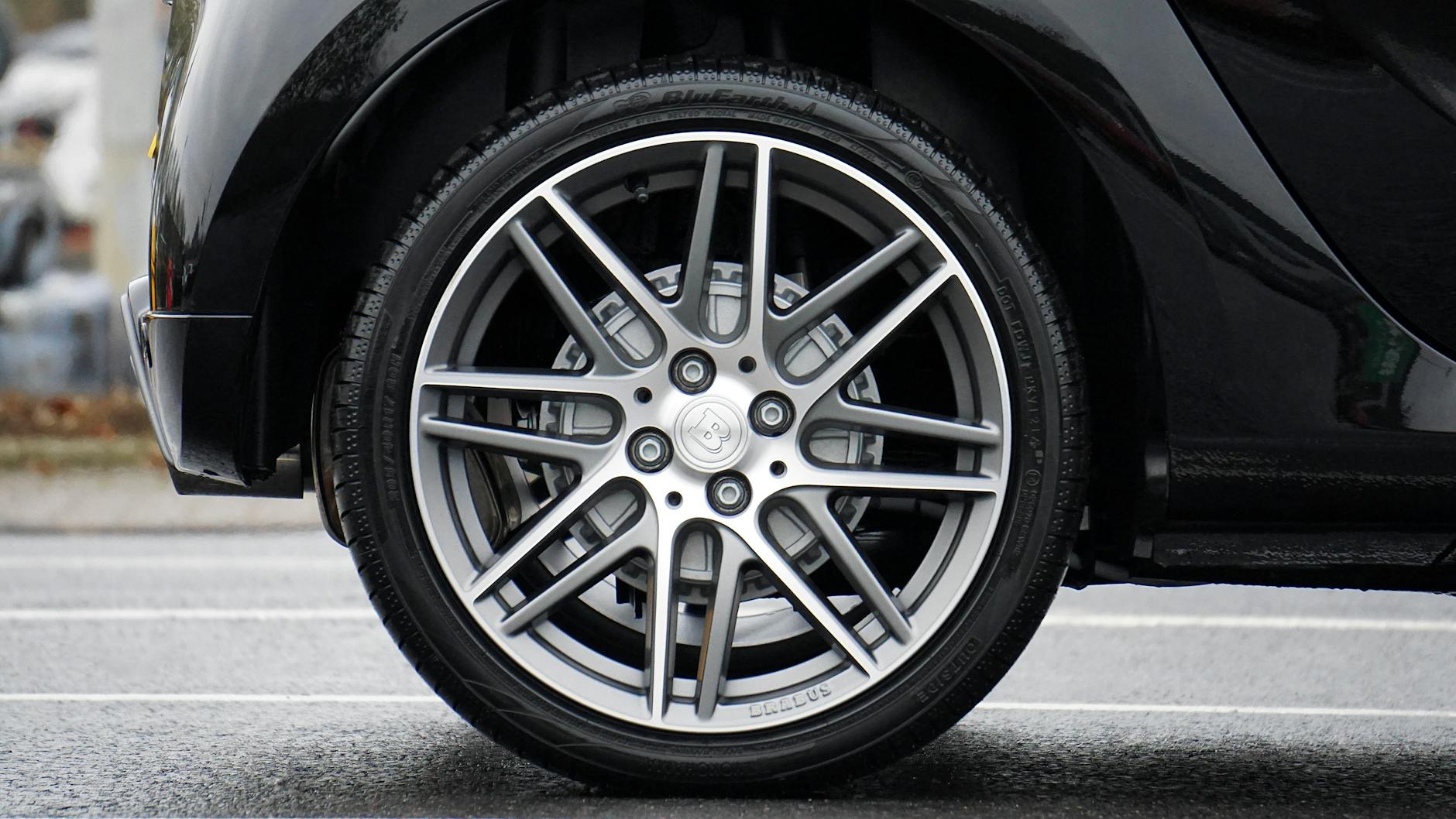
Custom Rims and Tires: How to Build the Right Setup

Most people start the custom rims and tires process backwards. They fall for a wheel design on Instagram, order the tires, then spend three weeks figuring out why the fitment is wrong. The smarter approach is to work from the car outward—understand what your platform actually accepts, then choose a wheel and tire combo that performs the way you want it to.
This guide covers everything in the right order: wheel construction, sizing, offset, tire selection, and how modern made-to-order forged wheels changed what's actually accessible without spending $6,000 on a set of HREs.
Why Construction Matters Before You Pick a Design
You can bolt nearly any wheel onto a car with the right adapter and spacer stack, but that's not the same as a wheel that fits correctly and holds up over time. Construction determines weight, strength, and long-term reliability—and it has a bigger effect on your tire's behavior than most people realize.
Cast vs. Flow Formed vs. Forged
Cast wheels are poured into a mold. They're inexpensive and fine for daily drivers that will never see a track, but they're heavier for a given strength rating and more brittle at the rim lip—bad news if you run low-profile tires on bad roads. A typical cast 18×8.5 in aluminum weighs 22–26 lbs depending on the design.
Flow formed wheels start as a cast blank, then a machine presses and spins the barrel under heat, aligning the grain structure. The barrel ends up significantly stronger, so manufacturers can thin it out without losing integrity. Same 18×8.5 in a decent flow formed construction typically runs 18–21 lbs. Better unsprung weight, more rim flex resistance.
Forged wheels are pressed from a solid billet under thousands of tons of force. The grain structure follows the shape of the wheel continuously, with no voids or porosity. A forged 18×8.5 can weigh as little as 15–17 lbs while meeting or exceeding the load rating of a cast wheel that's 8 lbs heavier. For a performance build—turbocharged F30 335i, a built S550 Mustang GT, even a performance-spec Model 3—that unsprung weight reduction translates to measurably faster steering response and better ride quality through the suspension.
The reason most people don't run forged is cost. Legacy brands like BBS, Vossen Forged, or HRE price their forged lineup at $1,500–$2,500 per wheel retail. Made-to-order programs through OEM forging partners—the same facilities producing wheels for actual automakers—can deliver the same construction at 50–70% less because there's no retail markup chain. Worth understanding before you default to a cast wheel out of budget habit.
For a deeper comparison, forged vs cast wheels: what actually matters covers the structural differences in detail.
Sizing: Get This Wrong and Nothing Else Matters
Wheel sizing involves four numbers that all interact: diameter, width, offset, and bore. Tire sizing adds three more: section width, aspect ratio, and speed/load rating. Most fitment problems come from treating these as independent choices.
Diameter and Width
Diameter is the most visible choice, but width has more real-world consequences. Running a tire on a wheel that's too narrow for it creates a balloon profile—the sidewall billows out, the contact patch rounds off, and the tire handles worse than it would on the right rim. Running too wide risks mounting issues and a stretched appearance that's fine aesthetically on some builds but mechanically problematic on others.
A 225/40R18 tire fits best on a 7.5–8.5" wide rim. A 255/35R19 wants a 9–10" rim. Continental, Michelin, and Bridgestone all publish rim width recommendations in their fitment data—use them as the floor and ceiling, not suggestions.
Diameter upsizing ("plus-sizing") is common: go from a factory 17" to an 18" or 19", keep the overall tire diameter within 2–3% of stock to avoid speedo error and clearance issues. A BMW 330i running 225/50R17 stock can go to 225/45R18 or 225/40R19 and stay within spec. Push to 20" with a low-profile tire and you start sacrificing ride quality on anything that isn't a near-flat surface.
Offset and Backspacing
Offset is the distance in millimeters between the wheel's mounting face and its centerline. High positive offset pushes the wheel inward; low or negative offset pushes it out. Stock offsets on most European platforms run ET35–ET45. Japanese domestics often run ET45–ET55. American muscle tends to be much lower, ET0–ET20 on wide rear setups.
On an F30 3-Series with a 18×8.5 front wheel, the stock offset is around ET36. Going to ET25 on the same width pushes the wheel about 11mm outward—fine for a moderate poke, but check your strut clearance and fender lip before assuming it clears. On the rear of a S550 Mustang GT with a 275/40R19 on a 10" wide rim, you're typically looking at ET24–ET30 to get a flush fitment without spacers.
Hub bore matters too. BMW uses a 72.6mm bore; Mustang uses 70.5mm; Tesla Model 3 uses 64.1mm. A wheel drilled to the wrong bore either won't seat or will require hub centric rings. Custom made-to-order wheels are drilled to your exact spec—no ring required, no vibration from a mismatched bore.
Choosing Tires for Custom Rims
The wheel is the platform; the tire is the performance interface. They need to be specced together.
Performance Category
Ultra-high-performance (UHP) summer tires—Michelin Pilot Sport 4S, Continental ExtremeContact Sport 02, Bridgestone Potenza Sport—are the right choice for most enthusiast builds that see occasional track use or spirited road driving. They grip on dry and wet pavement, last 20,000–30,000 miles in real use, and complement forged wheels well because the reduced unsprung weight lets the suspension work properly.
All-season UHP tires (Michelin Pilot Sport All Season 4, Continental SportContact 7 all-season variant) make sense for daily drivers in climates with real winters, but accept that you're trading 10–15% of peak lateral grip for usability in 35°F rain. If you're in a place with actual snow, a dedicated winter tire on a second set of steel or budget alloy wheels is smarter than any all-season compromise.
Run-flat tires are worth mentioning because they're common on BMWs and some Mercedes platforms. They work, but they ride harshly, cost more, and wear faster. If your custom wheel and tire setup is going on a platform that left the factory with run-flats, you need to make a deliberate choice about whether to continue with them or switch to conventional tires with a portable inflator kit.
Load and Speed Ratings
Never go below the load index specified by your vehicle manufacturer. A Tesla Model 3 Performance has specific load requirements because of the battery weight—a wheel and tire combo that's fine on a lighter car may be underrated here. Check the door placard and cross-reference the load index on any tire you're considering.
Speed rating rarely matters for street use in the US, but don't go below V (149 mph) on any performance build. W and Y rated tires are the standard for UHP applications.
Staggered vs. Square Setups
A staggered setup runs wider tires in the rear than the front—common on rear-wheel-drive platforms like the E46 M3 (225 front, 255 rear) or S550 Mustang GT (255 front, 275 rear). It optimizes traction balance but means you can't rotate tires. Square setups run the same size all around, allow rotation, and work well for front-wheel-drive or all-wheel-drive platforms. Most AWD builds—Audi S4, Golf R, Model 3 Performance—run square.
The Made-to-Order Process: What Actually Happens
Ordering custom rims and tires through a made-to-order program is less complicated than most people expect, but it does require getting your specs right before the order is placed.
The process at ForgedToFit works like this: you either pick an existing design from the catalog or upload a reference image of what you want. You provide your car's make, model, year, and any existing fitment mods (lowering springs, coilovers, fender work). A 3D CAD design is generated and shared for approval before anything goes into production. That approval step is important—it's your chance to catch anything off before the wheel is forged.
Manufacturing uses the same OEM forging partner that supplies actual automakers, which is why the quality is equivalent to what's on a factory Porsche or BMW M car. Lead time is typically 6–8 weeks from order to shipping, which is the main tradeoff versus buying an off-the-shelf cast wheel from a warehouse. Plan the build accordingly.
The 5-year warranty covers manufacturing defects—structural issues, finish failures, bore dimension errors. It doesn't cover curb rash, which is user error, but it does cover the things that actually indicate a quality problem.
For more detail on putting together the full wheel and tire package together, custom wheels and tires: the complete setup guide walks through the pairing process from sizing to installation.
Finish Selection and How It Ages
Finish affects maintenance, durability, and whether the wheel still looks good in three years. The main options:
Powder coat is the most durable finish for daily drivers. Matte black, gloss black, anthracite, and bronze are the most common. Chips are touchable. Scratches are matte-fillable. The finish holds up well in winter climates with road salt if the wheel is properly sealed at application.
Polished or brushed finishes look exceptional on certain builds—a brushed silver on a clean E92 M3 or a polished lip on a concave design is hard to beat visually. They require more maintenance and show brake dust accumulation faster. Polished lips are more sensitive to curb contact.
Two-tone (typically a painted face with a polished or machined lip) is popular right now for good reason—it creates visual depth without requiring full polished maintenance. Works particularly well on deep concave designs.
Don't pick a finish based on current trends alone. Gloss black was dominant for a decade and a lot of those builds look dated now. Anthracite grey and bronze have held up better because they're more neutral against a wider range of paint colors.
For design direction, understanding concave vs flat face wheels explained helps you match the spoke profile to the car's character before you commit to a finish.
What to Budget
A realistic budget for a quality custom rims and tires setup on an enthusiast build:
- Cast aftermarket wheels + UHP tires (18"): $1,200–$1,800 mounted and balanced. Fine for most daily drivers. Limited design options, heavier.
- Flow formed wheels + UHP tires (18–19"): $1,800–$2,800. Better construction, more fitment flexibility.
- Custom forged wheels (made-to-order) + UHP tires (18–20"): $2,500–$4,500 depending on size and tire spec. Legacy brand equivalents would run $5,000–$9,000+ for the same forged construction.
Installation, balancing, and TPMS sensor programming typically add $150–$300 at a shop depending on location.
If budget is the constraint, flow formed on the right fitment with a top-tier tire will outperform cheap cast wheels with mid-range rubber every time. The tire is doing a lot of work—don't cut corners there to fund a heavier wheel.
Platform-Specific Notes
BMW F30/F32/F36 (2012–2020): 5×120 bolt pattern, 72.6mm bore, ET36 stock on most trims. Common enthusiast fitments: 18×8.5 ET35 front, 18×9.5 ET22 rear for a staggered setup. 19" is a sweet spot for performance. 20" works but needs careful suspension setup to avoid harsh ride on run-flat-spec cars.
S550 Mustang GT/EcoBoost (2015–2023): 5×114.3 bolt pattern, 70.5mm bore. Stock GT runs 235/55R17 or 255/40R19 depending on trim. Track-focused builds commonly run 275/40R19 rear on a 10" rim. Plenty of fender clearance for aggressive fitments without pulling.
Tesla Model 3 (2017–present): 5×114.3 bolt pattern, 64.1mm bore. Factory aero covers on 18" steel wheels are purpose-built for range. Custom wheels on a Model 3 will hurt range slightly (less aero efficiency) but the difference is measurable only at highway speeds. Performance variant runs 20×8.5 front and 20×9.5 rear from the factory—the aftermarket follows that lead.
Audi B9 S4/A4 (2017–present): 5×112 bolt pattern, 66.5mm bore, ET37 typical. Running 19×8.5 ET35–37 keeps you inside the fenders cleanly. The platform looks best with a moderate poke on a flush fitment—aggressive negative offset tends to look awkward on the B9 body.
For BMW-specific guidance on forged wheel construction and fitment, custom forged wheels for BMW: the complete guide goes deeper on the popular platforms.
Installation and Break-In
Get a professional mount and balance regardless of how confident you are with tools. Forged aluminum is harder than cast and requires correct torque sequence and spec—BMW is typically 88–100 Nm, Mustang is 150 Nm, Tesla is 129 Nm. Gorilla-tightening or using an impact gun without a torque stick is how you crack a center bore or warp a rotor.
Torque to spec, re-torque after 50 miles. This is standard practice for any new wheel installation. New tires need 100–200 miles to scrub the release agent off the surface before they're at full grip—drive conservatively in wet conditions especially.
TPMS sensors from your old wheels may or may not transfer depending on manufacturer. Many custom wheels are ordered with sensor-ready valve stems; bring your existing sensors to the installer or budget $40–$80 per sensor for replacements.
Frequently asked questions
How do I know what size custom rims and tires fit my car?
Start with your door placard for the factory tire size, then cross-reference your bolt pattern, hub bore, and offset using a fitment database like Wheel-Size.com or your wheel manufacturer. Custom made-to-order wheels are drilled to your exact spec, so bore fit isn't an issue—but you still need to confirm offset and width clear your calipers, struts, and fender lips.
Do custom forged wheels actually perform better than cast wheels?
Yes, in measurable ways. Forged construction reduces unsprung weight by 5–10 lbs per corner on average, which improves steering response, braking distance, and ride compliance because the suspension doesn't have to manage as much rotating mass. The grain structure also resists cracking better than cast aluminum under impact loads—relevant if you run low-profile tires on poor roads.
Can I use winter tires on custom forged rims?
You can, but it's not recommended. Winter tires on expensive forged wheels expose them to road salt, slush, and the kind of road damage that's most common in winter. The better approach is a dedicated winter set—budget steel wheels or entry-level alloys—with proper winter rubber, and keep your custom set for three seasons.
How long does it take to get custom rims made to order?
Typically 6–8 weeks from order confirmation to shipping. The process includes design approval (3D CAD review), forging, machining, finishing, and quality inspection. It's longer than buying off-the-shelf but the lead time is what enables the custom fitment, design, and finish options that shelf stock can't offer.
What's the warranty on custom forged wheels?
ForgedToFit covers custom forged wheels with a 5-year warranty against manufacturing defects—structural failures, bore dimension errors, finish delamination. It doesn't cover cosmetic damage from curb strikes or road debris, which is considered normal use damage. Keep your installation torque record and inspection photos as documentation.
Is it better to buy wheels and tires as a package or separately?
Separately, if you're being deliberate about the build. Bundled packages from retailers are often priced conveniently but pair mid-grade tires with whatever margin is highest. Choosing your tire independently lets you match performance category, load rating, and sidewall profile precisely to how you use the car. The cost difference for buying separately is usually small compared to the performance benefit of a well-matched tire.