Custom Wheels: Everything You Need to Know

Buying custom wheels is one of the highest-impact modifications you can make to a car — and one of the most confusing. The market is full of replicas passed off as forged, "custom" options that are really just painted catalog sizes, and pricing that has nothing to do with manufacturing cost. This guide cuts through that. You'll walk away knowing exactly what custom wheels are, how they're made, what they cost and why, and how to spec a set that actually fits your car correctly.
What "Custom Wheels" Actually Means
The term gets used loosely. A lot of wheel companies call their catalog sizes "custom" because you pick a color. That's not custom. True custom wheels are manufactured to your specific measurements — bolt pattern, offset, bore, width, and diameter — rather than pulled from pre-made stock that may or may not fit your car without spacers or adaptors.
Real custom production means the wheel starts as a billet or ingot of aluminum alloy and gets shaped specifically for your order. The spoke geometry, the lip depth, the back-spacing — all of it is engineered around your platform and your fitment goals before a single piece of metal is touched. That distinction matters enormously for both safety and aesthetics.
Forged vs. Flow Formed vs. Cast
The manufacturing method determines weight, strength, and ultimately price. Cast wheels are poured into a mold — fast, cheap, and the most common. They're heavier and more porous, which limits how thin you can make the spokes before structural integrity suffers. Most OEM wheels and affordable aftermarket options are cast.
Flow formed wheels start with a cast center but then a machine spins and stretches the barrel under heat and pressure. This aligns the grain structure of the aluminum and makes the barrel section significantly stronger and lighter than a purely cast barrel. It's a meaningful upgrade for the price difference. For a deeper look at how these two methods compare in real-world use, Flow Formed vs Forged Wheels: Which Is Right for You? covers the technical breakdown thoroughly.
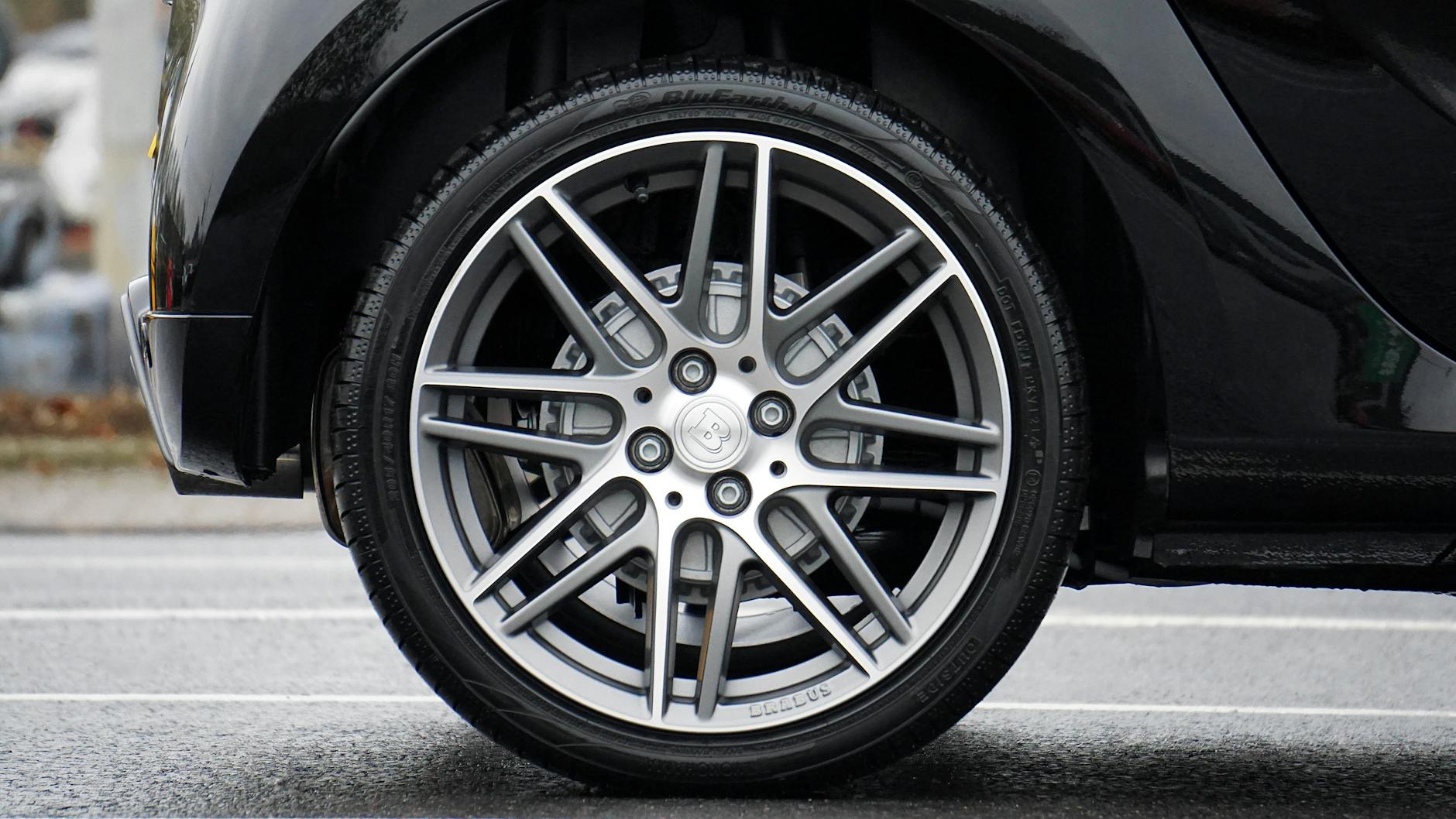
Forged wheels are pressed from a solid billet under thousands of tons of force. The grain structure runs continuously through the entire wheel, which is why a forged wheel can be substantially lighter than a cast wheel of the same diameter while being stronger. A forged 19x9.5 for an F30 335i might weigh 20–22 lbs. A cast equivalent often comes in at 26–28 lbs. That 5–6 lb difference per corner is meaningful unsprung weight — it affects ride quality, steering response, and acceleration.
One thing worth understanding about forging is that not all forged wheels are forged identically. Some manufacturers use a closed-die forging process, where the billet is pressed into a near-net-shape die, producing a wheel blank that's very close to the final form and requires minimal post-machining. Others use open-die or simpler pressing operations that produce a rougher forging requiring significantly more CNC work to reach final shape. Closed-die forging with tight tolerances produces better grain flow through complex spoke geometries. When a manufacturer says "forged" without specifying the process, that's worth asking about.
Fitment: The Part Most People Get Wrong
A wheel that looks great in a photo can ruin your car if it's specced incorrectly. Fitment has four main variables, and they all interact with each other.
Diameter and width. These are the obvious ones — 18, 19, 20 inches, and how wide the wheel is. Width affects tire options and how much the tire sticks out (or tucks). A 10.5-inch-wide wheel on a Mustang GT S550 with a 255 tire will stretch. The same wheel with a 305 will sit correctly. Neither is wrong, but they're different looks with different handling trade-offs.
Offset. This is the distance from the wheel's centerline to its mounting face, measured in millimeters. A high positive offset pushes the wheel inboard; a low or negative offset pushes it outboard. The stock offset on a Mk7 Golf R is around ET49 — fairly high. Drop that to ET30 on a wider wheel and you get a flush fitment. Go too far negative and you get rubbing or scrubbing under compression.
It's also worth understanding what offset changes do to scrub radius — the distance between the tire's contact patch centerline and the steering axis at the ground. Changing offset significantly from stock alters scrub radius, which affects steering feel and can increase stress on wheel bearings over time. This doesn't mean you shouldn't run an aggressive offset; it means you should be deliberate about how far you deviate from OEM and factor in wheel bearing replacement as part of the long-term cost on a heavily modified fitment.
Bolt pattern. Non-negotiable. A 5x112 bolt pattern on a Mercedes C63 is not interchangeable with the 5x114.3 on a Mustang without adaptors — which add weight, introduce a new failure point, and void most wheel warranties. Custom wheels are made to your exact bolt pattern.
Center bore. The hub-centric bore on a BMW 5-Series is 72.6mm. On a Subaru WRX it's 56.1mm. A wheel bored to 72.6 will not sit hub-centric on the WRX — it'll be lug-centric at best, which causes vibration. Custom manufacturing bores the wheel exactly to your car's spec.
This is why custom wheels justify their existence even for someone who doesn't care about unique designs. The fitment is simply better than trying to make a catalog wheel work.
Measuring Your Current Fitment Before You Order
If you're on stock suspension with stock wheels, your car's service manual and the door jamb sticker will give you most of what you need. But if you've already modified the car — coilovers, camber arms, fender rolling — you need to measure actual clearances rather than trust published specs.
The method that works: load the car to its normal ride height (driver in seat, usual cargo), measure the gap between the current tire sidewall and the nearest fender or suspension component at full lock in both directions, and again at full compression (have a helper push down on the corner). That tells you your real margin. For a custom wheel with different offset and width, you calculate how much the contact patch moves outboard relative to stock and subtract from your measured clearance. Leave at least 8–10mm of buffer for compression and flex. Getting this wrong — and relying on "it fits at static ride height" — is how people end up with torn fenders on a speed bump.
Design Options: What You Can Actually Specify
Custom wheel orders typically let you control more than people expect. The broad categories:
Spoke style. Multi-spoke, split spoke, mesh, monoblock, stepped lip — these are structural and aesthetic decisions simultaneously. Fewer spokes tend to look cleaner and can be lighter, but a well-designed multi-spoke can be equally light with better rigidity in specific loading directions. Concave vs Flat Face Wheels Explained goes into the depth vs. face geometry question specifically, which matters a lot once you start thinking about how a wheel will look in the wheel well.
Finish. Polished lip with a brushed face, full gloss black, satin bronze, raw machined — these are powder coat or paint decisions mostly, but some finishes require specific machining steps. A diamond-cut finish is literally machined after painting, which creates that two-tone effect. It looks sharp but is more vulnerable to curb damage since re-machining isn't DIY-friendly.
Sizing. This is where custom really earns its name. Need 19x8.5 ET45 5x112 CB66.5 for a Mercedes A45 AMG? That exact spec. Need staggered fitment — 19x9 front, 19x10.5 rear — for a Porsche 911 Carrera? That too. No spacers, no adapters, no compromises.
Uploading your own design. Some manufacturers, including ForgedToFit, allow customers to submit their own spoke designs or artwork. The engineering team translates that into a structurally viable CAD model that still meets load ratings, then manufactures from that drawing. It's how you get a wheel that genuinely exists nowhere else.
Valve stem position. A detail most people don't think about until they're mounting tires — custom wheels can specify the valve stem location to avoid interference with brake calipers, especially on cars with large front calipers like a Brembo 6-piston setup. Worth discussing with your manufacturer if you're running big brakes.
How Custom Wheels Are Priced
Legacy wheel brands — BBS, HRE, Vossen, ADV.1 — charge a significant premium for custom or semi-custom work. Sets routinely run $5,000–$15,000+, and a meaningful portion of that is brand equity. The manufacturing is often excellent, but you're paying for the logo as much as the wheel.
The alternative is working directly with an OEM forging partner. ForgedToFit uses a 15-year relationship with an OEM forging facility — the same kind of facility that supplies wheels to car manufacturers — and sells direct to the customer without the retail chain markup. The result is custom forged and flow formed wheels at 50–70% less than comparable branded options. A set of forged 19s that would cost $6,000 from a legacy brand typically runs $1,800–$2,800 through a direct model.
That pricing gap is not about quality. It's about margin structure. When a wheel goes from forge → distributor → dealer → customer, every step adds markup. When it goes from forge → customer, that margin stays in your pocket.
What a Custom Order Process Actually Looks Like
A serious custom wheel process should follow a specific sequence. At ForgedToFit, it works like this:
- You choose a design from the catalog or upload your own concept.
- You provide your car's fitment specs — make, model, year, any suspension modifications.
- We quote the project with exact pricing, no surprises.
- Engineering creates a 3D CAD render so you can approve the design before anything is made.
- Manufacturing begins once you approve. Typical lead time is 6–10 weeks depending on complexity.
- Wheels ship direct, with a 5-year structural warranty.
The CAD approval step is critical. It's the point where you can catch anything you don't like — spoke width, face depth, lip height — before metal is committed. Skipping that step and going straight to production is how mistakes happen.
A few practical notes on the process: the fitment information you provide at step two needs to be accurate, not approximate. "I think it's ET35" isn't good enough. Pull the spec from your current wheel (it's stamped into the barrel on most OEM and aftermarket wheels) or measure it directly. Similarly, if you're running aftermarket coilovers, note the brand and ride height adjustment relative to stock — this affects how close the tire sits to the fender and can change which offsets are actually viable.
Platform-Specific Considerations
Different cars have quirks that matter when ordering custom wheels. A few examples:
BMW F30 335i. The rear uses a 72.6mm center bore and 5x120 bolt pattern. The staggered OEM fitment is 225/40-18 front, 255/35-18 rear, but most F30 owners running coilovers go 18x8.5 or 19x8.5 up front and 19x9.5 or 10 in the rear. Offset typically lands between ET30–ET40 for a flush look without rubbing. The front suspension on the F30 uses a strut design where the strut tower limits how far inboard the wheel can go — if you go too high on offset, the inner barrel clips the strut on compression. For BMW-specific fitment guidance and design recommendations across multiple platforms, Custom Forged Wheels for BMW: The Complete Guide is worth reading before you order.
Ford Mustang GT (S550, 2015–2023). This car has massive wheel wells and can handle significant width — 10.5 or even 11 inches in the rear with the right tire. 5x114.3 bolt pattern, 70.5mm center bore. Stock offset is around ET30–ET34. Aggressive fitment often goes down to ET20–ET25 in the rear on wide bodies. One quirk specific to the S550: the Brembo brake package uses calipers that are large enough to create clearance issues with certain spoke designs at smaller diameters. If you're running the Brembo option, confirm brake clearance with 18-inch wheels before ordering — 19s are typically safe.
Tesla Model 3. The 5x114.3 bolt pattern is shared with a huge number of vehicles, but Teslas have a unique consideration: TPMS sensors. The factory sensors are internal and the wheel must clear them. Also, Tesla uses aero wheels partly for efficiency, so if you're putting wider, heavier wheels on a Model 3, expect some range impact — typically 5–15% depending on how dramatically different the spec is from stock. A set of forged wheels that's 4–5 lbs lighter per corner than a cast aftermarket option partially offsets that efficiency loss. The Model 3's rear suspension is a multilink design with relatively good wheel clearance, but the front struts are tight — stick to ET40 or higher in the front unless you've verified otherwise.
Subaru WRX/STI (VA, 2015–2021). The STI came with a 5x114.3 pattern and a 56.1mm bore. One common mistake is ordering wheels bored for BMWs (72.6mm) and using plastic hub-centric rings — these work but can crack under sustained track use. A wheel bored correctly to 56.1mm is the right answer. The VA STI's Brembo brakes are large in front; 18-inch wheels require a minimum spoke-to-caliper clearance check, especially on designs with wider spokes near the center.
Finish Durability and Maintenance
A custom wheel is an investment. How you maintain the finish determines how long it looks right.
Powder coat is the most durable option. Properly applied powder coat can last 10+ years without significant fading or chipping under normal use. Its weakness is impact damage — a hard curb strike can chip the coating and expose bare aluminum underneath. Touch-up paint in the matching color helps, but it's never invisible.
Painted finishes (non-powder) look better initially in some cases — deeper gloss, more complex color effects — but require more care. Avoid alkaline wheel cleaners. Stick to pH-neutral cleaners and seal regularly with a ceramic coating or dedicated wheel sealant.
Brushed and machined finishes will oxidize if not protected. A light application of metal sealant every 6 months keeps them looking right. Never use abrasive compounds on a brushed finish — you'll change the direction of the brush pattern and it'll be obvious.
One practical note: if you order a finish you've never seen in person, ask for a finish sample chip before committing to a full production run. Colors look different on a screen than on aluminum, and satin bronze on a monitor can look like anything from champagne to dark gold depending on your display calibration. A physical sample chip eliminates the guesswork.
Winter use deserves a specific mention. If you live somewhere that uses road salt, running your custom wheels through winter will dramatically accelerate finish degradation — and road salt combined with brake dust is particularly corrosive on machined and polished faces. The practical answer for most enthusiasts in those climates is a dedicated set of steel or inexpensive cast aluminum winter wheels, reserving the custom set for spring through fall. That's not a compromise on the custom wheel — it's correct asset management.
Load Rating and Safety
This is the non-negotiable part of custom wheel manufacturing. Every wheel needs a load rating that exceeds the corner weight of your vehicle. A 3,500 lb car with a roughly even weight distribution puts about 875 lbs per corner at rest — add dynamic loads from cornering and braking and you need significant margin.
Reputable manufacturers test to JWL (Japan Wheel and Tyre Association) and VIA standards, which include rotary bending fatigue tests and radial load tests. ForgedToFit wheels meet these standards. If a custom wheel manufacturer can't tell you what testing standard their wheels meet, that's a problem.
Also: don't over-reduce weight by going too aggressive on spoke thinning for a street car that sees track use. A wheel optimized for minimum weight on a show car and a wheel optimized for track abuse have different design briefs. A track-driven car sees sustained high-speed cornering loads, repeated thermal cycles from brake heat conducted through the wheel, and the occasional curb strike or rumble strip impact. All of those demand more structural margin than a car that lives on the street. Be honest about use case when you order — a good manufacturer will ask, and the answer should influence spoke geometry, material spec, and wall thickness in the barrel.
If your car is heavily modified — forced induction, power figures well above stock, track days — mention it during the order process. A 600whp S550 Mustang imposes meaningfully different dynamic loads than a stock car of the same weight, and the wheel spec should reflect that.
Frequently asked questions
How long does it take to get custom wheels made?
Typical lead time for custom forged or flow formed wheels is 6–10 weeks from design approval. Complex designs or exotic finishes may take slightly longer. Production doesn't begin until you've approved the 3D CAD render, so factor in review time on your end as well.
Are custom wheels safe for daily driving and track use?
Yes, provided they're manufactured by a facility that meets JWL or VIA load rating standards and are specced correctly for your vehicle's corner weight. Custom forged wheels are often safer than cheap cast aftermarket options because the forging process produces a denser, stronger grain structure in the aluminum.
Can I use my custom wheels with winter tires?
Absolutely. Many customers order a dedicated winter wheel set with the same fitment specs as their summer set — same bolt pattern and center bore, often a smaller diameter (e.g., 17 or 18 inches instead of 20) to allow a taller tire sidewall for better cold-weather protection. Just make sure the finish is rated for road salt exposure; powder coat holds up better than raw machined finishes in winter conditions.
What information do I need to provide when ordering custom wheels?
You need your vehicle's year, make, and model; bolt pattern; center bore diameter; your target diameter and width; and your desired offset range. If you've lowered the car or run different tire sizes than stock, include that information too. The more accurate your specs, the better the fitment.
How much cheaper are custom wheels from a direct manufacturer compared to legacy brands?
Significantly. A set of forged 19-inch wheels from a legacy brand like HRE or BBS typically runs $5,000–$12,000. The same quality of forged construction through a direct-to-consumer model like ForgedToFit runs $1,800–$3,500 for most applications — 50–70% less for comparable metallurgy and process, without the retail chain markup.
Can I submit my own wheel design, or do I have to choose from existing styles?
Both options are available. You can choose from an existing catalog of spoke designs, or upload your own concept — sketch, rendering, or reference images. The engineering team translates your design into a structurally viable 3D CAD model that meets load ratings, then presents it for your approval before production begins.