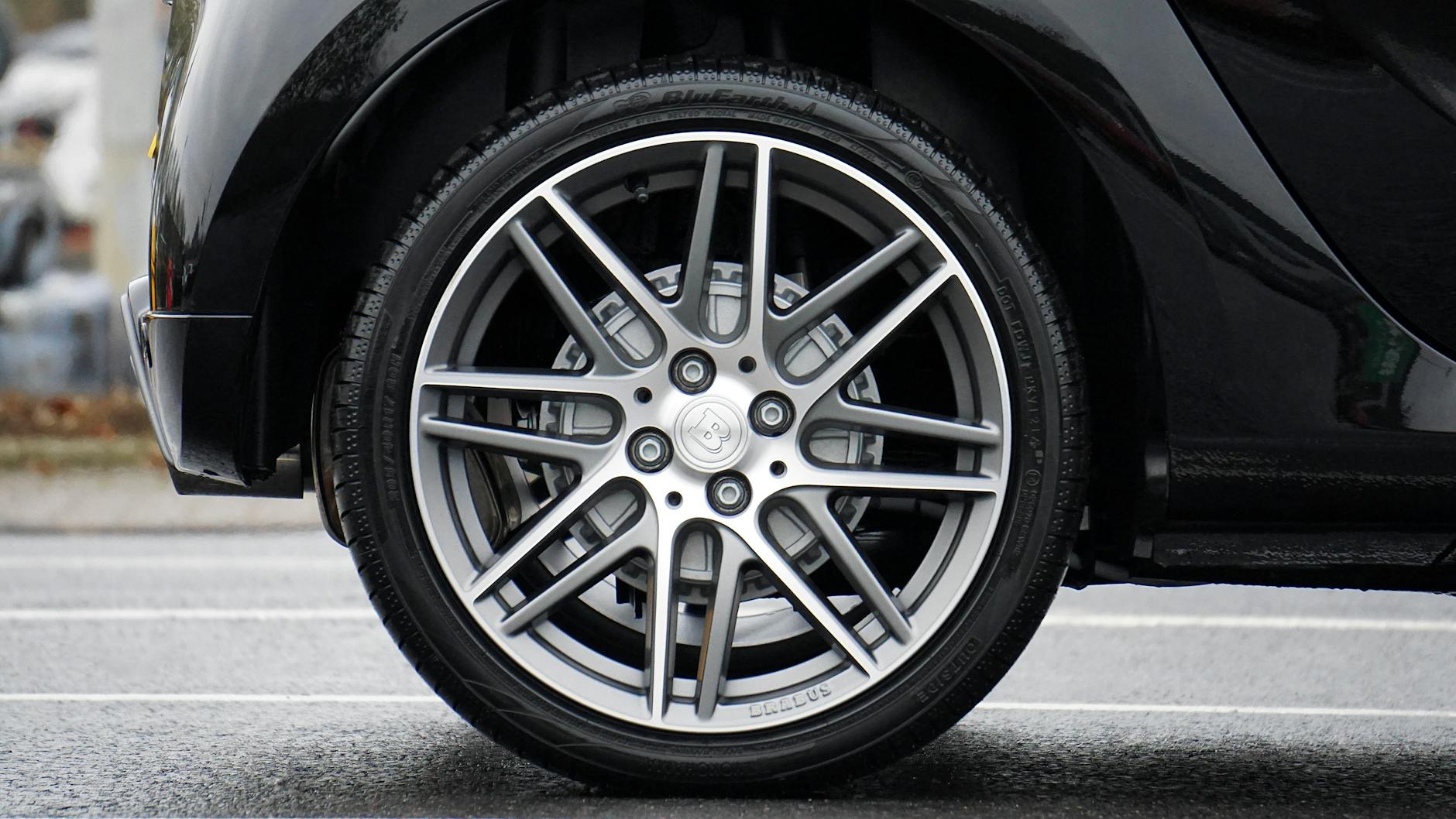
Forged Wheels: What They Are and Why They Matter

If you've spent any time shopping for aftermarket wheels, you've seen "forged" used as a selling point on everything from $300 budget sets to $6,000 bespoke one-pieces. Not all of it is honest marketing. Understanding what forged wheels actually are — how they're made, why the process matters, and what you should actually pay — cuts through a lot of noise and saves you from spending money in the wrong place.
What Makes a Wheel "Forged"?
Forging is a manufacturing process where a solid aluminum billet is compressed under extreme pressure — typically between 5,000 and 10,000 tons — inside a die. The metal doesn't melt. It deforms. That distinction is everything.
When aluminum is cast, you pour molten metal into a mold and let it cool. The grain structure of the metal ends up random, with micro-porosity (tiny air pockets) distributed throughout. It works fine for a lot of applications, but it means you need more material to hit a given strength target, which means more weight.
Forging aligns the grain structure of the aluminum along the shape of the part. The result is a wheel that's significantly denser and stronger per unit of weight. A well-executed forged wheel in a common size — say, 19x8.5 for an F30 335i — will typically come in 3 to 5 lbs lighter than a comparable cast wheel, sometimes more. On four corners, that's 12–20 lbs of unsprung, rotating mass gone. You feel that in steering response, in how quickly the car changes direction, and marginally in fuel economy.
The physics behind why unsprung weight matters more than sprung weight is worth understanding. Sprung mass — the body, drivetrain, passengers — sits on top of the suspension. When a wheel hits a bump, the suspension has to manage the inertia of the unsprung components (wheel, tire, brake rotor, hub) to keep the tire in contact with the road. Heavier unsprung mass means the suspension has to work harder to track the road surface, which translates directly to reduced grip and less precise steering feedback. Reducing unsprung weight by even 4–5 lbs per corner has measurable effects on suspension compliance that heavier components can't match regardless of spring rate tuning.
There's also fatigue resistance. Forged aluminum handles cyclic stress — the repeated flexing that happens every time a wheel rolls over a bump or a curb — far better than cast. That's why motorsport applications almost universally use forged construction, and it's why OEM performance cars like the Porsche GT3 or BMW M cars spec forged wheels from the factory.
The Different Types of Forged Wheels
One-Piece Forged
The entire wheel — barrel, spokes, and hub flange — is forged from a single billet. This is the most structurally pure approach. There are no joints, no welds, no assembly. One-piece forged wheels are the lightest and strongest option per design, but they're also the most material-intensive to machine, which historically made them expensive.
Because the entire structure shares a continuous grain flow, one-piece forged wheels have no inherent weak points at transitions between the barrel and spoke roots — the area that sees the highest stress concentration during lateral loading. For track use or high-power applications where you're regularly pushing the suspension to its limits, this matters more than it does for street driving.
Two-Piece and Three-Piece Forged
These split the wheel into a forged center (the face/spokes) and a spun or rolled barrel, joined by hardware or welding. The advantage is fitment flexibility — you can mix different barrel widths and offsets with the same center, which is why three-piece wheels became popular for widebody builds and custom offsets. A shop doing a full widebody conversion on a Lamborghini Huracán, for example, might spec a three-piece wheel with a +15mm wider outer barrel on the rear to fill the aggressive arch without commissioning an entirely new center design.
The weight penalty versus a one-piece depends on execution, but generally two- and three-piece wheels run heavier at the joint area. Hardware, weld material, and the structural reinforcement needed around fastener holes all add grams that the one-piece avoids entirely. High-end three-piece builds from brands like HRE or Forgeline minimize this through tight machining tolerances and careful hardware selection, but it's a fundamental constraint of the multi-piece architecture.
Flow Formed (and Why It's Different)
Flow forming starts with a low-pressure cast blank, then uses rollers under heat to stretch and compress the barrel, partially aligning the grain structure. It's a legitimate process that produces wheels meaningfully stronger and lighter than standard casting — but it's not the same as forging. The spoke area, where loads are highest, remains cast. The barrel benefits from improved grain alignment, which is why flow-formed wheels perform well for street driving and light track use, but the critical spoke-to-barrel transition doesn't share the same structural integrity as a fully forged piece.
For a deep dive on where each process makes sense, see our guide on flow formed vs forged wheels.
Why Forged Wheels Have Been So Expensive
Historically, getting forged wheels meant dealing with a short list of European and Japanese brands — HRE, BBS, Vossen's forged line, Rays — with pricing that started around $2,500 per wheel and climbed from there. A set of HRE P101s for a Mustang GT could easily run $8,000–$12,000 before tires and mounting.
That pricing reflects real costs: CNC machining from billet is time-intensive, the tolerances are tight, and legacy brands carry significant brand infrastructure. But a meaningful portion of the price is also brand positioning. The same forging facilities that supply Tier 1 OEM wheels for BMW, Mercedes, and Porsche have been capable of producing equivalent-quality consumer wheels for years — they just weren't selling direct.
Consider what the traditional distribution chain looks like: the forging facility sells to a wheel brand at manufacturing cost plus margin, the brand adds their development, warranty, and marketing overhead, then sells to a distributor at wholesale, who marks up to a retailer, who marks up again to you. By the time a wheel reaches the consumer, three or four intermediary margins have stacked on top of the actual cost of making it. That's not unique to wheels — it's how most manufactured goods work — but it's particularly pronounced in a market where brand prestige commands significant premium independent of product quality.
The model that's changed is the direct-to-consumer forged wheel: working with the same OEM-grade forging partners, skipping the wholesale distributor and retail markup chain, and building to order rather than carrying inventory. The result is one-piece forged wheels at 50–70% less than legacy brands, with fitment options legacy brands won't touch because the volumes aren't there.
What to Actually Look For in a Forged Wheel
Material Grade
The vast majority of quality forged wheels use 6061-T6 aluminum. The T6 designation is the temper — it means the aluminum has been solution heat-treated and artificially aged to maximize strength. The solution heat treatment dissolves alloying elements into a supersaturated solid solution; the artificial aging then causes controlled precipitation of strengthening compounds within the grain structure. The result is a tensile strength around 45,000 PSI and yield strength around 40,000 PSI — roughly double what you get from standard cast 356 aluminum alloy in the as-cast condition.
Some manufacturers use 6082 or 7075; 7075 is stronger but harder to form and typically used in aerospace or ultra-high-performance applications where cost isn't a constraint. For most street and track use, 6061-T6 is the right answer.
Be skeptical of any wheel advertised as "forged" that doesn't specify the alloy grade and temper. It's either cast or it's a marketing exaggeration.
Weight, Not Just Process
A forged wheel that hasn't been aggressively machined can still come in heavy. Ask for actual wheel weights before ordering. For reference: a properly designed 19x8.5 one-piece forged wheel should weigh in the range of 18–21 lbs depending on design. A 20x10 in the same construction should be 22–26 lbs. Numbers meaningfully higher than that suggest the design wasn't optimized, regardless of how it was made.
Some manufacturers publish spec-sheet weights based on the lightest possible finish spec — unpainted, with minimum material. Always ask for the weight as it will be delivered to you, including finish and hardware.
Load Rating
Every reputable forged wheel comes with a JWL or JWL-T load rating, which reflects the wheel's tested capacity in kg. Match this to your car's corner weight, not just curb weight — front-heavy platforms like the F30 or a V8 Mustang put more load on the front axle than you'd expect from the total number. The JWL standard (Japanese Light Alloy Wheel standard) requires dynamic cornering fatigue, radial fatigue, and impact testing. JWL-T is the higher-load variant used for trucks and heavier SUVs. A reputable manufacturer will provide test documentation on request.
Offset and Fitment Precision
This is where forged-to-order matters most. A cast wheel comes in set offsets — ET35, ET40, whatever the manufacturer decided. A forged wheel built for your specific platform can be dialed to the exact offset and center bore you need. For a Model 3 on a 19" fitment, that means a 5x114.3 bore at 66.1mm, with offset chosen based on whether you're running flush, tucked, or with a slight poke. For BMW fitments — say a 20x9 ET30 front and 20x10.5 ET20 rear on an F8x M3/M4 — the precision of the bore and offset matters because BMW's hubs are less forgiving of sloppy tolerances than most.
For platform-specific BMW fitment guidance, the custom forged wheels for BMW guide covers offset stagger, hub bore, and design selection in detail.
Design: Where Performance and Aesthetics Intersect
The spoke design of a forged wheel isn't just aesthetic — it directly affects stiffness, weight distribution, and how the wheel responds to lateral loading. Fewer, thicker spokes (5-spoke and 6-spoke designs) tend to be stiffer under braking and cornering. More spokes at thinner cross-section can save weight if the engineering is right, but they also reduce the open area of the wheel face, which affects brake cooling on performance applications.
A 5-spoke design with wide, tapered spokes distributes lateral cornering loads efficiently because each spoke carries a larger share of the load in direct tension or compression rather than bending. Multi-spoke designs (10-spoke, 12-spoke, Y-spoke) can distribute load more evenly when the geometry is right, but they're harder to machine to the same material efficiency. The sweet spot for most performance street and track applications remains the 5- to 8-spoke range, which is why you see it so consistently on OEM performance cars.
Concave profiles — where the spoke face curves inward toward the hub — became popular partly because they look aggressive and partly because they allow designers to push spoke mass outboard while keeping the hub mounting surface deep in the barrel. If you're deciding between a deep concave and a flat or stepped face for your application, the breakdown in concave vs flat face wheels explained is worth reading before you finalize a design.
At ForgedToFit, customers either select from proven designs or upload their own concept — we generate a 3D CAD render before anything goes to production. That step matters because what looks proportional in a stock photo doesn't always translate to your specific fitment. A 9" wide wheel with a high-dish concave that works perfectly on a widebody Supra can look completely wrong on a narrower fender with a restrictive arch.
Forged vs Cast: The Short Version
If you want the full technical breakdown, the forged vs cast wheels comparison covers it comprehensively. But the practical summary:
- Street driver who wants to look good: A quality flow-formed wheel is a defensible choice. The weight and strength difference over cast is real; the difference between flow-formed and forged is smaller and matters more at the performance extreme.
- Track use, autocross, or any application where you're pushing tire and suspension limits: Forged. The fatigue resistance and weight savings have direct, measurable effects on lap times and long-term reliability.
- Anyone doing custom offsets or non-standard fitments: Forged-to-order is the only practical path. Cast wheels come in limited fitments; forged wheels built to spec can hit any offset and bore combination you need.
What the Manufacturing Process Actually Looks Like
Our forging partner has been supplying OEM wheels to European and Asian automakers for over 15 years. The process for a custom forged order runs roughly like this:
- Billet aluminum is cut to weight spec and heated to forging temperature (below melting point — aluminum forges around 400–500°C)
- The billet is pressed in a multi-stage die under high tonnage, forming the rough wheel shape
- The forged blank is heat-treated to T6 temper
- CNC machining removes material to achieve the final spoke shape, weight target, and surface finish
- The wheel goes through inspection — dimensional check, X-ray for internal defects, load testing
- Finishing (paint, powder coat, brushed, or polished) is applied per spec
- Final QC and shipping
The CNC machining step deserves more attention than it typically gets. A forged blank comes out of the die in a near-net shape, but achieving the final spoke geometry — with taper, undercuts, and weight-saving pockets that can't be formed under pressure — requires multi-axis CNC work that can take several hours per wheel. It's this step that separates a well-designed forged wheel from one that's technically forged but hasn't had material removed intelligently. The machining program itself is a significant engineering asset; good ones are refined over dozens of design iterations.
The turnaround from approved CAD to shipping is typically 6–8 weeks. That's not as fast as pulling a cast wheel off a shelf, but it's the cost of getting something actually made for your car rather than adapted from a catalog fitment.
Warranty and Real-World Durability
A 5-year warranty on a forged wheel is meaningful because forged aluminum, properly heat-treated and machined, doesn't develop stress cracks from normal use the way cast wheels can. The failure modes for forged wheels are almost entirely impact-related — a hard pothole hit or curb strike — rather than fatigue failure. Cast wheels can develop cracks over time just from cyclic loading, particularly around lug holes and spoke roots.
If you crack a forged wheel from a pothole, it will likely crack cleanly rather than shatter, which is a safety advantage — you'll know immediately something is wrong rather than having the wheel fail progressively. Cast wheels, particularly lower-grade gravity-cast designs, can fail more catastrophically under sudden impact because the random grain structure doesn't resist crack propagation the way aligned forged grain does. That's another reason track and motorsport applications treat forged construction as non-negotiable.
Getting the Most From Custom Forged Wheels
A few practical notes before ordering:
Get a professional alignment after install. Custom offsets change the scrub radius and moment arm at the hub, which affects how your car steers. Even a well-engineered fitment needs alignment confirmation. If you've gone meaningfully wider or changed offset by more than 10mm from stock, consider having a four-wheel alignment done with the new wheels installed before driving hard.
Pair with appropriate tires. A set of 20-lb forged wheels paired with heavy all-season tires loses most of the unsprung weight benefit. The system matters — a forged wheel with a quality performance tire is a meaningfully different experience than the same wheel with budget rubber. If you're buying forged wheels for performance reasons, budget for at least a mid-tier summer performance tire at the same time. The combination of reduced unsprung weight and a stiffer, lower-profile tire sidewall transforms steering feel in a way either change alone won't.
Specify your brake clearance. If you're running a big brake kit (BBK), specify caliper make and model when ordering. Spoke geometry and inside barrel clearance have to be designed around your largest caliper. AP Racing, Brembo, and StopTech all have different caliper envelopes, and a spoke that clears a factory Brembo M-Performance caliper on an M3 may not clear an AP Racing CP9660 on the same car. This is one of the key advantages of forged-to-order — a cast wheel catalog can't accommodate this variability.
Don't skip the finish conversation. Powder coat is more durable for daily use. Polished or brushed finishes look better but require more maintenance and are more vulnerable to salt and brake dust. If you're in a winter climate, powder coat or a two-tone with powder-coated faces is the practical call. For a car that sees track days and street driving in fair weather only, a brushed or machined lip with a darker face is a reasonable choice — the maintenance burden is manageable and the aesthetic payoff is significant.
Frequently asked questions
How much lighter are forged wheels compared to cast?
Typically 3–5 lbs per wheel in equivalent sizes, sometimes more depending on design optimization. On a common fitment like 19x8.5, a well-machined forged wheel lands around 18–21 lbs versus 23–27 lbs for a comparable cast wheel. Multiply that across four corners and you're removing 12–20 lbs of unsprung rotating mass from the car.
Are custom forged wheels worth it for a daily driver?
It depends on what you're paying. At legacy brand pricing ($2,500+ per wheel), the value case for a daily driver is hard to make. At direct-to-consumer pricing — 50–70% less — forged wheels become competitive with quality cast alternatives and give you better durability, custom fitment, and real weight savings. For anything beyond pure commuting use, the case gets stronger.
How long does it take to get custom forged wheels made?
From approved CAD design to shipping, typically 6–8 weeks. The process includes forging, heat treatment, CNC machining, finishing, and QC. It's longer than buying off-the-shelf, but you're getting a wheel made to your exact fitment spec rather than a catalog item that's close enough.
What aluminum grade should forged wheels be made from?
6061-T6 is the standard for quality forged wheels and the right choice for virtually all street and track applications. The T6 temper (solution heat-treated and artificially aged) is as important as the alloy grade — 6061 without proper temper is significantly weaker. Any reputable manufacturer will specify both the alloy and the temper. If a wheel is just listed as "forged aluminum" with no alloy call-out, ask before buying.
Can I get forged wheels in a non-standard offset for my specific fitment?
Yes — that's one of the primary advantages of forged-to-order over catalog cast wheels. Cast wheels come in fixed offsets; forged wheels built to order can be machined to any offset and center bore combination. This is particularly valuable for cars with non-standard hub bores (like BMW's 72.6mm or Tesla's 64.1mm) or builds running custom suspension geometry that requires unconventional offsets.
Do forged wheels require special maintenance compared to cast?
Not particularly. The finish type matters more than the construction — powder-coated forged wheels are low maintenance, while polished or brushed finishes need regular cleaning to prevent oxidation and brake dust etching. Structurally, forged wheels don't need anything cast wheels don't. The one thing worth doing with any quality wheel: check lug torque after the first 50–100 miles on a new install, and periodically thereafter.