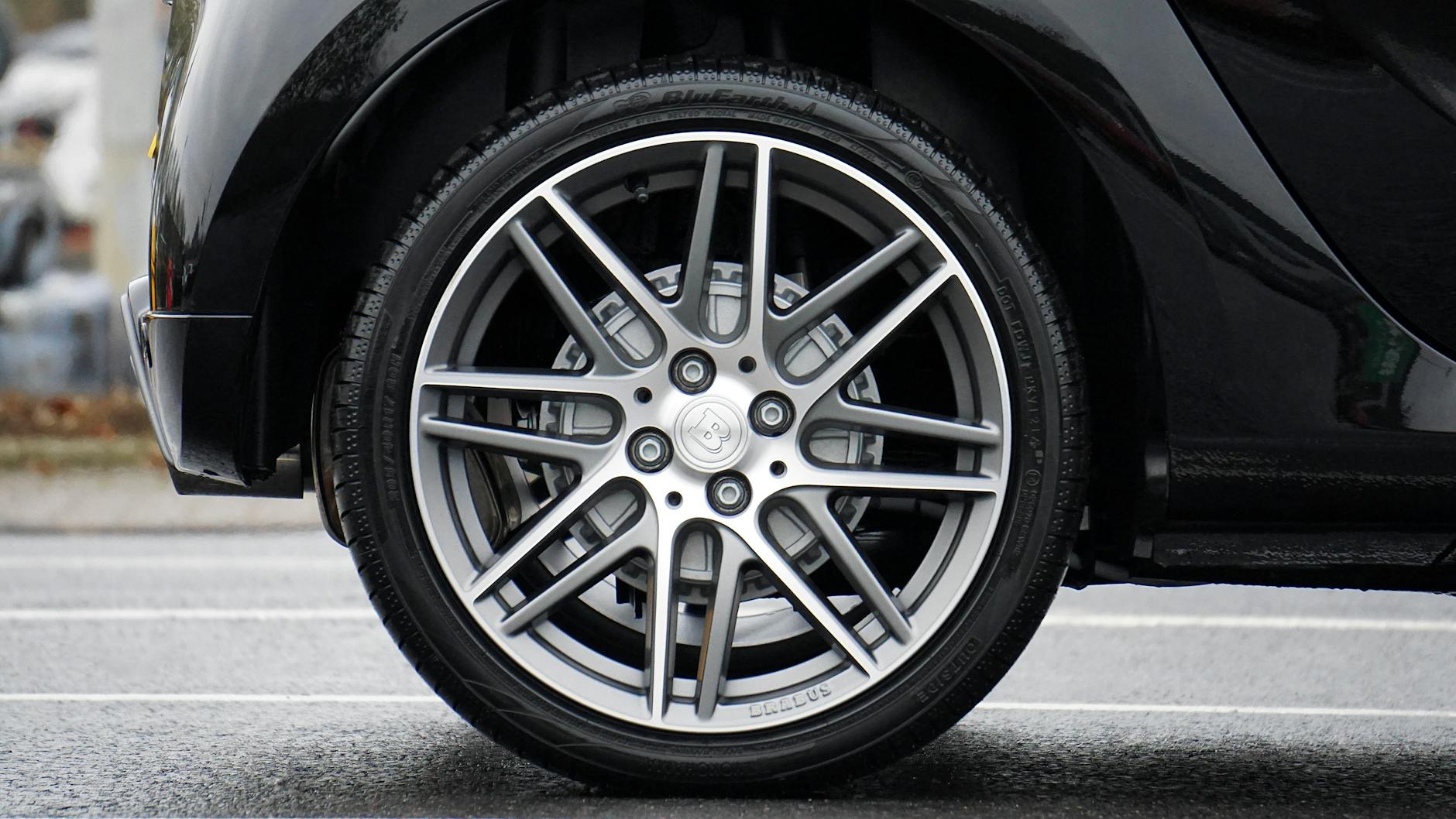
3 Piece Forged Wheels: The Complete Guide

Three-piece forged wheels occupy a specific corner of the wheel world — one where the priority is absolute fitment flexibility, deep concave profiles, and a level of visual drama that a one-piece wheel simply can't match. They're not the right choice for every car or every budget, but when they're the right choice, nothing else comes close.
This guide covers everything: how three-piece wheels are built, what makes them different from monoblock and flow-formed options, real fitment examples, what they cost, how to maintain them, and the honest tradeoffs. No fluff.
What Are 3 Piece Forged Wheels?
A three-piece forged wheel is exactly what the name says — three separate components bolted and sealed together to form a complete wheel.
- Center/face: the forged aluminum disc that carries the spoke design
- Outer barrel: the visible lip that gives the wheel its depth
- Inner barrel: the mounting surface that bolts to the hub
The center is typically forged from 6061-T6 or 7075-T6 aluminum billet, then machined to the design spec. The inner and outer barrels are usually spun (flow-formed) from aluminum sheet, which gives them a strong grain structure at lower weight than casting. All three pieces are bolted together through a ring of fasteners — typically stainless steel or titanium hardware running through a seam at the lip edge — then seam-sealed to prevent air leakage.
The result is a wheel that looks fundamentally different from anything one-piece. That deep, layered lip? That's the outer barrel sitting proud of the center. You can't get that profile from a monoblock, no matter how aggressive the offset.
Why the Three-Piece Construction Actually Matters
The engineering case for three-piece wheels comes down to three things: fitment range, repairability, and aesthetic depth.
Fitment Range
This is the biggest practical advantage. Because the barrel depth is adjustable at the manufacturing stage — you can spec a wider or narrower outer barrel independently of the center — a three-piece wheel can hit fitment specs that are impossible or impractical in one piece.
Take an E92 M3 running a staggered setup: 18x9.5 ET22 front, 18x10.5 ET12 rear. That rear spec is aggressive. In a one-piece forged wheel, you're working with a fixed set of offsets from the manufacturer's production matrix. In three-piece, the barrel width and offset are dialed in during assembly to hit exactly those numbers. A Porsche 997 Turbo running a 12-inch-wide rear wheel at a very low offset to fill the flared arch? Three-piece is often the only sensible construction to achieve that.
For platforms with unusual or highly specific fitment requirements — wide-body Mustangs, C7 Corvette Z06 with the aero package, or any car that's been fender-rolled and stretched — three-piece construction gives fabricators and wheel builders the freedom to hit exact specs without compromise.
Repairability
Curb rash the outer lip? On a three-piece wheel, you replace or refinish just the outer barrel. On a one-piece, you're refinishing the entire wheel — or writing it off if the damage is structural. Some three-piece manufacturers still stock barrels from designs made a decade ago, so a damaged lip on a 2012 build is still a parts swap rather than a wheel replacement.
This matters a lot for daily drivers on rough roads and for track cars that occasionally visit a wall. The hardware is standardized enough that most reputable wheel shops can source replacement barrels.
Deep Concave Profiles
The aesthetic case is inseparable from the engineering. Because the outer barrel depth is independent of the center offset, you can have a very deep outer lip with a very aggressive concave face — the center sits far inboard relative to the outer barrel edge. This creates the "deep dish" look that's defined performance and stance builds for 30 years.
A flat-faced monoblock at ET25 doesn't give you that visual. A three-piece wheel at ET5 with a 4-inch outer barrel does. If you want to understand the visual mechanics of this, the breakdown of deep concave wheel geometry covers why concave face depth is a function of barrel dimension rather than just offset.
3 Piece vs 1 Piece Forged Wheels
Both are forged. The performance gap between the two is smaller than most people assume, but the differences are real.
Weight: A well-executed one-piece forged wheel is typically lighter than a comparable three-piece. You don't have the hardware, seam sealant, or the mass of a separate outer barrel ring. For a 19x10 wheel, the difference might be 1–2 lbs per wheel — meaningful on a track car, less significant on a street build. The full breakdown of 1 piece forged wheels goes deeper on why monoblock construction optimizes for weight above all else.
Stiffness: One-piece wheels have no seam, no hardware, no joint — they're stiffer under lateral load. For pure track use, a monoblock is the benchmark.
Fitment flexibility: Three-piece wins, not close.
Cost: Three-piece is more expensive. More components, more labor, more hardware. A quality set of three-piece forged wheels from a legacy brand (HRE, Forgeline, ADV.1, Brixton) runs $4,000–$10,000+ for a set of four depending on size and spec. That's the market reality for the premium names.
Visual depth: Three-piece wins here too, especially in wider sizes.
For a driver who wants the lightest possible wheel for track days and doesn't need unusual fitment, a one-piece forged wheel is the correct answer. For someone building an aggressive street fitment, running a staggered setup on a wide-body car, or wanting a deep-dish look that fills the arch, three-piece is the tool for the job.
3 Piece Forged Wheels vs Flow Formed
This comparison comes up constantly and it's worth being precise. Flow-formed wheels use a casting process followed by a flow-forming operation that spins and stretches the barrel, aligning the aluminum grain and improving strength. They're not forged in the same sense — the center is not forged from billet. Flow forged wheels are lighter and stronger than pure cast wheels, and they cost significantly less than full forged.
For most street drivers, a quality flow-formed wheel is genuinely the better value. But it doesn't offer the fitment flexibility of three-piece construction, and the visual depth profile is more limited.
What 3 Piece Forged Wheels Actually Cost
Here's where honesty matters. Legacy brand three-piece forged wheels — HRE S201, Forgeline GS1R, Work Meister S1 — are expensive. A quad of 20-inch three-piece wheels from HRE will run $6,000–$9,000 depending on spec. Brixton Forged, ADV.1, and similar brands sit in a similar range. That's the price for the brand, the US or German manufacturing overhead, and the dealer margin.
ForgedToFit produces custom 3 piece forged wheels through a 15-year OEM forging partner at 50–70% less than those legacy prices. The manufacturing quality is the same — same 6061-T6 forged centers, same flow-formed barrels, same CNC finishing — because the partner makes wheels for OEM programs. The difference is the brand premium and the supply chain markup, not the metal or the process.
For a set of 19-inch three-piece wheels in a staggered spec for an F30 335i — say, 19x8.5 ET35 front and 19x9.5 ET22 rear — you're looking at a fraction of what the same spec costs from a legacy brand. The 5-year warranty is included.
Real Fitment Examples
F80/F82 M3/M4: The factory staggered fitment (front 18x8.5 ET52, rear 18x9.5 ET39 in base spec) is modest. Most M3/M4 owners running three-piece wheels push to 19x9.5 ET25 front, 19x10.5 ET18 rear, sometimes wider. Three-piece construction lets you hit those exact numbers without hunting for a catalog item that matches.
C7 Corvette Z06: The Z06 wants a 20x10 front, 20x12 rear. A 12-inch-wide rear wheel at a low enough offset to fill the quarter panel is a serious ask. Three-piece construction handles this comfortably; one-piece options at this width are limited.
Widebody Mustang GT (S550): Wide-body kits often call for 305 or 315 tires in the rear. That means a 10.5–11-inch-wide wheel at a very low or even negative offset. Three-piece is built for this.
Model 3 Performance: Tesla's hub-centric bore (66.1mm) and PCD (5x114.3) are straightforward, but owners running flush fitments on coilovers often need custom offsets in the 19x8.5 or 19x9 range that aren't stocked by most catalog brands. Three-piece allows exact offset spec.
Hardware, Seals, and Maintenance
The seam between the outer barrel and center is sealed with a silicone or urethane sealant during assembly. Over time — particularly on cars driven year-round in temperature extremes — that seal can harden and crack, leading to slow air leaks. This isn't common in the first several years of ownership, but it's a maintenance item to know about.
The hardware (the ring of bolts at the lip) should be torqued to spec and checked periodically. Most manufacturers spec 4–6 Nm for the stainless lip bolts. Overtightening strips the threads in the aluminum barrel; undertightening allows micro-movement that accelerates seal wear. If you're buying used three-piece wheels, inspect the hardware for corrosion and check that all bolts are present — a wheel with missing or corroded lip bolts is a project, not a plug-and-play purchase.
Finish maintenance on the outer barrel lip is straightforward since it's a separate piece. Polished lips can be wet-sanded and re-polished without touching the center finish. Powder-coated barrels can be stripped and re-coated. This is genuinely one of the better long-term ownership arguments for three-piece over one-piece.
Finish Options
Three-piece construction enables finish combinations that aren't possible in one piece. Common setups:
- Polished outer lip, brushed or machined center: the classic look, timeless on silver or dark cars
- Matte black center, polished lip: dramatic contrast, works especially well on white or grey cars
- Two-tone powder coat: center in one color, barrel in another
- Full gloss or satin black: cleaner, modern look that's popular on blacked-out builds
- Chrome or PVD outer lip: high-maintenance but genuinely striking
Because the components are assembled after finishing, there's no masking, no overspray risk, and no compromise between the two surfaces. Each piece is finished separately and then assembled.
Who Should Buy 3 Piece Forged Wheels
Be specific about the use case. Three-piece forged wheels make the most sense for:
- Cars with aggressive or unusual fitment requirements that aren't served by catalog options
- Builds where the deep-dish, layered lip aesthetic is a primary goal
- Long-term ownership where repairability matters
- Staggered setups on high-power RWD cars where the rear offset spec is unconventional
- Show cars or street builds where visual detail and finish combination matter
They make less sense for:
- Dedicated track cars where minimum unsprung weight is the priority
- Owners with a modest budget who just want quality forged wheels (flow-formed is the better value there)
- Cars where standard catalog offsets cover the fitment perfectly
If you're still working through whether three-piece or one-piece forged is right for your specific car, the comparison in the cast vs forged wheels guide covers the foundational material on why forging matters before you get into the construction type debate.
Sizing and Ordering Considerations
When speccing three-piece forged wheels, you'll need to confirm:
- Diameter and width: both front and rear if staggered
- Offset (ET): measured in millimeters from the mounting face to the wheel centerline
- PCD (bolt pattern): e.g., 5x112 for BMW/Audi/Mercedes, 5x114.3 for most domestic and Japanese platforms
- Hub bore: must match or be bored to match (hub-centric rings are a valid fix but check clearance with high-offset wheels)
- Outer lip depth preference: how much dish you want visually
- Finish combination
At ForgedToFit, you submit these specs (or we help you work them out), get a 3D CAD render before production starts, and approve the design before a single piece of aluminum is touched. That step matters with three-piece wheels because the visual impact is significant — you want to see the proportions of the lip to the center before it's built.
Lead times for three-piece custom forged wheels run longer than flow-formed catalog items — typically 8–14 weeks from order confirmation to shipping. That's not unique to us; any genuine custom three-piece wheel takes time. Anyone quoting you two weeks on a true custom three-piece is shipping you something that was already sitting on a shelf.
The Price Reality in 2025
The wheel market has a weird dynamic: the legacy brands with the biggest marketing budgets command prices that reflect brand equity as much as manufacturing quality. An HRE wheel is excellent. So is a Forgeline. But a significant portion of that price is the name, the US overhead, and the dealer network.
OEM forging partners — the factories that actually make wheels for BMW M, Porsche, and other performance OEMs — produce at quality levels that match or exceed what the legacy boutique brands offer, because they're held to OEM tolerances. Working directly with one of those partners, as ForgedToFit does, eliminates the intermediary markup. The metal, the process, and the quality are the same. The price isn't.
For a serious build where three-piece forged wheels are the right call, the gap between legacy brand pricing and direct-from-OEM-partner pricing — 50–70% — is real money that stays in your pocket or goes into other parts of the build.
Frequently asked questions
What is the difference between 3 piece forged wheels and 1 piece forged wheels?
A 3 piece forged wheel has a separate forged center, outer barrel, and inner barrel bolted together — giving you adjustable offset, deep concave profiles, and repairable lips. A 1 piece forged (monoblock) wheel is machined from a single forged blank, which makes it lighter and stiffer but limits fitment flexibility and visual dish depth.
Are 3 piece forged wheels safe for track use?
Yes, when properly assembled and maintained. Check that the lip hardware is torqued to spec and the seam seal is intact. For hardcore track use where minimum unsprung weight is the priority, a 1 piece forged wheel is typically the better choice since it's lighter and has no hardware or seam to fatigue. For street and occasional track use, 3 piece wheels are completely safe.
Why do 3 piece forged wheels cost so much from legacy brands?
Legacy brand pricing reflects manufacturing overhead, dealer margins, brand equity, and marketing costs — not just the metal and machining. OEM forging partners produce wheels at equivalent or higher quality (they build wheels for BMW M, Porsche, etc.) at significantly lower cost. Buying direct from an OEM-partner-backed brand like ForgedToFit eliminates the intermediary markup.
Can 3 piece forged wheels be repaired after curb damage?
Yes — that's one of their best ownership advantages. The outer barrel is a separate component, so curb rash or lip damage means replacing or refinishing just that piece rather than the whole wheel. Many manufacturers still stock replacement barrels for designs made years ago. On a 1 piece wheel, the same damage means refinishing the entire wheel.
How long do 3 piece forged wheels take to manufacture?
Genuine custom 3 piece forged wheels typically take 8–14 weeks from order confirmation to shipment. The center must be forged and machined, the barrels spun and finished, and all three pieces assembled and sealed. Anyone quoting 2 weeks is shipping pre-made stock, not a true custom build.
What finish options are available on 3 piece forged wheels?
Because the center and barrels are finished separately before assembly, you can run completely different finishes on each piece — polished outer lip with brushed center, matte black center with chrome or PVD lip, two-tone powder coat combinations, and more. This finish flexibility is unique to 3 piece construction and isn't possible on a monoblock wheel.