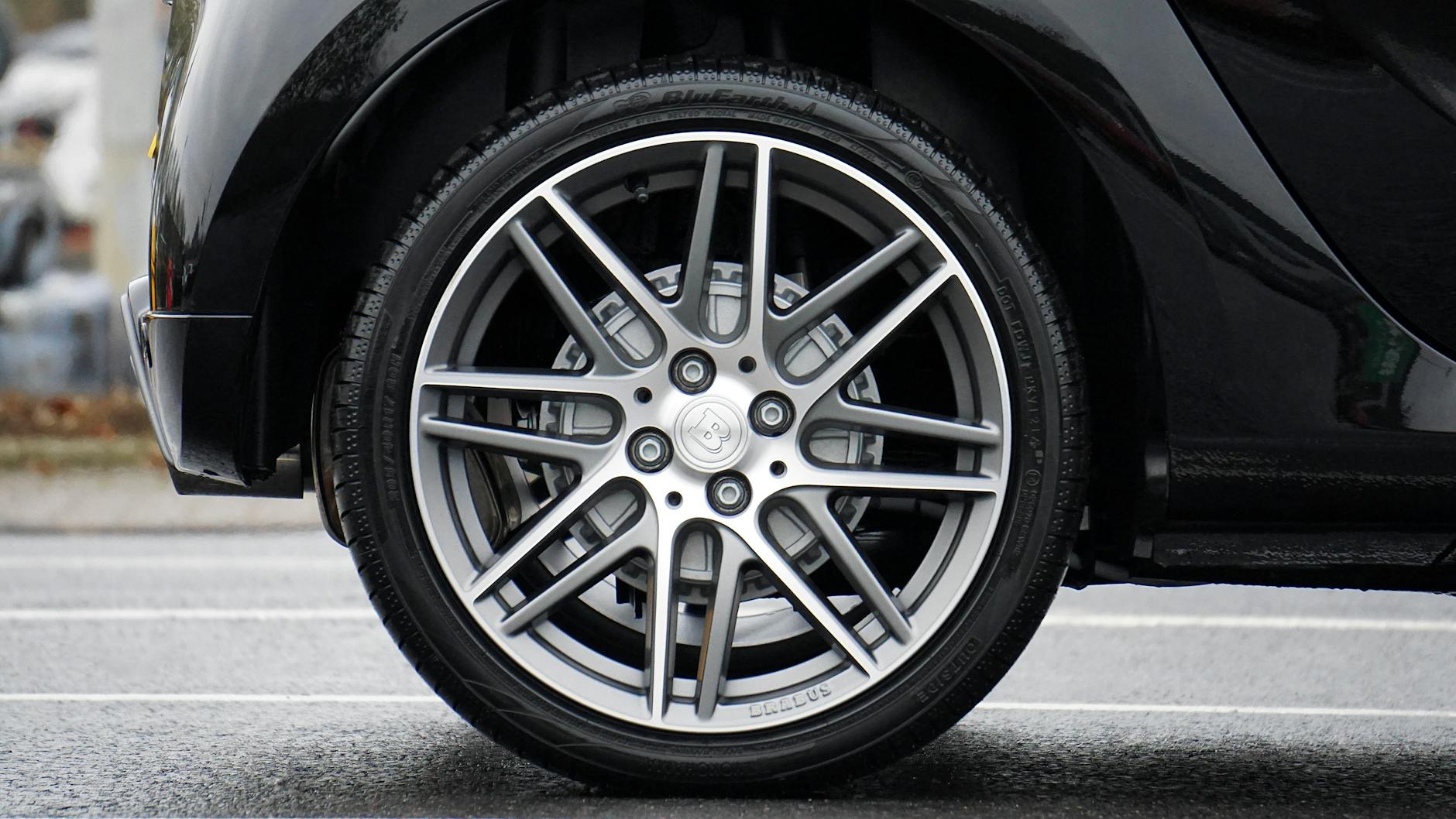
Deep Concave Wheels: How to Get Them Right

Deep concave wheels are the kind of thing people stop and photograph. That dramatic inward dish, the way spokes seem to carve backward into the barrel — it's one of the most striking looks in the fitment world. But there's a reason not every car is running them: done wrong, they rub, they look off, or they crack. Done right, they're some of the best-looking wheels you can put on a car.
This guide covers exactly what deep concave wheels are, why the depth matters mechanically (not just aesthetically), how to spec them correctly for your platform, and what manufacturing method actually holds up when you're pushing the limits of a wheel's geometry.
What Makes a Wheel "Deep Concave"
Concavity refers to the curvature of a wheel's face — specifically, how far the spokes and face dip inward relative to the outer lip. A flat-face wheel sits flush or nearly flush with the lip. A shallow concave wheel has a slight dish. A deep concave wheel has a pronounced, aggressive scoop that makes the outer lip visually prominent and the spoke bed significantly recessed.
There's no universal measurement that defines "deep" concave, but the fitment community generally considers anything with 25mm or more of face depth to qualify. Some extreme builds push 40–50mm of concavity, though at that point you're typically looking at multi-piece construction.
The depth is a function of two things: the wheel's offset and its barrel geometry. A lower (or more negative) offset pushes the mounting face inward relative to the centerline, creating more outboard barrel space — which is what you see as the concave dish. Higher backspacing means less of that barrel is visible. To get true deep concave, you generally want a lower offset combined with a wide wheel, which is why this style is closely associated with stretched fitments and wide-body builds.
For context: a stock F30 335i runs a +36 offset on 18-inch wheels. Running an 18x9.5 at +15 on the same car — a common aggressive street setup — immediately opens up room for concave face geometry that simply doesn't exist at the stock offset. Go to a 19x10 at +22 and you're in legitimate deep concave territory, assuming the spoke design supports it.
The Visual Logic Behind Deep Concave
The reason deep concave wheels look so good on the right car comes down to perceived depth and dimension. A flat wheel reads as a disc. A deep concave wheel reads as three-dimensional — it has a foreground (the outer lip), a midground (the spokes), and a background (the inner barrel). Your eye travels through the wheel rather than just registering it as a surface.
This is why spoke count and spoke width matter so much. A five-spoke design with thick spokes doesn't show concavity well — the face is too filled in. A seven- or ten-spoke design with narrow spokes, or a mesh-style design, lets you see into the barrel and actually appreciate the depth. The best deep concave builds leverage that visual layering intentionally.
Finish plays into it too. Brushed or machined lips paired with a darker face — gunmetal, gloss black, anthracite — maximize the contrast between the lip and the recessed spokes. Monochromatic finishes can look clean, but they flatten the visual depth effect.
Fitment Requirements: This Is Where Most People Get It Wrong
Deep concave wheels are unforgiving of sloppy fitment math. Because you're running lower offsets and wider wheels to achieve the look, the margin for error shrinks considerably.
Outer clearance is the first concern. A wider, lower-offset wheel pushes the outer barrel closer to the fender. On a non-widebody car, this often means either rolling and pulling fenders or accepting that the tire will tuck slightly under the fender lip. On a widebody or fender-flared car, you have more room to work. Either way, you need to account for suspension compression and steering articulation — what clears at ride height might rub when the wheel turns or the car drops over a bump.
Inner clearance is the less-discussed problem. Going wider with lower offset also moves the inner barrel closer to suspension components — specifically strut housings, control arm pivot points, and brake calipers. On an F80 M3, for example, the front strut is notoriously tight. A 20x9.5 at +20 will fit; a 20x10 at +15 on the same car might contact the strut under compression depending on the tire and your ride height. This is platform-specific and requires checking against known clearance data for your exact car.
Hub centricity becomes more critical with wide, low-offset wheels because there's more leverage acting on the hub. Lug-centric fitments on aggressive setups accelerate vibration. Always spec hub-centric rings if your wheel bore doesn't match your hub diameter exactly.
For platforms like the Mustang GT (S550 generation), the rear is more forgiving — the chassis has generous inner clearance and fender room. The front is tighter, which is why most aggressive S550 builds run a staggered setup: wide and deep in the rear, slightly more conservative up front. A 20x10 rear at +35 with deep concave geometry paired with a 20x9.5 front at +38 is a well-worn formula on that platform.
The Tesla Model 3 presents a different challenge. The rear motor and suspension geometry leave limited inner barrel clearance, and the flush-fitting stock look means running aggressive concave setups typically requires aftermarket suspension to bring the car down enough for the wheel to fill the arch properly. The aero cover delete crowd running 20x9 at +35 in a subtle concave profile is probably the sweet spot for most Model 3 owners who want the look without fitment headaches.
Monoblock vs Multi-Piece for Deep Concave
The construction method matters more for deep concave wheels than for any other style, because you're asking the wheel to do more geometrically.
A monoblock (one-piece) forged wheel machined to a deep concave profile is structurally the cleanest solution. The face, barrel, and spoke geometry are all one continuous piece of forged aluminum with no joints, no hardware, no sealing concerns. The challenge is that extreme concavity requires removing a lot of material from the forging billet, which increases machining time and limits how deep you can realistically go while maintaining sufficient spoke thickness.
Two-piece and three-piece wheels offer more flexibility. A two-piece wheel pairs a forged face with a spun or forged barrel, allowing you to dial in specific barrel depths independently of the face geometry. Three-piece construction goes further — the outer lip, inner barrel, and face are all separate, bolted together with hardware and sealed. This modularity is why three-piece wheels dominate the extreme concave market; you can run a 35mm lip on a three-piece where a monoblock would require compromising spoke integrity.
The tradeoff is weight and maintenance. Three-piece wheels are heavier due to the hardware, and they require periodic re-torquing and lip seal checks, especially if you live somewhere with road salt or temperature extremes. For track use, monoblock forged is almost always the better call. For a show car or street build where aesthetics are the priority, three-piece gives you the deepest concave options.
Flow-formed wheels can be specced in concave profiles, but the manufacturing process limits how aggressive the face geometry can get. Flow forming is excellent for achieving strength-to-weight ratios close to forged at lower cost, but deep concave requires significant face machining that partially offsets the cost advantage. For mild to moderate concave profiles, flow forged wheels hit a strong value point. For true deep concave, forged monoblock or multi-piece construction is the path.
Why Manufacturing Quality Actually Matters Here
Deep concave wheels carry more stress at the spoke roots than flat-face wheels. The geometry means that impact loads — hitting a pothole, dropping off a curb — create more bending moment on the spokes before the force reaches the barrel. On a properly forged wheel, the grain structure of the aluminum runs continuous through the part, which is exactly what you want when the geometry is working against you.
Cast wheels with thin, deep-concave profiles crack. This isn't speculation — it's a well-documented failure mode. The porosity inherent in casting, combined with the thinner cross-sections required to achieve aggressive concavity, creates stress risers that propagate into cracks under impact or fatigue loading. If someone is selling you cast deep concave wheels at a price that seems too good to be true, it probably is.
The forged monoblock wheels category is where deep concave aesthetics and structural integrity actually coexist without compromise. Forged aluminum — especially in 6061-T6 — has roughly 3x the tensile strength of typical A356 cast aluminum, which is what gives you the confidence to machine aggressive spoke geometry without creating a failure waiting to happen.
Sizing Strategy for Deep Concave Wheels
If you're spec'ing deep concave for a real-world build, here's how to think about it:
Start with the largest diameter that makes sense for your car — usually 18" for track-focused builds (lower rotational inertia, better tire selection), 19–20" for street builds where aesthetics matter more. Wider is almost always better for concave depth, but width has to be paired with appropriate offset to keep the tire under the fender.
For a BMW F32 440i, a 19x9.5 ET22 front and 19x10.5 ET25 rear is a legitimate aggressive setup that gives you enough barrel space to spec a strong concave face. A 20x9 ET25 / 20x10.5 ET28 staggered setup works well on the Audi B9 S5. These aren't arbitrary numbers — they come from what actually clears on those specific platforms with standard suspension.
When working with a custom manufacturer, provide your hub diameter, bolt pattern, and the clearance constraints you're aware of. A good custom wheel builder will have platform-specific knowledge and can flag potential issues before cutting metal. This is also where custom offset wheels earn their value — rather than compromising on depth to fit a standard offset, you get the wheel specced exactly to your car's geometry.
Tire choice interacts with concavity in ways people overlook. A stretched tire — running a narrower tire on a wider rim — enhances the visual effect of a concave wheel by letting more of the barrel show. A properly-sized or +1 tire fills the wheel and partially obscures the outer lip. Neither is universally right; it depends on whether the build is more about aesthetics or handling.
Getting Custom Deep Concave Wheels Made
The challenge with deep concave wheels from catalog brands is that you're limited to whatever offsets and face profiles they've decided to produce. If your platform needs a specific offset to make the fitment work, and the wheel you want is only available in +30 when you need +18, you're either compromising on the look or compromising on fitment.
Custom-built wheels solve this cleanly. You specify the diameter, width, offset, hub bore, finish, and face profile — including the concavity depth — and the wheel is manufactured to those parameters. For platforms with unusual hub diameters or bolt patterns (Land Rover, older Porsches, certain VAG variants), this often isn't optional anyway.
The economics have shifted significantly. Legacy custom wheel brands built their pricing on brand equity as much as manufacturing cost. A forged wheel made at a serious OEM forging facility — the same type of facility supplying Tier 1 automotive manufacturers — costs dramatically less to produce than the retail markup on a Vossen or BBS implies. The gap between what wheels cost to make and what they sell for under a heritage brand name is substantial, which is why direct-to-consumer custom forging operations can offer comparable or superior products at 50–70% less.
If you're serious about deep concave wheels, the custom forged wheels route is worth understanding before you commit to a catalog purchase at legacy brand pricing.
Common Mistakes to Avoid
A few things that trip up even experienced wheel buyers when speccing deep concave:
- Ignoring brake caliper clearance. A deep concave wheel with an aggressive spoke design can actually have less interior clearance than a shallower design, depending on where the spokes land. Always verify caliper clearance, especially if you're running big brake kits.
- Underestimating fender work. The difference between a flush concave setup and a rubbing concave setup is often 5–8mm of offset. That's the difference between a clean build and grinding noises every time you turn.
- Choosing depth for photos, not for use. A 45mm concave lip looks incredible in a build thread. It also requires very specific tire sizing, near-perfect alignment, and probably a lowered suspension setup to look right in person. Be honest about how you're actually using the car.
- Buying cast. Already mentioned, worth repeating.
For a deeper look at the full spectrum of concave styles and how they compare visually and mechanically, the guide on concave wheels: what they are and how to get them right covers the complete picture.
Frequently asked questions
What is considered a deep concave wheel?
There's no official standard, but the fitment community generally considers 25mm or more of face depth — measured from the outer lip plane to the deepest point of the spoke bed — to qualify as deep concave. Extreme builds can push 40–50mm, typically using multi-piece construction.
Are deep concave wheels structurally weaker than flat-face wheels?
They can be, on cast wheels. The geometry creates more bending stress at the spoke roots, and cast aluminum's porosity and lower strength make thin concave sections prone to cracking under impact. Properly forged deep concave wheels don't have this problem — the continuous grain structure handles the geometry without issue.
What offset do I need for a deep concave look?
Lower (less positive) offsets create more outboard barrel space, which is what allows for concave face depth. Exactly what offset works depends entirely on your platform, fender clearance, and wheel width. On most sport sedans and coupes, offsets in the +15 to +28 range on a wide wheel (9.5" or wider) produce legitimate deep concave results. Go too low and you'll push the wheel past the fender.
Can I get deep concave wheels on a front-wheel-drive car?
Yes, but the front axle is the limiting factor. Steering articulation and the CV axle geometry restrict how far outboard you can push a wheel before something contacts under full lock. Most aggressive FWD concave builds focus the depth on the rear, where there's more room to work. The front usually runs a more conservative profile.
Do deep concave wheels weigh more than flat-face wheels?
On monoblock forged wheels, the weight difference is minimal — the machining process removes material to create the concave profile. Multi-piece deep concave wheels are heavier due to the additional hardware (bolts, barrel sections, lip rings). A well-specced forged monoblock deep concave wheel in a performance size (19x9.5) typically comes in around 22–25 lbs depending on spoke design.
How do I know if deep concave wheels will fit my car without rubbing?
You need three things: the wheel's offset and width, your car's hub-to-fender clearance at ride height, and the inner clearance to suspension components. Most fitment databases (Fitment Industries, WheelOffset.com) have community data for common platforms. For custom wheels, a good manufacturer can work through platform-specific clearances with you before finalizing specs. Never assume a wheel that fits someone else's same-model car will fit yours if they're running different suspension or ride height.