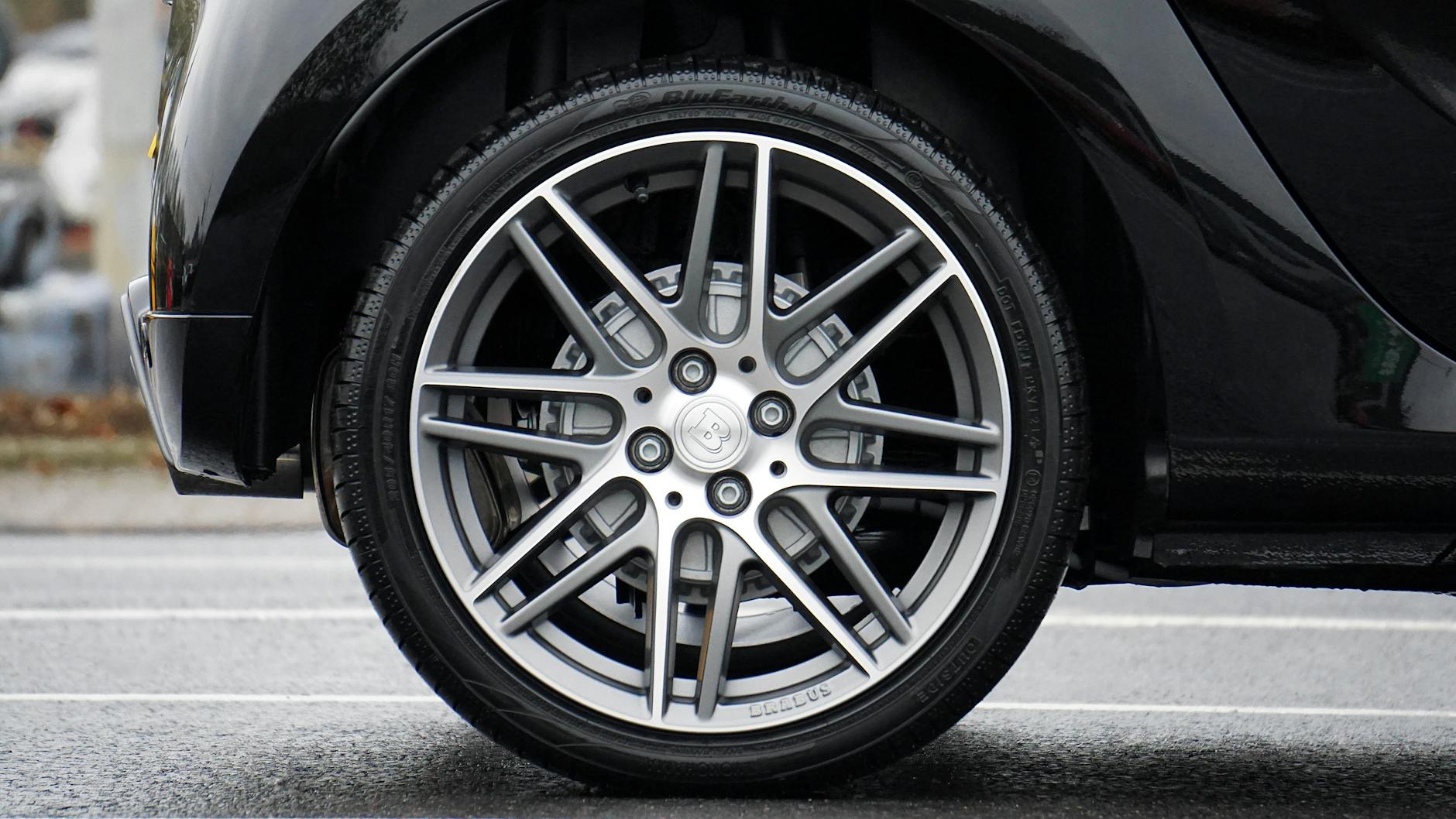
Flow Forged Wheels: What They Are and Why They Matter
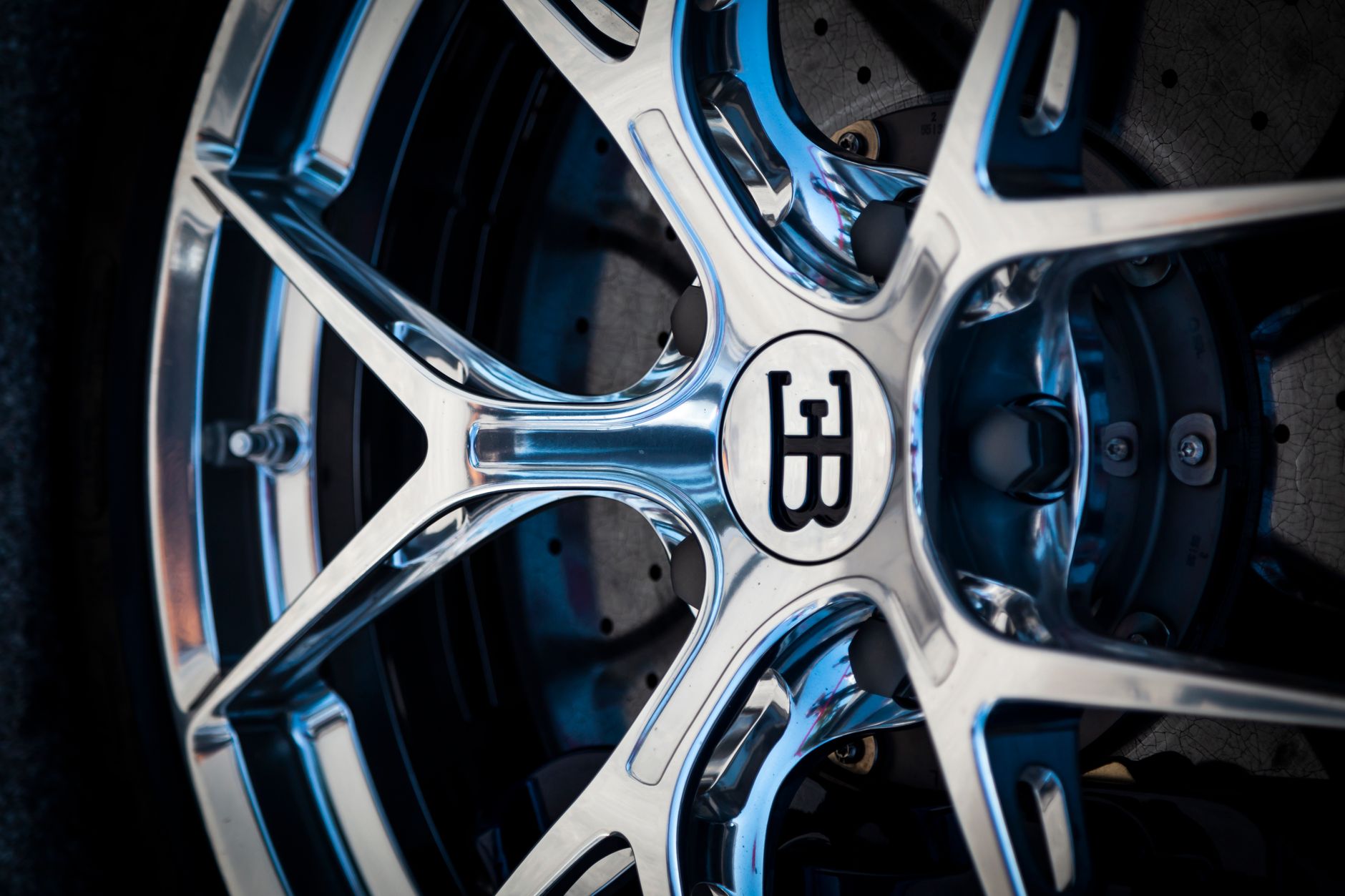
Flow forged wheels occupy one of the most interesting spots in the wheel market — strong enough for serious use, light enough to make a real difference, and priced in a range that doesn't require selling a kidney. They're also one of the most misunderstood products in the category, with some manufacturers using the term loosely and others doing it properly. Understanding what separates a genuinely well-made flow forged wheel from a marketing-dressed cast wheel is worth your time before you buy.
What Flow Forging Actually Means
The process starts the same way as casting: molten aluminum is poured into a mold to form a rough wheel blank. That blank becomes the hub and inner barrel structure. Here's where flow forging diverges from conventional low-pressure casting — the barrel of that blank is then loaded onto a spinning mandrel and pressed by rollers under high force while it's still warm.
Those rollers literally flow the aluminum outward, thinning and elongating the barrel walls to their final dimensions. The mechanical pressure realigns the grain structure of the aluminum along the barrel, creating a much denser, more directionally consistent material than you'd get from casting alone. The result is a barrel that behaves more like forged aluminum than cast — tighter grain, higher tensile strength, better fatigue resistance.
The hub and spoke area is still essentially cast, which is the honest caveat. But the barrel — the part that takes the most punishment from road load, cornering forces, and impact — gets the structural upgrade where it counts most.
The temperature window during the rolling phase matters more than most buyers realize. The blank needs to be worked within a specific thermal range — too cool and the aluminum work-hardens before the grain structure fully reorients, too hot and you lose the density gains the process is supposed to create. Manufacturers who invest in precise temperature control and consistent mandrel tooling produce barrels with measurably better material properties than those running the process at looser tolerances to increase throughput.
Flow Forging vs. Low-Pressure Casting
A standard low-pressure cast wheel has relatively uniform (and uniformly mediocre) material properties throughout. To hit adequate strength numbers, the designer has to add material — which adds weight. A flow forged barrel can be machined thinner because the aluminum is actually stronger, so you can remove weight without removing safety margin.
A typical 18x8.5 cast wheel for something like an F30 335i might weigh 22–24 lbs. A well-executed flow forged equivalent in the same size usually comes in at 18–20 lbs. That's not trivial — four wheels at 8 lbs less each is 32 lbs of unsprung, rotational mass gone. You feel that in throttle response, brake feel, and ride compliance.
The compliance point deserves more attention. Unsprung mass is the mass the suspension has to control rather than support — it moves with the road surface rather than with the chassis. Lighter unsprung mass means the suspension can react faster to bumps and undulations without the inertia of a heavy wheel fighting it. On a car with competent suspension geometry, dropping from 23 lbs to 19 lbs per corner produces a noticeable improvement in how the car rides over broken pavement, not just how it handles at the limit. That's a real-world benefit on a daily driver, not just a track metric.
Flow Forging vs. Full Forging
A fully forged wheel — monoblock or multi-piece — starts as a solid aluminum billet that's compressed under thousands of tons of force, then CNC-machined to final shape. Every part of the wheel has forged-grade grain structure. The spoke geometry can be more aggressive, walls can be thinner, and the strength-to-weight ratio is simply higher than flow forging can achieve.
For a direct comparison of these two processes and which actually fits your use case, the dedicated breakdown in our flow formed vs forged wheels article covers the tradeoffs in detail.
Full forging also costs more — significantly more when you're talking OEM-tier forging programs. That's not a reason to avoid it, but it does explain why flow forged wheels have carved out a legitimate market position rather than just being a consolation prize.
The practical spoke-width difference between the two processes is worth understanding concretely. A full forged monoblock can achieve spoke cross-sections of 8–10mm at the narrowest point while maintaining structural integrity, because the forged billet has consistent grain throughout. A flow forged wheel, with its cast spoke origin, typically needs 12–15mm minimum in the same location to hit equivalent strength numbers. That's not a problem for most street and moderate track applications, but it limits how aggressive the design can get and sets a floor on how light a given diameter and width can be made.
Strength Numbers: What the Testing Shows
Flow forged barrels routinely test at tensile strengths of 290–320 MPa, compared to 200–240 MPa for typical A356 cast aluminum. Yield strength follows a similar gap. These numbers matter if you're running sticky track tires, autocrossing, or living in a city where potholes are basically infrastructure features.
The JWL and VIA testing standards that most reputable manufacturers reference test for radial fatigue (simulating sustained load) and impact resistance. Flow forged wheels tend to exceed JWL minimums by a wider margin than cast, which is meaningful for high-load applications — heavier vehicles, track use, aggressive tire pressures.
That said, a well-engineered cast wheel from a serious manufacturer can also pass JWL and VIA with adequate margins. The difference shows up more in longevity under cyclic stress and in catastrophic failure mode — forged and flow forged aluminum tends to crack and deform rather than shatter, which is a meaningful safety characteristic.
It's also worth noting that JWL certification applies to a specific wheel configuration — a 17x7 wheel certified under JWL isn't automatically certifying the manufacturer's 20x10.5 variant. Serious manufacturers run JWL testing on each distinct size that has meaningfully different wall thicknesses or spoke geometry. When you're buying a less common size or a custom spec, asking whether that specific configuration has been tested (rather than whether the brand holds JWL certification generally) is a reasonable question.
Who Flow Forged Wheels Actually Make Sense For
Not everyone needs full forging. Here's how to think about it honestly.
Track-day drivers on a budget. If you're running an S550 Mustang GT or a WRX on weekend track days and don't want to spend $3,000–$5,000+ on a full forged set, flow forged is a serious option. You get real weight reduction and structural integrity without the full forged premium.
Daily drivers who want meaningful performance. On a Model 3 or Golf GTI, dropping 6–8 lbs per corner versus a stock cast wheel has a real effect on range (in the EV case) and handling response. Flow forged hits that target at prices that make sense for a street car. The Model 3 Performance specifically benefits disproportionately from unsprung weight reduction because the instant torque delivery amplifies what the suspension has to manage — a lighter wheel makes the torque feel smoother off the line rather than kicking the rear loose.
Enthusiasts who want custom fitment without custom forged pricing. A properly spec'd flow forged wheel can be manufactured with custom bolt patterns, offsets, and diameters. For a platform like the E90/E92 or a Challenger Hellcat running a staggered setup, that's genuinely useful.
Vehicles with higher curb weights. Full-size trucks and heavier performance cars — a Charger Hellcat at 4,600 lbs, an Escalade-V at 5,900 lbs — put more sustained load through the wheel barrel than a lighter sports car. The improved fatigue resistance of flow forged over cast matters more at these weights, and the economics of flow forging make it feasible to build wheels strong enough for the platform without going full forged.
Where full forging makes more sense: Competitive racing where every gram counts, very high-horsepower builds where material limits matter, or any situation where you're specifying the thinnest possible spoke cross-sections for aesthetics. The spoke section of a flow forged wheel is still limited by its cast origin — a full forged monoblock can do things geometrically that flow forging can't.
The Marketing Problem
This is worth saying plainly: "flow formed" and "flow forged" are terms that get applied to a spectrum of manufacturing quality. Some wheels marketed as flow forged go through a cursory spinning process that barely changes the material properties. Others are built to a proper standard with documented metallurgy.
The tell is usually in the claimed weight savings. A manufacturer claiming their 18x8.5 flow forged wheel weighs 21 lbs hasn't done much — that's barely lighter than a decent cast wheel. A genuinely well-executed flow forged process in that size should be hitting 18–19 lbs. If the published weights don't reflect meaningful improvement over cast equivalents, the manufacturing process probably didn't either.
Things to ask or look for:
- What alloy? A356-T6 treated aluminum is standard; better programs use 6061-T6 or proprietary alloys. Some cut corners with lower-grade aluminum that undermines the process.
- What testing certification? JWL + VIA is the floor. TÜV certification is a higher bar and worth looking for.
- Can they document the process? A serious manufacturer can show you the forging program, not just a marketing video of a wheel spinning on a lathe.
- What's the warranty? A 1-year warranty on a flow forged wheel is a tell. A manufacturer confident in their process offers 3–5 years.
At ForgedToFit, our flow formed wheels come from the same 15-year OEM forging partner that handles our full custom forged program. The metallurgical documentation exists, the testing exists, and the 5-year warranty reflects that.
Fitment Considerations
Flow forged wheels are typically available in a wider range of sizes than full forged, because the economics of the process are more favorable for higher-volume SKUs. That said, if you have unusual fitment requirements — say, a 5x112 bolt pattern with a 45mm offset in 19x9.5 for a B9 S4 running a staggered setup, or a 5x114.3 in 20x10.5 for a widebody S550 — custom flow forged manufacturing is a legitimate path.
For fitment on specific platforms: the F30 335i typically runs 18x8.5 +35 front, 18x9.5 +22 rear as a popular staggered spec. The S550 Mustang GT in square fitment often works well at 19x10 +38–45 depending on suspension setup. The Model 3 Performance runs 20x8.5 +35 from the factory, and going to a lighter flow forged wheel in the same spec is a straightforward swap with meaningful results on range and feel. The B9 S4 staggered spec deserves a specific note: running 19x8.5 +45 front and 19x9.5 +38 rear in 5x112 is a common and clean fitment that clears the big brake option without spacers, and it's a size combination that flow forged programs handle well without the lead times and pricing of full custom forging.
If you're thinking through offsets and custom sizing, custom offset wheels has the fitment math laid out in practical terms.
Finish Options on Flow Forged Wheels
Because the face and spoke area of a flow forged wheel starts as a casting, machining and finishing are relatively straightforward. You can get:
- Painted (powder coat or liquid paint) in any color
- Machined face with painted windows — the classic two-tone look
- Full polish or brushed finishes
- Custom anodizing on some programs
One thing flow forged does well that cast sometimes doesn't: tight, clean machined edges. Because the barrel walls are denser, the CNC work comes out crisper. That's mostly aesthetic, but it matters if you're spending real money on a set.
The barrel finish deserves separate attention from the face finish. On a flow forged wheel, the barrel is the strongest structural element and also the most exposed to road debris, brake dust, and moisture. A properly applied clear coat or anodized finish on the barrel extends service life meaningfully. Some manufacturers leave the barrel in a raw or lightly painted state to save cost — that's a corner worth asking about when comparing options.
On the design side, flow forged wheels can handle concave face profiles reasonably well, though deep concave designs — the kind where the face sits significantly behind the lip — are better executed in full forged where spoke geometry can be more aggressively optimized. For a deeper look at face design options, concave wheels covers what's achievable and how to spec it right.
The Price Reality
A set of four flow forged wheels from a reputable manufacturer in a common size (18x8.5, 5x114.3) will typically run $800–$1,400 from offshore volume brands, and $1,200–$2,000 from mid-tier performance brands. Full forged from legacy brands like HRE, Vossen, or BBS starts at $3,000 and goes north from there quickly.
ForgedToFit's custom forged and flow forged programs run 50–70% less than those legacy brands by going direct from our manufacturing partner to you, cutting out the distributor chain entirely. For a set that comes with 3D CAD validation, documented metallurgy, proper fitment engineering, and a 5-year warranty, the value equation is straightforward.
If you're doing a full wheel and tire package — which most people are — the savings on wheels matter a lot because quality tires are non-negotiable and already expensive. A set of Michelin Pilot Sport 4S in 275/35R19 runs $250–$300 per tire before mounting and balancing. When tires alone are pushing $1,200–$1,400 of your budget, getting quality flow forged wheels at $1,400–$1,800 rather than paying $4,000+ for full forged makes room for the tire spend without compromising either side of the package. Running through the full setup logic for a combined purchase is covered well in custom wheels and tires.
What the Installation Process Looks Like
Flow forged wheels install identically to any other wheel. There's nothing exotic about the process — mount, balance, torque to spec (typically 85–100 ft-lbs for most passenger cars, check your platform). The lighter weight means some balancing machines need slightly adjusted parameters for very light wheels, but any competent shop handles this routinely.
Hub-centric fitment matters here the same as it does with any aftermarket wheel. Confirm your hub bore matches, or spec the right hub rings. Running wheel-centric rather than hub-centric is fine at low speeds but creates vibration at highway speeds — it's a simple thing to get right and a common thing people skip.
One installation detail specific to lighter wheels: re-torque after the first 50–100 miles. As a new wheel seats against the hub face and the lug seats compress slightly, torque values can drift. This applies to any wheel but is a good habit to establish whenever you're running wheels lighter than OEM spec.
For an end-to-end look at the broader buying and installation process, aftermarket wheels and tires covers it from size selection through mounting.
Durability in Real Use
Flow forged wheels hold up well in real conditions. The barrel, which is the part most likely to take impact damage from potholes, has the material properties to absorb and deform rather than crack outright. Track use in moderate conditions — HPDE, autocross — is well within what a properly made flow forged wheel handles.
Corrosion resistance depends on the finish and the aluminum alloy, not the manufacturing process. A flow forged wheel with a quality powder coat will last as long as a forged wheel with equivalent finish treatment. Don't let anyone sell you on "forged = corrosion resistant" — that's not how it works.
Road salt exposure in northern climates is worth a specific mention. The area where the barrel meets the spoke, and the back of the hub face where it contacts the rotor hat, are the two spots most prone to corrosion on any aluminum wheel. Flow forged or not, inspecting and cleaning these areas annually — particularly the back of the hub face — prevents the galvanic corrosion that makes wheel removal difficult over time. It's a maintenance habit that extends the life of any quality wheel.
The one durability caveat: very aggressive track programs with repeated heavy braking (endurance racing, time attack with significant thermal cycles) push the limits of what flow forging can deliver at optimal weight. That's where full forged earns its premium. For street performance and occasional track use, flow forged is genuinely adequate and not just a compromise.
Frequently asked questions
Are flow forged wheels as strong as fully forged?
Not quite. The barrel of a flow forged wheel reaches tensile strengths of 290–320 MPa — close to fully forged — but the hub and spoke area remains cast and doesn't match full forged grain structure throughout. For street use, track days, and most performance driving, flow forged is more than adequate. Competitive motorsport or ultra-aggressive weight reduction is where full forging justifies the extra cost.
How much lighter are flow forged wheels compared to cast?
Typically 15–25% lighter in comparable sizes. An 18x8.5 cast wheel might weigh 22–24 lbs; a well-executed flow forged equivalent usually lands at 18–20 lbs. That's 6–8 lbs per corner — significant for handling response, brake feel, and EV range.
Can flow forged wheels be made in custom sizes and offsets?
Yes. Unlike some cast programs that are limited to fixed SKUs, flow forged manufacturing can accommodate custom diameters, widths, offsets, and bolt patterns. You can spec an unusual fitment — like 5x120 in 19x9.5 +22 for a staggered BMW setup — and have it manufactured to those exact dimensions.
What's the difference between 'flow formed' and 'flow forged'?
The terms refer to the same basic process — a cast blank has its barrel spun and pressed by rollers under heat to densify and elongate the aluminum. Some manufacturers say 'flow formed,' others say 'flow forged.' The quality varies more by manufacturer than by which term they use. Look for documented alloy grade, JWL/VIA certification, and warranty length rather than marketing language.
Are flow forged wheels suitable for track use?
Yes for most track applications — HPDE events, autocross, and occasional circuit lapping. The barrel strength is well above what street driving demands, and the weight reduction helps handling. Very high-intensity endurance racing or time attack programs with aggressive setups may benefit from full forging, but that's a relatively narrow use case.
How do I know if a wheel is genuinely flow forged or just marketed as one?
Ask for the alloy specification (A356-T6 or better), the testing certification (JWL + VIA at minimum, TÜV is better), and the warranty terms. A manufacturer who can answer those questions specifically is doing it properly. One who responds with vague claims about 'advanced manufacturing processes' probably isn't.