Custom Offset Wheels: Get the Fitment Exactly Right
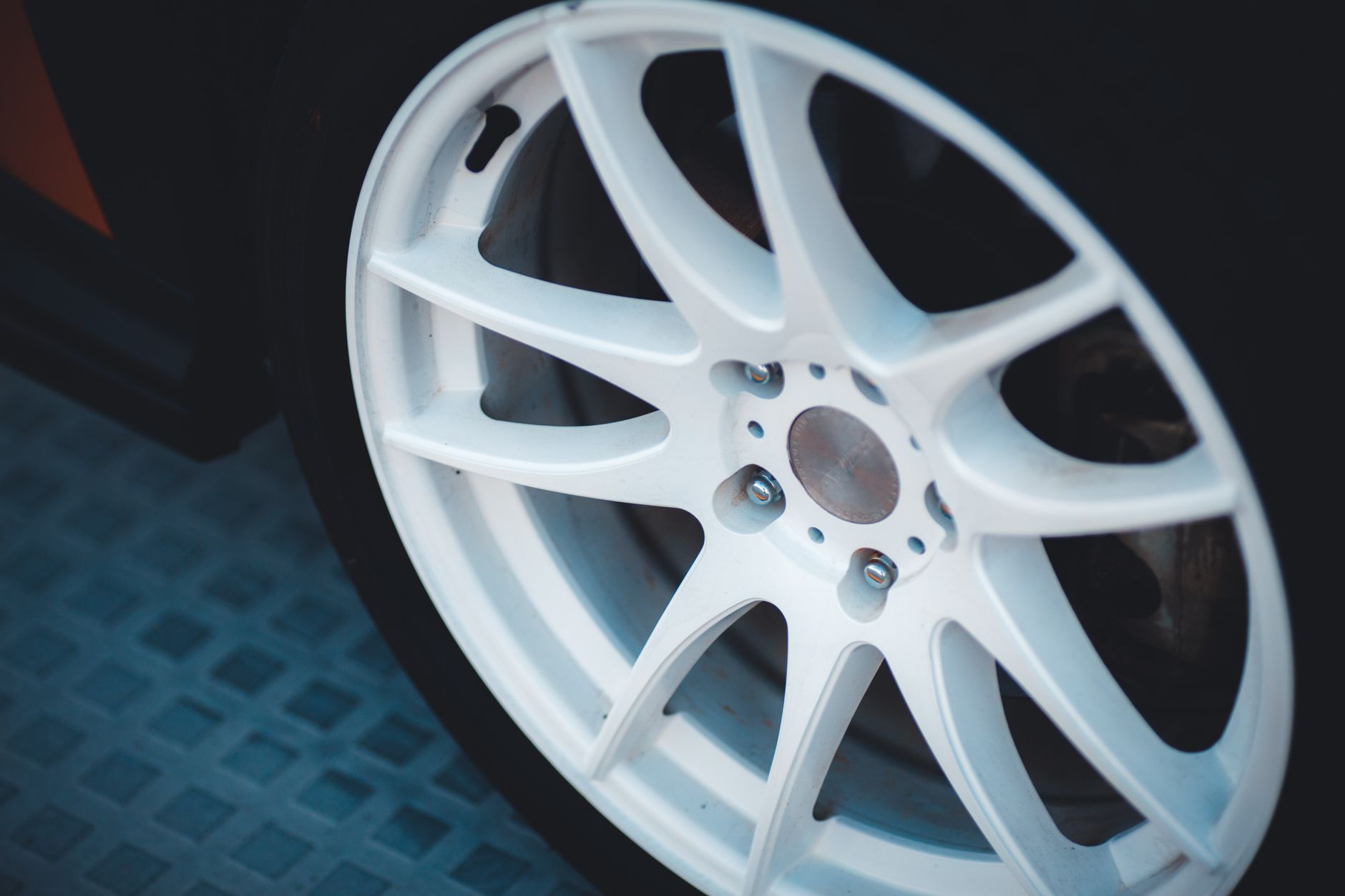
Offset is one of those specs that sounds simple until you're staring at a wheel that sits 15mm too deep inside the fender or sticks out past the lip. It's a single measurement — the distance in millimeters from the wheel's centerline to its mounting face — but it controls everything about how your car looks and handles. Get it right and the wheel fills the arch perfectly, the stance looks intentional, and the geometry behaves. Get it wrong and you're either rubbing on full lock or running spacers as a band-aid.
Custom offset wheels solve that problem at the source. Instead of hunting through a catalog hoping something close enough exists, you spec the exact offset your build requires and the wheel gets manufactured to that number. It's how serious builders have been doing it for years, and with direct-to-consumer forging operations now available, it's no longer a cost-prohibitive option.
What Wheel Offset Actually Means
The mounting face of a wheel can sit in three positions relative to center. Positive offset means the mounting face is toward the street side of the wheel — common on front-wheel-drive cars and most modern platforms. Zero offset puts the mounting face exactly at the centerline. Negative offset pushes the face inboard, which is what gives lifted trucks and aggressive fitment builds that wide, planted look.
A stock F30 BMW 335i runs ET40 on the front and ET30 on the rear — positive offset on both axles, with the rear staggered outward slightly to widen the track. A Mustang GT rolls on roughly ET33 all around from the factory. A bagged Mk7 Golf sitting on air might be running ET25 or lower on a wheel that was never produced at that offset from the factory catalog. These aren't arbitrary numbers — they're tuned to suspension geometry, fender clearance, and the OEM's intended stance.
When you go aftermarket, those numbers become negotiable. But only up to a point.
How Offset Affects More Than Looks
Every millimeter of offset change shifts the scrub radius — the distance between the steering axis and the tire contact patch. Go too far negative and you'll feel it in steering pull under braking, increased sensitivity to road crown, and accelerated wear on wheel bearings. Go too positive and the wheel tucks under the fender, kills your stance, and can create clearance issues with suspension components inside the barrel.
The practical sweet spot for most performance builds is staying within 15–20mm of factory offset while adjusting for your specific wheel width. A 19x9.5 wheel on a platform that ran a 19x8 stock will need a lower (more negative) offset to maintain the same outer lip position. The formula: every 0.5 inches of additional width requires roughly 6.35mm of offset reduction to keep the outer edge in the same place.
For a Tesla Model 3 running 20x9 wheels on a platform that stocks 20x8.5 ET40, you'd typically target ET35–38 to maintain fender clearance while filling the arch. Go to ET25 without checking clearance on the strut and inner barrel and you're buying problems.
It's also worth understanding how offset interacts with backspacing, since the two terms get used interchangeably in conversation but measure different things. Backspacing is the physical distance from the back bead seat to the mounting face, measured in inches. It includes the entire inboard depth of the wheel. Offset is derived from backspacing relative to the overall width — it's the same relationship expressed from centerline rather than from the back edge. American truck builders tend to speak in backspacing; European and JDM fitment culture speaks in ET (from the German Einpresstiefe, meaning press depth). Knowing both lets you translate specs across communities without making a conversion error that puts your wheel in the wrong place.
Why Custom Offset Wheels Exist
Catalog wheels are built around the highest-volume fitments. A wheel brand producing a 19-inch design in a popular size might offer it at ET35 and ET45 — and that's it. If your build calls for ET28 or ET52, you're either compromising or running spacers. Spacers work, but they add a failure point, often void warranties, and are the mechanical equivalent of admitting you didn't plan ahead.
Custom offset wheels close that gap. The wheel is manufactured to your stated offset from the start — the forging geometry, the barrel depth, and the mounting pad position are all calculated to your spec before a single billet of aluminum gets touched. You get the offset you actually need, not the closest approximation someone decided was worth tooling.
This matters most in a handful of scenarios:
- Widebody builds where fender extensions change the target outer lip position significantly
- Lowered cars on coilovers where reduced suspension travel changes what clears
- Track cars needing precise scrub radius to match alignment specs
- Staggered setups where front and rear offsets need independent tuning
- Rare or older platforms that aren't well-served by catalog wheels
It also matters for builders who've already modified their suspension geometry. If you've installed adjustable control arms, a front subframe brace that relocates mounting points, or a big brake kit with larger calipers, your clearance envelope is no longer factory-standard. The catalog wheel that fits a stock version of your platform may not fit yours at all. Custom offset lets you account for those changes directly rather than guessing and hoping.
How to Determine the Right Offset for Your Build
Start with your current offset and wheel width as a baseline. Measure the gap between the outer lip and the fender lip, and the gap between the inner barrel and the closest suspension or chassis contact point. These two measurements define your range.
A good physical method: tape a straight edge across the fender opening and measure to the hub face. That tells you how far outboard the hub sits relative to the fender. Combine that with your target wheel width and you can calculate the offset that puts the outer lip exactly where you want it.
If you're running spacers right now, your target offset is simple math: current offset minus spacer thickness. A wheel at ET40 with a 15mm spacer is effectively running ET25. Order at ET25 and pull the spacer.
Another useful technique is the cardboard template method. Cut a flat piece of cardboard to the same diameter as your target wheel and hold it against the hub with a helper. Mark where the outer edge sits relative to the fender lip. Then mark where the inner face would need to be to achieve your desired outer position given your target wheel width. This won't give you millimeter precision, but it quickly reveals whether you're in a reasonable window or whether something fundamental needs to change first — like rolling the fender lip or adjusting ride height.
Checking Clearances Before You Order
Front axle fitment is tighter than rear on most platforms because you have to account for steering lock. A wheel that clears everything at center might contact the control arm at full lock. The critical measurement is the inner barrel-to-strut clearance — specifically what the barrel looks like when the wheel is turned 35+ degrees.
Common danger zones by platform:
- BMW E and F chassis: Front strut and spring perch eat into inner barrel space aggressively on wide offsets
- S550 Mustang: Brake caliper position limits how far positive you can go without hub-centric spacers
- C7/C8 Corvette: Front suspension geometry punishes excessive positive offset at lock
- Model 3/Y: Inner barrel clearance on the front strut is tight on anything over 9.5" wide at low offsets
On air suspension builds, ride height changes dynamically, which means clearances that exist at static ride height can close up at full drop. If you're running a bagged car, check clearances at your actual drive height and at the lowest point you'll realistically use, not just at whatever height the car was sitting when you measured. Owners who skip this step discover their inner barrel contacts the strut housing at low height, and the fix at that point is either a different offset or giving up the bottom of the drop range.
Virtually every major forum for these platforms has a fitment thread with real-world clearance data from owners who already experimented. Read those before you order, not after.
Forged vs Cast for Custom Offset Applications
When you're having wheels built to a specific offset, construction method matters more than it does when you're buying off the shelf. Cast wheels at unusual offsets carry the same structural concerns as cast wheels at any offset — the grain structure of poured aluminum is isotropic, meaning it's not optimized for the stress directions the wheel actually sees. At a non-standard offset, the bending loads on the barrel are different than what a catalog-dimension wheel was designed around.
Forged wheels start as compressed aluminum billets with aligned grain structure, then get machined to exact dimensions. That means a custom offset is just a machining parameter — the material properties don't change because you asked for ET28 instead of ET35. Flow-formed wheels occupy a useful middle ground: the barrel is flow-formed under pressure for strength, then combined with a forged or cast center. Either way, the structural integrity at a custom offset is fundamentally better than cast.
The cost difference used to be the blocker. Forged wheels from legacy European brands ran $800–$1,500 per corner. A direct-to-consumer model working through an established OEM forging partner changes that math significantly — the same forged construction at 50–70% less, built to your offset spec, with a proper warranty behind it. That's a different conversation than it was five years ago.
For more on how these construction methods compare structurally, the breakdown in flow formed vs forged wheels covers the material science in useful detail.
Ordering Custom Offset Wheels: The Process
The ordering process for custom offset wheels is more involved than picking a size from a dropdown, which is appropriate given what's being manufactured. Here's what it actually looks like.
First, you nail down the spec: diameter, width, offset, bolt pattern, and center bore. These five numbers define the wheel. You should also decide on dish preference (how much concavity you want), spoke design, and finish at this stage because those influence the CAD work that follows.
Then comes the 3D CAD design phase. A proper custom wheel build includes a CAD rendering that shows the exact offset, barrel depth, and design geometry before manufacturing starts. Review this carefully — it's your last checkpoint before aluminum gets forged. Check that the offset matches what you calculated, that the center bore is correct (or specify a hubcentric ring if needed), and that the spoke design you chose translates to the size you ordered. Pay particular attention to the inner barrel profile in the CAD view — this is where clearance problems hide, and a spoke that looks clean in a front-facing render can have a barrel shape that conflicts with a caliper or strut at the actual offset you specified.
Manufacturing on forged aluminum wheels typically runs 6–10 weeks from approved design. The wheel is forged, machined, inspected, finished, and shipped direct. If you've done the fitment work upfront, the wheels bolt on and sit exactly where you calculated.
When the wheels arrive, don't mount and torque everything down before doing a dry fit check. Seat the wheel on the hub without the tire, rotate it through full steering lock, compress the suspension through its travel range by hand or with a jack, and confirm there's no contact anywhere in that range. This is especially important if you pushed the offset closer to the limits of what you calculated. Finding a 2mm clearance issue during dry fit is a conversation with the manufacturer; finding it after you've mounted tires and driven on them is a much worse situation.
For the full picture on design options, the guide to custom car wheels walks through the design-to-delivery process in detail. And if you're building on a BMW platform specifically, the custom forged wheels for BMW guide covers platform-specific offset and clearance considerations.
Staggered Offset Setups
Rear-wheel-drive platforms almost always benefit from a staggered setup — wider rear wheels with a more negative offset to widen the rear track and fill the rear arches. The offset differential between front and rear is what makes or breaks staggered fitment.
On an F30 335i going from stock to a 19x8.5 ET35 front / 19x9.5 ET25 rear setup, the rear outer lip moves out by roughly 12mm compared to a square setup at the same ET. That fills the wider rear arch without pushing past the fender lip. The front stays tucked with more positive offset, maintaining steering geometry and clearance at lock.
That exact pairing of front and rear offsets is unlikely to exist in any single catalog brand's lineup at a price point that makes sense. A custom order where both axles are spec'd independently is how you get it right without compromise.
On platforms with significantly different front and rear arch widths — like the E46 M3 or the R35 GT-R — the stagger isn't just an aesthetic preference. The rear fender flare is physically wider from the factory, and running the same offset front and rear would leave the rear looking under-filled while the front is already at its limit. Getting this right requires independently calculating each axle, not just adding width to a square setup and hoping the offset scales evenly.
Common Offset Mistakes
The most common mistake is ordering based on what looks good in renders without measuring clearances. Wheel visualizer tools are useful for aesthetic decisions but they don't simulate inner barrel clearance or behavior at steering lock. Physical measurements on your actual car matter more than any simulator.
Second most common: assuming the same offset works across different wheel widths. If you ran 18x8 ET35 and you're stepping up to 18x9.5, ET35 is now 9.5mm more outboard than your old setup. That might be fine or it might push you past the fender — you need to recalculate, not assume.
Third: ignoring hub centricity. A wheel at the right offset but the wrong center bore will either not seat or will run with the wheel centered on the lug nuts instead of the hub. That causes vibration at speed. Custom wheels should be ordered with the exact OEM center bore for your platform — or with the appropriate hubcentric ring spec if the bore is larger.
Fourth: not accounting for suspension modifications already made to the car. If you've installed coilovers with a different strut diameter than stock, or added extended ball joints for additional camber adjustment, the clearances your platform's forum threads describe no longer apply cleanly to your build. Always measure your actual car, not the stock spec.
Fifth: ordering the front and rear as a matched square set when the platform clearly warrants a stagger. This is usually a cost decision, but it often results in a fitment that looks visually unbalanced — rear arches under-filled while the fronts are dialed in — or requires a compromise offset that doesn't fully optimize either axle.
For additional context on making the right choices throughout the buying process, the custom alloy wheels overview covers the decision framework comprehensively.
What Custom Offset Costs
Forged wheels built to a custom offset from a direct-to-consumer brand typically run $300–$600 per wheel depending on diameter, design complexity, and finish. That puts a set of four in the $1,200–$2,400 range — competitive with mid-tier cast aftermarket wheels, with significantly better material properties and exact fitment built in.
Flow-formed options from the same type of operation come in lower, often $200–$400 per wheel, while still allowing full offset customization. For most street builds, flow-formed at a custom offset is the practical sweet spot between cost and performance.
Legacy forged brands in this space — HRE, Vossen Forged, Brixton — start at $700–$1,000 per wheel and scale up from there. The manufacturing quality is real, but the price premium is partly brand and partly distribution cost. A direct manufacturing model cuts both.
When evaluating total cost, factor in what you're not spending. A set of catalog wheels at the wrong offset plus a quality set of hubcentric spacers adds $150–$300 to the project, introduces an additional torque-sensitive failure point, and typically voids the wheel warranty. The offset you actually need, built in from the start, is the cheaper solution when you do the full accounting — not just the sticker comparison.
Frequently asked questions
What is wheel offset and why does it matter for custom wheels?
Wheel offset is the distance in millimeters from the wheel's centerline to its mounting face. Positive offset means the face is toward the outside; negative means it's toward the inside of the car. It determines how far inboard or outboard the wheel sits in the fender, affects scrub radius and steering feel, and controls clearance between the inner barrel and suspension components. Custom offset wheels let you specify this number exactly rather than accepting whatever a catalog brand decided to produce.
How do I calculate the right offset for my build?
Start with your current wheel width and offset. Measure the gap between the outer lip and fender edge, and the clearance between the inner barrel and the nearest suspension or chassis component. If you're widening the wheel, subtract approximately 6.35mm of offset per 0.5 inches of added width to keep the outer lip in the same position. If you're already running spacers, your target offset equals your current offset minus the spacer thickness.
Can I run the same offset on wider wheels?
No — and this is one of the most common fitment mistakes. The same offset on a wider wheel moves the outer lip further outboard and the inner barrel further inboard simultaneously. A 19x9.5 at ET35 sits about 9.5mm more outboard than a 19x8 at ET35. You need to recalculate for the new width, not carry the old number over.
How long does it take to get custom offset wheels made?
Forged custom offset wheels typically take 6–10 weeks from approved CAD design to delivery. The process includes design review, forging, CNC machining, finishing, and quality inspection before shipping. Flow-formed options may be slightly faster depending on the manufacturer's production schedule.
Are custom offset forged wheels significantly more expensive than catalog wheels?
Through a direct-to-consumer forging operation, custom offset forged wheels typically run $300–$600 per wheel — comparable to mid-tier cast aftermarket wheels. That's 50–70% less than legacy forged brands like HRE or Brixton. You get exact offset fitment and superior material properties without paying for brand overhead or distribution markups.
Do custom offset wheels require different tires or TPMS sensors?
The offset itself doesn't affect tire sizing — what matters is the overall wheel width and diameter, which determine compatible tire sizes. However, if your custom offset wheels change from OEM rim width significantly, you may need to adjust tire width and aspect ratio for proper sidewall clearance. TPMS sensors are independent of offset; if your wheels are drilled for sensors, your existing OEM sensors or aftermarket equivalents will work normally.