Custom Car Wheels: How to Choose, Order, and Get It Right
Ordering custom car wheels sounds straightforward until you're three tabs deep into offset calculators, arguing with yourself about whether 20x10.5 will clear your fenders. Done right, a custom wheel order gets you better fitment than anything sitting on a shelf, a finish tuned to your exact build, and construction quality that matches or beats what OEM charged you $800 per corner for. Done wrong, you're paying to press spacers against a hub that was never meant to see that load.
This guide covers everything — construction methods, sizing, finish, the order process, and the questions you actually need to answer before you spend a dollar.
Why "Custom" Matters More Than You Think
Most people use "custom car wheels" to mean aftermarket wheels in general. That's fine colloquially, but there's a real difference between buying a wheel someone else designed in a size that roughly fits your car and having a wheel built to your exact specs. The second approach opens up combinations that don't exist off-shelf: a +32 offset in a 19x9.5 for a lowered F30 335i, a staggered 20x9 / 20x10.5 setup with a specific concave depth for a Mustang GT, or a fitment-correct 20x8.5 for a Tesla Model 3 that doesn't compromise the TPMS mounting ledge.
The other thing custom gets you is construction choice. Off-shelf wheels are almost universally cast — pour aluminum alloy into a mold, let it cool, machine it. Fast to produce, cheap to run at scale. Forged and flow-formed wheels start from a billet or cast preform that's then mechanically worked under pressure, which aligns the grain structure of the alloy and produces a meaningfully stronger, lighter result. For a 19-inch wheel, the weight difference between a cast unit and a forged equivalent in the same design can be 4–6 lbs per corner. Multiply that across four wheels and you've removed 16–24 lbs of unsprung rotational mass — the kind of mass that actually costs you in acceleration, braking, and ride quality.
For a deeper look at why the manufacturing process matters structurally, the forged vs cast wheels breakdown covers the metallurgy without the marketing language.
Construction: Forged vs. Flow-Formed
These are the two processes worth understanding when you're buying custom.
Forged wheels are made by pressing a billet aluminum preform under thousands of tons of force — typically 5,000 to 10,000 tons for a full-face forging. The result is a dense, consistent grain structure that allows engineers to remove material where stress is low and keep it where it's high. That's how you get a wheel that's lighter than cast but stronger. Forged wheels are the right call for track use, heavy vehicles, and anyone running serious power on street tires. They're also the standard on most OEM sport packages above $70k — Porsche GT3, BMW M, AMG all run forged from the factory.
Flow-formed wheels (also called flow-forged, roll-forged, or spun-rim) start with a low-pressure cast wheel that's then spun against a mandrel while rollers apply pressure to the barrel. The barrel — where most of the structural load actually sits — gets the grain refinement and strength benefits of a forged process, while the face remains cast. The result is materially stronger and lighter than a pure cast wheel at a lower price point than full forging. For street use, autocross, or a daily that you want to look good without spending forged money everywhere, flow-formed is the smart middle ground.
See flow formed vs forged wheels if you want to dig into which construction type actually makes sense for your use case.
Getting Fitment Right
This is where more custom wheel orders go sideways than anywhere else. Four numbers define whether a wheel fits your car:
Diameter and width are obvious — but width has downstream effects on offset and tire stretch that aren't. A 19x9.5 and a 19x10.5 in the same design on the same car will sit completely differently in the arch, and the wider wheel needs either a more negative offset or a stretched tire to clear without rubbing.
Offset (ET) is the distance in millimeters from the wheel's mounting face to its centerline. Higher ET (more positive) pushes the wheel inward toward the suspension. Lower ET (more negative) pushes it out toward the fender. OEM offset on most front-wheel-drive cars runs ET35–ET50. Rear-wheel-drive performance cars are often ET20–ET35. Going too negative without checking clearance is how you end up with spokes contacting the caliper on full lock.
Bore size needs to match your hub exactly. A 72.6mm bore on a BMW hub, 57.1mm on a Ford, 64.1mm on a Tesla. You can run a wheel with a larger bore using hub-centric rings, but for a custom order there's no reason not to just spec the correct bore from the start.
For a platform-specific example: a lowered F30 335i running coilovers typically has more arch space than stock but tighter suspension clearances. A 19x9.5 ET30 up front and 19x10 ET22 rear is a fitment combination that works well — flush-ish stance, no rubbing under compression, clears the M-Sport brakes. That combination doesn't exist off-shelf in most designs. Custom does it in one order.
Design: Shape, Profile, and Finish
Once fitment is sorted, the design work starts. This is where custom car wheels actually earn the name.
Face Profile
The profile of the wheel face — flat, stepped, or concave — changes the whole character of the car. Flat-face designs tend to read cleaner on cars with complex body lines; deep concave designs create shadow and depth that make the wheel look three-dimensional even at speed. Most modern performance builds run some concave, anywhere from a subtle 5mm dish to an aggressive 25mm+ deep lip design on wider setups.
The concave vs flat face wheels guide breaks down how to choose between them based on your car's proportions.
Spoke Count and Structure
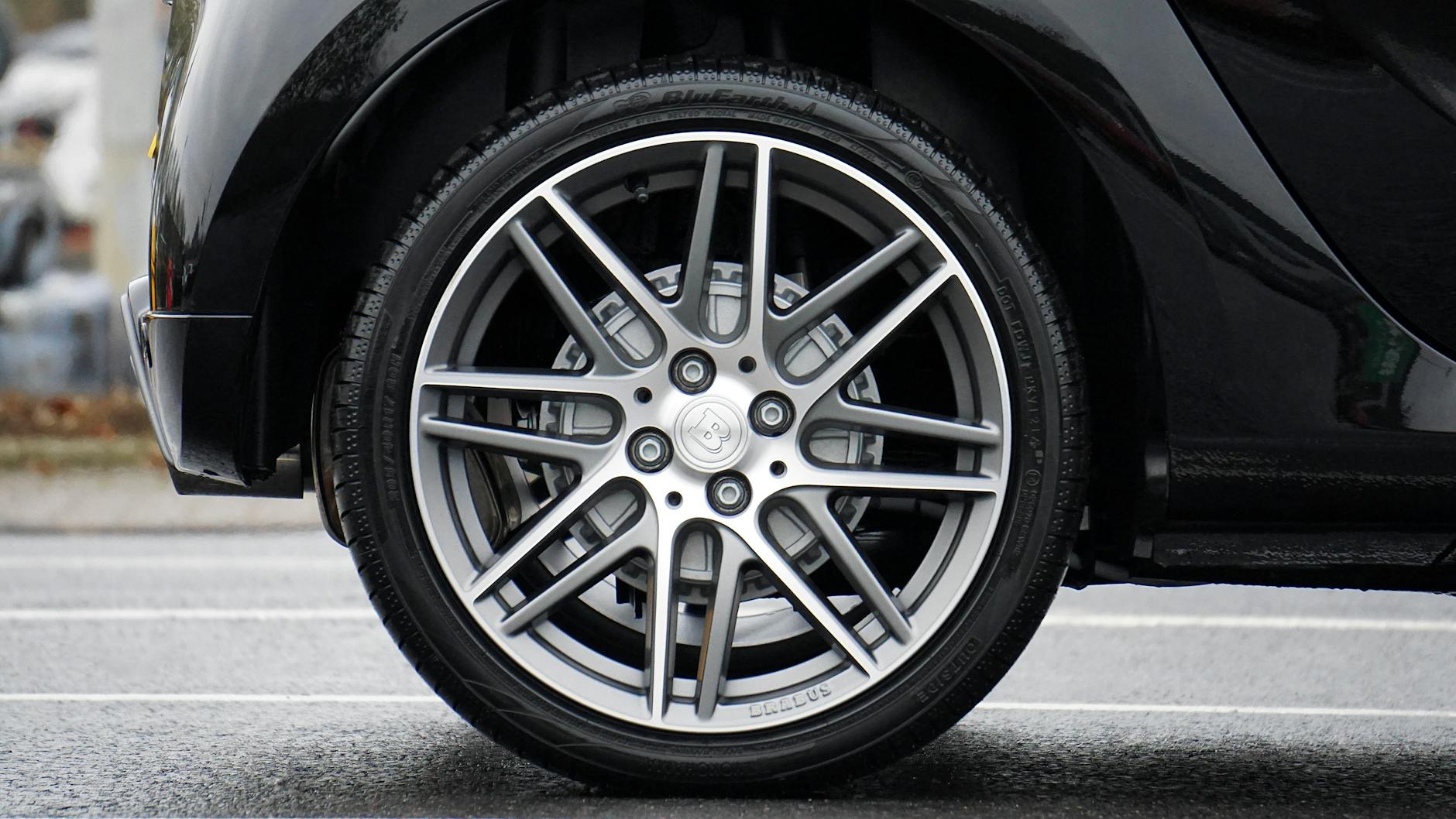
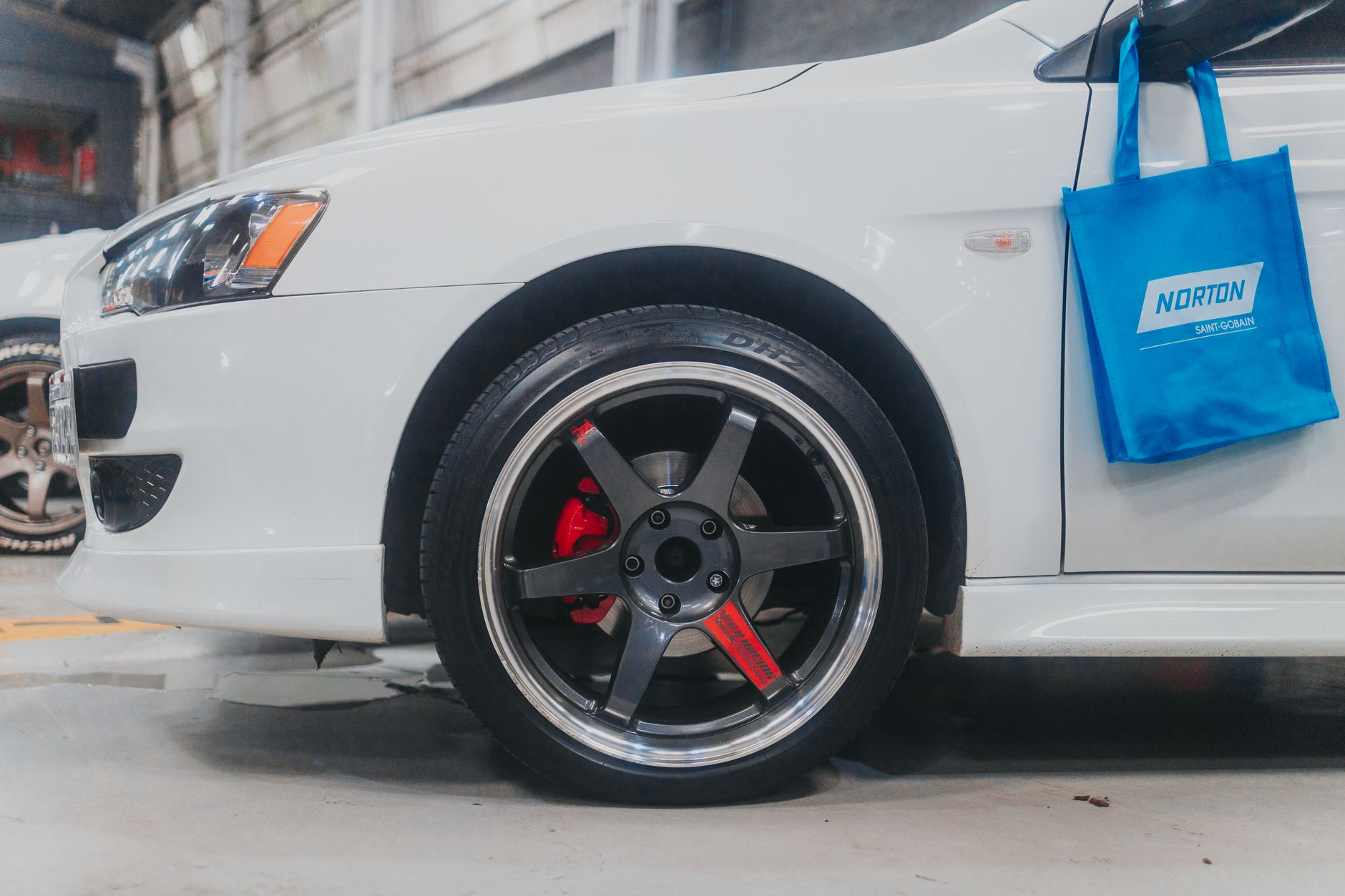
Spoke count affects both aesthetics and function. Five-spoke designs are the most structurally efficient and give brake components visibility — good for performance builds where you want the caliper to read. Ten-spoke and mesh-style designs hide brake hardware and tend to look more road-car restrained. Split spokes (Y-spokes, turbine patterns) add visual complexity and are popular on wider fitments where the extra material fills the face naturally.
For track use, stick to fewer spokes with more material per spoke. For street/show, go as detailed as you want — the thermal and load cycles are lower.
Finish Options
This is where custom wheels let you move completely off the shelf. The common finishes:
- Brushed / machined: Directional grain finish, often with a clear or tinted coat over it. Holds up well, shows depth.
- Painted: Any RAL or custom mix. Matte, satin, or gloss. Can be two-toned — painted spokes with a machined lip is one of the cleaner combinations.
- Powder coated: More durable than liquid paint for a solid color. Slightly thicker application, which matters on tight bore fits.
- Chrome or PVD: Physical vapor deposition chrome is more durable than traditional chrome plating and doesn't require the hexavalent chromium process. Better for the environment, better durability, better on tight fitments.
- Custom anodized (for forged): Forged aluminum can be anodized in bronze, smoke, blue, and other tones that aren't possible on cast. The color goes into the metal rather than sitting on top of it.
Finish durability is largely about the quality of prep and coating process. Wheels that get salt, brake dust, and pressure washing weekly need a quality clear coat over whatever finish you choose. Ask specifically about the coating process — a good custom manufacturer will have an answer.
The Custom Wheel Order Process
Here's what a proper custom order looks like from first inquiry to wheels on car.
Step 1 — Design selection or upload. You either pick from an existing design catalog or submit your own concept. Some manufacturers accept vector files, sketches, or reference images. The key is communicating the aesthetic direction clearly: profile depth, spoke style, finish intent.
Step 2 — Quote with specs. You provide your vehicle, target size, offset, bore, and finish. A legitimate custom wheel manufacturer will either confirm fitment or push back on sizing that won't work for your application. This is a good sign, not a hassle — it means someone actually checked.
Step 3 — 3D CAD rendering. Before a gram of aluminum moves, you should see a CAD model of your wheel in your specified finish and size. This is where you catch issues: a spoke that looks too thin at the center, a lip depth that's too aggressive for the offset you want, a finish tone that reads differently in context. Approve the design before manufacturing starts.
Step 4 — Manufacture. Lead times on custom forged or flow-formed wheels typically run 6–10 weeks depending on facility load. That's not slow — it's the reality of made-to-order production. Anyone promising full custom forged wheels in two weeks either has excess inventory labeled custom or is cutting corners somewhere.
Step 5 — QC and shipping. Each wheel should be individually inspected for dimensional accuracy, balance, and finish quality before it ships. Track shipping to your door, preferably in individual protective packaging.
For more on the full ordering process for custom rims specifically, this guide walks through each decision point in detail.
What Custom Wheels Actually Cost
Let's be direct about pricing because the range is enormous and confusing.
Cast aftermarket wheels from a budget manufacturer: $150–$300 per wheel. Fine for appearance, not great for strength, limited fitment options.
Flow-formed wheels from a quality manufacturer: $250–$500 per wheel. Good strength, better fitment options, reasonable weight.
Forged wheels from legacy brands (HRE, BBS, Forgeline): $800–$2,000+ per wheel. Excellent quality, but you're paying heavily for brand positioning.
Forged wheels from a quality OEM-partner manufacturer: $350–$700 per wheel, depending on size and complexity. Same forging processes as the legacy brands, made through partners that supply OEM programs, at 50–70% less. This is where ForgedToFit sits — the manufacturing quality is equivalent, the margin structure is just different because there's no dealer network and no heritage brand premium baked in.
A 5-year warranty matters here. It tells you the manufacturer is confident in both material and process. A warranty that covers defects in materials and workmanship for five years is a real commitment — it means the wheel was built with enough margin that field failures are rare.
Platform-Specific Considerations
Different platforms have quirks that matter at the spec stage.
BMW (F and G-series): Hub-centric fit at 72.6mm is critical — BMW suspension is sensitive to wheel imbalance and non-hub-centric fitment creates shimmy at highway speed. Most F-series M-Sport cars need ET30–ET35 front, ET20–ET25 rear for a flush look without rubbing. For a complete BMW-specific breakdown, custom forged wheels for BMW covers it thoroughly.
Ford Mustang (S550/S650): The Mustang's rear track is wide and the arch has room. A 19x10.5 rear at ET45 works well stock ride height; lowered you can run ET35 without issues. The Brembo brake package on GT Performance and Mach 1 cars needs clearance confirmation on any spoke design that runs close to the center.
Tesla Model 3/Y: TPMS sensors are integrated differently from traditional valve-stem units — they use a band-mounted sensor on the barrel. Your wheel needs a mounting ledge spec'd for Tesla's sensor format. Miss this and you're either drilling the wheel or running without TPMS. Also worth noting: Model 3 Performance runs a staggered fitment from the factory (235/35 front, 265/35 rear) and the hub bore is 64.1mm.
Honda/Acura (FK8/FL5 Type R, Integra Type S): These cars run a relatively narrow factory track with aggressive suspension geometry. The FK8 Type R runs 245/30/20 on a 20x8.5 ET60 from stock. Going wider requires arch work or very careful offset selection. The caliper on the front brake is also large enough to contact some spoke designs at low offsets.
One Decision That Simplifies Everything
If you're early in the process and feeling overwhelmed by specs, here's the frame that simplifies it: decide on construction first, then size, then design, then finish — in that order. Construction determines your budget range and tells you what manufacturing partner you're working with. Size is a function of your fitment goals and your car's clearances. Design is personal once you have the constraints. Finish is last because it doesn't affect anything upstream.
Start anywhere else and you'll keep reversing decisions. Start with construction and everything downstream gets easier.
For anyone still working through the broader aftermarket landscape before going full custom, the aftermarket wheels buyer's guide covers the full spectrum from cast production wheels to bespoke forged.
Frequently asked questions
How long does it take to get custom car wheels made?
For forged or flow-formed custom wheels, expect 6–10 weeks from design approval to delivery. This includes CAD design review, manufacturing, quality inspection, and shipping. Anyone promising full custom forged wheels in under 4 weeks should be questioned on whether they're actually making them to order.
What information do I need to provide to order custom wheels?
At minimum: your vehicle year/make/model, target wheel diameter and width, desired offset (ET), and hub bore size. If you don't know your offset, your OEM wheel's specs are stamped on the back of the spoke — use those as a baseline and adjust from there based on how much flush or poke you want.
Are forged wheels worth the extra cost over cast for a street car?
For a daily driver that never sees track use, flow-formed is usually the better value proposition — you get most of the weight and strength benefit of forging at a lower price. Full forged makes the most sense if you're tracking the car, running above 450whp, or want the absolute lightest possible wheel for performance reasons.
Can I run custom wheels on a Tesla without losing TPMS?
Yes, but the wheel needs to be spec'd with a barrel mounting ledge designed for Tesla's band-mounted TPMS sensor format — not a standard valve-stem hole. Specify this when ordering. Tesla's hub bore is 64.1mm, which also needs to be correct for proper hub-centric fitment.
What's the difference between custom car wheels and just buying aftermarket wheels?
Aftermarket wheels are pre-manufactured in set sizes and designs — you pick from what exists. Custom wheels are built to your specifications: your exact offset, bore, finish, and sometimes your own design. Custom gets you fitment combinations and finishes that don't exist off-shelf, and typically access to forged or flow-formed construction rather than cast.
How do I know if a wide wheel will fit my car without rubbing?
You need to check three clearances: inner clearance between the spoke and suspension/caliper, outer clearance between the tire sidewall and the fender lip, and fender liner clearance under compression. The easiest method is finding what others run on your exact platform on forums, then verifying offset math. For a custom order, a reputable manufacturer will cross-check your specs against known fitment data for your vehicle before finalizing the design.