Custom Rims: How to Get the Right Set Built for Your Car

Most people shopping for custom rims start with aesthetics and end up frustrated by fitment issues, long lead times, or a final price that doubled what they expected. It doesn't have to work that way. If you understand what actually goes into a custom wheel — the construction method, the spec sheet, the finish options — you can order with confidence and end up with something that fits perfectly, lasts years, and costs far less than the name-brand alternatives.
What "Custom" Actually Means
The word gets thrown around loosely. At one end, "custom" means picking a color from a dropdown on a catalog wheel. At the other end, it means specifying every dimension — diameter, width, offset, bolt pattern, center bore, spoke profile, barrel depth — and having a wheel manufactured to those numbers from scratch.
Real custom rims are made to order. No warehouse stock, no compromises on offset to match available inventory. If you're running an E90 M3 with aggressive fitment and need a 19x10 ET25 in the rear with a specific hub bore for a hubcentric fit, that's what gets made. That level of precision is the whole point.
For most enthusiasts, the meaningful distinction is between forged and flow-formed construction. Both are manufacturing processes that produce stronger, lighter wheels than standard cast aluminum — but they work differently and serve different use cases. If you want to understand which makes sense for your build, the breakdown in our flow formed vs forged wheels comparison is worth reading before you spec anything.
Why Fitment Is the Most Important Spec on the Sheet
A wheel that looks incredible on a render can rub your fender liner, sit too deep in the arch, or create scrub radius issues that make your steering feel wrong. Fitment isn't just about the wheel fitting through the wheel well — it affects handling geometry, tire wear, and in extreme cases, bearing load.
The core numbers:
- Diameter and width — the obvious ones, but width has to work with your tire size
- Offset (ET) — how far inboard or outboard the mounting face sits; too low and you rub suspension components, too high and the wheel tucks too far inside
- Bolt pattern — 5x112 for most modern Audis and Mercedes, 5x120 for BMWs and some GMs, 5x114.3 across a huge range of Japanese and American platforms
- Center bore — the hole that centers the wheel on the hub; this needs to match your hub diameter or you'll need hubcentric rings
To give you a concrete example: a Mustang GT on a 19x10.5 ET45 front is asking for problems — that offset pushes the wheel too far inboard and may contact the caliper on some brake setups. Dropping to ET35 or ET28 solves it but may require a slight fender pull in the rear. These tradeoffs are real, and getting them right before manufacturing starts is critical.
If you're buying off a catalog, you're fitting your car to whatever offsets exist. With custom rims made to order, you spec the offset your car actually needs.
Forged vs. Cast: Why the Build Method Matters
Cast wheels are poured — molten aluminum goes into a mold, cools, and is machined. Fast to produce, inexpensive, but the grain structure of the metal is random, which means engineers have to add material to hit strength targets. The result is heavier wheels with less consistent performance.
Forged wheels start as a solid aluminum billet that gets pressed under thousands of tons of pressure. The grain structure aligns with the shape of the wheel, which produces dramatically better strength-to-weight ratios. A forged 19" wheel for a BMW F30 335i can weigh 8–9 lbs less per corner than a comparable cast wheel — that's unsprung weight reduction that actually improves ride quality and handling response, not just bragging rights on a spec sheet.
Flow forming (sometimes called flow forging or rotary forging) is a middle-ground process. The center of the wheel is cast or forged, then the barrel is spun under heat and pressure to align the grain structure. The result is significantly lighter and stronger than a conventional cast wheel, at a lower cost than full forging. For daily drivers and street builds that don't need a 100% forged piece, flow formed is an excellent choice.
The detailed breakdown of these tradeoffs is covered in our forged vs cast wheels guide — required reading if you're deciding between construction methods.
Design Options: From Catalog to Completely Custom
Choosing From Existing Designs
Most custom rim manufacturers — ForgedToFit included — offer a library of spoke profiles, face designs, and barrel configurations. You pick the design, specify your fitment, choose a finish, and the wheel is manufactured to your numbers. This is the fastest path to something genuinely custom without the cost of original design work.
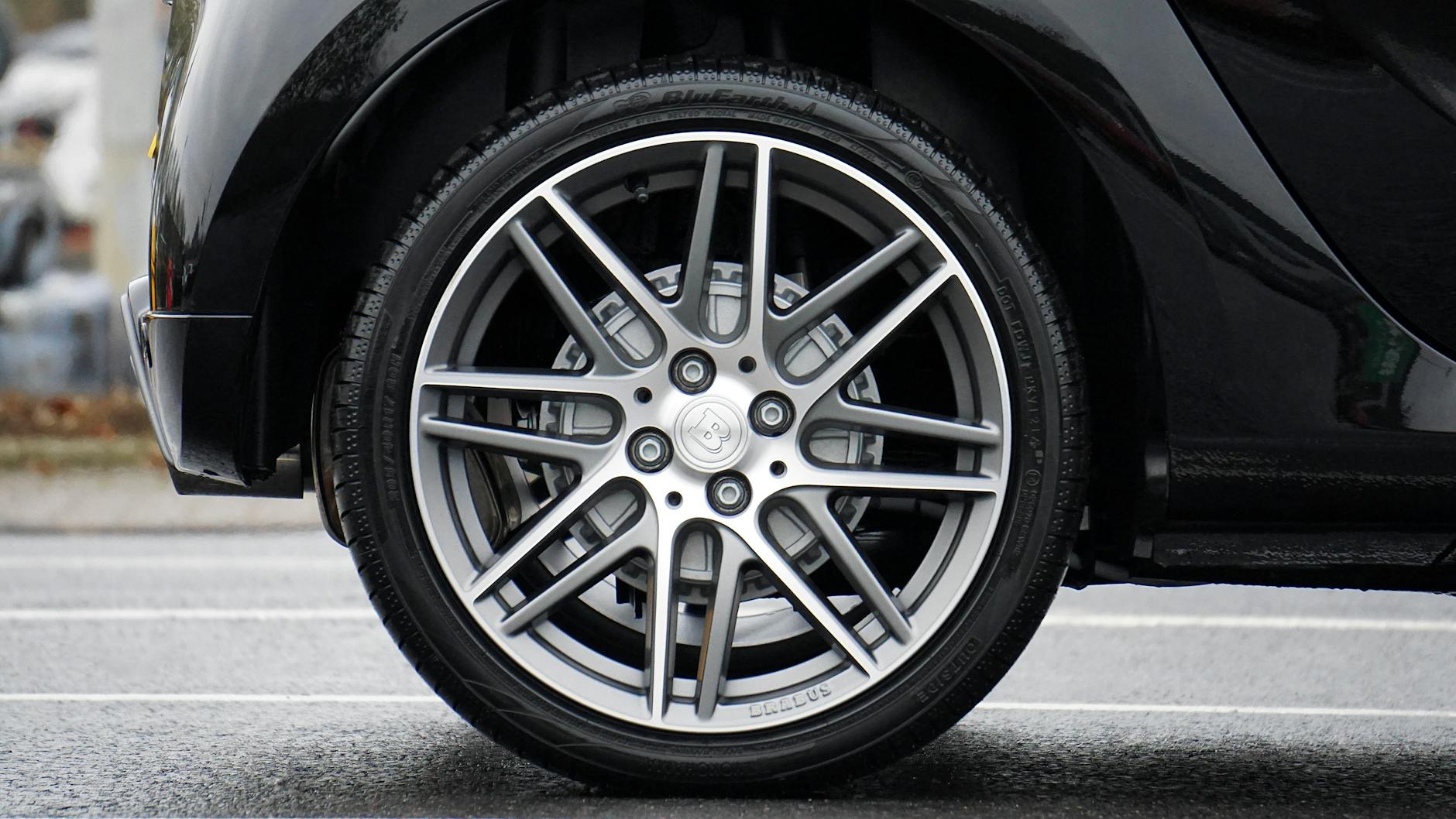
Face profile has real functional and aesthetic consequences. Deep concave faces look aggressive and are popular on wide-body builds and flush fitment setups, but they require careful attention to brake clearance. A 10" wide wheel with an aggressive concave might not clear a large aftermarket caliper. Flat face designs are cleaner, often easier to clear big brakes, and have a more classic look that works on everything from Porsches to lowered Civics. We've written a full breakdown of concave vs flat face wheels if you're undecided.
Uploading Your Own Design
If you have a specific vision — a design that doesn't exist in any catalog, a spoke pattern inspired by something obscure, or a completely original concept — you can submit artwork or a rough sketch and work through a 3D CAD process. The design gets rendered in CAD, reviewed for structural integrity and manufacturability, iterated until it's right, then sent to the forge.
This takes longer (typically 4–6 weeks for a clean design cycle) and costs more than picking an existing profile, but the result is genuinely unique. Nobody else has that wheel.
Finish Options
Finish is where custom rims diverge most dramatically in terms of visual impact. The main categories:
Machined + painted: The most common. A base color gets applied, then the face or lips are CNC machined to reveal bare aluminum, creating contrast. Works well in two-tone combinations.
Powder coat: Durable, UV-stable, available in matte, satin, and gloss variants across hundreds of colors. Flat black, bronze, and matte white are perennial favorites. Powder holds up better than paint against stone chips on the barrel.
Polished: A multi-stage hand polishing process that produces a mirror finish. High maintenance — polished aluminum oxidizes — but nothing else looks like it. Popular on show cars and classic builds.
Brushed: Machine-brushed aluminum with a clear coat. Less reflective than polished but doesn't require the same upkeep. Very clean on modern platforms like the Model 3.
Liquid/candy finishes: Candy red, candy blue — translucent colors over a polished base. Polarizing, but executed well they're genuinely impressive.
Bi-tone and tri-tone setups (face in one finish, barrel in another, hardware in a third) are popular on custom forged wheels and can be executed in a single order if the specs are clear upfront.
Real Platforms, Real Fitment Notes
To make this concrete, here are fitment setups that work well across common platforms:
BMW F30 335i: 19x8.5 ET35 front, 19x9.5 ET25 rear on 5x120 with a 72.6mm center bore. Runs without spacers, clears M-Sport brakes, and sits well under stock fenders with a moderate spring drop.
Ford Mustang GT (S550): 20x10 ET45 front, 20x11 ET52 rear on 5x114.3 with a 70.5mm bore. This is essentially the factory stance replicated in a forged wheel — change those offsets if you're running wider rubber or a more aggressive look.
Tesla Model 3: 20x8.5 ET40 all around on 5x114.3 with a 64.1mm bore. The Model 3's weight (around 3,900 lbs) and instant torque delivery make forged construction worth the investment — cast wheels on performance EVs take more abuse than people expect.
Subaru WRX (VA): 18x9.5 ET38 on 5x114.3 with a 56.1mm bore. The small bore is often overlooked — get hubcentric rings wrong on a WRX and you'll feel vibration at highway speed.
The Cost Reality
Legacy forged wheel brands — HRE, Vossen Forged, ADV.1 — price full custom forged sets in the $4,000–$8,000+ range for a set of four. Sometimes significantly more. That pricing reflects brand positioning and retail markup as much as manufacturing cost.
The actual cost of producing a high-quality forged aluminum wheel from a reputable OEM forging facility is a fraction of those prices. ForgedToFit works directly with a 15-year OEM forging partner, cuts out distribution layers, and passes the difference to the customer — typically 50–70% below legacy brand pricing for equivalent construction quality. A set of custom forged 19" wheels that would cost $6,000 elsewhere lands in the $1,800–$2,800 range through a direct model.
Flow formed sets come in lower still — a set of four in 18" or 19" diameter typically runs $900–$1,600 depending on size, finish complexity, and whether it's a standard catalog design or a fully custom spec.
All ForgedToFit wheels carry a 5-year warranty, which matters. A warranty on a custom rim tells you the manufacturer is confident in their process and willing to stand behind it.
The Order Process Step by Step
Knowing what to expect removes most of the anxiety from ordering something custom. Here's how it flows:
- Design selection or submission: Pick from existing profiles or upload your concept
- Fitment spec: Provide your year/make/model, target diameter/width, and desired stance (flush, slightly poked, tucked)
- Quote: Pricing based on design, size, quantity, and finish
- 3D CAD review: You see a render of your exact wheel before anything gets manufactured
- Approval and production: Manufacturing begins after sign-off — typically 3–5 weeks
- Quality check and ship: Direct to your door
The CAD step is valuable. It's where you catch a finish that doesn't look right on your color car, or realize the spoke count feels too busy. Changes at this stage cost nothing. Changes after forging cost everything.
What to Watch Out For
A few mistakes that show up repeatedly:
Ordering the wrong offset for your stance goal. If you want a flush fitment, you need to know your current setup and what offset change is required. Don't guess — use a fitment calculator or ask someone who knows your platform.
Ignoring center bore. Most custom wheels can be machined to any bore, but you have to specify it. A wheel with a 73mm bore on a car with a 64.1mm hub will center on the lug nuts instead of the hub — and you'll feel it.
Choosing finish based on renders alone. Gloss white looks great in a product photo. On a car with road grime, brake dust, and stone chips, it's high maintenance. Consider how you actually use the car.
Underspecifying tire width. A 19x10.5 wheel wants at minimum a 255 tire, and really prefers 265 or 275. Running a 245 on a 10.5-wide rim stretches the sidewall, affects handling, and looks wrong.
For a comprehensive look at all the decisions involved in buying aftermarket wheels — custom or otherwise — the aftermarket wheels buyer's guide covers the full landscape.
BMW-Specific Note
BMW fitment deserves its own mention because the platform diversity is significant — E46, E9X, F3X, G-series, and M cars all have specific requirements around offset, brake clearance, and center bore. F80/F82 M3/M4 owners running track setups need wheels that clear the big M compound brakes without spacers. The specific considerations are detailed in our custom forged wheels for BMW guide.
Getting It Right the First Time
Custom rims are a significant purchase — not in the "spend irresponsibly" sense, but in the sense that they touch every aspect of how your car looks and drives. Get the construction right for your use case, nail the fitment numbers, choose a finish that works with your actual lifestyle, and you end up with something that genuinely transforms the car and holds up for years. Rush any of those decisions and you're either sending wheels back or living with a compromise.
The process is straightforward when you know what you're doing. That's what this is for.
Frequently asked questions
How long does it take to get custom rims made to order?
Typically 3–5 weeks from design approval to shipping for standard catalog designs. Fully custom designs with original artwork go through a 3D CAD cycle first, which adds 1–2 weeks. Rush production isn't usually available on forged wheels — the manufacturing process has a minimum cycle time that can't be compressed without compromising quality.
Are custom forged rims worth the cost over cast wheels?
For most performance applications and daily drivers that log real miles, yes. Forged wheels are measurably lighter — often 8–12 lbs per corner versus a comparable cast wheel — which reduces unsprung mass and improves ride quality, steering response, and braking. They're also stronger, meaning they're more likely to bend than crack in an impact. Through a direct manufacturer like ForgedToFit, the price premium over quality cast wheels is smaller than most people expect.
Can I run custom rims without spacers on my stock suspension?
Yes, if the offset is specced correctly for your platform. Custom wheels made to order can be built to any offset, so you specify the number that puts the wheel exactly where you want it without needing spacers. Spacers are typically a workaround for catalog wheels that don't come in the offset you need — with a made-to-order wheel, they're usually unnecessary.
What information do I need to provide to order custom rims?
At minimum: year, make, and model of your car; desired diameter and width; target fitment (factory stance, flush, poked, or tucked); and your preferred finish. A reputable custom wheel company will confirm your bolt pattern, offset range, and center bore from that information. If you're running a lowered suspension or oversized brakes, mention that upfront — it affects offset and clearance recommendations.
Do custom rims come with a warranty?
It depends on the manufacturer. ForgedToFit includes a 5-year warranty on all custom forged and flow formed wheels, covering structural defects. Finish warranties vary — most cover manufacturing defects but not road hazard damage or curb rash. Always ask about warranty terms before ordering, and be skeptical of any custom wheel without at least a 2-year structural warranty.
Can I submit my own spoke design for custom rims?
Yes. ForgedToFit accepts original designs — artwork, sketches, or reference images — and converts them into 3D CAD models for review before manufacturing. The design goes through a structural analysis to ensure the spoke geometry can handle load at the specified dimensions. You'll see and approve the render before anything is forged, so you know exactly what you're getting.