Aftermarket Wheels: The Complete Buyer's Guide

Swapping your wheels is one of the few modifications that changes how a car looks, handles, and feels all at once. Done right, a set of aftermarket wheels transforms a car from stock-bland to genuinely purposeful. Done wrong, you're rubbing on your fenders, destroying wheel bearings, and eating tires every 15,000 miles. The gap between those two outcomes almost always comes down to decisions made before you ever place an order.
This guide covers every meaningful factor — construction, sizing, fitment, weight, finish — so you can buy with confidence rather than just vibes.
What "Aftermarket" Actually Means
Any wheel not installed by the vehicle manufacturer qualifies as aftermarket. That's a massive range: from $80 Chinese cast knockoffs to $6,000 bespoke monoblock forgings. The category includes brand-name lifestyle wheels, motorsport-spec forgings, replica OEM designs, and fully custom made-to-order sets. Treating them as a single category is like calling everything between a Miata and a Lamborghini just "sports cars."
The practical distinction that matters most is how the wheel is made. Manufacturing method determines weight, strength, repairability, and ultimately whether the wheel is actually worth putting on your car.
Construction: The Most Important Decision You'll Make
Cast Wheels
Gravity casting and low-pressure casting dominate the budget end of the market. Molten aluminum is poured into a mold and allowed to cool. The process is inexpensive and scalable, which is why you'll find cast wheels everywhere from your dealership's OEM option packages to the discount aisle at Discount Tire.
The structural weakness of casting is porosity — microscopic air bubbles trapped in the metal during cooling. Manufacturers compensate by adding material (i.e., weight). A cast 18×8.5 wheel for a Mustang GT will typically weigh 24–28 lbs. That's unsprung, rotating mass, which the suspension has to control on every single bump. A forged equivalent in the same size can come in under 18 lbs.
For a deeper breakdown of where cast falls short and where it's actually fine, the Forged vs Cast Wheels: What Actually Matters piece covers the metallurgy without the usual marketing spin.
Flow Formed Wheels
Flow forming (also called rotary forging or flow forging depending on who's marketing it) starts with a cast center and then applies high-pressure rollers to the barrel while it spins. This work-hardens the aluminum, aligning the grain structure and pushing material outward to form the barrel walls. The result is a wheel that's significantly lighter and stronger than a purely cast wheel, without the full cost of forging.
A flow formed 19×8.5 for an F30 335i will typically land around 20–22 lbs — noticeably better than cast, and a reasonable middle ground for a street car that sees occasional track days. If you're building a dedicated track car or want the absolute best strength-to-weight ratio, you'd go further up the ladder. But for most drivers, flow forming hits a very sensible value point.
Flow Formed vs Forged Wheels: Which Is Right for You? goes deep on when each makes sense for your specific use case.
Forged Wheels
Forging takes a solid billet of aluminum alloy (6061-T6 is standard; some manufacturers use 7075 for even higher strength-to-weight) and compresses it under thousands of tons of pressure. The grain structure flows continuously through the piece rather than having weld lines or cast seams. The resulting wheel is denser, stronger, and can be machined thinner because there's no porosity to worry about.
A properly forged wheel for a Tesla Model 3 Performance in 20×9 can come in around 17–19 lbs. For a car that already has significant unsprung weight concerns due to its battery mass, shaving 6–8 lbs per corner is a real performance benefit, not just a spec sheet brag.
Forging also means the wheel can take a hit — a pothole impact that cracks a cast wheel often bends a forged one, and bent forged wheels can frequently be straightened where cracked cast wheels are scrap.
Sizing: Where Most People Get It Wrong
Diameter
Going up in diameter ("plus sizing") is almost universal in aftermarket fitments. An F30 335i comes stock on 17s or 18s; most owners move to 18s or 19s. A Mustang GT ships on 18s; 20s are common aftermarket. This is generally fine as long as you maintain overall tire diameter — reducing sidewall height proportionally to keep the rolling circumference within about 2–3% of stock.
Where people go wrong is chasing diameter for its own sake. A 22-inch wheel on a sport sedan requires a 25-series or 30-series tire. At that profile, there's essentially no sidewall to absorb road impact, and the wheel takes the full load of every pothole and expansion joint. Warranty claims and bent wheels skyrocket. The sweet spot for most performance applications is 1–2 inches over stock diameter.
Width
Wider wheels let you run more tire contact patch, which improves lateral grip. The relationship isn't linear though — a 275mm tire on a 10-inch wide wheel and the same tire on a 9-inch wide wheel perform differently. Tire manufacturers publish approved rim width ranges for every tire size; running outside those ranges changes the contact patch shape and can affect both grip and wear patterns.
For a Porsche 911 (992) running a staggered setup — say 20×8.5 front and 21×11.5 rear — matching rim width to the tire's ideal range matters more than the number looks good on paper.
Offset and Backspacing
Offset (ET rating) is where fitment gets technical. Offset is the distance in millimeters from the wheel's centerline to its mounting face. Higher positive offset pushes the wheel inward toward the car; lower offset or negative offset pushes it outward.
Get this wrong and you're either rubbing on the inner fender liner under compression or poking so far outside the fender that it's illegal in some states and causes scrubbing on the outer lip. Most OEM offsets for front-wheel drive cars run ET40–ET55. Rear-wheel drive performance cars are often ET20–ET35. All-wheel drive crossovers vary wildly.
A 5mm change in offset moves the wheel 5mm outward or inward relative to the hub face — but it moves the outer edge of the wheel 5mm in the opposite direction. On a wide wheel, small offset changes have a big visual effect on fitment.
Center Bore
This one is boring (pun unavoidable) but genuinely important. The center bore is the hole in the wheel's hub that fits over the hub on your car. OEM wheels are hub-centric — the bore fits snugly over the hub, meaning the hub carries the centering load. Many aftermarket wheels have a larger bore and use plastic hub-centric rings to fill the gap.
Those rings are fine for street use, but if one falls out (they can, especially with thermal cycling), your wheel is running lug-centric, and you'll feel vibration above 60 mph that no amount of balancing will fix. Custom-made aftermarket wheels can be bored to your exact hub diameter, which is one less variable to manage.
Style Choices: Beyond Just Looking Good
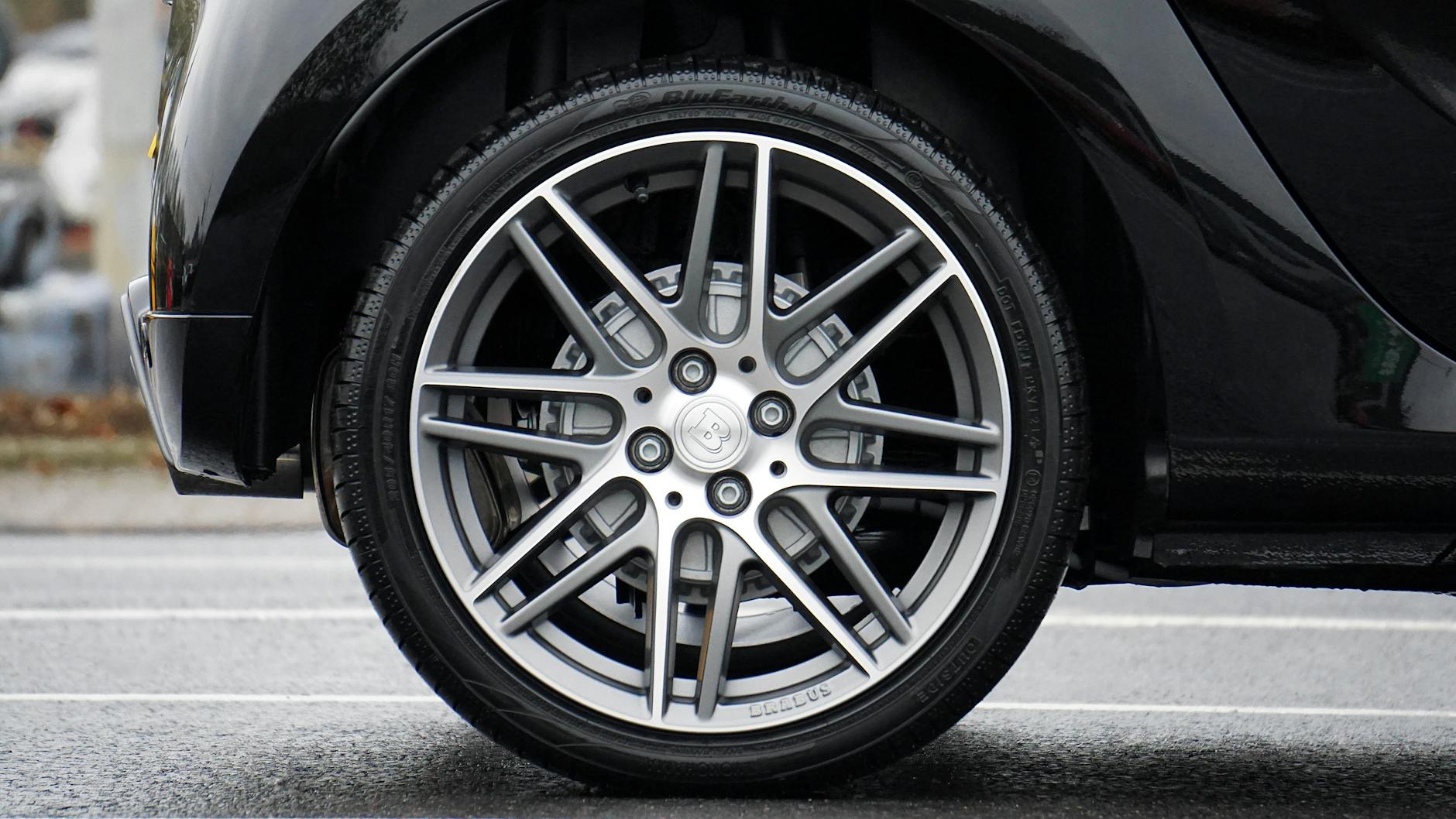
Wheel face design isn't purely aesthetic. A concave vs flat face wheel decision, for example, has real implications for brake clearance, wheel weight distribution, and how the spokes respond to stress.
Deep concave profiles look dramatic and are popular on stance-oriented builds, but they can conflict with large brake calipers — a common issue on cars running Brembo or AP Racing upgrades. A flat or mildly concave face gives more clearance. If you're running a Brembo 6-piston on a Charger Hellcat, verify caliper clearance before falling in love with a deep-dish design.
Spoke count affects both aesthetics and practical access for brake work. Five-spoke and ten-spoke designs offer reasonable access to brake calipers and rotors for maintenance. Mesh and multi-spoke designs can make getting a socket onto caliper bolts genuinely annoying.
Finish Durability: What Actually Holds Up
The finish conversation usually starts with color — gloss black, brushed gunmetal, bronze, two-tone machined faces — but durability matters more than color choice. Powder coat is generally the most durable finish for street wheels; it resists chips, brake dust, and road chemicals better than liquid paint. Bare polished aluminum is gorgeous and high-maintenance — expect to polish 2–4 times a year if you want it to stay looking right.
Chrome is heavy (adds 1–2 lbs per wheel due to the plating process) and increasingly hard to repair when damaged. Most serious enthusiasts have moved away from it. Hydro-dipped finishes look unique but are comparatively fragile and difficult to touch up.
For daily-driven cars in regions with road salt — the upper Midwest, Northeast, Canada — a quality powder coat finish over properly prepared aluminum is your best bet for wheels that still look good at year three.
The Price Landscape
Here's an honest breakdown of what different price tiers actually deliver:
Under $150/wheel: Almost certainly a cast wheel from an overseas manufacturer with limited quality control. Fine for a daily driver winter set where you'd rather bend a cheap wheel than your nice summer set. Not suitable for any performance application.
$150–$350/wheel: The mass-market mainstream. Mix of cast and flow formed, brand names you'll recognize from car shows and YouTube builds. Quality ranges significantly; some are excellent value, some are just expensive marketing.
$350–$700/wheel: Flow formed and entry forged territory from established brands (Enkei, Volk, BBS, HRE entry lines). Noticeable weight and quality improvement. These are appropriate for track day use and serious performance builds.
$700+/wheel: Full custom forged territory. This is where OEM-supplier manufacturers, bespoke machining, and fully custom fitment live. Legacy brands in this space (HRE, Vossen Forged, Brixton) charge a premium that includes significant brand markup.
One development worth knowing: the same OEM forging technology used to build wheels for major manufacturers is now accessible through direct-to-consumer brands. ForgedToFit works with a 15-year OEM forging partner to build fully custom forged and flow formed wheels at 50–70% below legacy brand pricing — same manufacturing process, no middleman markup. For a full platform-specific walkthrough, the Custom Wheels: Everything You Need to Know guide is a useful starting point.
Platform-Specific Considerations
Different cars demand different approaches to aftermarket wheel selection.
BMW 3 Series (F30/G20): Hub bore is 66.6mm — critical to get right, as many generic aftermarket wheels use 73.1mm bore with hub rings. Offset range for street use is typically ET30–ET40 on 18s and 19s. Staggered setups (wider rear) are common and suit the car's RWD balance. Our Custom Forged Wheels for BMW: The Complete Guide covers this platform in detail.
Mustang GT (S550/S650): These cars handle more wheel weight than you might expect thanks to the independent rear suspension, but dropping unsprung weight still sharpens steering response noticeably. OEM offset is ET40 front and rear on the base car. Common fitments are 19×10 or 20×10 square setups, or 19×10 front / 19×11 rear staggered.
Tesla Model 3: Tesla uses a 5×114.3 bolt pattern with a 64.1mm hub bore. The Performance variant's 20-inch OEM wheels weigh around 25 lbs each — significant for a car where efficiency matters. A quality forged 20-inch wheel in the 17–19 lb range helps both range (slightly) and steering feel (noticeably). The aero cover delete is popular, but whatever wheel you choose, verify it clears the Model 3's large front brake setup.
Subaru WRX (VB): The 2022+ chassis runs 5×114.3 at a relatively high ET55 offset from the factory. Dropping offset into the ET40–ET45 range with 18×9.5 or 19×9.5 wheels gives a more aggressive stance without needing fender work. Stay above ET35 or you'll have clearance issues with the strut on full lock.
What Custom Made-to-Order Actually Changes
Off-the-shelf aftermarket wheels require you to find a design that fits your car's specifications. Custom made-to-order flips that: you define the diameter, width, offset, center bore, finish, and spoke design, and the wheel is manufactured to those exact parameters.
For most production cars, quality off-the-shelf options exist and the fitment question reduces to research. Where custom becomes clearly superior: cars with unusual hub dimensions or offsets (some older European platforms, modified cars with coilovers and spacers already installed, widebody kits that change the optimal offset dramatically), drivers with specific weight targets, and anyone who wants a wheel design that doesn't already exist in the market.
The CAD design step — seeing your exact wheel rendered before machining starts — also removes most of the aesthetic uncertainty. You're not hoping a wheel looks right on your car; you're approving it before it exists.
Weight Matters More Than People Think
Unsprung weight (wheels, tires, hubs, brake rotors — anything not supported by the suspension spring) affects ride quality, handling response, and even fuel economy. Every pound saved at the wheel is worth roughly 4–7 pounds saved elsewhere on the car in terms of handling feel, because unsprung mass has to be controlled by the spring and damper on every road input.
Going from 26-lb cast wheels to 19-lb forged wheels on a Tesla Model 3 is a 7 lb/corner reduction. That's 28 lbs of unsprung mass removed. The steering sharpens, the suspension tracks better over broken pavement, and the car feels less inert in direction changes. These are real, measurable improvements — not enthusiast placebo.
Rotational inertia matters too. A heavier wheel requires more energy to accelerate and decelerate rotationally. On a car you drive hard — whether that's track days or just spirited canyon runs — lighter wheels mean the drivetrain spends less effort spinning the wheels and more effort moving the car forward.
Frequently asked questions
How do I know if aftermarket wheels will fit my car?
You need to match four specifications: bolt pattern (number of bolts and their circle diameter, e.g., 5×114.3), center bore (the hub hole diameter), offset (ET rating in millimeters), and overall wheel diameter/width. Most fitment databases like Wheel-Size.com list OEM specs for every platform. If you're ordering custom wheels, the manufacturer should verify all four against your vehicle before manufacturing begins.
Are aftermarket wheels safe for daily driving?
Yes — quality aftermarket wheels from reputable manufacturers are completely safe for daily driving. The key word is quality. Cast wheels from unknown brands with no load rating certification are a legitimate safety concern. Flow formed and forged wheels from established manufacturers or OEM forging partners are typically stronger than OEM cast wheels. Always verify the wheel's load rating exceeds your vehicle's per-corner weight.
Will aftermarket wheels void my car's warranty?
In the US, the Magnuson-Moss Warranty Act means a dealer cannot void your warranty simply because you installed aftermarket parts — they must prove the aftermarket part caused the specific damage being claimed. Fitting properly sized aftermarket wheels won't void your powertrain warranty. However, if you install wheels with incorrect offset that damage your wheel bearings or suspension bushings, that specific repair may not be covered.
How much do aftermarket wheels typically cost?
The range is genuinely enormous. Budget cast wheels start around $80–$150 each. Quality flow formed wheels from recognized brands run $200–$400 each. Forged wheels from legacy brands typically start at $700 each and go well beyond $1,500 each. Made-to-order forged wheels through direct-to-consumer manufacturers like ForgedToFit can deliver the same OEM forging quality at $300–$600 each by cutting out the brand premium.
What's the difference between forged and cast aftermarket wheels?
Forged wheels are made by compressing billet aluminum under high pressure, aligning the grain structure for superior strength and allowing thinner, lighter construction. Cast wheels are made by pouring molten aluminum into a mold; the cooling process can create microscopic porosity, requiring more material (and more weight) to hit the same strength targets. A forged wheel in the same size typically weighs 20–35% less than a cast equivalent and handles impacts better.
Can I use hub-centric rings with aftermarket wheels?
Yes, hub-centric rings are a standard and accepted way to fit a wheel with a larger center bore than your car's hub. Use quality aluminum or hard nylon rings rather than soft plastic. The main risk is rings falling out over time due to thermal cycling — checking them when you rotate tires is good practice. If you're ordering custom wheels, specifying the exact hub bore for your vehicle eliminates the need for rings entirely.