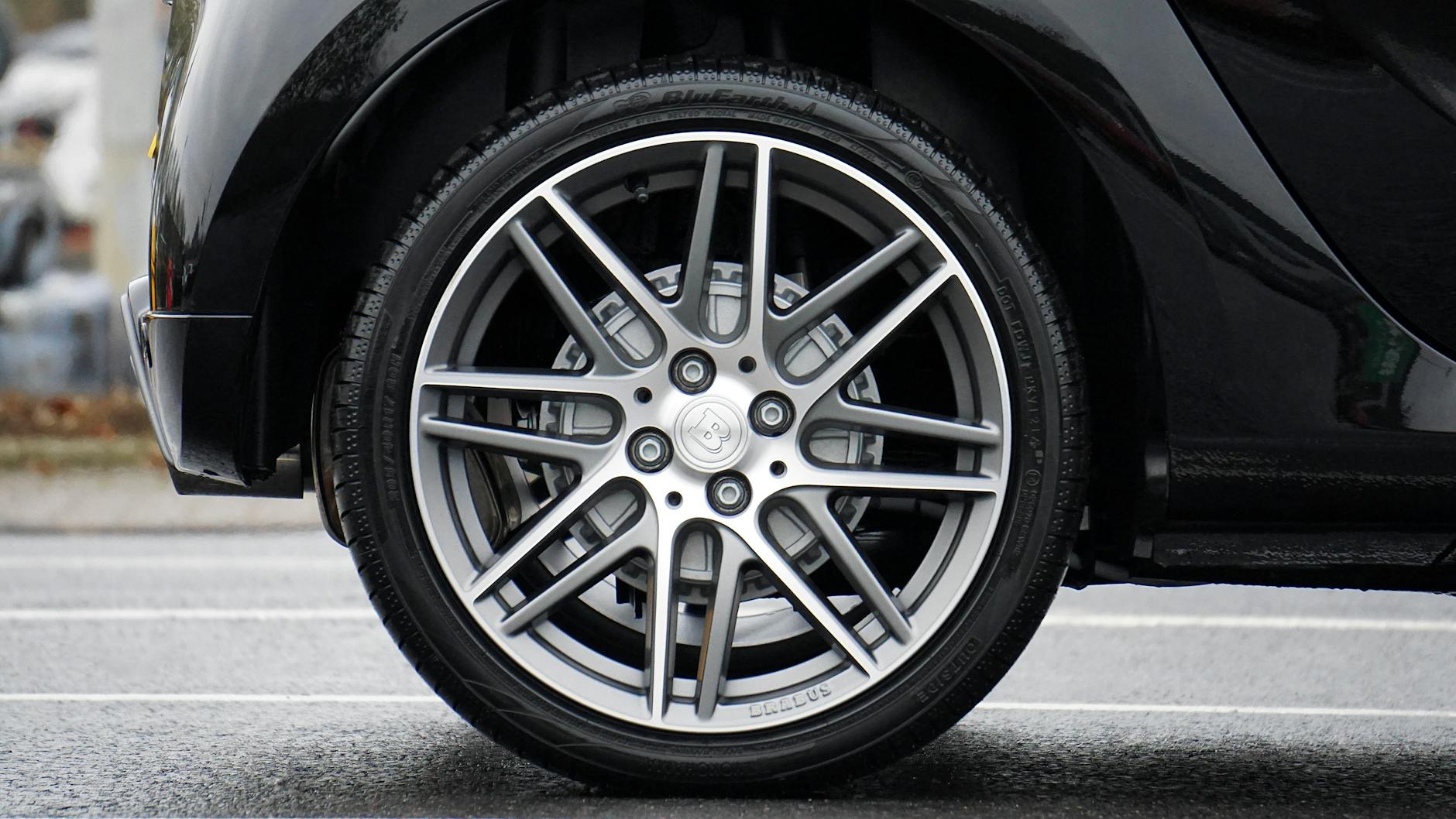
C6 Corvette Aftermarket Wheels: The Complete Guide

The C6 Corvette is one of the most satisfying platforms to wheel properly. From the base coupe to the Z06 and ZR1, every variant has a wide, muscular stance that responds dramatically to the right set of wheels — and suffers just as dramatically from the wrong ones. Get the sizing right and a set of properly specced forged wheels will transform a stock-looking C6 into something that looks like it cost twice as much. Get it wrong and you're dealing with rubbing, poor handling, or worse, a wheel that fails under load.
This guide covers everything: stock fitments, what changes for Z06 and ZR1, how to think about sizing up, what materials actually matter on a performance car, and how to get a custom set built without the legacy-brand markup.
Stock Wheel Specs: Know What You're Starting With
GM ran a staggered fitment across the C6 lineup, which matters enormously when you're shopping for replacements or upgrades. The base C6 and C6 Grand Sport left the factory on 18×8.5 fronts and 19×10 rears. The Z06 stepped up to 18×9.5 fronts and 19×12 rears — that 12-inch rear is unusually wide and directly limits your aftermarket options if you want a drop-in fitment. The ZR1 matched the Z06 rear width.
All C6s share a 5×120.65mm bolt pattern (that's the old GM 5×4.75-inch pattern), a 70.3mm center bore, and relatively shallow positive offsets — the base car runs around +56mm front and +57mm rear. The Z06's wider rear drops the rear offset closer to +57mm but the tire section width jumps to 325mm territory, which is where people get into trouble trying to fit aftermarket wheels that weren't designed for that specific application.
If you're building a track car or just want to fill the arches properly, understanding these numbers is the starting point, not an afterthought.
Sizing Up: What Actually Works on a C6
Most C6 owners shopping for aftermarket wheels are looking at one of three directions: matching factory stagger with better materials, going wider in the rear, or going to a square setup for track use.
Staggered Fitments
A staggered setup is the default choice for street-driven C6s, and for good reason — the Corvette's rear-biased weight distribution and massive torque output benefit from a wider contact patch out back. A popular street upgrade is 19×9.5 front and 20×11 or 20×12 rear, which keeps the stagger but goes a half-inch taller in diameter. That adds a touch of visual drama without throwing off the speedometer significantly.
For Z06 owners specifically, matching that 12-inch rear width in an aftermarket wheel means you're looking at a pretty short list of options among cast wheels. Forged construction is almost mandatory at that width to keep weight in check — a cast 19×12 can easily hit 30+ pounds per corner, which is brutal for unsprung mass on a car that was engineered to be quick through corners.
Staggered setups do mean you can't rotate tires front-to-rear, which shortens tire life and adds cost over time. That's the tradeoff.
Square Setups for Track Use
If your C6 sees autocross, HPDE events, or road course days, a square setup — same size front and rear — is worth serious consideration. Running something like 18×10.5 or 19×10.5 all around with a 275 or 285 tire lets you rotate tires, run the same compound at all four corners, and tune handling balance with tire pressure alone. The tradeoff is giving up some rear grip potential compared to a 325-width rear, but for most non-pro drivers the handling consistency and tire cost savings more than compensate.
The C5 ran a similar debate, and most dedicated track guys eventually went square. The reasoning holds for the C6.
Going Wider Than Stock
Fitting a wider rear wheel — say a 20×13 — on a C6 typically requires fender work or at minimum aggressive negative camber to clear the lip. It's doable on a modified car, but if you're running stock suspension geometry you'll hit the inner fender liner before you make it aesthetically work. Stick to 12 inches wide in the rear maximum for a street car with standard suspension, and even then verify your offset carefully.
Offset and Backspacing: Where People Get It Wrong
Offset is the single most common mistake in C6 wheel fitment. The temptation is to run aggressive negative offset (lower ET number) to push the wheel face outward and fill the arch. It looks great in renders and terrible in reality if you haven't accounted for caliper clearance, control arm clearance, and the geometry changes that come with a shifted scrub radius.
For the base C6 with stock suspension, most aftermarket wheels in the ET45–ET57 range will fit without issue front and rear. Go lower than ET40 up front and you start risking contact with the lower control arm on full lock. In the rear, the C6's geometry is a bit more forgiving, but going below ET35 on a 10-inch-wide rear wheel will often push the wheel lip outside the fender on a stock-height car.
Custom offset wheels are the cleanest solution here. Rather than hunting for a shelf fitment that's close-but-not-perfect, specifying exact offset to your suspension setup and ride height gets you a wheel that sits exactly where you want it. This is especially relevant for lowered C6s on Bilstein or Öhlins coilovers, where the geometry has already shifted from stock.
If you've gone to the trouble of lowering your C6 by 1.5 inches and adding camber plates, running a shelf wheel at stock offset is leaving performance and aesthetics on the table.
Forged vs Cast: It Actually Matters on a Corvette
On a daily driver crossover, the difference between cast and forged wheels is real but not urgent. On a C6 Corvette — especially a Z06 or ZR1 making 500+ horsepower — it matters more than most people admit.
Forged wheels start from a solid billet of 6061-T6 aluminum that's been compressed under thousands of tons of force, aligning the grain structure of the metal. The result is significantly higher tensile strength at lower weight compared to cast aluminum. A forged 19×12 rear wheel for a Z06 can realistically come in 4–6 pounds lighter than an equivalent cast piece. Multiply that across four corners and you've reduced unsprung mass by 16–24 pounds — which is meaningful for steering feel, ride quality, and acceleration.
Flow-formed wheels sit between cast and fully forged. The barrel of the wheel is spun and stretched under pressure after casting, which increases barrel strength substantially. A quality flow-formed wheel is a legitimate performance upgrade over gravity-cast or low-pressure cast wheels and often hits a better price point for drivers who want better-than-cast without the full forged premium.
For track use, forged is the right answer every time. For a street C6 that sees occasional canyon runs, flow-formed is a defensible choice. For a Z06 or ZR1 running serious power, don't compromise on the rear wheel especially — the loads are real.
The full breakdown of why this matters mechanically is worth reading if you want to go deep on the metallurgy: understanding cast vs forged wheels changes how you evaluate every option.
Finish Options and Aesthetics
The C6's design language is low and wide with an aggressive front splitter area and muscular rear haunches. Wheels that work best tend to have substantial spoke presence — deep concave multi-spokes, Y-spokes, or mesh designs look proportionate. Very thin spokes on very wide wheels tend to look busy and toyish at the C6's scale.
Finish-wise, gloss black and dark gunmetal are the most popular choices for C6s, and they work. But a brushed or polished face on a darker lip — what's often called a machined or two-tone finish — reads as more premium on the road and photographs extremely well. Satin finishes hold up better over time than gloss on track cars because brake dust and heat cycling are less visible.
Chrome is rarely the right call on a Corvette that's meant to perform. It adds weight, is brutally difficult to maintain, and looks dated on anything post-2008.
Convex vs concave face profiles change the perceived depth of the wheel significantly. On a wide rear fitment for the Z06, a deep concave face makes the spoke structure visible from a distance and adds visual depth that flat-face wheels simply can't replicate. Understanding deep concave wheels — particularly how lip depth interacts with offset — is worth your time before you spec a custom set.
The C6 Z06 Deserves Special Attention
The Z06 is a fundamentally different animal than the base coupe. The LS7 made 505 horsepower from 7.0 liters of naturally aspirated V8, and it spun to 7,000 RPM with a character that few American cars have matched. Running a wheel that's even slightly undersized — either in diameter or width — visually miniaturizes the car. The Z06 is wide. The wheels need to match.
Many Z06 owners running serious power (whether from a cam kit, supercharger, or nitrous) upgrade to forged wheels specifically because cast wheels have been documented to fail at the bead seat under hard launches. On a 600+ whp build, a cast wheel is genuinely a risk item. This isn't theoretical — it shows up in Corvette forum threads with photos. A forged wheel's metallurgical consistency essentially eliminates that failure mode.
For ZR1 owners, the same logic applies at higher intensity. The supercharged LS9 pushing 638 horsepower and running 335/25R20 rear tires is putting serious lateral and longitudinal loads through the rear wheel on every hard exit. Anything you're going to drive hard deserves the structural advantage of forged construction.
Getting Custom C6 Corvette Wheels Built
The conventional path for C6 aftermarket wheels is to shop a shelf brand — BBS, Forgeline, Vossen, HRE — pick a design, hope a catalog fitment matches your setup, and pay $3,000–$8,000+ for the set. That works if the catalog fitment is right and you're comfortable with the pricing.
The alternative is specifying a custom set built to your exact dimensions. This is how OEM wheels get made — a 3D CAD file gets turned into a forging die, the blanks get pressed and machined, and the result is a wheel that fits your car precisely rather than approximately. ForgedToFit works with a 15-year OEM forging partner to do exactly this, at 50–70% less than legacy forged brands, with a 5-year warranty.
The process is straightforward: you browse existing designs or submit your own, get a quote, approve a 3D CAD rendering of how the wheel will look on your specific application, and the set gets manufactured and shipped direct. For a Z06 owner who needs a true 19×12 rear at a specific offset for a lowered car, this is often the only way to get exactly the right wheel without compromising.
Custom doesn't mean expensive by default. It means built for your car rather than for a catalog.
What to Avoid
A few specific traps worth naming:
- Universal fitment wheels with hub-centric rings: These work, but on a performance car the ring takes the centering load that should be handled by metal-to-metal contact with the hub bore. They're fine for street driving; under track conditions with heat cycling, they can migrate. A proper 70.3mm center bore machined into the wheel is the right approach.
- Very heavy cast wheels on Z06/ZR1: We've covered this, but it bears repeating. A 30-pound rear wheel is a liability.
- Wheel spacers to correct offset: They work in a pinch, but they extend wheel studs into a shear loading scenario and change bearing loads. Get the offset right in the wheel spec instead.
- Undersized lug nuts: The C6 uses 14×1.5mm thread pitch. Aftermarket wheels with thick hub flanges sometimes need extended or ball-seat lug nuts. Confirm before installing.
Where the C6 Sits in the Corvette Lineup
The C6 ran from 2005 to 2013 and represents one of the best value propositions in American performance cars. Used examples now sit in a range where serious wheel investment makes total sense — a well-maintained C6 Z06 is a legitimate performance car at a price that leaves budget for wheels. Compare that to a new C8 where the OEM wheel game is entirely different.
If you're coming from or cross-shopping a C5, the bolt patterns are the same (5×120.65mm) but the body is wider and the wheel wells are larger, so don't assume C5 fitments translate directly. The C5 Corvette aftermarket wheels guide covers that platform specifically if you're dealing with an earlier car.
Final Spec Checklist
Before you pull the trigger on any set of C6 Corvette aftermarket wheels, confirm these in writing:
- Bolt pattern: 5×120.65mm (also listed as 5×4.75")
- Center bore: 70.3mm hub-centric
- Front offset: verify against your suspension setup and ride height
- Rear offset: same — critical on Z06 with the 12-inch width
- Wheel weight: get actual measured weights, not nominal specs
- Brake caliper clearance: C6 Z06 brembos are large; verify inner barrel clearance
- Load rating: should exceed the corner weight of the vehicle
Getting these right takes 20 minutes of homework. Getting them wrong takes much longer to fix.
Frequently asked questions
What bolt pattern does the C6 Corvette use?
All C6 Corvettes use a 5×120.65mm bolt pattern, which is also commonly listed as 5×4.75 inches. The center bore is 70.3mm and the lug nut thread pitch is 14×1.5mm. Any aftermarket wheel needs to match these specs exactly — hub-centric fit at 70.3mm is strongly preferred over using adapter rings on a performance application.
Can I run a square wheel setup on a C6 Corvette?
Yes, and it's often the preferred choice for track use. A square setup — same width front and rear — allows tire rotation, makes handling balance easier to tune with pressure adjustments, and reduces running costs. A common track fitment is 18×10.5 or 19×10.5 all around with a 275 or 285 tire. The tradeoff is giving up the wider rear contact patch that the staggered factory setup provides.
What's the maximum rear wheel width on a C6 Z06 without fender modifications?
The Z06 left the factory with a 19×12 rear wheel, so 12 inches wide is achievable without bodywork — but offset must be correct. Going wider than 12 inches typically requires significant fender work or aggressive negative camber to avoid contact with the inner liner. On a street car with stock-height suspension, 12 inches is the practical limit for the rear.
Are forged wheels worth the cost on a street-driven C6 Corvette?
On a base C6 used primarily for street driving, flow-formed wheels are a strong value choice — meaningfully lighter and stronger than cast without the full forged price premium. For Z06 and ZR1 owners, especially those running modified power levels, forged construction is worth the investment. The weight reduction in unsprung mass improves steering feel and acceleration, and the structural integrity of a forged wheel eliminates the bead-seat failure risk that high-power launches create in cast wheels.
How much do quality aftermarket wheels for a C6 Corvette cost?
A set of quality cast or flow-formed aftermarket wheels for a base C6 typically runs $800–$2,000 for the set from volume brands. Forged wheels from legacy brands like BBS, Forgeline, or HRE for a Z06 fitment can easily reach $4,000–$8,000. Custom forged wheels built to your exact spec through a direct-to-consumer manufacturer like ForgedToFit come in at 50–70% less than legacy forged brands while using the same forging processes and OEM-grade aluminum.
Will C5 Corvette wheels fit a C6 Corvette?
The bolt pattern is the same — 5×120.65mm — but C5 wheels are narrower and sized for smaller tire sections. They will physically mount on a C6, but the sizing is wrong for the wider C6 body. A C5 rear wheel at 18×9.5 will look visually undersized inside a C6's wider rear arch, and the overall diameter is often shorter than what the C6's suspension geometry expects. It's not a recommended fitment outside of a temporary spare situation.