Monoblock Wheels: What They Are and How to Choose

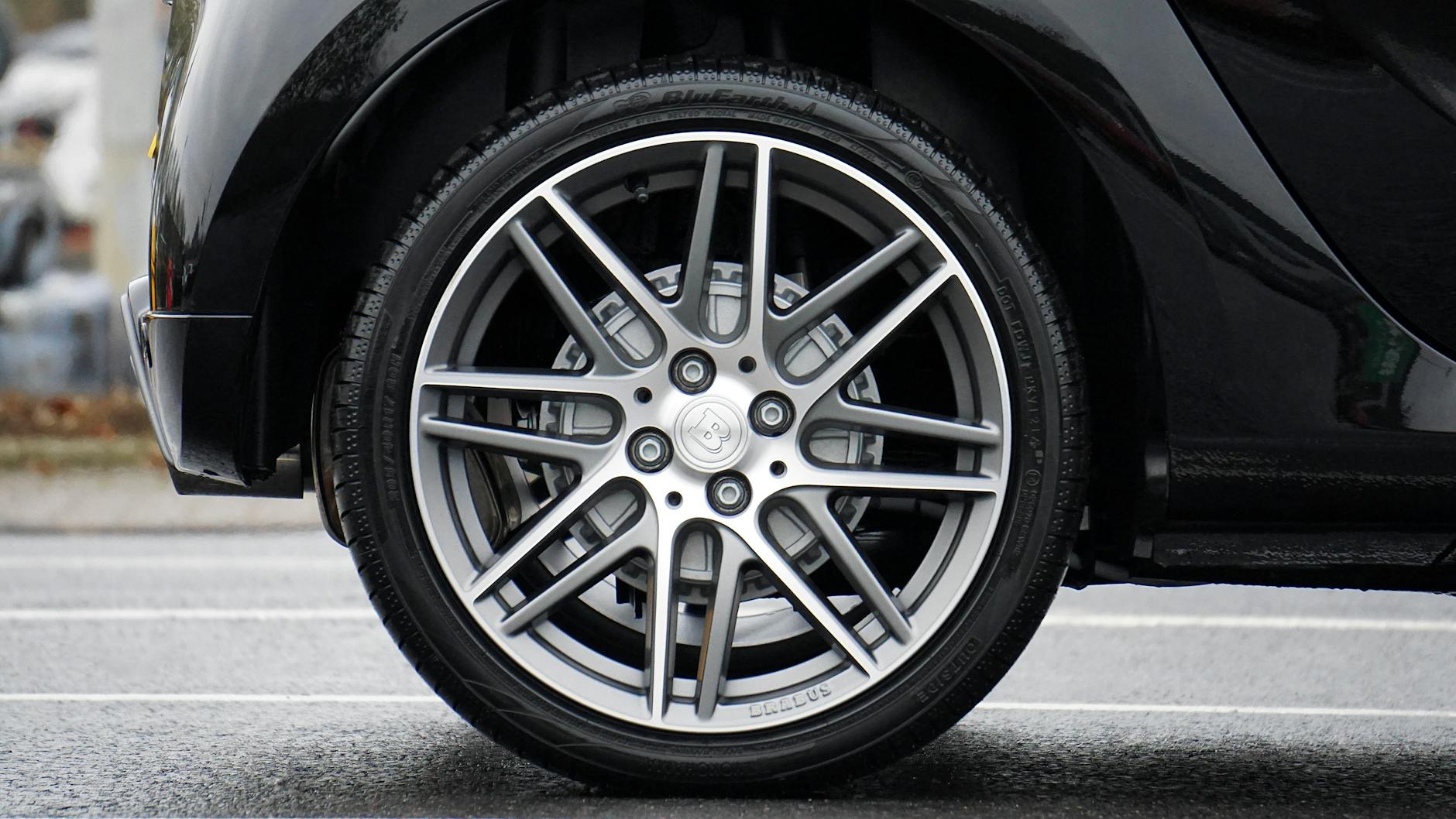
A monoblock wheel is exactly what the name says: one piece. The barrel, spokes, and flange are all forged or cast from a single billet of aluminum alloy, then machined to spec. No bolted-together sections, no adhesive seals, no hardware to come loose at 120 mph. That structural simplicity is why OEM engineers default to the design, and why serious aftermarket builders treat it as the reference point against which multi-piece wheels get measured.
That said, "monoblock" doesn't tell you much about quality on its own. A cheap cast monoblock from a budget brand and a forged 6061-T6 monoblock from a precision manufacturer share the same piece count — and almost nothing else. The construction method underneath that label is what determines how the wheel actually performs.
How Monoblock Wheels Are Made
There are three main manufacturing routes: gravity casting, low-pressure casting, and forging (sometimes paired with flow forming for the barrel). Each produces a one-piece wheel, but the grain structure, density, and strength ceiling are completely different.
Cast Monoblock
Gravity and low-pressure cast wheels pour molten aluminum into a mold. The metal solidifies with a relatively coarse grain structure and some porosity. Manufacturers compensate by adding material — which is why cast wheels tend to run heavier. A 19×9.5 cast monoblock on a popular staggered fitment for something like an F30 335i might tip the scale at 26–28 lbs per corner. That's not catastrophic, but it's not light either.
Low-pressure casting is better than gravity casting. The controlled fill reduces porosity and allows thinner sections in non-critical areas. A lot of OEM wheels are low-pressure cast monoblock — they're cost-effective, they last, and the structural predictability is high enough for factory engineering tolerances.
Forged Monoblock
Forging starts with a solid aluminum billet that gets pressed under enormous hydraulic force — typically 8,000 to 10,000 tons — into a rough wheel shape. That compression aligns the grain structure, increases density, and eliminates the micro-voids you get in casting. The result is a wheel that's genuinely stronger at a given weight, which means you can machine more material away and still hit the strength targets.
A forged monoblock in 19×9.5 for that same F30 application might come in at 19–21 lbs — 6 to 8 lbs lighter per corner. Multiply that across four wheels and you're removing 24–32 lbs of unsprung, rotating mass. Suspension response tightens up noticeably; the dampers are working against less inertia on every single compression and rebound cycle.
The trade-off is cost. Forged monoblock wheels require expensive tooling, longer machine time, and more material input (a lot gets cut away on the CNC). Legacy brands have historically charged a premium that reflects both real manufacturing costs and significant brand markup — think $600–$1,200+ per wheel for established names. That's where direct-to-consumer forging programs start making sense, and we'll get to that.
Flow Formed Monoblock
Flow forming — sometimes called rotary forging or spin forming — is a hybrid approach. The wheel starts as a low-pressure cast blank, then a CNC machine presses rollers against the spinning barrel under heat. The mechanical work refines the grain structure in the barrel specifically, increasing tensile strength in that region by 20–30% compared to a standard cast barrel. The face remains cast.
This gives you a wheel that's measurably lighter and stronger than a fully cast design, at a lower price point than a full forge. For a daily-driven Mustang GT on a 19×10 rear fitment, a quality flow formed monoblock is a genuinely smart choice — you get most of the weight benefit at a fraction of the full-forged cost. For our deeper breakdown on how these two processes compare, see our guide on flow formed vs forged wheels.
Monoblock vs Multi-Piece Wheels
Two-piece and three-piece wheels split the wheel into a center and barrel (and outer lip, for three-piece), bolted together with hardware and sealed with adhesive or O-rings. This unlocks fitment flexibility — you can change the offset by swapping barrels, build extreme lips on three-piece designs, and refinish individual sections. Custom builders love them for aggressive fitment work.
Monoblock wheels have real advantages that multi-piece designs can't fully replicate:
- Structural rigidity: No bolted joint means no flex at the interface. On a track car or a heavy performance SUV, the monoblock is categorically stiffer under lateral load.
- Weight: Fewer components, no hardware, no excess material at the joint. A well-executed forged monoblock is almost always lighter than a comparable multi-piece wheel in the same diameter.
- Maintenance: Nothing to re-torque, no seals to age or leak, no bolts to corrode. Set them and forget them.
- Aerodynamics: No exposed hardware on the face; slightly cleaner airflow to the brakes on open-spoke designs.
The honest limitation of a monoblock is fitment flexibility. If your car needs an unusual offset — say, a 997 Porsche with OEM fender clearances and a desire for a deep-dish look — a monoblock might not get you there without custom tooling. Multi-piece wheels let builders push offsets into ranges that a single forging blank simply can't accommodate without a new die. For cars where aggressive stance or extreme dish is the aesthetic goal, three-piece wheels often win that conversation.
For a detailed look at face geometry decisions — deep concave vs. flat — which applies equally to monoblock and multi-piece, the concave vs flat face wheels guide covers the tradeoffs well.
What to Actually Look for in a Monoblock Wheel
Alloy Specification
6061-T6 and 6082-T6 are the standard forging alloys. 6061 is more common in North American production; 6082 is prevalent in European OEM forging. Both have tensile strength around 310–330 MPa in T6 temper. 7075 is occasionally used for extreme weight reduction — it's about 40% stronger than 6061 — but it's more expensive to forge and somewhat more brittle under impact. For road use, 6061-T6 is the sweet spot.
If a manufacturer won't specify their alloy, that's a red flag. Reputable forging operations know their material to the heat-treat level.
JWL/VIA and TÜV Certification
JWL is the Japanese standard for wheel structural testing; TÜV is the German equivalent and slightly more rigorous in its fatigue cycle requirements. Either certification means the wheel passed standardized radial load, lateral load, and impact testing. For a daily driver or a street-plus-track application, you want at least one of these. Neither certification is difficult for a quality manufacturer to obtain — the absence of it on a performance-priced wheel is a meaningful data point.
Load Rating
This is especially relevant for heavier platforms. A Tesla Model 3 Long Range weighs roughly 4,100 lbs. Divide that across four wheels, add a safety factor, and you want wheels rated for at least 1,200 lbs each, ideally 1,400+. Most quality monoblock forged wheels will comfortably exceed this, but check the spec sheet on anything that seems unusually light or is priced aggressively.
Hub Bore and Offset
Hub bore needs to match your vehicle exactly, or use a precision hub ring (not the cheap plastic kind). Running a wheel with a bore that doesn't seat properly on the hub creates vibration at speed. Offset — measured as ET in millimeters — determines how far inboard or outboard the wheel sits relative to the mounting face. Getting this wrong creates rubbing, scrub radius changes that affect steering feel, and potential clearance issues with calipers and suspension components.
For platforms like the F30 BMW, standard fitment is often 18×8.5 ET33 front, 18×9.5 ET37 rear. Many builders go to 19×8.5 ET35 front and 19×9.5 ET40 rear. A custom forged monoblock program lets you dial those offsets precisely rather than picking the closest thing on a shelf.
Pricing: What You Should Actually Expect to Pay
For cast monoblock wheels in 18–19" diameters, budget $150–$350 per wheel from reputable brands. Flow formed monoblock from quality manufacturers runs $250–$500 per wheel. Forged monoblock from legacy brands — HRE, Vossen, Brixton, BBS — typically starts at $600 per wheel and goes well past $1,200 for larger diameters or complex designs.
The legacy brand premium is real, but it's partly engineering and partly brand equity. The forging equipment and alloy are available to multiple manufacturers; what varies is QC standards, design investment, and frankly, marketing budget. OEM forging partnerships — the kind that supply aluminum wheels to automakers directly — operate at scale with the same equipment, often with manufacturing costs that are a fraction of the heritage brand retail price.
That's the structural reason why direct-to-consumer custom forged monoblock programs can price at 50–70% below legacy brands while using equivalent or identical manufacturing processes. There's no distributor margin, no retail markup, and no brand premium baked in. You're paying for material, machining, finish, and logistics — which is how wheel pricing should work.
For broader context on the custom wheel buying process, the custom forged wheels complete guide covers the full journey from design to delivery.
Custom Monoblock Wheels: The Design and Ordering Process
The practical question for most buyers isn't cast vs. forged in the abstract — it's whether a custom monoblock is achievable without an enormous lead time and a six-figure budget. The answer, increasingly, is yes.
A modern custom monoblock forged wheel program works roughly like this: you specify your vehicle (platform, year, existing suspension setup, brake caliper size), provide target dimensions and offset, and select a design — either from an existing catalog or a custom design you've sketched or described. The manufacturer produces a 3D CAD rendering, you approve it, and the wheel goes into production.
Lead times for custom monoblock forged wheels from serious OEM-partnered operations run 6–10 weeks typically. That's not a lifetime — it's comparable to ordering a set of custom seats or a performance exhaust for a project car. For a build that's going to sit on those wheels for years, a few weeks is entirely acceptable.
Finish options matter more than many buyers realize. A standard silver or gloss black paint finish is fine and durable. Step up to a powder coat and you get better chip resistance for track use. Brushed or machined lip finishes on a monoblock — technically a machined face with a painted or anodized inset — can replicate some of the visual depth of a multi-piece design without the structural compromise. Discuss this with your manufacturer before quoting, because finish choice affects both price and lead time.
If you're building a BMW specifically, the custom forged wheels for BMW guide has platform-specific fitment guidance worth reading before you finalize dimensions.
Monoblock Wheels on Specific Platforms
BMW F-Series (F30, F32, F80, F82): These cars respond very well to forged monoblock wheels. The E and F platform BMWs are already well-tuned dynamically; the primary benefit of a lighter wheel is sharper turn-in and better steering feedback. Common fitments are 19×8.5 ET35 front, 19×9.5 ET40 rear for staggered; a square 19×9 ET40 is popular for track-focused builds running a more aggressive alignment.
Mustang GT/GT500 (S550/S650): The Mustang is heavier than the BMW M-cars — a GT is around 3,800 lbs — so load rating matters here. 19×10 front, 19×11 rear is a common aggressive street fitment. The GT500's carbon-ceramic brake package requires specific caliper clearance; always spec that before ordering any aftermarket wheel.
Tesla Model 3/Model Y: The dual-motor Long Range and Performance variants are heavier than most buyers expect. 20×9 in a square setup is common on the Model 3 Performance; the low rolling resistance tire pairing matters for range, so check that your wheel spec doesn't force you into a tire that kills efficiency.
Porsche 911 (992): Porsche's center-lock option aside, bolt-pattern and hub bore are specific. The 992 GT3 runs 20×9 front, 21×12 rear from the factory. Matching or exceeding that with a custom forged monoblock is entirely achievable; the key is confirming offset and ensuring your tire spec matches the rim width properly for handling balance.
Warranty and Long-Term Ownership
A quality forged monoblock wheel should last the life of the car with normal use. Curb rash, pothole impacts, and track use are the primary failure modes, in that order. Cast wheels crack more readily under sharp impact; forged wheels tend to bend rather than crack, which is generally more repairable.
Look for a manufacturer warranty that covers structural defects for at least three years. Five years is better and reflects genuine confidence in the product. Finish warranties are typically shorter — one to three years — because environmental factors outside the manufacturer's control affect paint and powder coat longevity.
For any wheel purchase, forged or cast, monoblock or multi-piece, keep your torque specs and check lug torque at 25 miles and again at 500 miles after installation. This applies to monoblock wheels too — not because the wheel itself needs re-torquing, but because lug nuts seat against the wheel face and can relax slightly in the first few heat cycles.
Frequently asked questions
Are monoblock wheels stronger than two-piece or three-piece wheels?
For most applications, yes. A forged monoblock has no bolted joints or seals, so there's no flex at the interface under lateral load. That makes it stiffer and more predictably strong. Multi-piece wheels can match monoblock strength in the center section, but the barrel joint is always a potential weak point under hard cornering or track stress.
What's the weight difference between a cast and forged monoblock wheel?
Significant — typically 5 to 8 lbs per wheel in the same diameter and width. A 19×9.5 cast monoblock often weighs 26–28 lbs; a forged monoblock in the same spec can come in at 19–21 lbs. Over four wheels that's 20–32 lbs of unsprung rotating mass removed, which is one of the more impactful performance modifications you can make to a street car.
Can I get custom offsets and bolt patterns on a monoblock wheel?
Yes, but the flexibility depends on whether you're ordering from shelf stock or a custom forged program. Off-the-shelf monoblock wheels come in fixed offsets. A custom forged monoblock program — where your wheel is made to order — lets you specify exact offset, bolt pattern, hub bore, and diameter. This is how you get a precisely fitted wheel for unusual platforms or modified suspension setups.
How long does it take to get custom monoblock forged wheels made?
Typically 6–10 weeks from order confirmation for a quality OEM-partnered forging operation. That includes CAD design approval, forging, CNC machining, finishing, and shipping. More complex designs or custom finish work can push that to 10–12 weeks. It's longer than buying off a shelf, but the fitment precision and design quality are categorically better.
Are monoblock wheels a good choice for track use?
Forged monoblock wheels are the preferred choice for track use specifically because of their structural rigidity and weight. No joint hardware means nothing to come loose under vibration; the higher strength-to-weight ratio of a forged piece means you can run a wheel that's both lighter and less likely to crack under hard curb contact or pothole impact than a cast wheel of the same design.
What certifications should I look for on monoblock wheels?
JWL (Japanese standard) and TÜV (German standard) are the most meaningful. Both require standardized radial load, lateral load, and impact fatigue testing. TÜV has slightly more stringent fatigue cycle requirements. Either certification confirms the wheel passed third-party structural testing — any quality manufacturer at a performance price point should hold at least one of them.