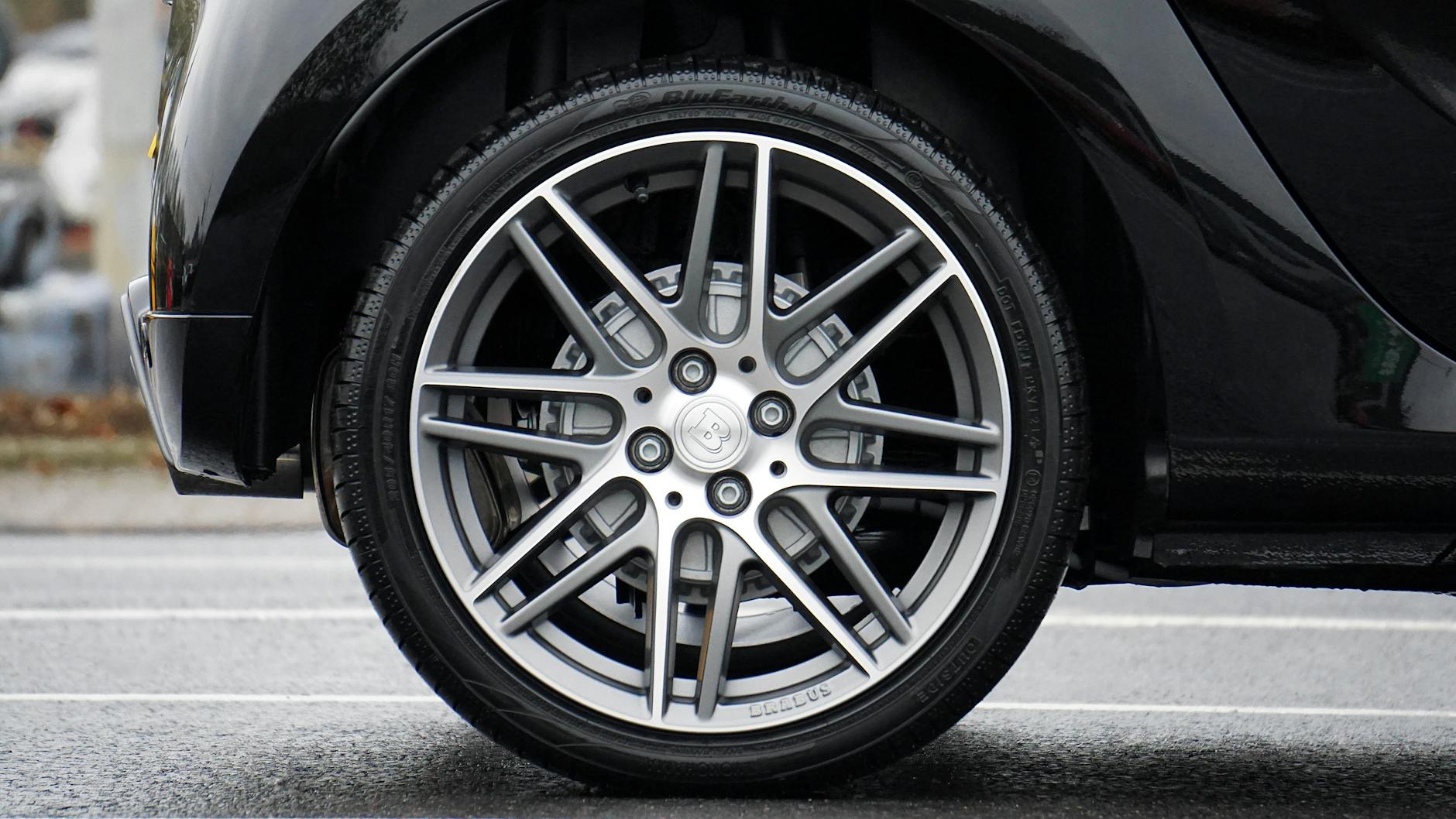
Staggered Wheels: What They Are and When to Run Them

Running wider rubber out back than up front has been a performance staple since the muscle car era — and for good reason. Rear-wheel-drive platforms with more power going to the ground than the front tires need to put down benefit from the extra contact patch. But "staggered wheels" has become a bit of a buzzword in the fitment scene, and plenty of people bolt on a staggered setup without fully understanding what they're actually optimizing for, or what they're giving up.
This covers everything worth knowing: what staggered fitment actually means, which cars it makes sense on, the real trade-offs around tire rotation and handling, and how to spec a staggered set correctly from the jump.
What Staggered Wheels Actually Are
A staggered wheel setup uses a wider wheel and tire on the rear axle than on the front. The difference is almost always in wheel width — and by extension, tire width — not in diameter, though diameter can also vary in some setups.
A common stagger on an F30 BMW 335i, for example, would be 18×8.5 up front with 245/40 tires and 18×9.5 out back running 265/35s. The rear is a full inch wider, which adds meaningful contact patch. On a Mustang GT, factory stagger from Ford runs 235s up front and 255s rear on the base setup, with the GT Performance Package widening that gap further.
Some setups go more aggressive — a Ferrari 458 runs 235/35/20 fronts against 295/35/20 rears. That's a 60mm difference in tire width, which tells you something about how much grip those rear-mid engines demand from the back axle.
Width vs. Diameter Stagger
Most staggered setups only vary width. Diameter stagger — where rear wheels are also taller, like a 19-inch front and 20-inch rear — exists but is far less common and mainly aesthetic on most street cars. The tire sidewall math gets complicated fast, and you can end up with a rear that looks taller even if the rolling circumference matches. Stick to width stagger unless your platform was engineered for diameter stagger from the factory.
Why RWD Cars Benefit Most
The logic is straightforward on a rear-wheel-drive platform: the rear tires are doing the acceleration work. Giving them more contact patch means more grip off the line, better traction mid-corner on exit, and a higher threshold before the rear steps out. That matters whether you're tracking a car or just like the way it drives.
Front-wheel-drive cars don't benefit at all — putting a wider tire in front where the driven wheels are would make more sense mechanically, but most FWD platforms don't run stagger. The geometry and suspension tuning on those cars is set up for equal-width tires, and wider fronts create their own problems with scrub radius and steering feel.
AWD cars are the complicated case. Some AWD platforms run a factory stagger — the Porsche 911 Carrera 4 is a classic example — because the rear-biased torque split means the rear tires still do more work. But on most symmetrical AWD setups, like a Subaru WRX or an Audi S4 with quattro, stagger creates a problem: you can't rotate your tires. The front and rear tires are different sizes, so they have to stay on their axles. That accelerates wear and eliminates one of the main tools for extending tire life.
The Fitment and Offset Math
Width is only half the staggered equation. Offset determines how the wheel sits relative to the hub, and when you're running a wider rear, you'll almost always need a different offset front-to-rear to get the lip flush with the fender or achieve a specific stance.
Take a Mustang S550 as an example. Running 20×10 fronts and 20×11 rears is a popular stagger. The fronts might run +40mm offset to clear the front struts, while the rears go +35mm or even +30mm to push the lip out to the quarter panel. Getting that combination wrong gives you either a wheel that rubs or one that sits tucked in and looks wrong.
Any good custom wheel builder will account for this across both axles separately. If you're ordering a staggered set through ForgedToFit, the 3D CAD process models both front and rear fitment against your specific platform — hub bore, bolt pattern, suspension clearance, brake caliper clearance — before anything goes into production. That's where a made-to-order process has a real advantage over trying to mix and match off-the-shelf sizes.
Backspacing matters too, especially on rear-wheel-drive cars with solid rear axles or IRS setups that have limited outboard clearance. A wider rear wheel with aggressive negative offset can look perfect statically and then contact the fender lip under suspension compression. Measure under load, not just sitting in the driveway.
Handling Trade-Offs You Should Know
Stagger changes the handling balance of a car, and not always in the direction people expect.
A wider rear tire increases rear grip. That pushes the balance of the car toward understeer — the front end runs out of grip relative to the back. On an OEM-staggered car like a BMW M3, the suspension geometry, spring rates, and anti-roll bars are all calibrated around the factory stagger, so the balance is dialed in. If you put a more aggressive stagger on a car that came square from the factory, you may find it starts pushing in fast corners where it used to rotate cleanly.
This doesn't mean stagger is bad — it means you need to account for the whole system. If you're tracking an F80 M3 and want to run more rear width than stock, you may want to adjust your alignment, particularly rear camber, to keep the contact patch even under load. Going from -1.5° to -2.5° of rear camber to compensate for added width is a reasonable starting point for a track setup, but that's a conversation worth having with someone who has data on your specific setup.
On the street, the handling effects are subtle enough that most people won't notice the shift unless they're driving at high pace through aggressive corners. Where stagger does make a palpable difference on the street is in wet-weather traction. A wider rear tire is more susceptible to aquaplaning than a narrower one at the same speed, and a more aggressive stagger amplifies that gap between front and rear wet-weather behavior.
Square vs. Staggered: When Square Makes More Sense
Square setups — same width front and rear — are having a moment, partly because of the track/autocross community and partly because the tire rotation question is real. If you drive 15,000 miles a year and you're running a staggered setup, plan on replacing rear tires substantially more often than fronts. On high-performance tires that cost $350–450 each, that adds up.
Square setups let you run the same tire all around. Rotate them every 5,000–6,000 miles and they wear together. Simpler, cheaper to maintain, and on a car that's primarily a street driver, the grip difference between a square setup and a modest stagger is minimal unless you're pushing hard at a track day.
For dedicated track builds, square setups also allow you to move tires around between sessions to balance heat cycles — something you can't do with staggered fitment.
If visual stance is part of the goal, it's worth knowing that a wide square setup — say, 20×10.5 all around with appropriate offset — can look just as aggressive as a staggered setup, especially combined with the right wheel face and tire profile. A deep-dish concave wheel at 10.5 wide on a Mustang is a statement on its own.
For a deeper look at how concave wheel design interacts with fitment choices, see our piece on concave vs flat face wheels explained.
How to Spec a Staggered Forged Set
If you've decided stagger is right for your platform, here's how to approach the spec process without making expensive mistakes.
Start with what the platform allows. Check clearances first — front strut clearance, rear caliper clearance, fender lip position under compression. Most platforms have well-documented fitment guides in owner communities, and that data is more reliable than generic calculators.
Decide on diameter first, then width. Most modern performance cars look right on 19s or 20s. Going to 21+ on a street car usually means sacrificing sidewall for aesthetics, which hurts ride quality and increases rim damage risk on real roads. A 19×9 front and 19×10.5 rear is a very functional stagger for a lot of RWD platforms.
Calculate offset per axle independently. Don't assume the same offset works front and rear when you're changing width. A 10mm width increase typically needs a 5mm offset change to maintain the same lip-to-fender relationship, but this varies by car.
Match tire aspect ratios carefully. If you change wheel diameter or width significantly, you need to recalculate tire sidewall to maintain the correct rolling circumference. Running a 245/35 up front and a 295/30 out back on 20-inch wheels is common on a Porsche-style stagger, but confirm the rolling circumference is within about 1.5% — anything beyond that starts affecting speedometer accuracy and, more importantly, AWD system calibration on cars with electronic differentials.
Forged wheels are the right call for staggered performance builds. The strength-to-weight advantage matters most in the larger, heavier rear wheel. A cast 20×10.5 rear wheel is going to be heavier than a forged equivalent, and that unsprung weight difference is real. Our guide on forged vs cast wheels breaks down exactly why that matters in the context of a performance build.
Real Examples Worth Studying
BMW F80/F82 M3/M4: Factory stagger is 265/35/19 rear vs. 245/35/19 front. Popular upgrade goes to 275/30/20 rear and 255/30/20 front — maintains the stagger ratio, adds a diameter. The M differential handles the rear grip load well.
Mustang GT S550: Factory is 235/50/18 all around on the base car. A common upgrade stagger is 275/40/19 rear against 245/40/19 front — adds almost 30mm of rear contact patch over stock.
Tesla Model 3 Performance: Comes from the factory with a mild stagger — 235/35/20 front, 235/35/20 rear, but OEM can vary. Because it's AWD with a heavily rear-biased power delivery under full throttle, some owners run a 245 rear against a 235 front. The catch: same rotation issues as any AWD car.
Porsche 911 992 Carrera S: Factory stagger is aggressive — 245/35/20 front, 305/30/20 rear. That 60mm difference is one of the widest factory staggers you'll find. Porsche engineers the entire car around it, including torque vectoring and PDCC on higher trims. Don't try to replicate this ratio on a platform that wasn't designed for it.
Getting Staggered Wheels Built to Order
Off-the-shelf staggered sets exist, but they're designed around the most common fitments. If your car is slightly unusual, or you want a specific offset combination that the big-name brands don't stock, made-to-order is the cleaner path.
With ForgedToFit, both wheels in a staggered pair go through the same 3D CAD process separately, modeled against your exact hub specs and clearance requirements. The manufacturing happens at our OEM forging partner — the same facility producing wheels for performance car brands — which is how we can offer five-year warranty coverage while pricing comes in 50–70% below comparable legacy brands.
For anyone building a staggered setup on a BMW platform specifically, our custom forged wheels for BMW guide walks through the offset and hub bore specifics that BMW applications require.
And if you're still working through the broader question of what to prioritize in a custom wheel build — not just front-rear sizing, but material, construction, and finish — the custom forged wheels complete guide is a solid starting point.
The bottom line on staggered wheels: they make genuine sense for rear-wheel-drive platforms where the rear contact patch is the performance limiting factor. They come with real compromises around tire rotation and handling balance that are manageable when you account for them upfront. Get the offset math right on both axles, pair them with tires that match in rolling circumference, and a staggered forged set done correctly is one of the highest-impact changes you can make to both the performance and the look of the right car.
Frequently asked questions
Can I run staggered wheels on an AWD car?
Technically yes, but you'll lose the ability to rotate your tires, since the front and rear sizes won't be interchangeable. This accelerates rear tire wear significantly. AWD cars with a strong rear torque bias — like a Porsche 911 Carrera 4 — are designed around factory stagger, but most symmetrical AWD setups like a Subaru WRX or Audi quattro work better with a square setup for real-world street driving.
Do staggered wheels affect handling?
Yes. A wider rear tire increases rear grip, which pushes the car's balance toward understeer — the front runs out of grip before the rear does. On factory-staggered platforms like a BMW M3, everything is calibrated around that stagger. If you add more stagger to a car originally set up square, you may notice it pushes more in fast corners than before. Alignment adjustments, particularly rear camber, can help compensate.
What's the most common stagger ratio for a street performance car?
A 10mm to 25mm width difference front-to-rear is the most common range for street builds. Something like an 8.5-inch wide front and a 9.5 or 10-inch wide rear — translating roughly to a 245 front tire and a 265–275 rear tire on a 19 or 20-inch diameter — is a practical, well-balanced stagger for most RWD platforms without going extreme.
Do front and rear staggered wheels need different offsets?
Almost always, yes. A wider rear wheel needs a lower (less positive) offset than the front wheel to maintain the same relationship between the wheel face and the fender lip. If you just bolt a wider rear wheel at the same offset as the front, it'll sit deeper in the fender and look wrong, or it may rub. Spec each axle independently and model the clearances before ordering.
Is a forged wheel worth it for a staggered rear fitment specifically?
Yes — arguably more so than anywhere else. The rear wheel on a staggered setup is wider and therefore heavier in a cast or flow-formed construction. A forged rear wheel in a larger size stays lighter because of the higher material density and thinner wall construction that forging allows. Unsprung weight reduction is real and measurable, especially in wider fitments where cast wheels can be 3–5 lbs heavier than forged equivalents.
Can I run staggered wheels and still use a full-size spare?
Not practically. A full-size spare needs to match one of your two sizes, which means it only works on one axle. Most staggered setups rely on a temporary spare or run-flat tires, which limits your options. If run-flat availability for your specific tire size is limited — which it often is for wider rear fitments — factor in roadside assistance coverage or a portable inflator kit as part of your setup plan.