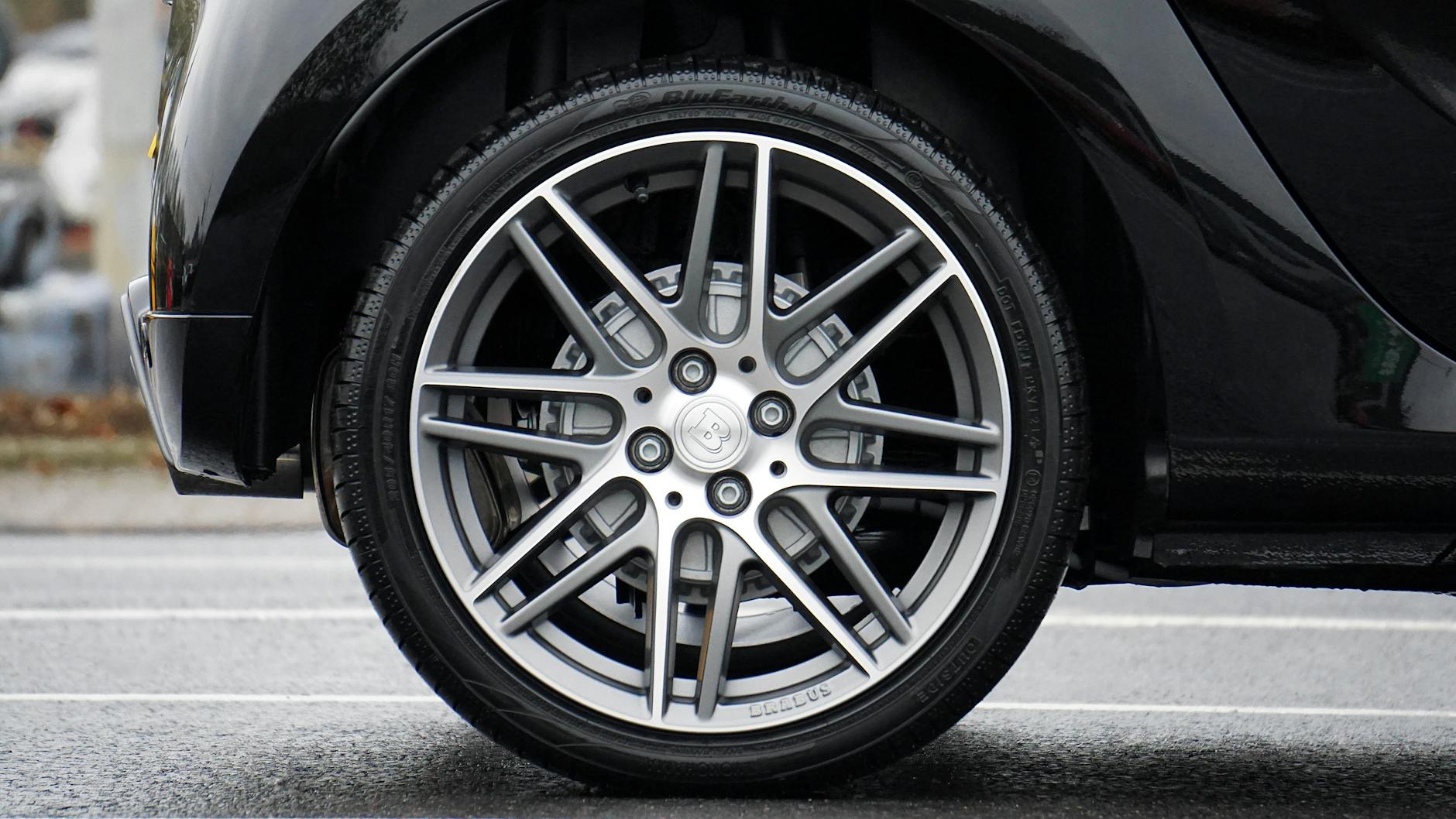
Best Aftermarket Wheels for C8 Corvette (2025)

The C8 Corvette is a genuinely different animal from every Vette that came before it. Mid-engine placement shifts the weight balance to roughly 40/60 front-to-rear, the stock staggered fitment is aggressive, and the brake caliper clearance is tighter than most people expect. All of that means the wheel selection process isn't as simple as picking something that looks good and matches the bolt pattern. Get it wrong and you're rubbing, bottoming out TPMS sensors, or running wheel weights that undo everything the engineers did to keep unsprung mass in check.
This guide covers what you actually need to know: the real fitment specs, why staggered sizing matters on this platform, which construction types are worth your money, and how to get a custom set built without paying the Forgeline or HRE tax.
C8 Corvette Wheel Specs: What the Car Actually Needs
The factory fitment on a base C8 Stingray runs 19x8.5 front, 20x11 rear — already staggered 1.5 inches in diameter and 2.5 inches in width. The Z51 package pushes that to the same diameters but with slightly different tire specs. The Z06 goes further: 20x10 front, 21x13 rear. Yes, 21-inch rear wheels. That's not a typo.
Bolt pattern is 5x120mm — same as a lot of BMWs, which matters because it expands the supply of compatible hardware. Center bore is 70.3mm. Those two numbers need to be exact. Hub-centric rings can cover bore mismatches, but on a 670-horsepower mid-engine car putting serious torque through the rear axle, you want a proper hub-centric fit, not a ring doing all the work.
Offset is where people get tripped up. The stock front offset runs around ET52-ET56 depending on trim; the rear is tighter, typically ET62-ET65. The rear wheel sits very close to the fender lip, and the suspension geometry is tuned for specific scrub radius values. Running a wildly different offset — especially going much lower to get flush fitment — can introduce bump steer characteristics and put unusual stress on wheel bearings. Going about 5-8mm lower than stock offset in the rear is generally safe with no spacer needed; beyond that, get a proper fitment check.
One practical point here: the C8's rear suspension is a five-link independent setup with very precise geometry. Unlike older Corvettes where you could fudge offset by 15mm and feel nothing unusual, the C8 will tell you about large offset changes through steering feel and tire wear patterns. If you're seeing uneven inner wear on the rear after a wheel swap, offset is the first thing to investigate.
Caliper clearance is a real concern on every C8 trim. The Brembo setup on Z51 and Z06 cars is massive. A 6-piston front caliper needs real space. Most reputable wheel brands spec their C8 fitments at 73mm minimum inner barrel clearance, but verify this before ordering any wheel with tight spoke geometry near the mounting face. A good way to check before committing money is to ask the manufacturer for a CAD overlay of the wheel against the published C8 brake envelope — any brand doing serious C8 fitment work will have this on file.
Staggered vs Square Setup on the C8
The C8 was designed for staggered fitment and there are real reasons to keep it that way. The rear-biased weight distribution means the back tires are doing most of the work under acceleration, and the factory engineers sized the rubber accordingly. Running a square setup — same size front and rear — on a stock C8 is fighting the car's geometry.
That said, there's a segment of C8 owners who track their cars and want square fitment for rotation flexibility. If that's your goal, most go 20x10.5 or 20x11 all around with appropriate offsets front and rear. You'll need a front tire with a slightly higher load rating to handle the geometry change, and you should expect some understeer increase compared to the stock setup. With square fitment on a stock C8, the car's torque vectoring logic — which is calibrated around the staggered contact patches — also behaves differently. Not dangerously, but noticeably if you're used to how the car drives factory-spec.
There's also a practical consideration for track day drivers: square fitment lets you rotate tires and potentially mount rears on all four corners for a particularly aggressive session, which is genuinely useful if you're doing multiple track days per season. On the street, that flexibility is rarely worth the handling tradeoff.
For street and occasional track use, sticking with the staggered approach is the smarter call. Our guide on staggered wheels meaning breaks down the physics in detail if you want to go deeper on why.
Forged vs Cast: The Answer Is Simple on This Car
If you're spending $60,000-$120,000 on a C8 and then bolting on heavy cast wheels, you've made an odd decision. The stock Corvette wheels — even on base cars — are already relatively light compared to average cast aftermarket options. The Z06 comes with carbon fiber wheels as an option at around 18 lbs per corner. That's the standard Chevy set.
Cast wheels in the 20-21 inch sizes the C8 needs will typically weigh 28-35 lbs each at the rear. A quality forged wheel in the same size runs 18-24 lbs. That's a 40-60 lb reduction in unsprung mass across all four corners — a change you'll actually feel in steering response, ride compliance, and how quickly the suspension tracks road imperfections.
To put that in more concrete terms: 50 lbs of unsprung mass reduction is roughly equivalent in handling response to removing 200-250 lbs of sprung mass. The spring and damper have to control the wheel's motion as well as the car's body, so weight at the wheel itself has an outsized effect. On a car already engineered with obsessive attention to mass distribution, matching that philosophy with your wheel choice is consistent thinking.
Flow-formed wheels split the difference. They start as a cast blank that gets spun and pressure-formed to tighten the grain structure in the barrel, resulting in weights that approach forged levels at a lower price point. For street C8 owners who aren't doing track days, flow-formed is a legitimate option. For anyone pushing the car hard, forged is the correct answer.
The full breakdown of why this matters mechanically is covered in our cast vs forged wheels comparison, but the short version: forged aluminum has a denser, more aligned grain structure that handles cyclic stress better. On a car making 490-670 hp and sitting on summer performance rubber, that matters. It particularly matters in a scenario many C8 owners don't think about until it happens: curb strikes. A cast wheel at this diameter will crack. A properly forged wheel in the same situation tends to bend, which is survivable and repairable.
What Sizes Actually Work: Fitment Guide by Trim
Base Stingray (1LT, 2LT, 3LT)
The stock 19/20 stagger is functional but leaves some room for improvement in appearance. Most owners step up to 20/21 for a more filled-out look, matching the Z06 stance. Common fitments that work without modification:
- Front: 20x9.5 ET52-ET58
- Rear: 21x12 ET60-ET65
If you want to stay at the 19/20 diameters (which keeps more tire sidewall and helps with ride quality on rough roads), 19x9 front and 20x11.5 rear is a clean setup that won't require fender work. Staying at 19/20 also opens up a wider tire selection — the 21-inch rear market has fewer ultra-high-performance options at the moment, and what exists costs significantly more per tire.
Z51 Package
Same diameter as base but the Brembo brakes change the caliper clearance equation. Verify at least 75mm inner clearance on any wheel you're considering. The bigger calipers also run hotter, so wheel finish choice matters — brushed or machined finishes handle heat radiation better than full gloss paint in track conditions. If you're running the car at autocross events or occasional open lapping days, the thermal cycling on the wheel finish from brake heat is real; full gloss paint in the inner barrel area will start to show discoloration after a full day of spirited driving.
Z06 and Z06 with Z07
The 20/21 stagger is factory here, and the 13-inch rear rim width is serious real estate. Options narrow considerably at the rear because not every manufacturer tools up for a 21x13. Custom forged is often the most reliable path at this spec. If you're running the Z07 package, those carbon ceramic brakes need even more caliper clearance — budget at least 78-80mm inner barrel.
Worth noting: a 21x13 wheel mounted with a 345-section tire creates an enormous contact patch. The Michelin Pilot Sport Cup 2 R in 345/25R21 — the factory Z07 tire — is a 200-treadwear semi-slick. If you're upgrading wheels on a Z06 with Z07, match the tire to the wheel width carefully; going to a 21x13.5 or wider requires a 355 or 365 section tire to avoid the sidewall buckling that comes from running an undersized tire on a wide rim.
Finish Options and What Holds Up
Gloss black is still the most popular finish on C8s, and for good reason — it contrasts sharply with the aggressive body lines and most of the available exterior colors. But it shows brake dust badly, especially on the front axle. C8 front brakes generate substantial dust even in street driving, and a set of gloss black wheels will look grimy after a single hard driving session if you don't clean them after every outing.
Brush-machined finishes — a dark base with machined highlights on the spoke faces — have become increasingly popular and are more forgiving to maintain. Satin finishes (sometimes called matte or brushed) hide minor swirling and work particularly well on Rapid Blue and Amplify Orange cars. The Amplify Orange exterior is tricky to pair; gloss black tends to fight it, while a gunmetal or dark bronze satin finish reads as intentional and gives the car a more cohesive look.
Chrome is rare on C8s but exists. It's a heavy finish process that adds weight and doesn't do well with track heat cycles. Skip it unless you're building a show car that never sees a performance event.
If you're ordering custom forged wheels, powder coat gives you better durability than liquid paint at similar cost. Two-tone powder options — say, a gloss black center with brushed outer lip — look factory-correct on this platform without being predictable. Cerakote is another option worth asking your manufacturer about; it's primarily a firearms coating that has migrated into wheel finishing, and it offers outstanding chemical resistance to brake fluid and iron brake dust, both of which will stain standard powder coat over time on heavily used cars.
The Price Reality and Where the Market Sits
Here's the situation with C8 wheels: the car's popularity has made every major forged brand acutely aware that owners will pay. HRE P101 in C8 fitment runs $3,500-$5,000 per wheel. Forgeline GA1R is in similar territory. Vossen's forged series starts around $2,800 per corner. For a full set in staggered fitment, you're looking at $12,000-$20,000 before tires — which, on a 13-inch rear rim, will cost you another $1,500-$2,500 for quality rubber.
The argument for going custom forged through a direct manufacturer is straightforward. The same 6061-T6 billet that goes into those branded wheels comes from the same handful of Japanese and Taiwanese forging operations. What you're paying for with the legacy brands is R&D amortization, dealer margin, and branding. A direct-to-consumer forged wheel from a manufacturer with 15 years of OEM experience can deliver the same material grade, the same weight targets, and similar or better finish quality at 50-70% of that cost.
A concrete example: a custom forged staggered set for a Z06 — 20x10 front at ET54, 21x13 rear at ET63, in 6061-T6 with a brushed dark gunmetal finish — can be produced in the $4,500-$6,500 range for a full set through a direct manufacturer. The same spec from HRE or Forgeline with a similar design is $14,000-$18,000. The metal is the same. The machining is comparable. The difference is the logo on the center cap.
For a full aftermarket Corvette wheels overview covering all generations, we've got a complete guide — but the C8 market specifically rewards people who do their research and don't just buy the name on the center cap.
Design: What Works Visually on the C8
The C8's body is busy. The mid-engine proportions, the flying buttresses, the wide hips — there's a lot happening. Overly complex 12-spoke spider designs get lost against the bodywork. Wheels that photograph well on C8s tend to share a few characteristics:
Five to seven spoke designs with some depth read cleanly in the wheel arch and don't compete with the body for visual attention. Monoblock construction with a concave face fills the wide rear arch without needing a multi-piece design.
Y-spoke and twin-spoke layouts work particularly well on the wider rear fitment. A 21x13 rear wheel with a concave twin-spoke looks genuinely menacing in a way that a busy multi-spoke doesn't. The depth of concavity matters here — because the C8 rear wheel sits close to the fender lip at stock offset, a heavily concave design at a slightly lower offset can give the illusion of a deep-dish setup without pushing the wheel face outside the fender.
Gloss or brushed lip contrast on a monoblock design gives visual depth without the weight penalty and structural complexity of a 3-piece wheel.
If you're open to uploading your own design concept or starting from a design you've seen elsewhere, that's exactly the kind of project that works well in a direct custom forging workflow — get a 3D CAD render done before any metal moves, and you know exactly what you're getting. Renders placed against an image of your actual car color are increasingly standard practice among direct manufacturers; if a supplier won't provide this before asking for a deposit, that's a yellow flag.
TPMS, Lug Nuts, and Things People Forget
The C8 runs TPMS sensors as standard, and they need to transfer to your new wheels. The factory sensors use a 90-degree angle valve stem in most configurations. Confirm with your installer that the new wheel barrels can accommodate the factory sensor or that you're buying compatible replacements. Aftermarket TPMS sensors that clone factory frequency (315MHz for C8) run $30-60 each and solve compatibility issues cleanly. Note that if you're running winter wheels on a second set, GM's TPMS system will automatically recognize and switch between two paired sets — but only if the second set's sensors are properly programmed to the car's ECU through a scan tool. A dealer or shop with a Tech 2 or equivalent can do this in 15 minutes.
Lug nuts: the C8 uses M14x1.5 thread pitch. This is the same as many BMWs and some Mercedes platforms, so hardware availability is good. Seat type is conical (60-degree taper). Torque spec from GM is 100 ft-lbs. Don't use an impact gun with cheap sockets on lightweight forged wheels — use a calibrated torque wrench and re-torque after 50 miles. Extended-shank lug nuts are sometimes required on aftermarket wheels with recessed lug pockets; verify shank length against your specific wheel's pocket depth before installing.
Center caps matter more than people admit. A premium forged wheel with a cheap plastic center cap looks wrong. Get wheel-specific caps machined to match the finish, or go bare hub if the design looks complete without them. Some C8 owners running custom forged sets opt for a simple billet aluminum cap in a contrasting finish — raw brushed aluminum on a gloss black wheel, for instance — which looks purposeful rather than decorative.
Getting a Custom Set Made Right
The process for a custom forged C8 wheel set isn't complicated when the manufacturer knows what they're doing. You provide the trim, the desired sizes and offsets, any design preferences or reference images, and the manufacturer pulls your bolt pattern and bore from their database (or measures directly if there's any ambiguity on a modified car).
A proper supplier will send you a 3D CAD render showing the wheel on your specific fitment before production begins. That's your chance to adjust spoke thickness, face depth, or finish before anything is committed. Production on a forged monoblock typically runs 6-8 weeks from approval. Flow-formed options with existing tooling can be faster — sometimes as quick as 3-4 weeks if the design and size are already in production.
Ask specifically about load rating documentation. Any wheel going on a C8 should carry a load rating appropriate for the car's corner weights — the C8 Z06 has a listed curb weight around 3,366 lbs, meaning roughly 840 lbs per corner as a baseline, and considerably more under braking. A reputable manufacturer will provide a JWL or VIA load rating certification with the finished product.
For more on the overall buying process, our guide to custom forged wheels covers what to ask, what to verify, and what the production timeline looks like.
One last thing: get a weight spec in writing before you approve production. Any reputable forged wheel manufacturer can tell you the finished weight within a pound for a given size and design. If they can't, ask why. Weight is a first-principles quality check — if a manufacturer is using the right alloy and the right forging process, they know what the wheel weighs. Vagueness on this question is a signal worth taking seriously.
Frequently asked questions
What bolt pattern does the C8 Corvette use?
5x120mm with a 70.3mm center bore. It's the same bolt pattern as many BMW models, which increases the availability of compatible hardware and lug nuts (M14x1.5 thread pitch, 60-degree conical seat).
Can I run a square wheel setup on my C8 Corvette?
Yes, but it works against the car's mid-engine design. The C8's weight sits roughly 40/60 front-to-rear, so the factory staggered setup is there for a reason. Square setups are mainly used by track drivers who want tire rotation flexibility. Expect some understeer increase and verify offsets carefully at the front where the geometry changes more.
How much do good aftermarket forged wheels for a C8 cost?
Legacy brands like HRE and Vossen Forged run $12,000–$20,000 for a staggered set before tires. Custom forged wheels built direct through a manufacturer using the same 6061-T6 billet typically come in at 50–70% less — often $4,000–$8,000 for a full staggered set depending on size, design, and finish.
What's the safest offset range for C8 Corvette aftermarket wheels?
Stock front offset is approximately ET52–ET56; rear is ET62–ET65. You can safely go 5–8mm lower than stock offset at the rear without modification on most builds. Going significantly lower risks rubbing and changes the scrub radius enough to affect steering feel. Always confirm with a fitment check before ordering.
Do I need new TPMS sensors when I change C8 Corvette wheels?
Not necessarily — you can transfer the factory sensors if the new wheel barrels are designed to accept them. C8 sensors often use a 90-degree angled valve stem, so confirm compatibility. If your new wheels won't accept the factory hardware, aftermarket cloning sensors at 315MHz frequency work cleanly and cost $30–60 each.
Are flow-formed wheels good enough for a C8 Corvette?
For street driving and occasional spirited use, yes. Flow-formed wheels approach forged weight levels and offer significantly better strength than standard cast. For regular track days or high-output Z06 builds, full forged construction is the better call — the grain structure handles sustained cyclic stress better under heat and repeated hard braking.