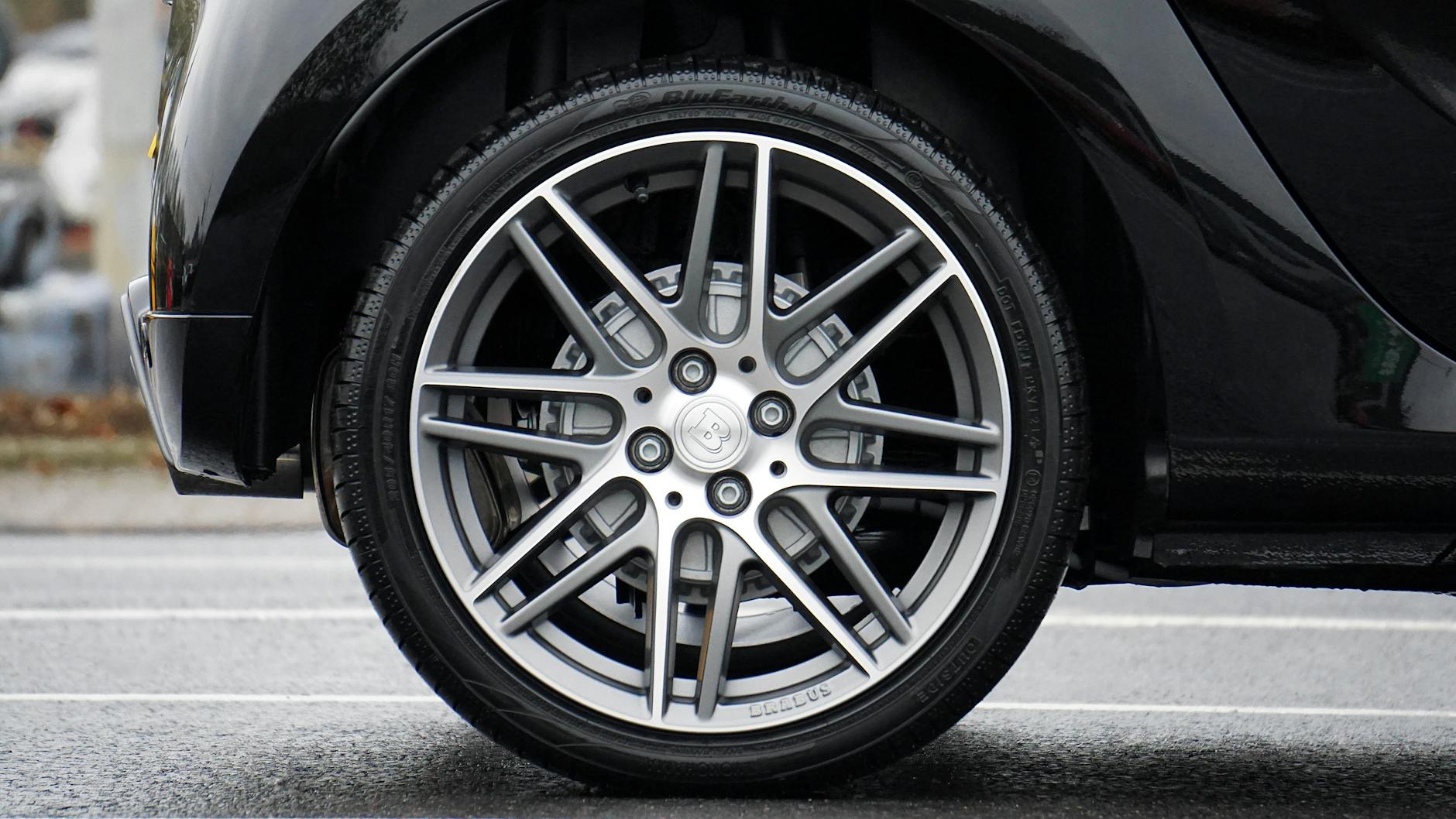
Aftermarket Corvette Wheels: The Complete Guide

The Corvette has always been America's performance benchmark — and the wheel game around it reflects that. From the C5 Z51 to the mid-engine C8 Stingray, owners obsess over fitment with good reason. The factory wheels are decent, but they're also heavy, brand-restricted, and designed around cost targets GM set years ago. Aftermarket Corvette wheels let you fix all of that, whether you're chasing lap times, concours points, or just a cleaner look on a car that deserves better than stock.
This guide covers every generation currently on the road — C5, C6, C7, and C8 — with real fitment specs, the forged versus cast debate, staggered setup considerations, finish options, and how to get a custom set built without paying legacy-brand prices.
Why Corvette Owners Upgrade Wheels
Unsprung weight matters more on a Corvette than on almost any other production car. The magnetic ride suspension — standard or optional across C6 through C8 — reacts in milliseconds. Every pound you strip from a wheel improves its ability to follow pavement. A forged 20-inch wheel for a C7 can come in around 22–24 lbs depending on spoke design; the OEM cast equivalent is typically 28–32 lbs. That's 16–32 lbs off all four corners on a car that already weighs under 3,400 lbs (C7 Stingray). You feel it.
The physics here compound quickly. Rotational inertia scales with the square of the radius, which means a heavier rim doesn't just add static weight — it resists changes in speed more aggressively than the same mass located closer to the center. When you're braking from 120 mph at the end of a straight, lighter wheels shed rotational momentum faster, giving your brakes a meaningful assist. Track drivers who have swapped to forged sets routinely report shorter braking distances and better turn-in response — not because anything in the suspension changed, but because the wheel itself is less reluctant to stop spinning.
Beyond weight, the factory wheels on most Corvettes — especially base Stingrays — are five-spoke cast designs that look fine but not special. The Z06 and Z51 packages get better-looking multi-spoke designs, but they're still cast. If your car is a base C7 or C8 Stingray and you want the visual presence of a Z06 or a completely custom look, aftermarket is the only path.
Finally, there's the practical side: curb rash, pothole damage, and corrosion from track days or winter storage. Replacing a single OEM Corvette wheel through a dealer runs $600–$1,200 depending on generation. A custom forged set from a direct-to-consumer manufacturer costs less per wheel at full sets of four — and when you inevitably catch a curb on a tight parking garage turn, you're not cringing at the dealer price list.
Fitment Specs by Generation
Getting fitment right on a Corvette isn't optional — it's the whole project. Run the wrong offset and you'll either scrub the inner fender liner under compression or stick out past the lip, which looks wrong and may be illegal in some states. Corvettes also run a relatively low ride height from the factory, which reduces the margin for error when it comes to tire-to-fender clearance at full suspension compression. What looks fine on a lifted truck at static ride height will contact on a Corvette during a hard corner.
C5 Corvette (1997–2004)
The C5 runs a 5x120.65mm bolt pattern — that old GM bolt circle that trips people up. Stock sizes are 17x8.5 front and 18x9.5 rear with a +56mm front offset and +57mm rear. Most aftermarket builders move to 18x9.5 front / 19x10 rear for a modest stagger without requiring major suspension changes. Stick within ±5mm of factory offset unless you're running a specific suspension setup.
One nuance worth noting on the C5: the cars came with a 70.3mm hub bore, which most aftermarket wheels exceed. Hub-centric rings are almost always required and should be included by any reputable manufacturer. On a C5 Z06 with the LS6 making 405 horsepower, leaving hub centering to the lug nuts alone isn't advisable — the rings keep the wheel concentric under load and prevent the slight vibration that develops over time when fit is only lug-centric.
C6 Corvette (2005–2013)
Same 5x120.65 bolt pattern. Base C6 runs 18x8.5 front / 19x10 rear; Z06 goes up to 18x9.5 front / 19x12 rear. That rear 12-inch width on the Z06 is aggressive — finding an aftermarket wheel that fills it correctly while staying within the fender is where a lot of people go wrong. Offset on the Z06 rear is around +59mm, so your aftermarket wheel needs to land in that neighborhood. The Grand Sport sits between the two with 19x10 rear.
The C6 Z06's 325-section rear tire on a 12-inch-wide wheel was a statement when it launched in 2006, and it still is. Getting aftermarket wheels right on that platform means ensuring the inner barrel of the rear wheel clears the suspension links and brake caliper under articulation. If you're going custom, ask your wheel builder specifically whether they've done C6 Z06 applications — the clearance geometry on the rear is specific enough that a builder without that experience can get it wrong.
C7 Corvette (2014–2019)
Same bolt pattern, but sizes escalate. The base Stingray runs 18x8.5 / 19x10; the Z06 steps up to 19x10 front / 20x12 rear. Z51 package cars run 19x10 / 20x11. Most C7 owners upgrading for looks go 19x10 / 20x11 or 19x11 / 20x12. The Z06's 335-section rear tire on a 20x12 is one of the widest setups on any production car — matching that correctly in aftermarket requires a wheel with enough inner lip clearance and the right backspacing.
The C7 is arguably the generation where aftermarket wheels make the most transformative visual impact. The factory base Stingray wheel — a relatively simple five-spoke design — contrasts sharply with the car's sculpted bodywork. Swap to a deep-dish 10-spoke forged wheel in satin gunmetal and the car suddenly looks like something that costs $30,000 more. The widebody proportions of the Z06 body kit, available on later C7s, also give aftermarket fitment more room to fill the arch without looking undersized.
C8 Corvette (2020–present)
Here's where it gets interesting. The C8 switched to a 5x120mm bolt pattern — note the difference from the old 5x120.65. Those 0.65mm matter; C5/C6/C7 wheels will not fit a C8. The mid-engine layout also changed the offset requirements significantly. Base C8 runs 19x8.5 front / 20x11 rear; Z06 goes 20x10 front / 21x13 rear. That 21x13 Z06 rear is enormous. If you're building custom aftermarket Corvette wheels for a C8, the rear offset and inner clearance relative to the transaxle and suspension pickup points need to be verified — ideally with a test fit or by working with a builder who has done C8s before.
The C8's mid-engine architecture also means the front suspension geometry changed substantially from the front-engine C7. The front wheels sit further outboard relative to the chassis, and the steering rack is positioned differently, which affects how much inner barrel room exists at full lock. Going significantly wider on the C8 front — beyond stock width — requires careful measurement rather than assumptions carried over from C7 experience.
For any generation, if you're running wider-than-stock or dramatically different offsets, check with your alignment shop before ordering. Staggered wheel setups on Corvettes — especially the rear-biased sizes on Z06 and Grand Sport — are one of the more nuanced fitments in the sports car world. If you want to understand the geometry behind why stagger matters here, the breakdown in our guide on staggered wheels meaning is worth reading.
Forged vs Cast: It's Not a Close Call for a Corvette
For a daily driver that never sees a track, a good cast wheel is fine. For a Corvette — especially one with performance tires, magnetic suspension, and a driver who actually uses the power — forged is the right choice.
Forged aluminum has a tighter grain structure than cast. It's stronger per pound, which means a wheel engineer can remove more material to hit the same strength target, producing a lighter finished product. A cast wheel achieving the same structural rating as a forged one will always be heavier. On a car where the suspension is recalculating every 2 milliseconds, that weight delta is real.
The strength advantage also matters for durability on track. Cast wheels fail from fatigue — the relatively open grain structure of cast aluminum develops microscopic cracks at stress concentrations over repeated high-load cycles. Forged wheels, with their compressed and aligned grain structure, resist that fatigue progression significantly longer. For a car doing regular lapping days at Road America or Laguna Seca, that matters more than it does for something that sees only street use.
Flow-formed (also called flow-forged or rotary-forged) is a middle-ground manufacturing process that starts with a cast center and then spins and stretches the barrel under pressure, aligning the grain structure of the barrel similarly to a forged wheel. The result is lighter and stronger than a standard cast wheel at a lower price than a full monoblock forged. For Corvette owners on a tighter budget, flow-formed is a legitimate option. For a C8 Z06 or a dedicated track car, full forged monoblock is the answer.
Our deep dive on cast vs forged wheels covers the metallurgy in more detail if you want the full technical picture.
Design and Finish Options
Spoke Count and Style
Corvettes look best with multi-spoke or Y-spoke designs in the 7–10 spoke range. The factory Z06 5-spoke is iconic for a reason — clean, aggressive, and it shows the brake hardware. Thin multi-spoke designs (think 10+ spokes) work well on lighter colors like Arctic White but can look busy on dark cars. Deep concave face designs are popular on C7 and C8 because the wider rear wheel gives you more bowl depth to work with.
If you want to go concave on a C8, the 20x11 rear is deep enough to run a pronounced dish without looking cartoonish. The front 19x8.5 is narrower, so the concave there will be shallower — which actually creates a nice visual contrast front to rear. Understanding how depth and width interact is covered well in our concave wheels guide.
Split-spoke designs — where each spoke divides into two near the barrel — have been particularly popular on C8 builds because the angular bodywork of the mid-engine car pairs well with the added visual complexity. A clean seven-spoke monoblock design reads as more track-focused; a split ten-spoke with a machine-faced lip reads as more street-oriented. Neither is wrong — it depends on the direction of the build.
Finish
Gloss black, brushed gunmetal, and satin bronze are the three most popular finishes on aftermarket Corvette wheels right now. Satin bronze on a C7 in Torch Red is one of those combinations that shouldn't work but absolutely does. Dark Satin Bronze on a C8 in Rapid Blue has been all over social media for good reason.
Polished lips on a brushed-face wheel work if the car has other bright trim; on a fully blacked-out car, it looks inconsistent. Matte black is still popular but shows brake dust badly on a high-performance car — plan to clean weekly or choose a darker graphite instead.
Chrome is largely out of fashion on performance cars and adds weight via the plating process. If you're after a bright finish, a machine-faced aluminum wheel with clear coat will be lighter, more durable, and more visually accurate to what modern track-oriented builds use.
Two-tone finishes — a darker main face with a contrasting machined or polished barrel lip — have grown significantly in popularity on C7 and C8 applications. The contrast draws the eye to the depth of the concave face and emphasizes the tire profile. It works best when the wheel diameter is large enough that the barrel depth is visible behind the tire sidewall, which generally means 19 inches or larger on the front and 20 inches or larger on the rear.
Custom Forged Aftermarket Corvette Wheels: What the Process Looks Like
Ordering a fully custom set isn't as complicated as it sounds. Here's the actual sequence:
Spec the fitment. Pull your exact offset and hub bore (Corvettes are 70.3mm hub bore for C5–C7; C8 is 70.3mm as well). Decide on width and diameter. For most C7 owners going slightly wider than stock, 19x11 front / 20x12 rear with a +5mm offset adjustment is a popular choice.
Choose or upload a design. Either select from existing spoke patterns or send reference images of what you want. A 3D CAD rendering comes back before anything gets manufactured. This step is worth taking seriously — small changes to spoke taper, dish depth, or barrel lip width dramatically affect how the finished wheel reads on the car.
Confirm and manufacture. Forged monoblock wheels are machined from a single billet forging — no welds, no joints. Lead times vary but typically run 6–10 weeks for custom forged.
Mount and balance. Standard wheel mounting applies; TPMS sensors from your OEM wheels transfer directly since the valve stem hole sizing is standard. On C7 and C8 specifically, the factory TPMS sensors are a press-in style — transfer them to the new wheels at the same time as tire mounting and you'll retain full functionality without any relearn procedure beyond driving for a few minutes.
Custom forged sets for a Corvette from legacy brands — HRE, Forgeline, ADV.1 — run $5,000–$12,000+ for a set of four depending on size and design. Through a direct manufacturer using the same forging infrastructure, comparable specs come in at $1,500–$3,500 for the set. The forging process is identical; you're paying for branding and distribution margin with the legacy players.
Common Mistakes to Avoid
Buying C5/C6/C7 wheels for a C8. The bolt pattern change is the most common expensive mistake. 5x120mm and 5x120.65mm are not compatible. Check the generation before ordering anything.
Ignoring hub bore. Most aftermarket wheels come with a larger hub bore and ship with hub-centric rings to fill the gap. On a 700-horsepower Z06, hub-centric fit is not optional — a lug-centric fit on high-power applications can cause vibration and, in worst cases, wheel movement under hard acceleration.
Going too wide on the front without checking clearance. The C7 and C8 front suspension has limited clearance for wider wheel faces. Going beyond +2 inches over stock front width typically requires checking inner barrel clearance against the steering knuckle under full lock.
Choosing the wrong offset for a staggered setup. A common error is matching front and rear offsets when the wheels have different widths — this pushes the wider rear wheel too far outboard. Run the math: if your rear wheel is 2 inches wider than the front, the rear offset typically needs to be 10–15mm higher to maintain the same flush appearance.
Ordering without a reference wheel or mock-up. On C8 builds in particular, where the mid-engine layout creates tighter clearances at both ends, ordering a full set of four before confirming fitment with a single test wheel is an avoidable risk. Some builders will supply one wheel for fitment verification before manufacturing the remaining three — worth asking about on any non-standard spec order.
Pricing Reality
A legitimate forged set for a C7 Stingray in 19x10 / 20x11 from ForgedToFit lands in the $1,800–$2,800 range depending on spoke complexity and finish. For a C8 with the wider Z06-spec sizes, expect $2,200–$3,500. Both include a 5-year structural warranty.
For comparison: OEM replacement wheels from GM retail at $800–$1,200 each, and they're cast. You can buy a full custom forged set for less than two OEM replacements — and end up with something lighter, stronger, and unique.
If forged is beyond the current budget, flow-formed is the next best thing and costs roughly 20–30% less for a comparable setup. Our guide on flow forged wheels explains why the process produces a meaningfully better wheel than standard low-pressure casting.
For anyone comparing options across multiple platforms, our broader aftermarket car wheels buying guide covers the decision framework in detail.
Frequently asked questions
Will C7 Corvette wheels fit a C8?
No. The C7 uses a 5x120.65mm bolt pattern; the C8 switched to a true 5x120mm. That 0.65mm difference means C7 wheels will not seat correctly on a C8 hub. Always verify the bolt pattern by generation before purchasing any aftermarket wheel.
What size wheels does a C8 Corvette Stingray take?
The base C8 Stingray runs 19x8.5 front and 20x11 rear from the factory. Most aftermarket upgrades stick close to these dimensions or step up slightly — 19x9.5 front / 20x11.5 rear is a common mild stretch. Hub bore is 70.3mm and bolt pattern is 5x120mm.
Are forged wheels worth it on a Corvette?
Yes, more so than on most other cars. The Corvette's magnetic ride suspension responds to unsprung weight changes in real time. Dropping 4–6 lbs per corner with forged versus cast wheels produces a measurable improvement in ride compliance and transient response — not just a marginal one. On a track-driven car, it's not a cosmetic upgrade, it's a performance one.
What is the bolt pattern for a C5 and C6 Corvette?
Both the C5 (1997–2004) and C6 (2005–2013) use a 5x120.65mm bolt pattern — sometimes listed as 5x4.75 inches. This is the older GM metric and differs from the C8's 5x120mm. Hub bore across C5–C7 is 70.3mm.
How much do custom forged Corvette wheels cost?
Through a direct-to-consumer manufacturer like ForgedToFit, a full set of custom forged monoblock wheels for a C7 or C8 Corvette typically runs $1,800–$3,500 depending on size and design complexity. That's 50–70% less than equivalent sets from legacy forged brands like HRE or Forgeline, which can exceed $8,000–$12,000 for the same specifications.
Can I run a non-staggered (square) setup on a Corvette?
Technically yes on C5 and C6, where some owners run a square 18x10 or 19x10 setup. On C7 and C8, the factory stagger is quite aggressive (especially on Z06 variants), and running a square setup means either undersizing the rear or oversizing the front. Most performance-oriented C7/C8 owners keep the stagger and match it in aftermarket — it's there for a reason given the rear-biased power delivery.