Aftermarket Car Wheels: The Complete Buying Guide

Swapping your wheels is one of the few modifications that changes how your car looks, how it handles, and how much it weighs — all at once. But the aftermarket wheel space is enormous, and a lot of it is noise. Cast junk dressed up with aggressive marketing, fitment specs that technically work but look terrible on your specific car, pricing that makes no sense relative to what you're actually getting. This guide cuts through all of that.
What "Aftermarket" Actually Means
Any wheel that didn't come on your car from the factory qualifies as an aftermarket wheel. That covers everything from a $120 steel wheel you bolt on for winter to a $3,500-per-corner fully custom forged piece machined to your exact hub spec. The word itself tells you nothing about quality.
What matters is how the wheel was made, what alloy was used, what the weight is, whether it fits your car properly, and whether the manufacturer stands behind it. Those five things separate a wheel worth buying from one that looks fine in photos and costs you a tire and a PR rod six months later.
Manufacturing Methods: Cast, Flow Formed, and Forged
This is where most buyers tune out because it sounds technical, but it directly affects what you're paying for and what you're getting.
Cast wheels are made by pouring molten aluminum into a mold. It's cheap and fast. The problem is that casting creates porosity — tiny air pockets in the metal — which means you need more material to hit a safe strength threshold. More material means more weight. A cast 18×8.5 wheel typically weighs 22–26 lbs. That's rotating unsprung mass, and it affects acceleration, braking, and steering feel.
Flow formed wheels start as a cast blank, then get spun on a mandrel under high pressure while rollers stretch and compress the barrel. This aligns the aluminum's grain structure and increases tensile strength by 20–30% over a standard cast wheel. You can run thinner walls and hit weights of 18–21 lbs on the same 18×8.5 size. Flow forming is the sweet spot for most performance street builds — meaningfully better than cast, significantly cheaper than forged.
Forged wheels are pressed from a single billet of aluminum alloy under thousands of tons of pressure. The grain structure is continuous, with no porosity. The result is the strongest, lightest option available. A forged 19×9.5 for an F30 335i can come in under 20 lbs. The catch is cost — traditional forged wheels from legacy brands like HRE, BBS, or Vossen run $1,500–$4,000 per wheel. That's not a typo.
The reason our forged vs cast wheels breakdown goes deep on this is because the price gap between cast and forged has historically been so large that most buyers default to cast without ever really considering the alternative.
Why Aftermarket Car Wheels Cost What They Cost (And Why They Shouldn't)
Legacy wheel brands carry enormous overhead — dealer networks, warehouse inventory across 50+ sizes, marketing budgets, and brand equity built over decades. You're paying for all of that. A forged wheel from a well-known brand isn't 10x better than a forged wheel from a factory producing for OEMs; it's just 10x more expensive to distribute and market.
OEM forging partners — the same factories that supply wheels to BMW, Mercedes, and Porsche at the manufacturing level — operate at scale and with tolerances that meet automotive OEM specs. When you buy direct from a brand that uses one of these partners and cuts out the dealer markup, the math changes completely. That's how it's possible to deliver a genuine forged or flow-formed wheel at 50–70% below what legacy brands charge for comparable product.
Fitment Is Everything
The single most common mistake people make when buying aftermarket car wheels is treating fitment as a checkbox rather than a calculation. "It fits" is not the same as "it fits right."
Four numbers govern fitment:
- Bolt pattern — The number of lugs and the diameter of the circle they sit on. A 5×114.3 is common across Mustang GT, many Hondas, and the Toyota GR86. A 5×120 covers most BMW platforms, including the F30 335i and G20 330i.
- Bore size — The center hole diameter. This needs to match your hub or you'll need hub-centric rings. Running spigot rings is fine if done correctly; leaving it loose is how you get vibration at 70 mph.
- Offset (ET) — Measured in millimeters, this is how far the mounting face sits from the wheel's centerline. A higher ET pushes the wheel inward; a lower ET pushes it out. The stock ET on an F80 M3 is around +36–37mm. Running ET25 on the same car with a wider wheel can fill the fender perfectly — or rub on the strut if you haven't checked clearances.
- Width and diameter — These interact with tire sizing. An 18×9.5 running a 265/35 has different clearance behavior than the same width with a 255/40.
For a proper deep dive on sizing and tire pairing, the aftermarket wheels and tires setup guide covers this in full.
Flush, Poke, and Tuck: Aesthetic Fitment
Beyond whether a wheel clears your calipers and fenders, there's the question of how it sits visually. A flush setup — where the face of the wheel sits nearly even with the fender lip — tends to look clean and intentional on most builds. "Poke" (wheel face outside the fender line) is popular on stance builds. "Tuck" (wheel tucked inside the fender) works on certain lifted trucks and dedicated track cars where tire clearance under compression matters more than aesthetics.
None of these is objectively correct. What matters is knowing which you want before you order, because an offset mistake means a $2,000 wheel you can't run.
Wheel Sizing for Common Platforms
Here's how sizing actually shakes out on a few popular platforms:
BMW F30 335i: Stock is 18×8 ET30 front, 18×8.5 ET25 rear with 5×120 bolt pattern. Most enthusiasts step up to 19×8.5 ET30 front and 19×9.5 ET22 rear with 225/40 and 255/35 tires. This fills the arches well without rubbing on a stock suspension.
Ford Mustang GT (S550): 5×114.3 bolt pattern, stock offset around ET55 on 18s or 19s. Widebody Mustangs and those running a mild drop frequently go 19×10.5 ET45 front and 19×11 ET52 rear with 275s and 305s. Caliper clearance is the main concern up front with older Brembo packages.
Tesla Model 3: 5×114.3, stock 18×8.5 ET40. The Performance model runs 20×8.5 ET40. Because the Model 3 doesn't have traditional suspension geometry changes for typical upgrades, wheel weight matters more here — heavy cast wheels on an EV hurt range and acceleration more noticeably than on a comparable ICE car.
Subaru WRX (VA/VB): 5×114.3, typically 17×8 ET55 stock. Moving to 18×8.5 ET45 opens up tire selection considerably. Worth noting that WRX owners running aggressive aero setups need to check fender liner clearance carefully — the front lips can contact at full lock.
For more fitment detail and how to spec a full setup from scratch, the guide on custom car wheels walks through the process step by step.
Face Design: More Than Aesthetics
Spoke count, spoke shape, and face profile all affect both appearance and structural behavior.
High-spoke-count designs (10+ spokes) distribute load more evenly across the face and tend to be more forgiving on rough roads. Lower spoke counts (5–7) look more aggressive and are often preferred on track-oriented builds, though they concentrate stress differently and require forging or flow forming to be done safely at low weights.
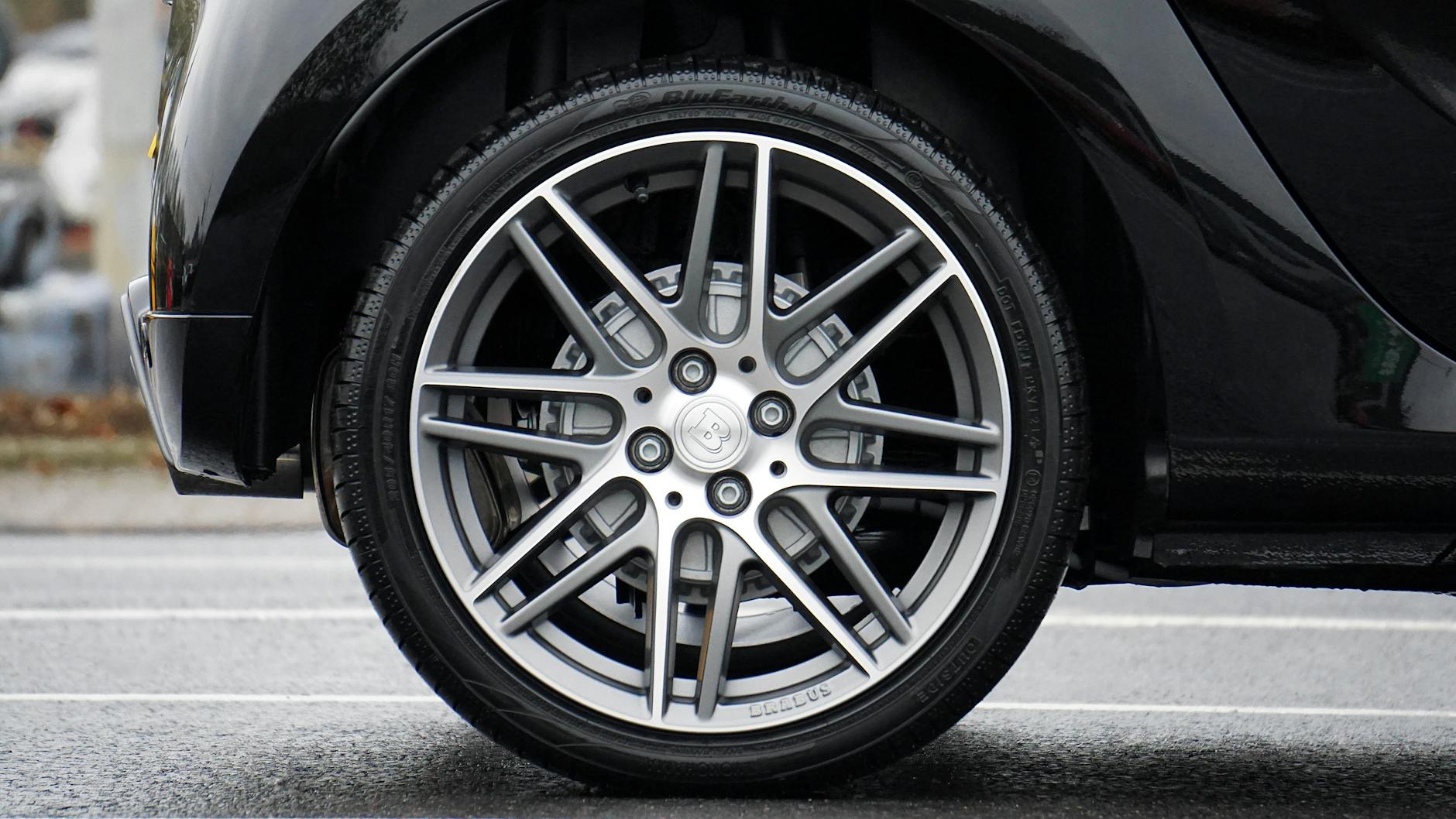
Concave faces — where the spokes angle inward from the outer lip toward the center — are probably the most popular design direction in the enthusiast market right now. The depth of the concave dramatically changes how the wheel reads at a distance. A 15mm concave is subtle; 25mm+ is an aggressive dish that looks best on wider, lower cars. For a full breakdown of how this affects both look and function, the concave vs flat face wheels article covers it well.
Finish Options and How They Hold Up
Painted finishes — gloss black, matte gunmetal, anthracite, satin bronze — are the most common and the easiest to touch up if curbed. They hold up well in most climates with normal maintenance.
Machined finishes expose the raw aluminum on spoke faces or lips and look striking, but bare aluminum oxidizes. Most machined wheels get a clear coat over the machined surfaces, which protects well for 3–5 years before it may need attention depending on where you live and whether you use corrosive wheel cleaners.
Powder coat is more durable than standard paint for road grime and brake dust exposure, though it's slightly thicker and can affect the precision of machined areas.
Two-tone and custom color options are available on made-to-order wheels. If you're going that route, commit to the color before you order — changing your mind mid-production on a custom piece isn't always possible.
Flow Formed vs Forged: Which Do You Need?
For most street builds — daily drivers, weekend cars, even spirited canyon driving — flow formed wheels offer an excellent strength-to-weight-to-cost ratio. You're getting a wheel that's materially better than cast, lighter, and genuinely capable.
Forged is the right call when weight is a priority target (track prep, performance EVs, dedicated sport builds), when you need truly custom dimensions that don't exist in flow formed tooling, or when longevity over a decade of hard use is the goal. The grain structure in a forged wheel simply doesn't fatigue the same way.
The flow formed vs forged wheels comparison breaks down the actual performance differences with numbers if you're on the fence.
Custom vs Off-the-Shelf
Off-the-shelf aftermarket wheels cover most standard fitments well. If you're on a common platform with stock suspension and standard dimensions, you'll find dozens of options that technically work.
Custom-made wheels make sense when:
- Your fitment is unusual (widebody kit, air suspension, specific camber setup)
- You want a design that doesn't exist in any catalog
- You want your exact bolt pattern, bore, offset, and width without compromise
- You're ordering for multiple cars and want a cohesive look across a fleet
The process for a custom order is more involved but not as complicated as most people assume. A proper builder takes your specs, produces a 3D CAD rendering for approval, then manufactures to those exact dimensions. No guessing, no spacers, no "close enough."
More detail on the full custom process is in the custom auto wheels guide.
What to Look for in a Warranty
A wheel warranty matters more than most buyers realize. Structural failures — cracks from impact, deformation from a pothole — should be covered. So should manufacturing defects. Cosmetic damage from curbing or road debris typically isn't, and that's reasonable.
Five years is the benchmark for a credible structural warranty on forged and flow-formed aftermarket car wheels. Less than that on a premium product should raise questions. Make sure the warranty is backed by the manufacturer, not just the retailer, and that there's a clear claims process.
Avoiding Common Mistakes
A few things that trip up buyers who are otherwise doing their research:
Ordering by wheel size alone. Two 19×9.5 wheels with different offsets and bore sizes are not interchangeable. Confirm every fitment dimension.
Ignoring load rating. Every wheel has a maximum load rating. On heavier cars — a Tesla Model S, a BMW 5 Series, a loaded truck — verify that the wheel's rated capacity exceeds what the corner weight will put on it.
Skipping a TPMS plan. If your car has tire pressure monitoring sensors, you need a plan for them before the new wheels arrive — either transfer your existing sensors if the stem design allows, or buy new ones. Afterthought TPMS is a recurring headache.
Buying by photo. Wheel renders and photos are almost always shot at ideal angles under ideal lighting. If you can, find real-car photos of the specific wheel on a similar platform before committing.
The aftermarket wheels buyer's guide covers the full vetting process if you want a structured checklist before pulling the trigger.
Frequently asked questions
How do I know if aftermarket wheels will fit my car?
You need to match four specs: bolt pattern (e.g., 5×114.3), center bore diameter, offset (ET value in millimeters), and wheel width and diameter. Your factory wheel specs are the baseline. From there, you can adjust width and offset within the clearance envelope of your fenders, calipers, and strut housing. When in doubt, run your intended specs through a fitment calculator and check real-world examples on platforms like yours.
Are forged wheels worth the extra cost over cast?
For a dedicated performance car or a build where weight reduction matters, yes. A forged wheel can be 4–8 lbs lighter per corner than a cast equivalent, which meaningfully affects unsprung mass, acceleration, and braking. If you're driving a daily commuter and won't notice the weight difference, flow-formed wheels offer much of the strength benefit at a lower price point.
What does wheel offset mean and why does it matter?
Offset (marked as ET, from the German 'Einpresstiefe') is the distance in millimeters from the wheel's mounting face to its centerline. A higher ET pushes the wheel inward toward the suspension; a lower ET pushes it outward. Getting offset wrong by 10–15mm can cause your wheel to rub on the strut at full lock or stick out past the fender — both problems that aren't fixable without changing the wheel.
Can I run the same wheels on both front and rear axles?
On many cars, yes. On performance platforms with staggered setups — like a stock Mustang GT or E92 M3 — the rear wheel is wider than the front, so square fitments require choosing a width that works on both axles or going staggered intentionally. Some rear-wheel-drive enthusiasts prefer staggered for handling reasons; others prefer square setups for rotation flexibility.
How long does it take to get custom aftermarket wheels made?
Lead times for custom forged or flow-formed wheels typically run 4–8 weeks from design approval to shipment, depending on the manufacturer's current production schedule. Off-the-shelf aftermarket wheels that are in stock ship much faster. If you're planning a build around a specific date, factor in the production timeline and build in a buffer.
What finish holds up best on aftermarket wheels?
Powder coat is the most durable finish for resistance to road grime, brake dust, and minor abrasion. Painted gloss or satin finishes look excellent and are easier to touch up when curbed. Machined finishes with clear coat over the bare aluminum look striking but require more attention over time, particularly in northern climates where road salt is used. Avoid harsh alkaline wheel cleaners on any finish — they degrade clear coat quickly.