Custom Rims for Car: How to Get Exactly What You Want

Getting custom rims for your car used to mean either settling for whatever was on the shelf at your local tire shop or spending $4,000+ per wheel at a boutique forging house. Neither option made much sense for the majority of enthusiasts. That gap has closed considerably, and understanding how the process actually works will save you money, prevent fitment headaches, and get you a better wheel than you'd find at any big-box retailer.
This guide covers everything from manufacturing differences to fitment specs to finish options — practical information that applies whether you're building a track-focused F80 M3, a slammed Mk7 Golf R, or a lifted Tacoma.
What "Custom Rims" Actually Means
The term gets used loosely. In a lot of contexts, "custom rims" just means aftermarket — something that didn't come on the car from the factory. That's not wrong, but it's not the full picture.
True custom rims are built to your specifications: diameter, width, offset, bolt pattern, center bore, finish, and often spoke design. You're not picking from a size chart and hoping your application is listed. The wheel is engineered for your car from the start.
That distinction matters more than it might seem. A wheel that's manufactured to your exact offset eliminates the need for spacers. A correct center bore means no hub rings, no vibration at 80 mph. A specified load rating accounts for your car's actual corner weight. Off-the-shelf aftermarket wheels require compromises at nearly every one of those points. Custom rims don't.
It's also worth distinguishing between custom rims ordered through a direct manufacturer versus what a local shop might describe as "custom." Many shops are simply reselling catalog inventory from distributors like TSW, Rotiform, or Vossen — wheels that come in fixed size increments and a handful of finishes. Nothing wrong with those brands, but you're still constrained by what they stocked. A direct-to-manufacturer custom order has no such constraints.
Forged vs. Flow-Formed vs. Cast: The Short Version
Most custom rims are made through one of three processes, and the differences are significant enough to affect your decision.
Cast wheels are poured as molten aluminum into a mold. They're the cheapest to produce, and that's about the only advantage. Cast aluminum has a more porous grain structure, which means manufacturers have to add material to hit strength targets. The result is heavier wheels that absorb more unsprung mass — and unsprung mass is the enemy of both ride quality and handling response. A cast 19x9.5 wheel in a common 7-spoke design might weigh 26–28 lbs. A forged equivalent in the same size often comes in under 20 lbs.
Flow-formed wheels start as a cast blank, then get spun and pressed under heat and high pressure to stretch the barrel. That process aligns the aluminum's grain structure and increases tensile strength by 20–30% compared to a purely cast wheel. You get a meaningfully lighter, stronger wheel at a price point that's still accessible. For most street builds — a Mustang GT, a Model 3 Performance, a C8 Corvette daily driver — flow-formed is the smart call. The weight savings over cast are real and measurable: a flow-formed 19x9.5 typically lands in the 21–23 lb range.
Forged wheels are machined from a solid billet of aluminum that's been compressed under thousands of tons of pressure. The grain structure is dense and consistent throughout. Forged wheels are lighter, stronger, and more fatigue-resistant than either alternative. They're the standard for motorsport, supercar OEM fitments, and serious track builds where rotating mass and structural integrity are non-negotiable. Porsche GT3 RS wheels, Ferrari Challenge rims, and GT3 class race wheels are all forged for exactly these reasons. The manufacturing cost is higher, but working with a direct-to-consumer brand through an OEM forging partner brings that cost down to a fraction of legacy brand pricing.
For a deeper technical breakdown, the comparison between forged vs cast wheels covers the metallurgy in detail. If you're weighing the middle ground, flow formed vs forged wheels is worth reading before you commit.
The Fitment Specs That Actually Matter
This is where most buyers go wrong. Picking a design you like is easy. Getting the fitment right requires understanding a handful of numbers.
Diameter and Width
Diameter is usually the starting point — 18", 19", 20", and so on. Width determines how wide a tire you can run and significantly affects the wheel's visual stance. A 9.5" wide wheel on a 19" diameter is a common setup for sport sedans; something like an F30 335i runs well on 19x8.5 front and 19x9.5 rear with staggered fitment. A Mustang GT with a square setup often runs 19x10 or 20x10 all around.
Going wider than the OEM spec requires checking fender clearance and potentially adjusting suspension geometry. Going larger in diameter (plus-sizing) while maintaining overall tire diameter keeps your speedometer accurate and preserves ride quality. The general rule on plus-sizing is to drop sidewall height proportionally — moving from an 18" to a 19" on an F80 M3 means stepping from a 255/35 to a 255/30 on the front, keeping the rolling diameter within a few millimeters of stock.
Offset (ET)
Offset is the distance in millimeters from the wheel's mounting face to its centerline. A positive offset pushes the wheel inward toward the car; a negative offset pushes it outward. Most modern front-wheel-drive and all-wheel-drive cars run high positive offsets (ET40–ET55). Rear-wheel-drive platforms tend to be lower (ET20–ET35).
Running the wrong offset is where custom rims separate themselves from shelf stock. If a catalog wheel lists ET35 and your car needs ET42, you're either running a 7mm spacer or accepting that the wheel sits 7mm too far outboard — which can mean rubbing on the strut at full lock or clearance issues with the inner fender liner. On a car with a big brake kit, running a wheel that's too inboard in offset can cause the spoke or barrel to contact the caliper. That's not a minor inconvenience; it's a safety issue.
The scrub radius — the distance between the wheel's center of contact with the road and the steering axis — also shifts with offset changes. Significant deviations from the OEM offset alter steering feel and can accelerate inner tie rod wear, particularly on FWD platforms.
Bolt Pattern and Center Bore
Bolt pattern is non-negotiable. A 5x114.3 wheel does not fit a 5x112 hub, period. The center bore — the hole in the middle of the wheel — needs to match your hub diameter exactly for a hub-centric fit. If it's larger, you need hub-centric rings; if it's smaller, the wheel won't mount at all. Common center bores: BMW uses 66.6mm, Ford 5.0 uses 70.5mm, Tesla Model 3 uses 64.1mm, and Subaru/Toyota 5x100 applications typically use 56.1mm.
Custom rims can be bored to any specification at the time of manufacture. That's not possible with off-the-shelf stock, which is why you'll often see hub-centric ring kits bundled with catalog aftermarket wheels — they're compensating for the fact that one center bore has to work across many platforms.
Choosing a Design
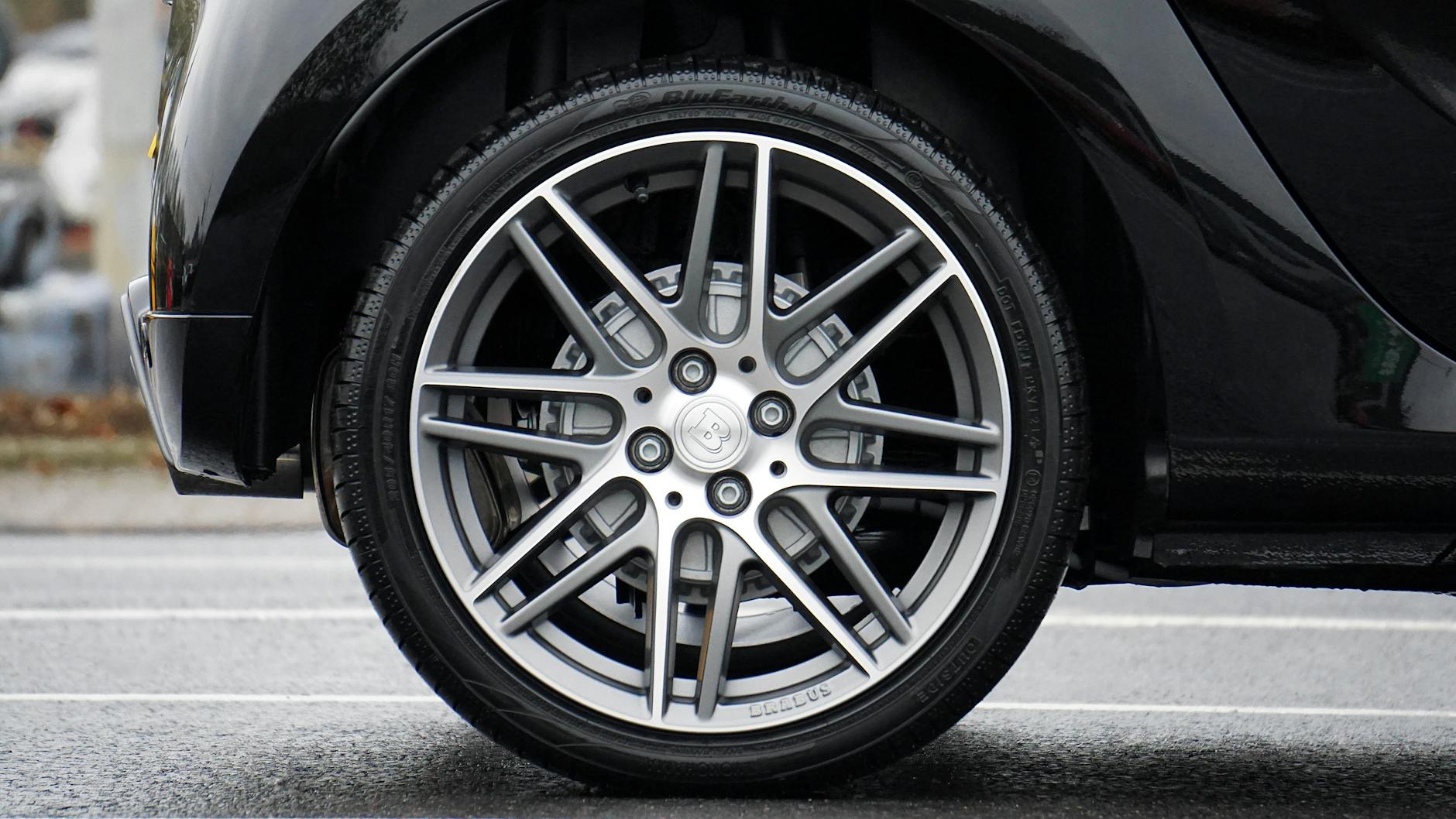
Spoke count, spoke shape, and face depth all affect both aesthetics and function. A deep concave profile looks aggressive and works well for wide fitments where the barrel has room to push inward. Flat-face and shallow-concave designs suit lower-offset fitments and more conservative builds. The visual difference is dramatic — the same diameter and width wheel can look completely different depending on face depth.
The concave vs flat face wheels breakdown is useful here if you're still deciding which direction fits your build.
Spoke count matters structurally too. More spokes generally means more material in the critical stress areas, which can allow for a lighter overall wheel because the rim section doesn't have to compensate. Fewer spokes (5-spoke, Y-spoke) tend to look more open and sporty but require each spoke to handle more load individually. Mesh and multi-spoke designs (10+ spokes) can achieve aggressive concave profiles while maintaining excellent strength because the load path is distributed across more material. That's why many high-end track wheels use tight mesh patterns rather than open 5-spoke layouts.
Spoke width also interacts with brake cooling. Wide spokes reduce airflow to the rotor; narrow spokes allow more air circulation. For a dedicated track car where brake temperatures matter, this is worth factoring into your design choice.
Finish Options
Powdercoat is the most durable finish for street use — it resists chips, brake dust, and car wash chemicals better than painted wheels. Gloss black and matte black remain popular for obvious reasons, but gunmetal, bronze, satin silver, and two-tone machined finishes all have their applications. A bronze or gold finish on a dark-colored car — anthracite grey M3, dark blue WRX STI — has a way of tying a build together that gloss black simply doesn't achieve.
Chrome is heavy and high-maintenance. If you're building something performance-oriented, chrome is probably not on your list. If you're building a show truck, it's your call.
Custom color matching is available through most serious custom rim manufacturers — you can supply a paint code and get a finish that ties into the car's bodywork or interior accents. Satin finishes have seen a significant uptick in popularity because they read as premium without the fingerprint-magnet quality of gloss.
Ceramic coating over powdercoat is an option some manufacturers offer that further extends the finish's resistance to brake dust, road salt, and UV fading. For wheels on a daily driver in a northern climate, it's a worthwhile upgrade.
How the Custom Rims Ordering Process Works
The process at a direct manufacturer is more straightforward than most people expect.
You start by providing your car's details: year, make, model, trim, and any suspension modifications. From there, you browse available designs or — depending on the manufacturer — submit your own. A fitment specialist confirms the offset, width, and center bore based on your specific application and any clearance concerns (big brake kit, coilover setup, fender work).
Once specs are confirmed, a 3D CAD model is generated so you can see exactly what the wheel will look like on your car before any aluminum is touched. This step catches problems early — a spoke that would conflict with your caliper, a face depth that doesn't work with your fender gap, a width that needs trimming. Some manufacturers now offer rendered visualizations on actual photos of your car model, which makes the approval step easier when you're making a significant financial commitment.
Manufacturing lead times for true custom forged wheels typically run 6–10 weeks depending on volume and finish complexity. Flow-formed builds are often faster. The wheels ship direct, which cuts out distributor and retailer margins — a significant factor in why custom forged rims from a direct manufacturer can run 50–70% less than equivalent product from legacy brands.
For the full walkthrough on spec'ing and ordering, custom rims: how to get the right set built for your car goes deeper on each step.
Platform-Specific Considerations
A few examples of how fitment decisions play out on real cars:
BMW F30 335i / F80 M3: These run 5x120 bolt pattern with a 72.6mm center bore. The M3 uses a staggered setup from the factory (front narrower than rear). If you're going square for track use, confirm the front offset keeps you clear of the electric power steering rack and the front strut at full lock. An ET22 front in 19x9 is common and works without rubbing. If you're running the M Carbon Ceramic brakes, the front caliper is substantial — confirm inner barrel clearance for any deep concave design before approving the CAD render.
Ford Mustang GT (S550): 5x114.3, 70.5mm center bore. The S550 has generous fender clearance, which is why you see a lot of aggressive 10" and 10.5" wide fitments on these. A square 20x10 at ET40 tucks cleanly on stock suspension. If you're running a Brembo brake upgrade or a Shelby GT500 brake swap, the front caliper clears a standard 19x9.5 at ET38 without issue, but verify with your manufacturer at 20" diameter where the inner barrel sits closer to the hat.
Tesla Model 3 Performance: 5x114.3, 64.1mm center bore. The rear caliper is large, so if you're running a concave design, confirm inner barrel clearance before ordering. This car also benefits significantly from unsprung mass reduction — swapping the heavy OEM 20" cast wheels (which weigh approximately 30 lbs each) for a lighter forged set produces a noticeable improvement in acceleration feel and ride quality. A 10 lb per corner reduction in unsprung mass is roughly equivalent, dynamically, to removing 40 lbs of sprung mass.
Tacoma (3rd Gen): 6x139.7, 106.1mm center bore. Lifted trucks push into negative offset territory for visual clearance, but too much negative offset puts stress on wheel bearings. Stay within –12 to –24mm offset for most lift levels. A 17x9 at –12mm is a balanced choice for a 3" lift with 285/70R17 all-terrain tires — enough visual clearance without the bearing load concerns you'd get at –24mm or beyond.
For BMW-specific custom rim guidance, custom forged wheels for BMW covers platform nuances in detail.
What Custom Rims Cost — and Why the Range Is So Wide
Cast aftermarket wheels from a mass-market brand might run $150–$300 per wheel. Flow-formed custom rims from a direct manufacturer typically land in the $400–$700 per wheel range, depending on size and finish. Forged custom rims sit higher — $600–$1,200 per wheel is realistic from a direct-to-consumer brand with an OEM forging partner. Legacy forging brands charge $1,500–$3,500+ per wheel for equivalent product.
The quality difference between a $300 cast wheel and a $600 flow-formed custom rim is substantial. The difference between a $600 direct-sourced forged wheel and a $2,500 legacy brand forged wheel is almost entirely brand markup and distribution cost. The aluminum is the same. The presses are often the same — many of the premium forging facilities in Japan and Taiwan manufacture for both legacy luxury brands and direct-to-consumer operations running under different names. The difference is who gets paid in between.
A set of four custom forged rims through a direct manufacturer with a 5-year structural warranty is a different value proposition than anything you'll find at a traditional retailer. Factor in that you're getting exact-spec fitment rather than a compromise offset, and the value gap widens further.
Getting It Right the First Time
The most expensive mistake you can make with custom rims is ordering the wrong specs and having to eat the cost of a set that doesn't fit. A few things help avoid that:
Measure your current offset if you're not sure — there's a straightforward method using a straightedge across the face of the wheel and a ruler to the hub face. Don't trust online forums blindly for offset recommendations; individual cars vary based on suspension modifications, trim level, and brake upgrades. A stock S550 Mustang GT and an S550 GT350 both run 5x114.3, but the GT350's larger front brakes require more inner barrel clearance at equivalent offsets. Always ask your manufacturer to confirm clearance for your specific setup, especially if you have aftermarket coilovers, big brake kits, or flared fenders.
If you're adding coilovers at the same time as wheels, nail down your ride height first. A wheel that clears at stock height may not clear at a 30mm drop, particularly in the front where the strut sweeps during steering. Some builders order wheels after setting ride height for exactly this reason.
If you're building a complete setup including tires, the interaction between wheel width and tire width matters too — a 275 tire on a 9.5" wide wheel behaves differently than a 275 on an 11" wheel, both in how the contact patch deforms under load and how the sidewall presents visually. That topic is covered thoroughly in custom rims and tires: how to build the right setup.
Custom rims for your car are an investment in both function and aesthetics. Getting the specs right from the start — manufacturing process, fitment dimensions, finish — means the wheels you receive are exactly what you envisioned, and they'll stay on the car for years without issues.
Frequently asked questions
How long does it take to get custom rims made?
Flow-formed custom rims typically take 4–6 weeks from order confirmation to shipping. True custom forged wheels usually run 6–10 weeks depending on the design complexity and finish. If you need them faster, ask the manufacturer about current production lead times before ordering.
Are custom rims stronger than off-the-shelf aftermarket wheels?
Generally, yes — especially if you're comparing forged or flow-formed custom rims to cast aftermarket wheels. The manufacturing process matters more than the price tag. A flow-formed custom rim is significantly stronger and lighter than a cast wheel at a similar price point.
Can I get custom rims in any bolt pattern?
Yes. One of the core advantages of custom manufacturing is that bolt pattern and center bore are specified at the time of production. Whether you're running a 5x114.3 Mustang, a 5x112 Audi, or a 6x139.7 Tacoma, the wheel is built for your hub.
What finish holds up best on custom rims?
Powdercoat is the most durable option for street use. It resists brake dust, road grime, and car wash chemicals better than painted or polished finishes. If you want a machined or polished look, a clear-coated machined finish is the next best option for longevity.
Do I need hub-centric rings with custom rims?
Not if the wheels are bored to your exact hub diameter at the time of manufacture. Custom rims built for your car should match your center bore precisely — that's the whole point. Hub-centric rings are a workaround for off-the-shelf wheels with oversized center bores.
Can I submit my own wheel design?
Some custom rim manufacturers accept customer-submitted designs and will build to your concept. The process typically involves reviewing your design for structural feasibility, generating a 3D CAD model for your approval, and then proceeding to production. Ask your manufacturer specifically what design submission requires.