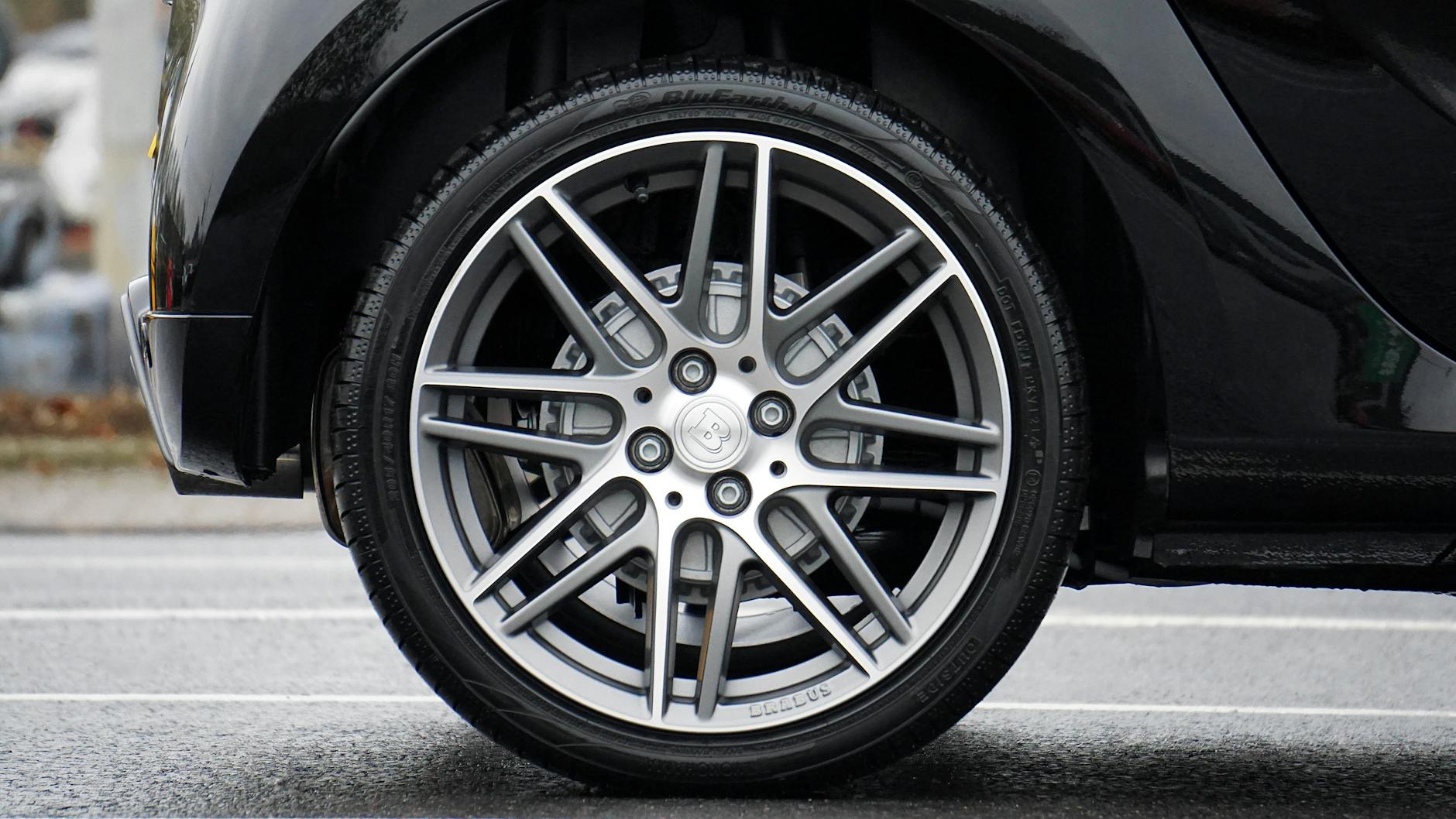
Custom Wheels for Trucks: The Complete Guide

Putting custom wheels on a truck is one of the highest-impact modifications you can make. A set of 20s or 22s on a lifted F-150 or a flush-fit setup on a Silverado completely changes the presence of the vehicle. But trucks are not just big cars, and the wheel decisions that work on a Mustang GT or a BMW 3 Series don't translate directly. Load ratings matter. Offset tolerances are tighter. The size options are wider — literally and figuratively. Get it wrong and you're rubbing fenders, scrubbing tires, or worse, running a wheel that isn't rated for the weight you're hauling.
This guide covers everything specific to custom wheels for trucks: what sizes actually work, why load ratings are non-negotiable, how offset affects stance and clearance differently than it does on a car, and what construction methods are worth paying for.
Why Trucks Demand a Different Approach to Wheel Selection
A stock F-250 Super Duty can carry over 4,000 lbs of payload. A Ram 1500 TRX hits the scales at nearly 6,400 lbs curb weight before you add passengers and cargo. These aren't light-duty numbers, and they have direct implications for what wheel you should be running.
Load rating is the first thing most people skip when shopping custom wheels for trucks, and it's the most consequential mistake. Every wheel carries a load rating — usually stamped or etched on the back of the barrel — measured in kilograms or pounds per wheel. Divide your truck's GVWR by four, add a safety margin, and that's your minimum per-wheel load rating. For a half-ton daily driver, you're typically looking for wheels rated at 1,000–1,400 lbs each. For a ¾-ton or one-ton, that number climbs higher. Most budget cast wheels from overseas suppliers don't publish these ratings prominently because the numbers aren't impressive.
Forged and flow-formed wheels win here. The forging process aligns the aluminum grain structure, producing a wheel that's meaningfully stronger at the same or lower weight compared to gravity cast. For trucks specifically — especially if you tow, haul, or run off-road — this isn't a luxury consideration, it's a structural one.
Sizing: What Actually Works on a Truck
Diameter
The most common custom wheel diameters for half-ton trucks are 20", 22", and 24". For three-quarter and one-ton work trucks, 18" and 20" stay popular because larger diameters compromise sidewall height and ride quality under load. A 22x10 on a lifted Silverado 1500 looks aggressive and works fine. That same 22" on a Ram 3500 towing 18,000 lbs is a different story — you've traded tire sidewall for aesthetics, and the ride quality and load capacity suffer for it.
For daily drivers and light-use trucks, 20" is the sweet spot. You get a wide selection of tire options, the wheels look proportional on most cab-and-bed configurations, and you're not sacrificing sidewall to the point where pothole damage becomes a recurring expense. Step up to 22" if you're running a leveling kit or a 3–4" lift and want a more aggressive stance without going full custom suspension.
24" and above is purely aesthetic territory. You're running a thin tire, the ride is harsher, and you need to be careful about backspacing to clear calipers and control arms. There's nothing wrong with it if that's the look you want — just go in with eyes open.
Width
Truck wheels run wide. 8.5", 9", 10", and even 12" wide wheels are common, particularly for lifted applications where a wider stance is part of the visual and handling goal. A 275/55R20 on a 9" wide wheel is a typical street/mild-lift combo for an F-150. Go to a 10" wide wheel and you can run a 305, which fills the fender opening much more aggressively.
Width interacts directly with offset, so you can't choose one without thinking about the other.
Offset and Backspacing: The Numbers That Determine Fit
Offset on trucks is almost always lower (less positive or outright negative) than on passenger cars. Where a BMW M3 might run +25mm or +30mm to tuck the wheel inside the fender, a lifted truck is often running 0mm, -12mm, or even -24mm to push the wheel out beyond the fender lip.
Backspacing — the distance from the mounting face to the back lip of the wheel — is often the more useful measurement for trucks because it directly tells you how much room you have between the wheel and the suspension/frame components. Most half-ton applications want 4.5"–5.5" of backspacing. Go too shallow and the wheel contacts the UCA (upper control arm) under full droop. Go too deep and you're rubbing the fender on full lock.
Lifted trucks change the math significantly. A 4" lift on a Chevy Colorado, for example, moves the suspension geometry enough that you often need a different offset entirely compared to stock height. This is where buying off-the-shelf from a generic catalog causes problems — the fitment might clear at stock height but bind at full suspension travel. Custom-built wheels, where you specify the exact offset for your application, solve this directly.
For reference: a 2021 Ram 1500 in stock trim typically runs a +18mm to +24mm offset. Drop the same truck on a 6" lift with a 10" wide wheel and you're likely looking at -12mm to -18mm. That's a 30–36mm shift, which is not a trivial adjustment.
If you want to go deeper on how offset decisions affect stance and clearance across different builds, the guide on custom offset wheels covers the geometry in detail.
Construction: Forged vs Flow-Formed vs Cast for Trucks
For truck applications, construction quality matters more than it does for a lightweight sports car, for two reasons: weight and stress cycles.
Trucks are heavy. A heavier vehicle generates more heat in the wheel under braking, more flex under load, and more impact stress over rough terrain or at highway speeds. Cast wheels — especially low-pressure cast — are adequate for stock passenger cars but can be marginal for trucks that actually work.
Flow-formed wheels (also called rotary forged or flow forged) are the practical choice for most truck owners. The rim section is spun under heat and pressure, refining the grain structure and increasing tensile strength significantly compared to a cast wheel. They're typically 10–15% lighter than an equivalent cast wheel, they handle load cycles better, and they're priced accessibly. For a truck owner who wants quality without paying $3,000+ per wheel, flow-formed is the answer.
Forged monoblock wheels are the top tier. One billet of aluminum, pressed and machined into a single-piece wheel. The strength-to-weight ratio is unmatched. For a TRX, a Raptor, or any truck being pushed hard off-road or under heavy towing, forged is worth the investment. The price difference is real — forged wheels typically run 2–3x the cost of cast — but the structural advantage is also real.
The practical breakdown of these two categories is covered thoroughly in the flow formed vs forged wheels comparison if you want to dig into the manufacturing specifics.
Finishes That Actually Hold Up on Trucks
Trucks see more abuse than almost any other vehicle. Gravel roads, off-road use, towing grime, brake dust from heavy calipers, road salt in winter climates. Finish durability matters.
Matte black and satin black are the most popular finishes for trucks right now, and there's a functional reason beyond aesthetics — they don't show brake dust and minor scuffs the way gloss or polished finishes do. Powder coat over a forged or flow-formed wheel is extremely durable, far more so than the painted finishes on most mass-market wheels.
Machined face with tinted clearcoat is a close second in popularity. The contrast between the machined aluminum face and a dark painted window creates the aggressive look that works well on lifted trucks. The machined areas require more maintenance — they're exposed aluminum and will oxidize if the clearcoat gets compromised — but the look is genuinely distinctive.
Chrome is durable if done properly but has mostly fallen out of favor for performance-oriented truck builds. It shows everything, it's heavier than other finishes, and the aesthetic reads as an earlier era. If chrome is what you want, the custom chrome wheels article covers the tradeoffs.
Brushed or raw machined finishes are gaining traction on the custom forged side. No paint, no chrome — just machined and clearcoated aluminum. On a quality forged wheel, it looks exceptional.
Lifted vs. Leveled vs. Stock Height: How Each Changes Your Options
Your suspension configuration is the single biggest variable in deciding which custom wheels will fit and look right.
Stock height trucks have the tightest constraints. You're working with factory fender clearances, and the range of wheel widths and offsets that actually fit without rubbing is narrower than most wheel retailers will tell you. On a stock-height F-150, a 20x9 at +0mm is about as aggressive as you can go without addressing the fenders. A 20x10 at -18mm will likely require a spacer or fender roll.
Leveled trucks (typically a 2" leveling kit up front to eliminate the factory rake) open up the fitment options slightly. You can often run a 275 or 285 wide tire on a 9.5" wide wheel without rubbing. The stance improves significantly without the cost and complexity of a full lift.
Lifted trucks (3" and above) have the most freedom — and the most complexity. A proper 4–6" lift with UCAs gives you enough clearance to run 35" tires on a 10" wide wheel, which is the most popular setup for the overlanding/adventure truck market. At this point you're almost certainly running a negative offset, and the wheel needs to be spec'd carefully for the specific lift kit and UCA geometry.
The broader guide on aftermarket truck wheels covers lift-specific fitment in more depth if you're working out the right setup for a modified application.
The Custom Build Advantage for Trucks
Most truck owners look at catalog wheels — a brand posts a photo, lists compatible years/makes/models, and you click buy. That works reasonably well for stock-height trucks in common configurations. It stops working the moment you have a non-standard lift, a custom suspension setup, a wide-body, or a specific visual target that the catalog doesn't cover.
Custom-built wheels — where you specify diameter, width, offset, finish, spoke design, and center bore — let you dial in exactly what your specific build needs. On a lifted application, getting the offset right by 6mm matters. On a work truck that regularly hauls near GVWR, having a wheel built to a specific load rating matters. On a truck that's going to be photographed at shows, getting the spoke design and finish precisely right matters.
The process isn't as complicated as it sounds. Provide your truck's year, make, model, suspension configuration, and target tire size. A reputable manufacturer will work out the fitment geometry from there and build to those specs. Turnaround is typically 4–8 weeks for a custom forged set, which is reasonable given what you're getting.
For a deeper look at how the custom build process works, the custom truck wheels guide walks through the ordering process step by step.
What to Budget
Here's an honest breakdown of what custom wheels for trucks cost at different tiers:
- Mass-market cast (budget): $150–$300 per wheel. These are the catalog wheels with generic fitment data and unpublished load ratings. Fine for a grocery-getter. Not what you want on a truck that works.
- Flow-formed, quality manufacturer: $400–$700 per wheel. This is the value sweet spot. Better strength, published specs, finishes that last. Many reputable brands land here.
- Custom forged, legacy brand: $1,200–$2,500+ per wheel. HRE, Vossen Forged, ADV.1 territory. The quality is real, but you're also paying for brand positioning.
- Custom forged, direct-to-consumer: $500–$900 per wheel. The same forging process, same alloy specs, 50–70% less because you're cutting out the brand premium and buying direct from the manufacturing partner. This is where ForgedToFit operates.
For a full set of four 22" custom forged truck wheels from a legacy brand, expect $6,000–$10,000. The same spec from a direct manufacturer is $2,200–$3,600. The wheel that comes out of the forge is functionally identical.
Tire Pairing: Don't Cheap Out After Spending on Wheels
This comes up constantly: someone spends $3,000 on a set of custom forged wheels and then mounts $90-per-corner tires. The tire is where the rubber literally meets the road — it affects ride quality, wet traction, and handling feel far more than the wheel does.
For most street/mild-off-road truck builds, look at the Toyo Open Country AT3, Falken Wildpeak AT3W, or BFGoodrich KO2 in 275/55R20 or 285/55R20 for a 20" wheel. These tires are proven, widely available, and priced around $200–$280 each — reasonable for the application. The full wheel-and-tire setup guide covers pairing logic in detail: custom wheels and tires.
Also: don't forget TPMS sensors. Most modern trucks require them and will throw a warning light if they're not present and calibrated. When switching to custom wheels, budget for a set of aftermarket TPMS sensors (typically $30–$60 each) and have them programmed to your truck's system.
Frequently asked questions
What load rating do I need for custom wheels on my truck?
Divide your truck's GVWR by four, then add a safety margin of 10–15%. For most half-ton trucks (GVWR around 6,500–7,000 lbs), you want wheels rated at a minimum of 1,800 lbs each. For three-quarter and one-ton trucks, that number goes higher. Always verify the load rating is published by the manufacturer before buying.
What offset should I run on a lifted truck?
It depends on your specific lift height, UCA geometry, and how wide a wheel you're running. A stock-height F-150 might run +0mm to +18mm on a 9" wide wheel. A 4–6" lifted truck with aftermarket UCAs often runs -12mm to -24mm on a 10" wide wheel. The safest approach is to spec the offset for your specific lift kit and wheel width rather than using catalog defaults.
Are forged wheels worth it for trucks?
For trucks that tow, haul near capacity, or go off-road, yes — the structural advantage of forging is meaningful, not just marketing. For a daily-driver truck on paved roads, high-quality flow-formed wheels are a cost-effective alternative that still outperform cast in strength and weight. The choice comes down to what you're asking the truck to do.
What's the most popular custom wheel size for half-ton trucks?
20x9 and 20x10 at +0mm to -18mm offset are the most common setups for half-ton trucks, covering everything from leveled daily drivers to mildly lifted builds. For trucks with 4–6" lifts, 22x10 and 22x12 in negative offsets are increasingly common. Anything above 22" is primarily aesthetic and involves tradeoffs in ride quality and tire sidewall height.
Can I order custom wheels with a specific finish and spoke design for my truck?
Yes — this is exactly what custom-built wheels are for. You specify the diameter, width, offset, spoke design, finish, and center bore. The wheel is then built to those specs rather than pulled from inventory. Turnaround is typically 4–8 weeks. This approach is particularly valuable for trucks with non-standard lifts or owners who have a specific visual target in mind.
Do I need new TPMS sensors when switching to custom truck wheels?
Almost always, yes. If you're moving your existing sensors from stock wheels to new custom wheels, they can be reused if they're in good condition. If the custom wheels are going on a separate tire set, you'll need new sensors. Aftermarket TPMS sensors run $30–$60 each and need to be programmed to your truck's receiver — most tire shops can do this.