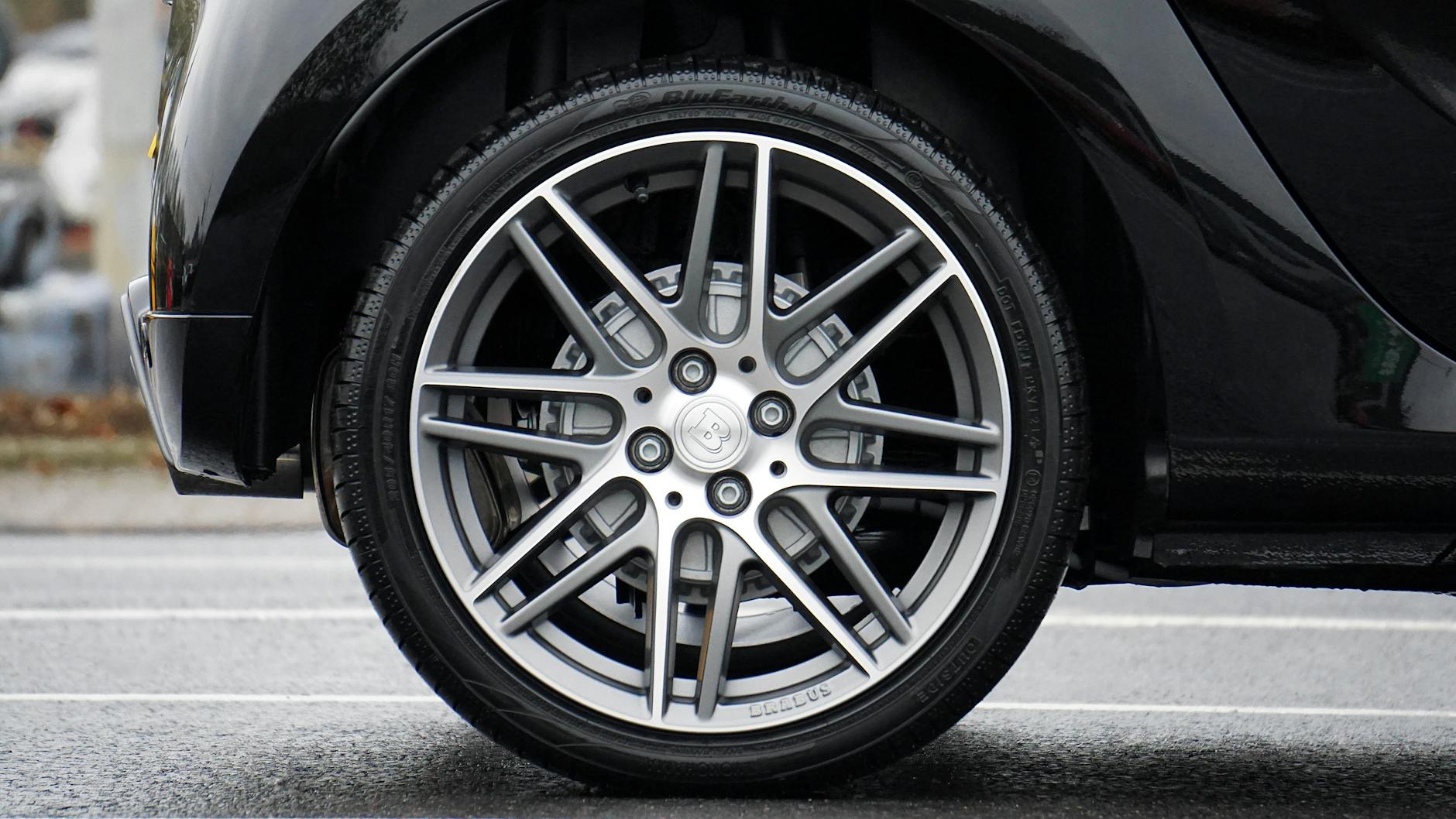
Deep Dish Wheels: What They Are and How to Get Them Right

Few wheel styles generate as much attention as a proper deep dish setup. The way a thick outer lip frames the spokes, the way it fills a wide fender, the sheer visual mass of it — there's nothing quite like a deep dish wheel done right. But "deep dish" gets thrown around loosely, and a lot of builds fall short because the buyer didn't fully understand what they were ordering, or couldn't get the offset and sizing right for their specific car. This guide covers all of it: what deep dish actually means, how the fitment works, which platforms pull it off best, and how to get a custom set built that actually fits.
What Makes a Wheel "Deep Dish"?
The "dish" in a wheel refers to the depth of the outer barrel — specifically, how far the outer lip protrudes from the face of the wheel. A wheel with a shallow dish has very little barrel showing from the front; a deep dish wheel has a pronounced outer lip that can range from 2 inches to 4+ inches depending on the offset and width combination.
The math is straightforward. Dish depth is determined by the relationship between the wheel's width, offset, and backspacing. Low or negative offset pushes the mounting face toward the inside of the barrel, which means more outer lip. A 10-inch wide wheel with a +10mm offset will have dramatically more dish than the same width wheel at +45mm. This is why offset — not width alone — is the primary lever for achieving a deep dish look.
Backspacing, which is the distance from the hub mounting surface to the inner edge of the barrel, tells you the same story from the other direction. Less backspacing equals more dish. If you're comparing wheels across brands or trying to verify a spec, knowing both offset and backspacing gives you the full picture.
Outer Lip vs. True Deep Dish
Not every wheel with a visible lip is a true deep dish wheel. Some designs use a shallow barrel with a decorative chrome or machined lip ring that's largely cosmetic — the actual barrel depth is modest. True deep dish is a function of barrel geometry, not surface treatment. A genuine deep dish wheel will have a barrel that's physically deeper on the outer side, which you can confirm by looking at the wheel from the side or checking the offset-to-width ratio.
For reference: a 9-inch wide wheel at +15mm offset gives you roughly 3.5 inches of outer lip. The same wheel at +35mm drops to around 2.5 inches. Every 25mm of additional offset removes approximately one inch of dish. That's the relationship to keep in mind when you're spec'ing a build.
Why People Run Deep Dish Wheels
The primary reason is aesthetic — deep dish wheels have an aggressive, planted stance that's hard to achieve any other way. The thick outer lip creates visual width even on narrower body cars, and it gives the wheel a three-dimensional presence that flat-face or low-offset designs simply don't have.
There's also a fitment dimension. On some platforms — older muscle cars, classic BMWs, wide-body builds — the fender geometry almost demands a low-offset, wide wheel to fill the arch properly. A Mustang GT on a 10.5-inch rear wheel at +25mm looks intentional. The same car on a 9-inch wheel at +45mm looks like it's wearing borrowed shoes.
For show builds and concours-style displays, deep dish is often a prerequisite. The OEM wheel industry moved heavily toward high-offset, low-dish designs over the past two decades for packaging and handling reasons, which means running a genuine deep dish setup is one of the clearest signals that a build has been intentionally modified.
Fitment: The Part That Actually Matters
Getting deep dish wheels to fit correctly is where most builds succeed or fail. The main variables are:
Offset and clearance. Low offset means the wheel sits further outboard. That's what creates the dish, but it also puts the inner barrel closer to your suspension components — control arms, coilovers, caliper brackets. On an F30 335i running a 9.5-inch front wheel, you typically max out around +22–25mm before you start contacting the strut housing under full lock. Go lower than that and you're either spacering it out (which defeats some of the purpose) or pulling fenders aggressively.
Tire stretch and lip protection. A signature element of the deep dish look is a tire that's slightly narrower than the wheel's tread width, creating a stretched profile that exposes more of the outer lip. A 225-section tire on a 9.5-inch rim (which normally takes a 255 or 265) will have noticeably more stretch. This is a stylistic choice, not a handling optimization — stretched tires sacrifice lateral stability. Know the tradeoff.
Hub-centricity. Deep dish wheels, particularly custom-built ones, should be hub-centric rather than lug-centric. The bore needs to match your hub diameter exactly — 72.6mm for most BMWs, 60.1mm for many Fords, 66.9mm for Tesla Model 3. A wheel that centers on the lugs alone will often exhibit vibration at highway speed, especially with heavier barrel configurations.
Weight distribution across the barrel. This is something most buyers don't think about but matters a lot in a forged or flow-formed build. A deep dish wheel concentrates more aluminum in the outer barrel, which shifts weight outboard relative to the hub. Good engineering accounts for this — spoke geometry and wall thickness should be tuned to keep rotational inertia in check. Cheap cast deep dish wheels often end up heavy specifically because they're poorly optimized for this geometry.
Common Platforms That Pull Off Deep Dish Well
Some cars are natural fits for deep dish setups based on their fender geometry and chassis architecture:
- BMW E30/E36/E46 — wide front strut towers limit inner clearance but the fenders can accommodate significant poke with a proper roll. A 17x9 at +15mm rear is a classic spec.
- Ford Mustang (S197/S550) — the rear axle has generous clearance and the quarter panels are wide enough for a 10.5-inch rear wheel at +25mm without pulling fenders.
- Chevy Camaro (5th/6th gen) — similar story to the Mustang; the rear is forgiving and the wide haunches reward a deep dish rear wheel.
- VW/Audi MQB platforms — the front-wheel-drive layout limits how low you can go on offset without tucking the wheel too far under the car, but staggered setups with a deeper rear are achievable.
- Tesla Model 3 — the lack of a traditional engine bay up front frees up some front clearance, and owners frequently run 19x9.5 or 20x10 at +25–28mm with excellent results.
FR-platform cars (rear-wheel-drive with the engine up front) generally have more flexibility on the rear axle, which is where most builders go deepest anyway. The front is constrained by steering geometry and strut clearance on almost every platform.
Multi-Piece vs. Monoblock for Deep Dish
This is a real decision point. Traditional deep dish wheels — think classic three-piece designs from the late '90s and 2000s — were built as multi-piece assemblies: a center section bolted to an outer barrel, with the offset adjusted by selecting different barrel depths. This gave incredible flexibility in achieving exact dish specs and allowed rebuilds if the barrel got curbed.
Monoblock forged wheels (milled from a single forging) can also be built with a deep dish profile, but the geometry is fixed at the time of manufacture. You spec the offset you want, and that's what's machined into the wheel. There's no disassembly and no adjustment later. The tradeoff is that a forged monoblock is structurally superior — no seam, no bolted joint at the barrel-to-center interface, better fatigue resistance. For a daily driver or track-adjacent build, that matters.
You can read more about how these construction methods compare in our piece on forged monoblock wheels and the broader breakdown in forged vs cast wheels.
Flow-formed wheels — where the barrel is roller-formed under pressure from a cast preform — can also produce deep dish profiles and hit a better price point than full forgings. The barrel wall is denser and stronger than a straight casting, which matters when you're putting more material outboard. For most street applications, a properly flow-formed deep dish wheel is an excellent choice. The full comparison is covered in flow formed vs forged wheels.
Finishes and Visual Considerations
The outer lip is the focal point of a deep dish wheel, which means the finish on that lip is everything. The most popular treatments:
Polished lip with matte or gloss center. The contrast between a mirror-polished barrel and a dark center is the classic deep dish aesthetic. It takes maintenance — polished aluminum oxidizes — but nothing else has the same visual pop.
Brushed or satin lip. Lower maintenance than a full polish, still distinct from the center. Works especially well on brushed gunmetal or bronze colorways.
Full gloss or full matte. Less contrast, cleaner look. Better for builds where the wheel is meant to complement the car rather than be the focal point.
Chrome barrel. Very traditional on show builds, particularly American muscle cars. Heavy, expensive to repair, but unmistakably deep dish.
Spoke design interacts heavily with dish depth. Concave spokes on a deep dish wheel create an almost tunnel-like depth from the front — the dish recedes behind the spoke plane, amplifying the effect. Flat or convex spokes on a deep dish barrel look slightly contradictory. If deep dish is the goal, concave or neutral spoke geometry is almost always the right call. The geometry is explained in more detail in our concave vs flat face wheels guide.
Getting a Custom Deep Dish Wheel Built
Off-the-shelf wheels rarely hit the exact offset you need for a specific fitment, especially on modified cars with aftermarket suspension, wider fenders, or unusual track widths. This is where custom manufacturing makes the most sense.
The process at ForgedToFit works like this: you choose a design or upload your own, provide your vehicle and fitment specs, and we generate a 3D CAD model for your approval before anything is manufactured. Offset, width, bore, and lug pattern are all set to your exact requirements. Because we work directly with our OEM forging partner — the same facility that supplies major automakers — the per-wheel cost is 50–70% less than equivalent legacy brands, with a 5-year warranty on the finished product.
For a deep dish build specifically, the CAD step is particularly valuable. You can see the dish depth before anything is cut, verify inner barrel clearance against your suspension geometry, and adjust the offset or width by a few millimeters if needed. Fixing a fitment problem in CAD costs nothing. Fixing it after the wheel is forged costs a second set.
If you're new to custom wheel ordering, the custom auto wheels guide walks through the full process in detail. For BMW-specific builds — which often involve tighter fitment constraints — the custom forged wheels for BMW guide is worth reading before you spec anything.
Staggered Deep Dish Setups
Many deep dish builds run staggered fitments — a narrower wheel with slightly more offset up front, a wider wheel with deeper dish in the rear. This is the natural approach on FR-layout cars where the rear axle has more clearance and the wider track width rewards a wider, lower-offset wheel.
A typical staggered deep dish setup on an S550 Mustang GT might be a 19x9.5 at +25mm front, 19x10.5 at +18mm rear. The front dish is noticeable but not extreme; the rear has a genuinely deep lip that fills the flared quarter. Running the same deep dish spec front and rear on a rear-wheel-drive car often results in front fitment compromises — clearance issues under lock or inside the fender liner — that aren't worth it.
For more on the logic behind staggered setups, see staggered wheels: what they are and when to run them.
What to Watch Out For
A few things trip up buyers who are new to deep dish fitment:
- Assuming any low-offset wheel is automatically deep dish. Offset determines dish relative to width. A 7-inch wide wheel at +10mm looks nothing like a 10-inch wide wheel at +10mm.
- Ignoring inner barrel clearance. The deeper the dish, the more the inner barrel intrudes into the wheel well. On lowered cars with aggressive camber, this is a real contact risk.
- Overlooking load rating. Wide, low-offset wheels have higher bending loads at the hub. This is not the place for a wheel with a marginal load rating.
- Buying cast deep dish for a car that sees track days. Cast aluminum and the mechanical stress of a deep dish geometry under cornering loads are a poor combination. Forged or flow-formed is the right call for anything beyond light street use.
Deep dish wheels reward careful planning and punish guesswork. The builds that look best aren't the ones with the most extreme specs — they're the ones where offset, width, tire fitment, and suspension setup were all dialed in together.
Frequently asked questions
How do I calculate the dish depth of a wheel?
Dish depth (outer lip depth) is approximately equal to: (wheel width / 2) minus offset in inches minus backspacing. A simpler approximation: for every 25mm of reduced offset on a given width wheel, you gain roughly one inch of outer dish. So a 10-inch wide wheel at +10mm will have about 1.5 inches more dish than the same wheel at +48mm.
What offset should I run for deep dish wheels?
It depends on your wheel width and vehicle. As a general rule, offsets below +25mm on widths of 9 inches or more produce a noticeable deep dish look. Many classic deep dish setups run +15mm to +20mm on 9.5–11 inch wide wheels. Always check inner barrel clearance against your suspension components before committing to a low-offset spec.
Are deep dish wheels heavier than standard wheels?
They can be, especially in cast form, because more material is concentrated in the outer barrel. A properly engineered forged or flow-formed deep dish wheel manages this through optimized spoke geometry and barrel wall thickness. Poorly designed cast versions often run 5–8 lbs heavier per wheel than an equivalent forged design — which adds up to 20–32 lbs of unsprung mass for a full set.
Can deep dish wheels fit on a front-wheel-drive car?
Yes, but with more constraints. FWD cars have driven front axles with CV joints that limit how far inboard the wheel can sit, which restricts how low you can go on offset. Most FWD platforms max out around +35mm on the front before running into CV axle clearance issues. Deep dish is achievable on the rear of a FWD car (passive axle) but the front is limited — so a full staggered deep dish look isn't really possible without fender work.
Do deep dish wheels require special tires?
No special tire type is required, but many deep dish builds use a slightly stretched tire — a tire section width that's narrower than the wheel's tread width — to expose more of the outer lip. This is a style choice with tradeoffs: stretched tires reduce lateral grip and can be harder to seat properly. Standard-width tires work fine on deep dish wheels and are the better choice for any performance application.
How do I protect the outer lip on a deep dish wheel from curb damage?
The outer lip on a deep dish wheel is more exposed than on a high-offset design, so curb rash is a real concern. Polished or machined lips show damage more than painted or brushed finishes. Practically speaking, parking slowly and watching your clearance is the only real protection — there are no meaningful aftermarket lip guards for alloy wheels. If you do curb a polished lip, local wheel repair shops can re-polish the damaged section, though a perfect match is difficult.