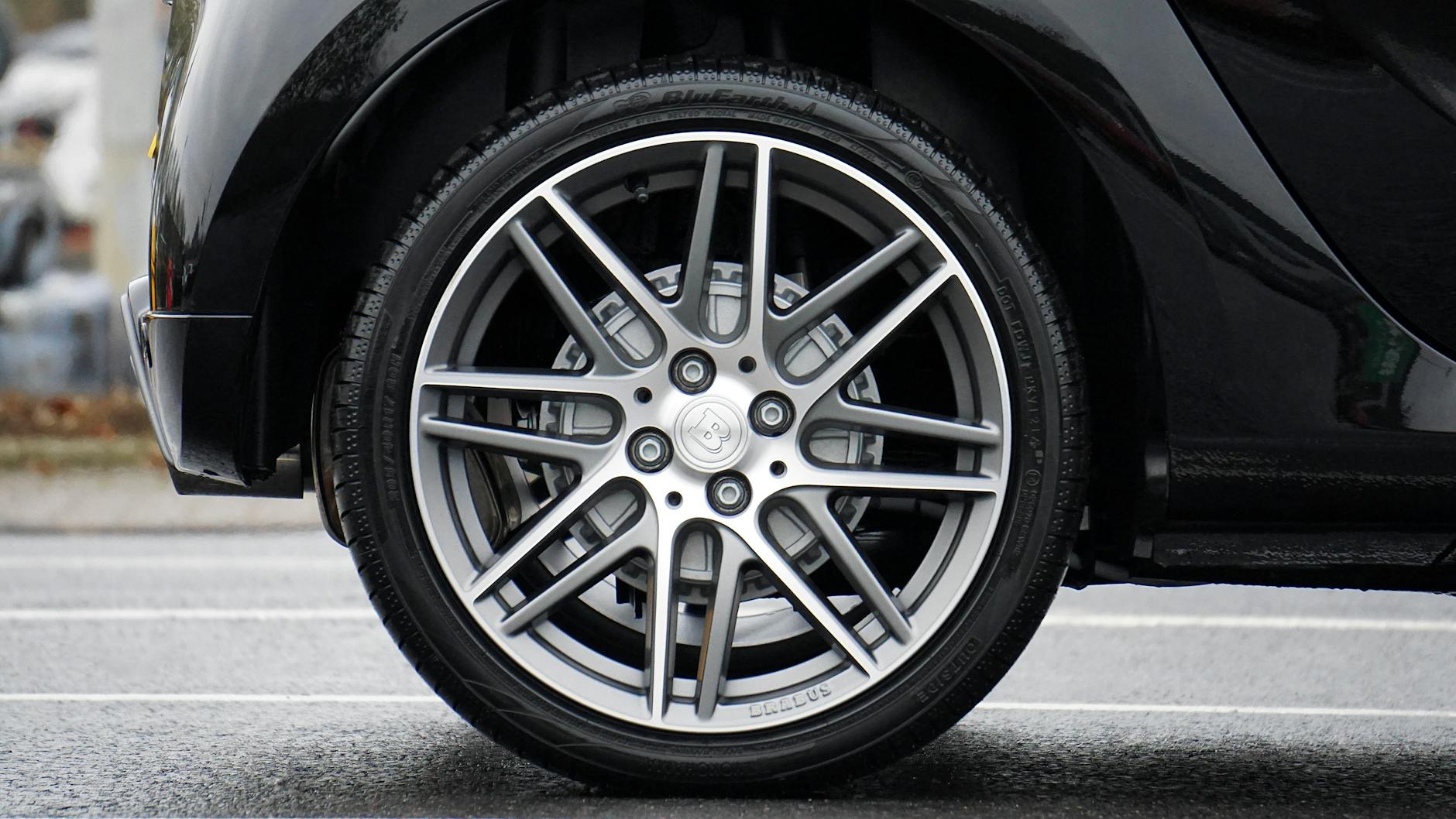
Rotary Forged Wheels: What They Are and Whether You Need Them

Rotary forging sits in a strange spot in the wheel market. Brands use the term constantly — sometimes accurately, sometimes as a vague quality signal — and buyers end up unsure whether they're getting a meaningfully better wheel or just better copywriting. The short answer: rotary forged wheels are legitimately superior to gravity-cast alloys, the weight savings are real, and the process has a clear engineering basis. But they are not forged wheels in the traditional sense, and understanding that distinction matters before you spend money.
What Rotary Forging Actually Is
Most alloy wheels start as a cast blank — molten aluminum poured into a mold, cooled, then machined to final dimensions. That process is fast and cheap, which is why it dominates the market. The problem is that casting leaves porosity in the metal (tiny air pockets), and the grain structure of the aluminum is relatively random. To make a cast barrel strong enough, manufacturers have to leave extra material in, which adds weight.
Rotary forging — also called flow forming, spin forming, or rotary flow forming depending on who's selling it — attacks that problem specifically in the barrel (the cylindrical section between the outboard face and the inboard flange). After the wheel is initially cast, the barrel is heated and then pressed against a spinning mandrel while rollers apply enormous radial pressure. This mechanically deforms the aluminum, compressing the grain structure, eliminating porosity, and aligning the molecular grain in the direction of stress.
The result is a barrel that behaves more like a forged component than a cast one. It's denser, stronger per unit of material, and allows the manufacturer to thin the barrel walls without sacrificing structural integrity. A typical rotary forged wheel comes out 10–20% lighter than an equivalent gravity-cast wheel in the same design and diameter.
The face of the wheel — the spokes, the center section — is still cast. Only the barrel gets the flow-forming treatment. That's the key distinction between rotary forged wheels and a fully forged monoblock, where the entire wheel is produced from a billet or pressed blank under extreme pressure.
Rotary Forged vs. Fully Forged: The Real Difference
This is where terminology causes the most confusion. Some brands list their rotary forged wheels under "forged" categories or use phrases like "forged technology" to describe them. That's misleading.
A [fully forged wheel](slug: forged-wheels-what-they-are-and-why-they-matter) starts as a solid aluminum billet or a pre-heated blank that gets compressed under thousands of tons of press force. The entire wheel — face, spokes, barrel, flanges — is formed through this process. The grain structure throughout is refined and directional. You end up with a wheel that's dramatically stronger and lighter than even a flow-formed piece, and one that can be machined to aggressive geometries (deep concave, ultra-thin spokes, complex undercuts) that would crack a cast face.
For a concrete comparison: a high-quality cast 18x8.5 wheel for a platform like the F30 BMW 335i might weigh 22–24 lbs. A rotary forged version of the same design typically lands around 19–21 lbs. A fully forged monoblock in the same size from a reputable manufacturer comes in at 16–18 lbs, sometimes lower with aggressive machining.
That 3–5 lb difference per corner between rotary forged and fully forged translates to 12–20 lbs of unsprung weight across four wheels. On a track car or a performance build, that matters. For a daily-driven Mustang GT where you want something that looks good, rides well, and doesn't cost as much as a set of fully forged wheels, rotary forged is a completely sensible choice.
The price difference reinforces this. Fully forged wheels cost more because the process is more material-intensive, slower, and requires more precise machining. A quality set of fully forged 19-inch wheels from manufacturers like Volk Racing, HRE, or Forgeline can run $3,000–$6,000 or more for the set. A comparable rotary forged set from brands like Enkei, TSW, or Fifteen52 typically falls in the $1,200–$2,500 range depending on size and finish. That gap is meaningful when you also have tires, suspension, and brake budgets to consider.
How the Manufacturing Process Affects Structural Properties
The mechanical improvement in the barrel isn't just marketing. When aluminum is flow-formed, the rollers apply pressure that exceeds the metal's yield strength locally, causing plastic deformation. This cold-works the material in the barrel zone, which does several things simultaneously.
First, it closes porosity. The voids that form during casting get compressed and sealed. Second, it refines the grain size — smaller grains mean higher tensile strength and better fatigue resistance. Third, it aligns the grain in the circumferential direction, which is exactly where the barrel sees the most stress during cornering loads and pothole impacts. A standard cast barrel has grains oriented randomly; the flow-formed barrel has them oriented where they do the most work.
To put numbers to this: the tensile strength of a standard A356 gravity-cast aluminum alloy runs around 160–180 MPa. After flow forming, that same alloy in the barrel region can reach 250–290 MPa — a 50–60% improvement in the zone that matters most for real-world durability. Yield strength and fatigue life improve proportionally, which is why manufacturers can justify the thinner walls.
This is why rotary forged wheels handle impact better than standard cast. A cast wheel hitting a sharp pothole at speed is prone to cracking or taking a permanent deformation at the barrel. A flow-formed barrel in the same scenario is more likely to survive or, if it does crack, to crack in a more controlled way along the grain rather than shattering. This behavior difference is especially relevant for large-diameter, low-profile fitments — a 20-inch wheel with a 35-series tire has almost no sidewall to absorb road shock, so the structural properties of the barrel become your primary defense against impact damage.
The face is still the structural weak point of any rotary forged design. Complex spoke geometries — very thin spokes, aggressive concave profiles, deep dish configurations — are limited by the cast face's properties. If you want extreme spoke designs, that's where a fully forged piece justifies the premium. For standard performance spoke patterns, cast faces are structurally adequate.
When Rotary Forged Wheels Make Sense
For most street-performance builds, rotary forged wheels are the sweet spot. Here's how the decision breaks down by use case.
Daily driver with performance intent: An F30 335i, a Mustang GT, a Model 3 Performance — cars that see occasional canyon runs or track days but primarily live on the street. Rotary forged gives you real weight savings over OEM cast wheels, better fatigue life, and the ability to run a properly fitted aftermarket design without the full cost of a forged set. A set of rotary forged 19x9.5 / 19x10.5 staggered wheels for a Mustang will cost significantly less than a comparable fully forged set while still dropping 15–18 lbs of unsprung weight. On the street, that translates to noticeably sharper turn-in response, reduced brake fade on spirited runs (less rotating mass to stop), and slightly improved fuel economy at highway speeds.
Fitment-specific builds: If you're running a non-standard offset, a custom bolt pattern conversion, or a size that OEM suppliers don't offer, flow-formed custom production gives you fitment flexibility without the full forged price. Platforms like the C8 Corvette, newer Porsche 911s, and high-offset European sedans often need custom specs that off-the-shelf options don't cover well. The C8's staggered OEM fitment — 19x8.5 front, 20x11 rear — is wide enough that many generic catalog wheels simply don't exist in those sizes at the right offset. Custom rotary forged production solves that problem at a cost that doesn't require rationalizing the entire wheel budget.
Track use on a budget: NASA ST or SCCA Street class competitors who need lighter wheels but have tire and brake budgets eating into the wheel spend often land on rotary forged as a practical compromise. The weight reduction is real enough to improve lap times without requiring a second mortgage. On a 2,800-lb Miata at a typical club track day, swapping from OEM 16-inch cast wheels to a rotary forged 17-inch set can reduce the unsprung moment of inertia enough to produce a measurable improvement in corner entry response — the kind of difference you feel in the first session rather than having to data-log.
Cases where fully forged is worth it: If you're running a dedicated track car, an aggressive wide-body build with very deep concave faces, or a show build where spoke geometry is central to the design, the fully forged piece is worth the extra investment. The face strength opens up design possibilities that flow-formed construction can't match. A 10-inch deep concave face with 8mm spoke thickness at the narrowest point simply cannot be produced safely in a cast center — the material properties aren't there. That geometry requires a fully forged center machined from properly processed billet.
Reading the Marketing Honestly
The wheel industry is full of terminology that sounds technical but gets used loosely. Terms like "flow forged," "pressure cast," "forged-style," and "rotary forged" can mean different things depending on the manufacturer — or nothing at all.
Genuine rotary forged / flow-formed production involves specific equipment (spinning mandrels, precision rollers, controlled temperature) and produces a measurable change in material properties. Ask manufacturers for the weight spec on a given size. If a claimed rotary forged 18x9 wheel weighs 23 lbs, something is off — that's in cast territory. A legitimately flow-formed 18x9 should be in the 17–20 lb range depending on design.
Also check whether the manufacturer's flow-forming process applies to the full barrel or just a partial spin at the lip. Some budget manufacturers apply minimal spinning that produces minor cosmetic changes without real structural improvement. A proper rotary forged barrel is thinner than the cast equivalent but equally strong or stronger — that's the test. If the manufacturer can't tell you the barrel wall thickness before and after forming, or can't provide tensile strength data for the post-formed material, treat the "rotary forged" claim with appropriate skepticism.
It's also worth checking independent certifications. JWL (Japan Wheel Light alloy standard) and VIA (Vehicle Inspection Association) testing are voluntary but meaningful — they require structural validation under standardized radial and lateral fatigue loading. A wheel that carries JWL+VIA markings has been tested to fail modes, not just visually inspected. TÜV certification serves a similar function for the European market. These don't guarantee a wheel is genuinely flow-formed, but manufacturers who invest in third-party certification are generally more transparent about their processes than those who don't.
This is one reason working with manufacturers who have transparent production processes matters. When you can see the CAD model, understand the wall thickness specs, and get actual weight data before ordering, you're in a much better position than buying based on marketing language alone.
Rotary Forged Wheels and Custom Fitment
One of the practical advantages of the flow-forming process is that it's compatible with custom production runs. Because the barrel is formed over a mandrel after casting, manufacturers can adjust barrel depth and wall thickness on a per-order basis with relatively low tooling cost. This means you can order a rotary forged wheel to a specific offset, width, and diameter combination without requiring the full bespoke tooling investment that some fully forged custom work demands.
For platforms that need unusual fitments — say, a 5x112 to 5x120 adapter situation, or a widebody S550 Mustang that needs 10.5" wide fronts at a specific offset to clear fenders — rotary forged custom production is often the most practical path. You get the weight and strength benefit of flow-forming with the fitment specificity of a custom build. The mandrel can be adjusted to produce different barrel depths while keeping the same cast face tooling, which means a manufacturer can offer the same spoke design across a range of offsets — say ET25 through ET45 in the same 19x9.5 — without cutting new face molds for each offset. That flexibility is one of the underappreciated manufacturing advantages of the process.
If you're working through this kind of fitment math, the principles in a guide to [custom offset wheels](slug: custom-offset-wheels-get-the-fitment-exactly-right) apply directly — offset, backspacing, and hub centricity all need to be dialed in before you commit to any custom production order.
Comparing Rotary Forged to the Full Manufacturing Spectrum
To put the process in full context:
Gravity cast: Molten aluminum poured into a mold under gravity. Cheapest, slowest to cool, most porosity, heaviest for a given design. OEM wheels on econoboxes and many entry-level aftermarket designs.
Low-pressure cast (A356): Aluminum forced into the mold under controlled pressure. Better density than gravity cast, less porosity, slightly stronger. Most quality OEM wheels and mid-tier aftermarket use this process. Many OEM BMW, Mercedes, and Honda alloys are low-pressure cast A356, which is why they're structurally adequate but not particularly light.
Counter-pressure cast: A variation where the mold is pressurized before and during filling, creating even better density and a finer grain structure than standard low-pressure casting. Some high-end OEM performance wheels — including certain OEM Porsche and AMG applications — use this process to get closer to flow-formed properties without the additional forming step. It's still a casting, but a notably better one.
Rotary forged / flow-formed: Low-pressure cast face with a mechanically flow-formed barrel. Better barrel strength, lower weight, improved fatigue life. The performance sweet spot for most street builds.
Fully forged: Entire wheel formed from billet or blank under high press force. Best strength-to-weight, highest design flexibility, highest cost. The choice for serious performance and show builds.
A more detailed breakdown of where flow forming sits relative to traditional forging is covered in the [flow formed vs forged wheels](slug: flow-formed-vs-forged-wheels-which-is-right-for-you) comparison, which goes deeper on the structural trade-offs.
What to Ask Before Buying
If you're evaluating rotary forged wheels from any manufacturer, four questions cut through the noise quickly:
- What is the actual wheel weight for the specific size I need? Get a number, not a range.
- Is the entire barrel flow-formed, or just the outer portion?
- What aluminum alloy is used, and what are the tensile strength specs post-forming?
- Is there a warranty that covers structural failure, and does it survive track use?
Those four questions separate manufacturers who actually run a proper flow-forming process from those using the terminology as a marketing badge. A manufacturer with genuine rotary forged production can answer all four without hesitation. One who deflects, provides only marketing copy, or can't give you a specific wheel weight for your size probably doesn't have the process they're claiming. Weight is the easiest proxy test — it's a direct, measurable output of whether the flow-forming actually happened and whether the barrel walls were actually reduced. If the numbers don't line up, the process didn't either.
Frequently asked questions
Are rotary forged wheels the same as forged wheels?
No. Rotary forged wheels (also called flow-formed) have a cast face with a mechanically worked barrel. True forged wheels are formed entirely from a billet or pressed blank under high force. Both are better than standard cast, but fully forged wheels are stronger, lighter, and allow more aggressive spoke designs. The terms are sometimes used interchangeably in marketing, which causes a lot of confusion.
How much lighter are rotary forged wheels compared to standard cast?
Typically 10–20% lighter in the same design and size. A gravity-cast 18x8.5 might weigh 22–24 lbs; a rotary forged version of the same design usually runs 19–21 lbs. The exact savings depend on spoke design, diameter, and width, but the difference is consistent and measurable.
Are rotary forged wheels strong enough for track use?
Yes, for most track applications. The flow-formed barrel is substantially stronger than a cast barrel and handles the fatigue loads of repeated cornering and curb impacts well. Where you might outgrow a rotary forged wheel is on very aggressive track programs — dedicated time attack cars or racing builds — where fully forged construction provides an additional safety margin and allows for lighter weight.
Can I get rotary forged wheels in a custom size or offset?
Yes. Because the barrel is formed over a mandrel post-casting, manufacturers can produce custom widths, offsets, and diameters within a given design's dimensional range. This makes rotary forged custom production practical for fitments that off-the-shelf options don't cover — unusual offsets, non-standard bolt patterns, or widths specific to a modified car.
What's the difference between 'rotary forged,' 'flow formed,' and 'spin formed'?
These terms describe the same fundamental process — mechanical deformation of the barrel using spinning rollers under heat and pressure. Different manufacturers use different terminology, and 'rotary forged' is increasingly common as a marketing label. The key is the actual process and resulting weight/strength specs, not the specific name used.
Do rotary forged wheels work for daily drivers or just performance cars?
They work well for both. The weight savings reduce unsprung mass, which improves ride quality and handling on any car — not just track builds. For a daily driver like a BMW 3 Series, Model 3, or Mustang GT, rotary forged wheels deliver a meaningful upgrade over OEM cast wheels in terms of weight, appearance options, and longevity without the cost of fully forged construction.