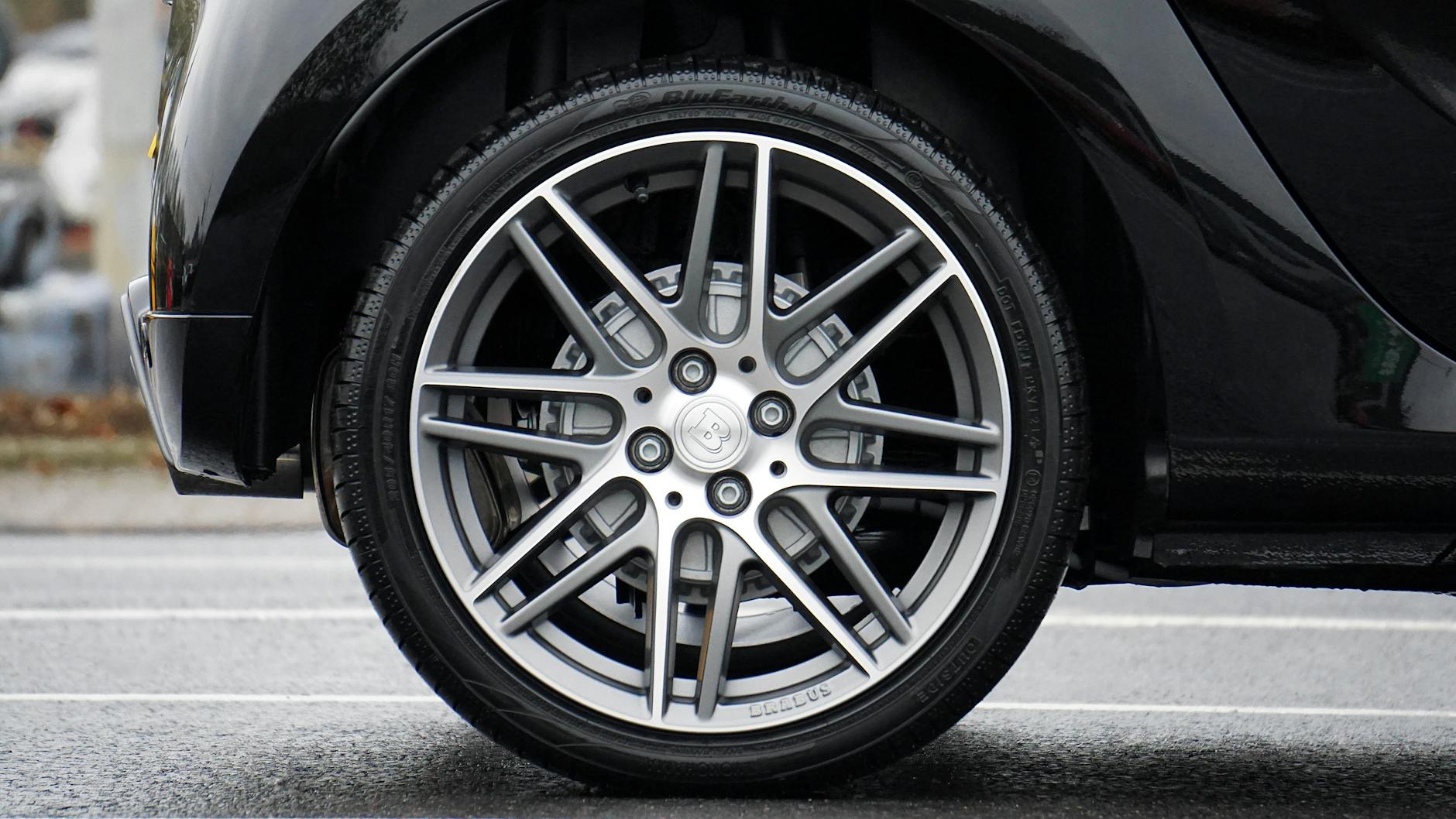
Aftermarket Porsche Wheels: The Complete Guide

Porsche builds some of the best factory wheels in the industry. The OZ-sourced center-lock forgings on a GT3, the staggered Carrera S fitments, the matte black turbine spokes on the Turbo S — they're not embarrassments. So why do so many Porsche owners still go aftermarket? A few reasons: cost, customization, and the simple fact that a fresh set of wheels transforms the look of a car more than almost any other modification.
But aftermarket Porsche wheels are a category where cutting corners backfires. Porsche uses aggressive offsets, staggered sizing on nearly every rear-engine platform, and hub-centric fitment with a 71.6mm bore. Run the wrong wheel and you get vibration, rub, or a car that handles worse than stock. Do it right and you can run a lighter, sharper-looking wheel than anything Porsche charges $4,000+ for as an option.
This guide covers everything: platform-specific fitment specs, staggered vs square setups, forged vs cast, finish choices, and how to get custom forged wheels made to your exact specs without paying the Porsche dealer markup.
Why Porsche Fitment Is More Technical Than Most Cars
Most mainstream cars have relatively forgiving fitment tolerances. Porsche doesn't. Here's why it matters more on these platforms.
Hub Bore and Centering
All modern Porsches use a 71.6mm hub bore — a fairly specific size that most mass-market aftermarket wheels don't nail. If your wheel's center bore is larger than 71.6mm, you'll need hub-centric rings to fill the gap. Run without them and you'll feel vibration at highway speed, sometimes severe enough to feel like a tire balance issue. A proper custom wheel made to 71.6mm eliminates this entirely.
Offset Sensitivity
Porsche geometry is calibrated around specific offsets. The 992 Carrera runs ET50 front, ET55 rear on the 20-inch fitment — tight numbers that leave little room for error. Go significantly more positive and the wheel tucks too far under the fender, looking wrong and affecting scrub radius. Go too negative and you're rubbing the suspension components or the arch liner under compression. A few millimeters matters here in a way it simply doesn't on a lifted F-150.
Staggered Sizing
The vast majority of 911s, Boxsters, Caymans, and Panameras run staggered fitments — narrower fronts, wider rears. The 992 Carrera S is 245/35 front, 305/30 rear on 20x9 and 21x11.5 wheels. That 11.5-inch rear is a genuinely wide wheel that requires a well-engineered spoke design to handle lateral loads properly. Understanding staggered wheels and when to run them is essential before ordering any Porsche fitment.
Platform-by-Platform Fitment Reference
These are common fitment starting points. Always verify against your specific model year, trim, and any suspension modifications before ordering.
911 (992 Generation, 2019+)
The current 911 is the most fitment-sensitive in the modern lineup. Base Carrera: 20x8.5 ET53 front / 21x11 ET67 rear, 5x130 PCD. Carrera S/4S steps up to 20x9 / 21x11.5. The Turbo S runs 21x9.5 front / 21x12 rear — that 12-inch rear is among the widest fitments on any production sports car. Custom wheel builders love this platform because the factory fitment is expensive (Porsche OEM 21-inch forged sets often exceed $5,000) and the visual impact of a well-chosen aftermarket set is dramatic.
911 (991.2 Generation, 2016–2019)
Similar fitment philosophy: 5x130 PCD, 71.6mm bore, staggered in almost all configurations. The 991.2 GTS runs 20x8.5 ET53 front / 21x11.5 ET67 rear. If you're buying a used 991.2 and want to go aftermarket, this generation has the most wheel options available because it's been on the road long enough for the fitment data to be well-established.
Boxster / Cayman (718 Generation, 2016+)
Same 5x130 PCD and 71.6mm bore. Staggered, but narrower than the 911 — the base 718 runs 19x7.5 front / 19x9 rear, ET53/ET47. The 718 GT4 steps to 20x8 / 20x10. These mid-engine platforms are particularly sensitive to rear offset because the engine sits just inboard of the rear wheels; too much negative offset and you're in trouble.
Cayenne (2018+, E3 Generation)
The Cayenne shifts to a 5x130 PCD like all modern Porsches but with a much larger 77.0mm hub bore — critical difference from the sports cars. Common fitment: 21x9.5 ET46 across all four corners on base models, stepping to 22x10 ET50 on the Turbo. The Cayenne Coupe follows the same specs. Running square fitments (same size front and rear) is common on the Cayenne because it's an SUV and rotation matters for tire wear.
Macan (2015–2023, First Generation)
The Macan breaks from the pattern: 5x112 PCD and 66.5mm hub bore — it's mechanically a VW Group platform (shared with the Audi Q5), not a traditional Porsche architecture. Offsets run around ET21 to ET26 depending on wheel width. This is arguably the most aftermarket-friendly Porsche platform because 5x112 is the most common fitment in the European performance segment, meaning far more off-the-shelf options exist.
Panamera (2017+, Second Generation)
5x130 PCD, 71.6mm bore, typically staggered. Base models run 19x8.5 front / 19x10.5 rear. The Turbo goes to 21x10 front / 21x11.5 rear. Offset is tight — ET50 range front and rear. The Panamera is the platform most commonly seen on deep concave forged wheels because the wide rear arch accommodates dramatic dish profiles beautifully.
Forged vs Cast for Porsche Wheels
This is not a close call for performance Porsches. Understanding cast vs forged wheels and what actually matters matters everywhere, but it matters most here.
Cast wheels are poured aluminum — the manufacturing method requires more material to achieve the same structural integrity, so they're heavier. On a 992 GT3 RS running 21-inch wheels, the difference between a quality forged set and a cast set can be 3–5 lbs per corner. That's 12–20 lbs of unsprung rotational mass removed from the car. Porsche's own Motorsport and Exclusive Manufacture departments use forged monoblock construction for this exact reason.
Flow-formed wheels sit in the middle. The barrel is spun and stretched under heat and pressure, producing a stronger, lighter barrel than pure casting, but the face is still cast. For daily-driven Porsches — a Macan, a base Cayenne, a Boxster used on weekends — flow-formed is a legitimate option that costs meaningfully less than full forging while still outperforming cheap cast wheels on weight and durability. For a track-day 911 or a Cayman GT4, go forged. The details behind flow formed vs forged wheels are worth reviewing before you commit.
Staggered Setups: The Details That Matter
If you're running a 911, Boxster, Cayman, or Panamera, you're almost certainly running staggered wheels. A few practical considerations:
You can't rotate staggered tires. This means your rear tires wear independently of your fronts. On a 992 Carrera, budget for rear tires every 10,000–15,000 miles on aggressive street/occasional track use — the 305-section rears work hard. Factor this into your running cost calculation.
Going square is possible but has tradeoffs. Some 911 owners run square fitments (same width front and rear) to enable rotation. The compromise is that the rears look slightly undersized relative to the arch, and you're working against Porsche's intended geometry. If tire cost is the concern, the math still doesn't favor square on most setups — you're optimizing around a $500/year problem by potentially affecting a $60,000 car's dynamics.
Diameter upgrades work, within reason. The 992 Carrera comes on 20/21 staggered from the factory. Going to 21/22 is done regularly. Going beyond that risks ride quality degradation as tire sidewall height drops to nothing, and you start introducing clearance issues with brake calipers and suspension components. The factory GT3 runs 21-inch all around — there's a reason they didn't go to 22.
Finish Options and What Holds Up on a Porsche
Porsche owners tend to care about long-term appearance, and rightly so. A few notes on finish durability:
Gloss black looks sharp on silver, GT Silver, Chalk, or Carrara White Metallic — high contrast, clean. It shows brake dust more than any other finish. If you're not washing the car weekly, you'll be disappointed within a month.
Brushed or machined finishes (like a satin silver or machine-face with dark window) age well, hide minor curb rash better than gloss, and look genuinely good on almost every Porsche color. The 991 GT3 Weissach package's satin gold wheels demonstrated that even unconventional metallic finishes work on these cars.
Anthracite / dark graphite is the dominant aftermarket choice right now — neutral enough to work on any color, darker than silver without the maintenance overhead of gloss black. Holds up well to road use.
Powder coat vs paint: For custom wheels, powder coat is generally more chip-resistant than liquid paint. The tradeoff is that powder coat can't achieve the depth of a multi-stage liquid finish or a machined face. For a daily-driven Cayenne or Macan, powder coat makes sense. For a show-quality Panamera build, liquid base with clear coat is the move.
What Aftermarket Porsche Wheels Actually Cost
OEM Porsche wheel pricing is genuinely punishing. A set of 21-inch Sport Classic wheels for a 992 retails for around $6,000 through the dealer — and that's a painted cast wheel, not a forged one. The Porsche Exclusive Manufacture forged sets push $8,000–$12,000 for a staggered set.
Big aftermarket forged brands — HRE, Forgeline, BBS at the top end — typically land between $3,500 and $7,000 for a staggered 911 fitment in forged monoblock construction. That's real money, and it's the reason so many Porsche owners compromise on quality or settle for something they don't fully love.
The ForgedToFit model cuts that price by 50–70% by working directly with the same class of OEM forging partner these brands use, without the brand premium layered on top. A custom forged set for a 992 Carrera in a staggered 20/21 fitment — made to your exact specs, in the finish and spoke design you choose — is achievable for significantly less than a comparable HRE set. The 5-year warranty covers manufacturing defects, and the 3D CAD review before production means you're not committing to something you haven't seen rendered on your car.
For context on how the broader aftermarket forged market shakes out by brand, forged wheels brands worth your money in 2025 breaks down who's actually building quality vs who's selling a name.
Spoke Design: What Works on Porsche Platforms
Portuguese sports car styling leans toward clean, architectural spoke designs rather than busy multi-spoke patterns. A few observations from what actually looks right:
5-spoke designs are classic 911 territory. The original Fuchs wheel was a 5-spoke forging. Modern clean 5-spokes work on 991 and 992 generations without looking derivative.
10-spoke turbine styles — flat or slightly concave — look natural on the 992 Turbo and Panamera Turbo platforms. The factory Turbo wheels use this language.
Deep concave 3-piece or monoblock profiles are increasingly popular on 991.1 and 991.2 cars. The wide rear arch on a 911 accommodates serious dish, and the concave profile emphasizes the width of the rear haunches effectively. Getting concave wheels right requires accurate offset data — this isn't a place to guess.
Mesh or multi-spoke (15+) designs read as more luxury than performance on a Porsche. They work on a Cayenne. On a 911, they tend to look out of character.
TPMS and Lug Seat Considerations
All modern Porsches (2008+) run TPMS from the factory. When switching to aftermarket wheels, you have two options: transfer your OEM TPMS sensors to the new wheels (requires a tire shop visit and possible valve stem adapter, usually straightforward) or purchase new TPMS sensors compatible with Porsche's system. Don't skip this — beyond the dashboard warning light, Porsche's stability management systems use TPMS data in their calculations.
Porsche uses ball seat lug bolts, not the conical/tapered seat used on most other European cars. Your aftermarket wheels need to be drilled for the correct ball seat to match. This is a detail that a competent custom wheel builder handles at the spec stage — but it's worth confirming explicitly before you order.
Getting Custom Aftermarket Porsche Wheels Built Right
The process for ordering custom forged Porsche wheels through ForgedToFit:
- Submit your platform, current fitment, and any modifications (lowering springs, coilovers, flared arches)
- Browse existing designs or upload a reference image
- Receive a quote and 3D CAD rendering of your exact wheel on your car's specifications
- Approve the design and specs before manufacturing begins
- Wheels are forged, finished, and shipped direct — typically 8–12 weeks depending on finish complexity
The CAD step is meaningful for Porsche buyers specifically because the offset and dish profile interact visually in ways that aren't obvious from a spec sheet. Seeing a rendered 21x11.5 ET67 wheel in your chosen spoke design, at the right diameter, before you commit — that's how you avoid buyer's remorse on a set of custom forged wheels.
For a broader overview of how the custom wheel ordering process works across platforms, custom forged wheels: the complete guide covers the full picture.
Frequently asked questions
What PCD (bolt pattern) do Porsche cars use?
Most modern Porsches — 911, Boxster, Cayman, Cayenne, Panamera — use a 5x130mm PCD with a 71.6mm hub bore. The exception is the first-generation Macan (2015–2023), which uses 5x112mm and a 66.5mm hub bore because it's built on the VW Group MLB platform shared with the Audi Q5.
Do aftermarket wheels void a Porsche warranty?
Aftermarket wheels don't automatically void your Porsche warranty. Under the Magnuson-Moss Warranty Act (US), a dealer must demonstrate that the aftermarket part caused the specific failure in question to deny a warranty claim. That said, if you're running significantly incorrect offsets or a wheel-tire combination that overloads the hub bearings, you've created a legitimate causal link. Run wheels in the correct fitment range and keep your OEM wheels, and there's no practical issue.
Can I run a square fitment on my 911 to rotate tires?
Technically yes — some owners run 19x9.5 or 20x9.5 square setups on older 911s. The tradeoffs are: the rears will look undersized relative to the bodywork, you're working against the factory geometry, and the rear tires on a 911 still work significantly harder than the fronts regardless of sizing, so rotation doesn't fully equalize wear. It's a reasonable choice for a daily-driven 997 C2, less so for a performance-oriented build.
How important is hub centricity on aftermarket Porsche wheels?
Very important. Porsche hubs are hub-centric, meaning the wheel centers on the hub bore, not the lug bolts. If your aftermarket wheel's center bore is larger than 71.6mm (or 77.0mm on the Cayenne), you need precision-machined hub-centric rings. Without them, the lug bolts carry centering load they're not designed for, and you'll get harmonic vibration at speed — often misdiagnosed as a balance issue.
What's the right offset range for aftermarket 992 911 wheels?
Factory 992 Carrera offsets run around ET53 front and ET55–67 rear depending on width. For aftermarket wheels, staying within ±5–7mm of factory offset is generally safe without any arch modifications. Going more negative (lower ET) pushes the wheel outward — aggressive fitment that can look great but may require rolling or pulling the arches, and will affect scrub radius. A custom wheel built to exact factory offset in your chosen width is the cleanest approach.
How much should a quality set of aftermarket forged wheels for a Porsche 911 cost?
Established forged brands like HRE or Forgeline typically charge $3,500–$7,000 for a staggered 911 fitment. OEM Porsche Exclusive Manufacture forged sets run $8,000–$12,000. Custom forged wheels through ForgedToFit — built to the same construction standard by an OEM forging partner — come in at 50–70% less than those legacy brand prices, with a 5-year warranty and 3D CAD design review before manufacturing.