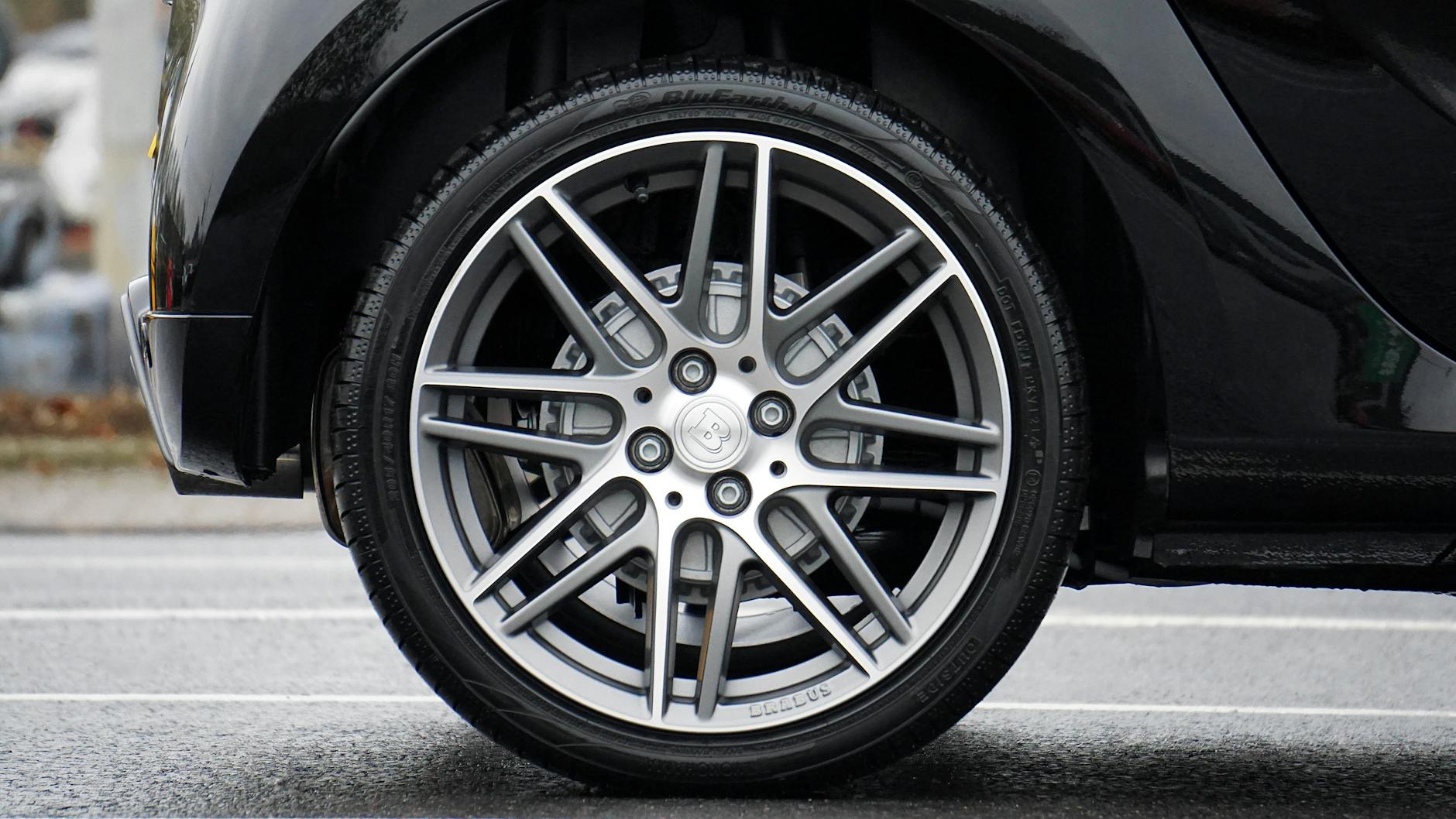
Best Aftermarket Wheels for C6 Corvette (2005–2013)

The C6 Corvette ran from 2005 through 2013 and covered a lot of ground — base coupe, Z06, Grand Sport, and ZR1. Each variant has different wheel and tire sizing needs, and the wrong choice on any of them will either rub, look off, or waste what is genuinely one of the best-handling American platforms ever built. If you're shopping for the best aftermarket wheels for C6 Corvette, the decisions you make around size, offset, construction, and finish will have real, measurable effects on both performance and appearance.
This guide covers all of it — fitment specifics by trim, construction options, style considerations, and what to avoid.
C6 Corvette Wheel Fitment: What the Factory Ran
Understanding the OEM fitment is the baseline. The C6 base model (LS2, later LS3) ran a staggered setup: 18×8.5 front with a +56mm offset and 19×10 rear with a +79mm offset. The Z06 went wider — 18×9.5 front at +57mm and 19×12 rear at +59mm. The ZR1 ran 19×10 front and 20×12 rear.
Those rear offsets on the Z06 and ZR1 push the wheels significantly outboard, which is how GM filled those wide fender flares without spacers. On the base C6 with narrower bodywork, running Z06 rear widths requires either flares or careful offset selection.
The bolt pattern across the entire C6 lineup is 5×120.65mm (commonly listed as 5×4.75"). Hub bore is 70.3mm. These are constants you can't deviate from.
One additional factory detail worth knowing: the C6 uses a conical lug seat (60-degree taper), not a ball seat. This matters when selecting aftermarket lug nuts. Running a ball-seat nut on a conical seat — or vice versa — creates an improper contact patch at the lug, which leads to uneven clamping force and, in a worst case, lug nut loosening under load. When you buy new wheels, confirm the seat type and source matching hardware. Extended lug nuts are sometimes required with thicker-centerbore hub rings or when wheel spoke geometry positions the lug holes deeper than OEM.
Staggered vs Square Fitment on the C6
The C6 was designed around a staggered setup, and it shows in the suspension geometry. The rear control arms, fender lip clearance, and overall stance are all tuned for a wider rear. Running a square setup — same size front and rear — is possible but compromises the look that makes a C6 look right, and you lose the added rear contact patch that helps put the torque down.
For track or autocross use where you want to rotate tires freely, a square setup in the 19×10 or 18×10 range makes sense. For street and show builds, stick with stagger. It's what the platform was designed for, and it genuinely looks better.
There's a practical wrinkle with square setups on a C6: the suspension geometry at the rear, particularly the toe and camber curves through travel, is calibrated for a wider contact patch. Running a narrower square setup in the rear doesn't break the car, but it does mean the rear end transitions from grip to slip more abruptly under hard cornering because the rear tire footprint is smaller than what the geometry expects. This is less critical for casual street driving but becomes relevant if you're pushing the car through high-speed corners where progressive breakaway gives you feedback and time to react.
If you want to understand the underlying geometry of why staggered setups work on rear-biased platforms like the C6, the staggered wheels meaning: a complete explanation piece covers that in detail.
Size Options: What Actually Fits
Base C6 and Grand Sport
The Grand Sport used the same wide-body as the Z06 but with the LS3 engine — so you get the broader fender flares and can run Z06-spec widths. On the base coupe, those same widths will sit proud without flares.
Front fitment for base C6:
- 18×9.5 or 19×9.5 at +50 to +57mm: flush, no modification
- 18×10 at +50mm: possible with some models, worth checking with a spacer sim
Rear fitment for base C6:
- 19×11 at +58 to +65mm: fills the arch cleanly
- 19×12 at +65mm+: borderline, inspect carefully for fender contact
Grand Sport (wide body):
- Front: 18×9.5 or 19×9.5 at +50 to +57mm
- Rear: 19×12 at +59mm works cleanly — same as Z06 spec
One thing to watch on the base coupe specifically: the inner fender liner at the rear is more restrictive than the outer lip suggests. A wheel that clears the lip at static ride height can still contact the liner during suspension compression — particularly relevant if you've lowered the car on springs or coilovers. If you're running a lowered base C6, budget time for a proper rolling clearance check with a passenger in the rear seat and someone compressing the suspension by hand before you put miles on the setup.
Z06 (C6)
The Z06's carbon fiber fenders and wider quarters give you room to run the full 18×9.5 / 19×12 setup or go slightly wider in the rear. Some builders run 19×13 at a higher offset on the rear with no modification — but you're starting to push it, and tire availability at 335/25/19 (the common 13" rear fitment) is limited and expensive.
Stick with 19×12 rear unless you have a specific tire target in mind and have confirmed clearance. The Z06 also benefits from front wheel width here: moving from 18×9.5 to 19×9.5 up front gives you access to a wider 275/35/19 tire rather than a 265/35/19, and that additional front contact patch is meaningful on a car making 505 hp that you may be pushing through corners with significant lateral load.
ZR1
The ZR1's factory 19×10 front / 20×12 rear stagger is unusual — that 20" rear is specific to this car. Aftermarket options exist but the tire selection in 20" rear sizes gets narrower. Most ZR1 owners who go aftermarket drop to 19" all around or keep the stagger at 19×10 / 19×12 for tire availability. A staggered 19" setup on a ZR1 looks correct and opens up a much wider tire catalog.
The other consideration for ZR1 owners is the supercharger hood. The raised center section isn't a fitment variable, but it does change the visual proportion of the car — a wheel that looks proportionally correct on a Z06 can read as too small in diameter on a ZR1 because the hood height shifts the vertical mass upward. Most ZR1 builders find that staying at 19" diameter with maximum practical width reads better than stepping up to a 20" front in the aftermarket, where the tire sidewall at 20×10 front becomes very thin and the ride quality suffers noticeably on the ZR1's already-firm magnetic ride calibration.
Construction: Forged vs Cast for a C6
This is where it gets important for a performance car. The C6, especially the Z06 and ZR1, is genuinely quick — stock Z06 curb weight is around 3,130 lbs with 505 hp. The unsprung weight of your wheels directly affects suspension response, steering feel, and acceleration.
A cast wheel in a 19×12 size can weigh 28–32 lbs per corner. A forged equivalent in the same size typically comes in at 18–23 lbs. Multiply that across four corners and you're looking at 20–40 lbs of unsprung weight removed — more impactful than most bolt-on mods short of coilovers.
To put that in concrete terms: reducing unsprung mass at the wheel by 8 lbs per corner on a C6 is roughly equivalent in handling feel to reducing total vehicle weight by 40–50 lbs. The wheel follows road surface variations faster, the damper doesn't have to work as hard to control the motion, and steering inputs translate more directly because the front wheels respond without the lag that comes from momentum in heavier rotating mass.
For anyone running a C6 on track, autocross, or even spirited canyon roads, forged is the right answer. The cast vs forged wheels: what actually matters breakdown explains why the density and grain structure of a forged billet results in more strength per pound.
Flow-formed wheels are the middle ground — a cast center with a flow-formed barrel that improves barrel strength and sheds weight. Solid choice for a street C6 where budget matters, and the quality gap between a well-made flow-formed wheel and a forged piece is smaller than legacy pricing suggests. A quality flow-formed 19×12 will typically land in the 24–26 lb range — heavier than a forged piece but meaningfully lighter than a standard cast wheel at the same size, and structurally better suited to the impact loads a wide rear wheel encounters on road imperfections.
Style: What Works on a C6
The C6 has strong, curved body lines and a wide, muscular stance. A few style directions consistently work:
Multi-spoke spoked designs (8–10 spokes): The OEM Z06 wheels are a multi-spoke design for a reason — they let the brake hardware show while maintaining structural rigidity at width. Aftermarket multi-spoke designs in forged monoblock construction look purposeful without being overdone. The Brembo six-piston front caliper on the Z06 is a visual asset; a spoke pattern with enough negative space to frame that hardware is the right call.
Deep concave profile: With the Z06 and Grand Sport running 12" wide rear wheels, there's room for real concavity. A concave wheels profile on a 19×12 rear looks aggressive without resorting to gimmicks. The depth is earned by the fitment.
Mesh and split-spoke designs: These photograph well on the C6 because the curvature of the quarter panels frames the spoke pattern. A 10-spoke mesh or Y-spoke design in the 19" diameter keeps proportions correct. Mesh designs in particular tend to complement the C6's organic body surfacing — the fine visual texture of a mesh face plays well against the smooth curves of the fenders rather than competing with them.
What to avoid: Deep dish in a barrel-first sense doesn't work as well here — the C6 isn't a show car with a 4" lip; the deep concave inward profile is what reads as aggressive on this platform. Also avoid super-thin spokes at 12" wide — a wheel that wide needs spoke mass to look proportional. Thin five-spoke designs borrowed from European sedan fitments tend to look underwhelming on the C6's rear quarters and can actually emphasize the width in the wrong way, making the wheel look spindly rather than wide.
Finish Options That Hold Up
Gloss black is popular but shows brake dust and road grime constantly on a car that tends to get driven. Brushed or satin finishes hide contamination between washes. Anthracite with a machined face is the current sweet spot — it contrasts with the brake calipers (Brembo red on the Z06) and reads as premium without being trendy.
For lighter-colored C6s — Velocity Yellow, Arctic White — polished or hyper silver finishes work well. Dark cars (black, Carbon Flash, dark grey) look excellent with a gloss or satin black wheel where the spokes recede and make the tire profile the visual element.
Chrome on a C6 is divisive. It works on a show build but oxidizes and chips in track or enthusiast use. If you want the reflective look, a polished lip with a painted face is more durable and easier to maintain. Many wheel finishers now offer a clear-coated polished option that extends the life of the polish significantly compared to bare aluminum — ask specifically about the clear coat process before ordering, since uncoated polished aluminum on a rear 19×12 that lives behind a tire is a maintenance burden.
Recommended Aftermarket Specs by Trim
These are practical starting points, not absolute rules — your specific tires, suspension setup, and use case may shift things.
Base C6 Coupe:
- Front: 18×9.5 or 19×9.5, +50 to +56mm, 5×120.65, 70.3 hub
- Rear: 19×11 or 19×12, +59 to +65mm
Grand Sport:
- Front: 19×9.5, +52mm
- Rear: 19×12, +59mm — clean factory-width fill
Z06:
- Front: 18×9.5 or 19×9.5, +55 to +57mm
- Rear: 19×12, +57 to +62mm — anything beyond starts to require clearance verification
ZR1 (if converting to 19" all around):
- Front: 19×10, +57mm
- Rear: 19×12, +59mm
Pricing Reality: What You Should Expect to Pay
Legacy forged wheel brands — HRE, Forgeline, CCW — price C6 fitments starting around $2,500–$4,000 per wheel. A set of four for a Z06 with 12" rears can easily hit $12,000–$16,000 before tires. That pricing reflects brand equity as much as engineering.
A flow-formed or forged set from a direct-to-consumer manufacturer using an established OEM forging facility can deliver comparable construction and material quality for 50–70% less. The difference is overhead, not metal. For a full forged set built to your exact C6 specs, $3,000–$5,000 is realistic depending on size and finish — roughly what one legacy brand wheel costs.
One useful sanity check: ask any wheel manufacturer for their forging source and whether they use T6 heat treatment on the finished product. T6 treatment — solution heat treating followed by artificial aging — is standard practice for structural forged aluminum and meaningfully improves tensile and yield strength. A manufacturer unwilling to answer that question or unfamiliar with the terminology is worth avoiding regardless of price.
For more context on what drives wheel pricing and what you actually get at different price points, the forged wheels brands: who's worth your money in 2025 comparison is worth reading before you decide.
Tires for C6 Aftermarket Wheel Setups
Choosing wheels without a tire plan is backwards. For a 19×12 rear, the sensible tire sizes are 305/30/19 (factory ZR1 rear), 315/30/19 (common upgrade), or 325/30/19 if you're building a dedicated track car and can verify fender clearance.
Michelin Pilot Sport 4S is the baseline performance answer and comes in all these sizes. The PS Cup 2 is available in the key C6 rear sizes if you're doing track days. Nitto NT555 G2 is a value-performance option that works well on street-driven Z06s. For autocross specifically, the BFGoodrich g-Force Rival S 1.5 in a 305/30/19 rear delivers a very strong grip-per-dollar ratio on a surface like concrete or asphalt and is available in sizes that work cleanly on the 19×12 rim width.
Front tires on a 19×9.5 typically run 265/35/19 or 275/35/19. The 275 fills the arch better and helps with the visual balance of the front end. It also gives you a slightly larger contact patch at the front, which is worth having on a car with a front-rear weight distribution that leans toward the rear — the extra rubber up front helps the steering feel responsive rather than light during hard cornering.
If you want to pair your wheel selection with a full tire sizing strategy, the aftermarket wheels and tires: the complete setup guide covers that process end to end.
Custom vs Off-the-Shelf Fitments
Because the C6 runs a non-standard bolt pattern (5×120.65 rather than the common 5×120), off-the-shelf options from many wheel brands are technically 5×120 with a slightly larger bolt hole — most manufacturers drill to 5×120.65 on request or as standard for Corvette fitments. Verify this before ordering. A wheel drilled to 5×120 will physically mount but the seat will be slightly off-center, which causes vibration and uneven lug nut loading.
This is more than a theoretical concern. A wheel drilled at 5×120 on a 5×120.65 application introduces a positional error of roughly 0.325mm per stud. At highway speed on a 19" wheel, that offset generates a rotational imbalance that no amount of balance weights fully corrects because the problem is geometric, not mass-related. Owners often chase this with repeated wheel balance appointments before identifying the root cause.
A made-to-order wheel eliminates this problem entirely — you spec the exact bolt pattern, hub bore, offset, and width from the start. For a platform like the C6 with specific dimensional requirements, custom fitment isn't a luxury; it's the practical choice. This is especially true for Z06 and ZR1 rear widths where the combination of 12" barrel width, +59mm offset, and 70.3 hub bore narrows the off-the-shelf catalog significantly.
The broader guide on aftermarket Corvette wheels covers fitment across all generations if you're researching comparisons across C5 through C8.
Buying a Used C6 Already on Aftermarket Wheels
If you're buying a C6 that already has aftermarket wheels, verify a few things before the sale. Measure the offset — previous owners sometimes ran aggressive negative offset or spacers that cause premature bearing wear. Check for hub-centric rings; if the wheel bore is larger than 70.3mm, a ring is required. Spin the wheels by hand off the ground and listen for bearing rumble before assuming the setup is clean.
Wheels that look good in photos can have hidden issues. A lip crack on a 19×12 rear from a pothole hit is a safety problem, not an aesthetic one. Cast wheels in particular don't bend — they crack. Forged wheels typically bend rather than fracture, which is both safer and fixable.
Also inspect the lug seats on used aftermarket wheels carefully. Repeated installation with impact tools and mismatched hardware rounds the conical seat, which leads to improper clamping and the same off-center loading described above. If the seats show visible marring or oval wear at any of the lug holes, factor a wheel refinishing or replacement cost into your offer. On a 19×12 forged rear, that's not a trivial number.
Frequently asked questions
What bolt pattern does the C6 Corvette use?
The C6 Corvette uses a 5×120.65mm bolt pattern (also listed as 5×4.75") with a 70.3mm hub bore. This is consistent across all C6 trims — base, Grand Sport, Z06, and ZR1. Many wheel brands offer this as a standard Corvette drill, but always confirm before ordering since 5×120 and 5×120.65 are technically different.
What's the widest rear wheel I can run on a stock C6 Z06?
The C6 Z06 ran a factory 19×12 rear at +59mm offset. Aftermarket, some builders have run 19×13 at a higher offset without modification, but tire availability in 335/25/19 is limited and expensive. A 19×12 at +57 to +62mm is the practical limit for a clean, unmodified Z06 — and it still looks aggressive with the right tire.
Are forged wheels worth it on a C6 Corvette?
Yes, especially on the Z06 and ZR1. A forged 19×12 rear wheel can be 8–12 lbs lighter than a cast equivalent. Across four wheels that's 20–40 lbs of unsprung weight removed, which genuinely improves suspension response, steering feel, and acceleration. For any C6 that sees track use, the performance case for forged is clear.
Can I run a square setup on a C6 Corvette?
Yes, but it changes the character of the car. A square 19×10 all-around setup allows tire rotation, which is useful for track or autocross use where you want even wear. The trade-off is that the C6's rear stance and fender fill look best with a staggered fitment, and the additional rear contact patch from a wider rear tire helps with traction on a car making 400–638 hp depending on trim.
How much should aftermarket forged wheels for a C6 Corvette cost?
Legacy brands (HRE, Forgeline) typically charge $2,500–$4,000 per wheel for C6 fitments. A direct-to-consumer forged or flow-formed set built to your exact specs can come in at $3,000–$5,000 for the full set — roughly 50–70% less for comparable construction. The pricing difference reflects brand overhead, not material quality.
What tire size fits a 19×12 rear wheel on a C6?
The most common fitments are 305/30/19 (OEM ZR1 rear spec), 315/30/19 (a popular upgrade), and 325/30/19 for dedicated track builds with confirmed clearance. Michelin Pilot Sport 4S and Nitto NT555 G2 are both available in these sizes. Confirm fender clearance at full lock before committing to 325 width on a street car.