Cheap Aftermarket Wheels: What You Actually Get

The phrase "cheap aftermarket wheels" covers a massive range. On one end, you've got a flow-formed set from a reputable manufacturer that weighs less than your OEM wheels and costs $800 for four. On the other, you've got a no-name cast set from an overseas marketplace that was never load-tested, has a bolt pattern that's been "adapted" with a sketchy spacer, and will crack at the spoke under hard braking. Both show up in the same Google search results. Knowing which is which takes a bit of education — and that's what this guide is for.
What "Cheap" Actually Means in the Wheel Market
Aftermarket wheels are manufactured through a few distinct processes, and the process largely dictates both the cost and the quality ceiling.
Gravity cast is the cheapest manufacturing method. Molten aluminum is poured into a mold and left to set. It works, but the resulting grain structure is porous and inconsistent. To get adequate strength, manufacturers have to use more material — so gravity cast wheels tend to be heavy. A 18×8.5 gravity cast wheel might weigh 22–26 lbs. That's worse than a lot of OEM steel wheels.
Low-pressure cast (also called counter-pressure or A356 cast) is a step up. The aluminum is pushed into the mold under pressure, which tightens the grain structure and reduces porosity. Most mid-tier aftermarket brands — Enkei, OZ Racing's entry line, Motegi — use this process. Weights drop to maybe 18–21 lbs for that same 18×8.5.
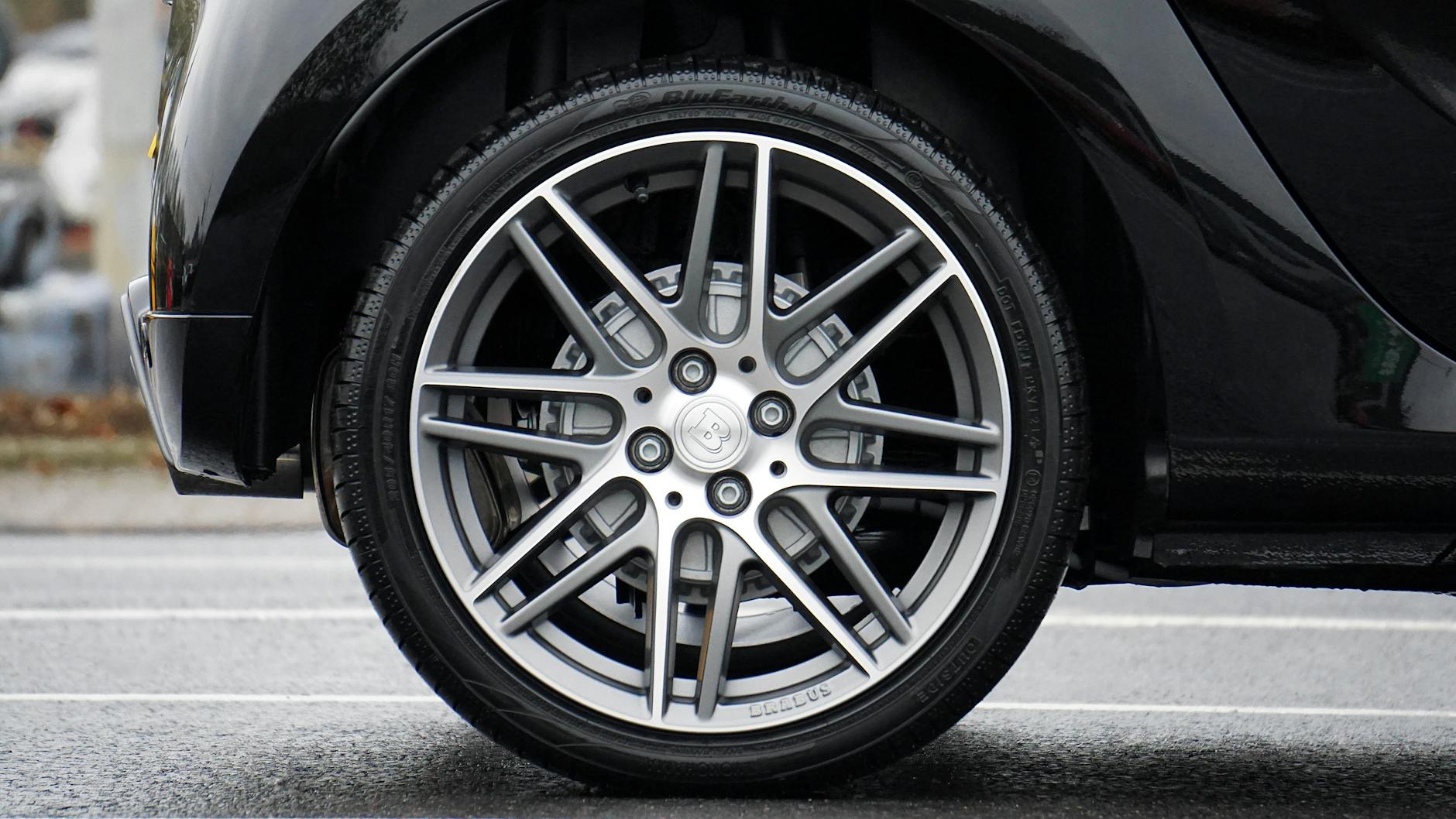
Flow formed (rotary forged, flow forged — same basic idea) starts with a cast blank and then spins and presses the barrel under heat. The barrel ends up with a near-forged grain structure while the face stays cast. Weights can hit 15–18 lbs. This is where cheap and good actually overlap — a flow-formed wheel at $200–$250 per corner is genuinely strong, light, and road-safe.
Forged is the top tier. A billet is pressed under thousands of tons of force. The grain structure is dense and aligned. A quality forged 18×8.5 can weigh 14–16 lbs or less. These are not cheap by traditional standards — but the price gap has shrunk considerably in the last decade.
The danger zone for cheap aftermarket wheels is the gravity cast no-name segment. These wheels are often sold through third-party Amazon or eBay storefronts, have vague or falsified load ratings, and are sometimes manufactured to bolt pattern specs that are slightly off. If you're shopping on price alone and you land here, you've bought a liability.
One thing worth understanding: the "cheap" appearance of a wheel listing doesn't always reveal which category it falls into. Some no-name gravity cast sets use photography and spec sheets that mimic reputable brands. The wheel in the product photo may even be a genuine unit, while the item shipped is something different. This is not rare — it's a documented pattern in enthusiast communities. An Enkei or Konig listing looks similar to a no-name clone at a glance. The difference is in the testing documentation, the brand's history, and whether the load rating is verifiable rather than self-reported.
The Real Risks of Going Too Cheap
Let's be concrete about this. A wheel failure at speed is not a cosmetic problem. Spoke fractures and barrel cracks happen most often at impact — a pothole, a curb strike, a hard autocross corner. A quality wheel deforms. A cheap cast wheel shatters.
The NHTSA doesn't certify aftermarket wheels the way it does tires, so there's no federally mandated safety testing gate for wheels sold in the US. The reputable certification to look for is JWL (Japan Light Alloy Wheel) and VIA (Vehicle Inspection Association) — both require documented load and impact testing. TÜV certification from Germany carries similar weight. If a set of wheels has none of these markings and costs $80 per wheel, walk away.
Fitment is the other major risk. A wheel with a 5×114.3 bolt pattern that's actually manufactured 0.5mm off — which happens with low-quality casting — will put stress on your wheel studs with every rotation. Hub centricity matters too. If the center bore is 73.1mm and your wheel's center bore is 67.1mm with no hub ring, you're relying entirely on the lug nuts for centering. That causes vibration at minimum, stud shear at worst.
For a car like an F30 335i (hub bore 66.5mm, 5×120 bolt pattern) or a S550 Mustang GT (hub bore 70.5mm, 5×114.3), exact specs matter. Cheap wheels often list fitment broadly without accounting for hub bore, or they spec hub rings as optional accessories. They're not optional.
There's also a longer-term failure mode that gets less attention: fatigue cracking. A gravity cast wheel that doesn't fail immediately may develop micro-fractures over thousands of miles of road vibration. These propagate slowly and invisibly until the structural integrity is compromised. Quality wheels are tested specifically for fatigue life — JWL's rotary fatigue test subjects a wheel to millions of load cycles before it passes. No-name wheels skip this entirely. You won't know the wheel is compromised until it fails under load.
Where the Value Zone Actually Lives
Here's the honest answer: the best value in aftermarket wheels right now is flow-formed construction from a manufacturer with documented testing, bought direct from a source that cuts out retailer markup.
A flow-formed set from a known brand — say, Enkei RPF1s or Konig Hypergrams — runs $900–$1,400 for a set of four in popular sizes. These are legitimately good wheels. Light, strong, JWL/VIA certified. If you're building a track car on a budget or just want a quality daily driver upgrade, this is the sweet spot.
The Enkei RPF1 in particular has become a benchmark in the enthusiast community for a reason. In an 18×9.5, it weighs roughly 18 lbs — lighter than many forged wheels from the previous generation — and it's been used successfully in everything from Honda Civic track builds to time attack S2000s. The Konig Hypergram sits in similar territory: flow-formed, JWL certified, and available in a wide range of sizes that cover most popular platforms. These aren't compromise purchases. They're genuinely capable wheels at a reasonable price.
The market has also evolved to include custom-made flow-formed and forged wheels at prices that weren't possible five years ago. Brands that work directly with OEM forging facilities — bypassing the legacy brand markup — can deliver a custom forged wheel for $300–$500 per corner instead of $700–$1,500+. That changes the math considerably. You're not choosing between cheap and good anymore. You're choosing between cheap-and-risky versus well-made-at-reasonable-cost.
If you want to understand exactly how manufacturing affects price and performance, the breakdown in cast vs forged wheels is worth reading before you buy.
What You Should Actually Spend Per Wheel
These are rough benchmarks based on manufacturing method and intended use:
- $60–$120/wheel: Gravity cast, no-name brand. Suitable only for show display, not for driving. Avoid for any functional use.
- $120–$220/wheel: Low-pressure cast from a known brand. Fine for street use on a daily driver. Heavier than alternatives.
- $200–$350/wheel: Flow-formed from a certified manufacturer. Strong, lighter, good for street and occasional track use.
- $300–$600/wheel: Forged from a direct-to-consumer manufacturer. Custom sizing, proper grain structure, lightest weight. This is where ForgedToFit operates.
- $700–$1,500+/wheel: Legacy forged brands (BBS, HRE, Vossen). You're paying for the name as much as the metallurgy.
The jump from flow-formed to forged has gotten much smaller. Five years ago the decision was clear: unless you were tracking the car seriously, forged wasn't justifiable. Now, with direct manufacturing, forged is in reach for most enthusiasts.
It's also worth noting what's happening at the legacy brand tier. A set of BBS FI-R wheels — which are genuinely excellent, one-piece forged — runs $600–$800 per wheel depending on size. HRE FlowForm FF15s, despite the "FlowForm" name, sit at similar pricing once you factor in their size and finish options. You're paying a substantial premium for established reputation and finish quality. That premium isn't irrational if you want the brand — but it's not buying you meaningfully better metallurgy than a direct-manufactured forged wheel at half the price.
Fitment: The Part Everyone Gets Wrong
Fitment errors are the most common mistake made by buyers chasing cheap aftermarket wheels. The three numbers that actually matter — bolt pattern, offset, and center bore — are all interconnected and all need to be correct.
Bolt pattern has to match. No exceptions, no adapters if you can avoid it. Adapters add thickness, change your scrub radius, and introduce another potential failure point.
Offset determines where the wheel sits relative to the hub. A wheel with too much negative offset on a Civic will cause inner fender rubbing and stress the wheel bearing laterally. Too much positive offset on a Mustang GT and you've lost all that aggressive stance you were going for. Each platform has a usable offset range — for a Model 3, you're typically working with +35 to +45mm front and rear. For a C7 Corvette, front offsets around +56mm with a 19×8.5 are common.
Center bore is often ignored by budget buyers. It needs to match your hub or use properly sized hub-centric rings. Hub rings cost $10–$20 for a set and eliminate the vibration that comes from load-bearing through lug nuts alone.
A practical example: a buyer fits a set of 18×8.5 wheels with a listed 5×114.3 pattern and 73.1mm center bore to a Mazda MX-5 ND (hub bore 67.1mm). Without hub-centric rings, the wheel centers on the lug nuts. At 70 mph the car develops a shimmy between 60–75 mph that the buyer initially blames on tire balance. After three balance attempts, a tire shop identifies the centering issue. The rings cost $12 and fix the problem instantly — but the buyer spent $90 in balancing labor chasing a problem that didn't exist in the tires.
That scenario plays out constantly. Center bore is not optional detail.
For a deeper look at offset and how to get fitment exactly right, custom offset wheels covers the geometry in full.
Flow Formed vs Forged: Which Is the Smarter Buy?
If budget is the primary constraint, flow formed is the honest answer for most street builds. You get most of the weight savings at a lower price. A quality flow-formed wheel at 17 lbs versus a cheap cast at 24 lbs is a 7 lb difference per corner — that's 28 lbs of unsprung weight removed from the car. You'll feel that in steering response and ride quality.
Forged makes the most sense when you're chasing maximum performance, want a custom size that doesn't exist in a flow-formed catalog, or want a wheel built exactly to your offset rather than picking the closest catalog option. Custom sizing is where forged dominates — if you want a 19×9.5 in +22mm offset for a widebody build on a 992 Carrera, no flow-formed catalog is going to have that. A forging operation will.
There's also a consistency argument for forged that matters at the track. Flow-formed barrels are excellent, but the cast face is still subject to the porosity variability of the casting process. On a street car this is inconsequential. On a car doing hard repeated lapping — brake temperatures cycling, cornering loads sustained over long sessions — a fully forged structure with uniform grain throughout the entire wheel has a measurable edge in thermal stability and fatigue resistance.
The full comparison between the two processes, including weight data and use-case analysis, is in flow formed vs forged wheels.
How to Vet a Cheap Aftermarket Wheel Before Buying
If you're shopping the budget end of the market, here's how to separate the real wheels from the junk:
- Look for JWL, VIA, or TÜV markings on the wheel face or spoke. If these aren't present and verifiable, the wheel has not been independently tested.
- Check the load rating against your vehicle's actual axle load. Your GVWR is on the door jamb. Each wheel needs to support at least 25% of that number.
- Verify center bore to the millimeter, not just bolt pattern.
- Google the brand name + "failure" or "crack" and see what comes up. Enthusiast forums don't lie about this stuff.
- Buy from a seller who will give you a warranty. A brand that won't stand behind a wheel is telling you something about how confident they are in it.
- Check whether the brand has a physical presence. A phone number, a real address, a customer service record in forum threads. Fly-by-night storefronts evaporate when warranty claims come in.
- Cross-reference the listed weight against manufacturing claims. If a brand claims "flow formed" but lists an 18×8.5 at 23 lbs, the weight doesn't match the process. Real flow-formed wheels in that size come in at 16–19 lbs. Either the weight is wrong, or the manufacturing claim is.
For a broader framework on evaluating any aftermarket wheel purchase, aftermarket car wheels: the complete buying guide has the full breakdown.
The Custom Alternative That Undercuts the Cheap Market on Value
Here's the counterintuitive reality: a custom-made forged wheel from a direct manufacturer can cost less than some mid-tier brand-name cast wheels, once you account for retailer markup, shipping, and the fact that the custom wheel is built to your exact specs.
ForgedToFit works directly with a 15-year OEM forging partner. We skip the distributors, the retail floor, and the brand licensing costs. The result is a forged or flow-formed wheel at 50–70% less than what you'd pay for comparable quality from a legacy brand. Our process starts with your platform and target specs — bolt pattern, offset, diameter, width — then goes through 3D CAD before manufacturing begins. You see the wheel digitally before a single piece of aluminum is pressed.
For platforms like the F30 335i, Mustang GT, or Tesla Model 3, we build to exact fitment. No adapters, no hub ring workarounds, no catalog compromises. And every set ships with a 5-year warranty — something you'll never get from an $80/wheel eBay special.
That warranty isn't a marketing line. It reflects the confidence that comes from building on verified tooling, with documented material specs, through a forging process that's been supplying OEM programs for over a decade. A brand selling gravity cast wheels at a thin margin has no capacity to honor warranty claims even if it wanted to. We do — because the manufacturing quality means the claims are rare.
If you want to understand the full custom wheel ordering process before committing, custom forged wheels: the complete guide walks through every step.
Making the Decision
The cheap aftermarket wheel market has genuinely good options in it — but you have to know where to look and what to verify. Flow-formed sets from certified manufacturers in the $200–$350 per wheel range are real value. Gravity cast no-name sets under $100 per wheel are not.
The clearest signal is certification. JWL, VIA, TÜV — if those markings are absent and the price is suspiciously low, the wheel has not been independently validated for the loads your vehicle will put through it. That's not a theoretical risk. It's a documented failure mode with real consequences.
And if you're close to the flow-formed price point, it's worth getting a quote on custom forged. The gap has closed. You might be surprised to find that "custom and forged" costs less than "brand-name and cast" once the middlemen are removed from the equation.
Frequently asked questions
Are cheap aftermarket wheels safe to drive on?
It depends entirely on the manufacturer and construction method. Flow-formed wheels from brands with JWL/VIA or TÜV certification are safe and well-engineered even at moderate price points. Gravity cast no-name wheels with no documented load testing are a genuine safety risk and shouldn't be on any car driven at speed. Price alone doesn't tell you which you have — you need to verify certifications and load ratings.
What certifications should I look for on aftermarket wheels?
JWL (Japan Light Alloy Wheel) and VIA (Vehicle Inspection Association) are the most common and widely respected standards. TÜV certification from Germany is equally credible. These require documented impact and load testing before a wheel can carry the marking. If a wheel has no certification markings and costs under $100, it almost certainly hasn't been independently tested.
How much should I expect to pay for a decent set of aftermarket wheels?
For a set of four quality flow-formed wheels in popular sizes (18–19 inch), expect to pay $800–$1,400 from a reputable brand. Custom forged wheels through a direct manufacturer like ForgedToFit can run $1,200–$2,000 for a set, which is 50–70% less than legacy forged brands for equivalent or better quality. Anything under $400 for a set of four is in gravity cast territory and should be treated with skepticism.
Can I use hub-centric rings to fix a center bore mismatch on cheap aftermarket wheels?
Yes, hub-centric rings can compensate for a center bore mismatch — but only if the wheel's bore is larger than your hub, not smaller. Rings are an inexpensive fix ($10–$20 for a set) and eliminate vibration caused by relying on lug nuts for centering. That said, if a wheel has the wrong bolt pattern or offset, no ring will fix that. Buy the right wheel first, then use rings to properly center it.
Is flow formed the same as forged?
No, but they're often confused. Flow formed (also called rotary forged or flow forged) starts with a low-pressure cast blank. The barrel is then spun and pressed under heat, which improves its grain structure to near-forged density. The face stays cast. True forged wheels start from a solid billet pressed entirely under high force — the grain structure is aligned throughout. Both are stronger and lighter than standard cast, but full forged is the superior process.
Do cheap aftermarket wheels affect performance?
Significantly. Unsprung weight — the mass not supported by your suspension — directly affects steering response, ride quality, and acceleration. A heavy cast wheel at 24 lbs versus a flow-formed wheel at 17 lbs is a 7 lb difference per corner, 28 lbs total. That's measurable in 0–60 times, braking distances, and the way the car handles mid-corner. Going from heavy cheap cast to quality flow-formed or forged is one of the highest-return modifications you can make.