Custom Rims Near Me: Why Local Isn't Always Best

Typing "custom rims near me" into Google at 11pm is a very specific kind of itch. You want something that looks right on your car, fits properly, and doesn't cost what a used transmission does. Makes total sense. But before you drive to the nearest shop expecting to walk out with a set of custom-built rims, it's worth understanding what local retailers actually do — and what they don't.
The short version: most shops that show up in that search don't manufacture anything. They're resellers stocking whatever cast wheels their distributors pushed this quarter. "Custom" usually means you pick a finish or a size from what's already on the shelf. That's fine for some builds, genuinely limiting for others.
What "Custom Rims" Actually Means
The word custom gets stretched pretty thin in the wheel industry. A local shop calling their selection "custom" might mean:
- You can choose from three finish options on a catalog wheel
- They'll mount and balance whatever you bring in
- They stock a few brands and will special-order a specific size
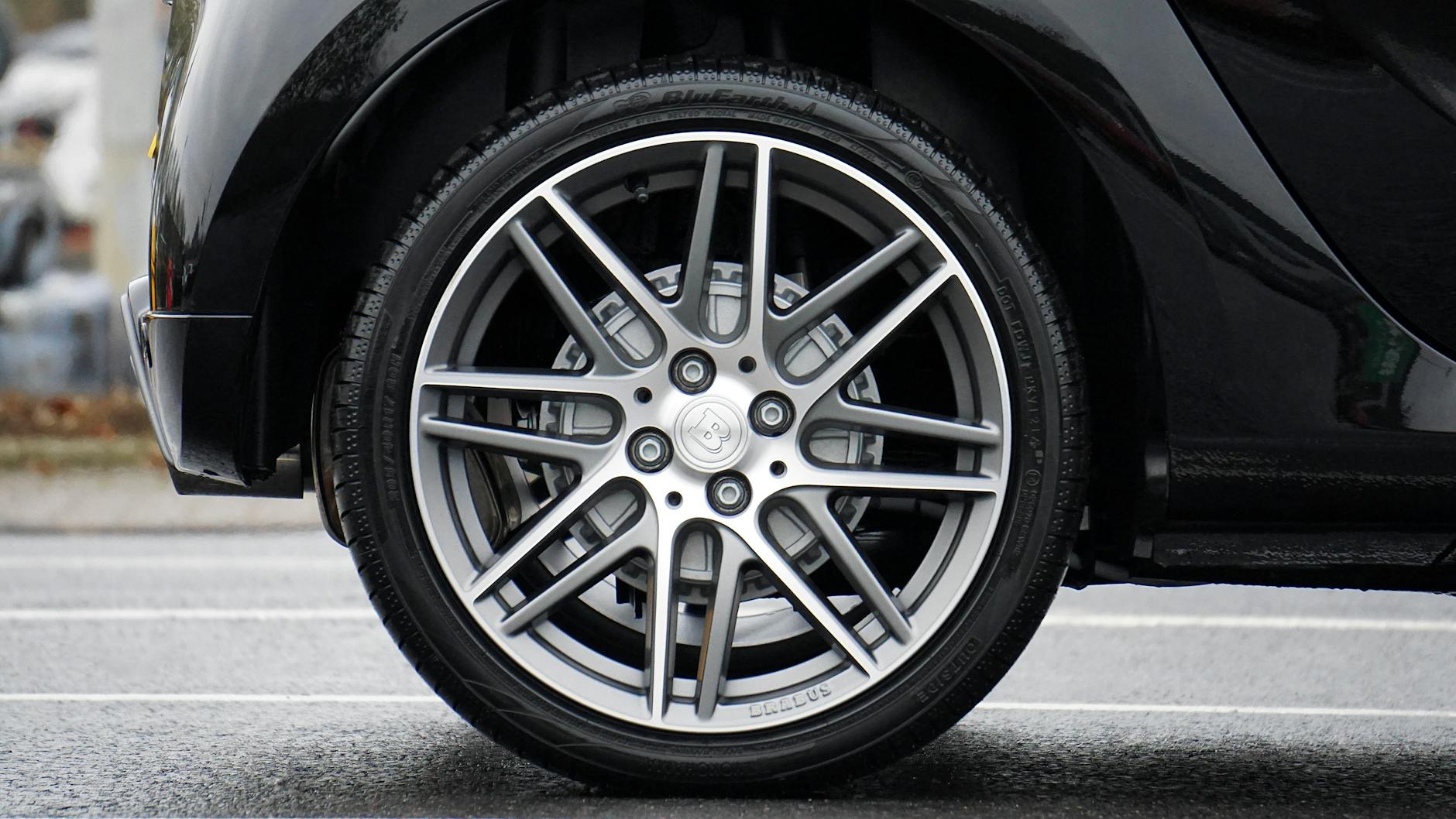
None of that is wrong — it's just not the same as a wheel designed and manufactured to your specifications. True custom rims are forged or flow-formed from billet aluminum, spec'd to your exact bolt pattern, offset, hub bore, width, and diameter, often in a design you've chosen or created. The production happens at a forging facility, not in a strip-mall shop.
If you're building an F30 335i and want an 18x9.5 ET30 on the front and an 18x10.5 ET22 on the rear in a matte bronze with a brushed lip — that's a custom rim. Your local tire shop almost certainly can't produce that. They might be able to order something close from an aftermarket catalog brand, but "close" in offset and width can be the difference between a clean tuck and a rubbing fender liner.
For a deeper look at what goes into the custom wheel buying process, the guide on custom rims for car covers it thoroughly.
What Local Shops Are Actually Good At
This isn't an anti-local-shop piece. Shops near you provide things that matter.
They can handle mounting, balancing, and TPMS programming — jobs that require physical equipment and can't be done remotely. If you're ordering custom forged wheels direct and shipping them to your door, you'll still need a local shop for the final install. That's fine. Most good tire shops will mount wheels you didn't buy from them, sometimes for a small surcharge. Call ahead and confirm — some shops have a policy against it, though that's increasingly rare as direct ordering has become normalized.
Local shops are also useful for urgent replacements. If you bend a wheel on a pothole on a Tuesday, you need something by Friday — the custom-order route with its 6-8 week lead time doesn't help you there. Catalog wheels exist for a reason. Keeping one spare catalog wheel in your size isn't a bad insurance policy if you're running custom forged wheels on a daily driver in a city with rough roads.
They're also good sounding boards if you're new to wheel fitment. An experienced shop guy who knows your platform — say, S550 Mustangs or fifth-gen Camaros — can tell you what offset range actually clears the calipers without rubbing and what doesn't. That local knowledge has value. A shop that's mounted hundreds of wheel sets on a specific chassis has seen what works and what comes back with rub marks on the inner barrel. Take that institutional knowledge seriously even if you ultimately order elsewhere.
What local shops generally can't offer: a wheel built to your exact dimensions in a finish that doesn't exist in anyone's catalog, at a price below what the premium forged brands charge. That combination requires going direct to the manufacturer.
The Fitment Problem That Most Shops Skip Past
Here's what trips people up when searching for custom rims near me: fitment specificity. Most local inventory is built for the broadest possible compatibility. A wheel designed to fit "most 5x114.3 applications" is engineered to the middle of that spec range, not to your specific car.
Take a Model 3 Performance. It runs a 5x114.3 bolt pattern, but Tesla uses a proprietary hub bore of 64.1mm and the caliper clearance on the Performance trim is tighter than on Standard Range. A generic 5x114.3 wheel from a shop's shelf might technically bolt on but could require hub centric rings (annoying), might not clear the Brembo-style calipers (dangerous), or could sit at an offset that puts the face of the wheel behind the fender line (ugly). Custom-spec'd wheels eliminate all three problems in one order.
Same story on a lifted truck. A shop might stock a 6x135 in 20x9 ET0 — a common F-150 size — but if you're running a 6-inch lift with specific upper control arm geometry, you might actually need ET-12 or ET-18 to get the right track width and avoid axle bind under articulation. That's not something a shelf wheel solves. Getting it wrong isn't just an aesthetics issue — improper offset on a lifted truck under load puts stress on wheel bearings and CV joints that shows up as premature wear and, eventually, component failure.
The same concern applies to lowered cars. A vehicle on coilovers with aggressive camber settings has very different caliper and fender clearance geometry than the same car at stock ride height. Offset specs that work fine for a stock suspension can put the inner barrel directly into the coilover body on a lowered setup. Custom-built wheels let you dial in exactly where the face sits relative to the fender lip and where the barrel sits relative to the suspension components — you're not trying to fit your car to the wheel, you're building the wheel around the car.
The offset conversation alone is worth reading more about — custom offset wheels breaks down exactly how to nail that spec.
Forged vs. Cast: The Quality Gap Local Shops Rarely Discuss
Most wheels sold at local shops are cast — molten aluminum poured into a mold, cooled, and machined. It works. Cast wheels are fine for daily drivers that stay near stock. But the material structure is porous compared to forged aluminum, which means cast wheels are heavier for the same strength rating, and more prone to cracking under impact rather than bending.
Forged wheels start from a solid aluminum billet pressed under thousands of tons of force. The grain structure of the metal aligns with the shape of the wheel, producing something significantly stronger and lighter. A forged 19x8.5 five-spoke might come in at 19-20 lbs. The equivalent cast wheel is often 24-26 lbs. That 4-6 lb difference per corner — 16-24 lbs total — is unsprung and rotating weight, which is the worst kind. Reducing it improves steering feel, braking response, ride quality over sharp impacts, and marginally reduces the load on wheel bearings and suspension bushings over time.
The strength advantage matters most in real-world use. A cast wheel hit by a sharp pothole at speed tends to crack — sometimes suddenly and catastrophically. A forged wheel of equivalent design is far more likely to bend, which is a repairable condition. On a long highway drive or a track day where a bent wheel would be an inconvenience rather than a blowout, that distinction is significant.
Flow-formed (also called rotary-forged or flow-forged) wheels are a middle ground: the barrel is spun and stretched under heat and pressure, giving the barrel forged-like density while the center is cast. They're lighter than full cast and cheaper than full forged — a strong option for performance daily drivers who aren't trying to spend $3,000 per corner. For most street-driven builds that see occasional spirited canyon roads but not track days, flow-formed hits a compelling value point. You get most of the weight and strength benefit at a noticeably lower cost.
The full comparison between these two manufacturing methods is laid out in flow formed vs forged wheels if you want to go deeper.
Why Direct-Order Custom Wheels Undercut Local Prices
The price gap surprises most people. A set of forged custom rims from a direct manufacturer through ForgedToFit typically runs 50–70% less than comparable wheels from legacy forged brands like HRE, Vossen Forged, or Brixton. How?
Legacy brands carry enormous overhead: design teams, dealer networks, marketing budgets, and the brand premium that comes with two decades of motorsport association. When you buy from them, a meaningful chunk of what you pay is for the logo on the center cap. HRE's cachet is real — you'll see those three letters recognized on any enthusiast forum — but the underlying aluminum forging process isn't fundamentally different from what direct manufacturers use, because in many cases they're sourcing from the same pool of OEM-qualified forging partners.
Direct-to-consumer manufacturers like ForgedToFit work through established OEM forging partners — the same facilities that supply factory wheels to automakers — and cut out the dealer layer entirely. The result is a forged or flow-formed wheel with a 5-year warranty, built to your exact spec, shipped direct, at a price that competes with premium cast wheels from catalog brands.
For context: a set of HRE FlowForm FF04s in a common BMW staggered fitment (19x8.5 front / 19x9.5 rear) retails around $2,400-2,800 for a set of four. A comparable flow-formed set through ForgedToFit lands well under that — often $1,000-1,400 — with equivalent structural quality and a fitment guarantee. Stepping up to full forged through ForgedToFit still comes in well below what HRE or Brixton charges for their forged lines, which start around $4,000-5,000 for a staggered set and climb quickly with finish options.
The catch is lead time. You're not walking out same-day or even same-week. If the price-to-quality math is appealing, you need to plan 6-10 weeks ahead. That's a real constraint for some buyers and a non-issue for others.
How the Custom Rim Order Process Actually Works
When local inventory doesn't have what you need — or when you want something actually built for your car — here's what the direct-order process looks like.
1. Spec your fitment first. Bolt pattern, hub bore, offset range, width, and diameter. For most platforms this is well-documented. A 2019 Mustang GT runs 5x114.3, 70.5mm hub bore; stock fitment is 19x8.5 front, 19x9.5 rear with ET30/ET40 respectively. You can run wider with appropriate offset adjustments. If you're unsure about your exact hub bore or want to verify caliper clearance for a specific design, most direct manufacturers have technical staff who can work through it with you before anything gets submitted to production.
2. Choose or submit a design. Browse existing designs in a catalog or upload reference images of what you want — a spoke pattern, a finish reference, a design from another brand you want replicated within copyright bounds. This goes to CAD.
3. CAD review. You get a 3D render of the wheel in your exact spec before anything gets cut. If the spoke proportions look off at this width, it gets adjusted now, not after forging. This step is where you catch things like spokes that look great at 18x8 but visually heavy at 20x10, or a deep-dish profile that needs spoke angle adjustment for structural integrity at the wider width.
4. Manufacturing. 6-8 weeks for forged; slightly less for flow-formed depending on queue. This is a real timeline — wheels are machined from billet, not pulled off a shelf. Rushing this process is how quality gets compromised; reputable manufacturers don't offer expedited production, and that's actually a good sign.
5. Quality inspection and finishing. Before shipping, each wheel goes through dimensional inspection — runout, bore diameter, offset measurement — to verify it matches the spec submitted. Finishes are applied after machining, and a final inspection checks for cosmetic defects. Some manufacturers provide inspection reports; ForgedToFit includes documentation with each set.
6. Delivery. Ships direct. You take them to your local shop for mount, balance, and install.
The custom rims: how to get the right set built for your car guide walks through each step in more detail if you're preparing to place an order.
Platform-Specific Notes Worth Knowing
BMW F30/F32 (3 and 4 Series): These run a 5x120 bolt pattern with a 72.6mm hub bore. Staggered fitments are common — 18x8 ET30 front, 18x9.5 ET22 rear is a popular aggressive street setup. Push offset too negative and you'll need fender work or spacers; too positive and you lose that tucked look. Custom forged sets are particularly popular here because the staggered requirement means catalog brands charge per-size pricing, often inflating the set cost significantly. Worth noting: F30s with M Sport suspension sit lower than standard and have tighter front inner clearance — verify your front offset against your specific suspension spec before finalizing.
Tesla Model 3/Model Y: 5x114.3, 64.1mm hub bore. Hub centric fitment matters — a lot of catalog wheels run 73.1mm and require rings. Custom spec eliminates that entirely. Model Y owners going with 20-inch fitments should also confirm weight ratings; the Y is a heavier vehicle than its crossover profile suggests, and undersized load ratings on wheels cause more problems at higher vehicle weights. Aero requirements are a non-issue if you're going open-face forged.
S550/S650 Mustang GT/GT500: Factory staggered on most trims. The GT500 runs massive Brembo calipers that require specific spoke clearance — not all wheel designs pass. Shelby GT350 owners face a similar issue with the track-width-specific front fitment that makes off-the-shelf catalog wheels a compromise. Custom CAD lets you verify caliper clearance before production. For S650 owners, the slightly revised suspension geometry compared to S550 changes the optimal offset by a few millimeters — worth specifying your exact model year when ordering.
F-150/Ram/Silverado trucks: Fitment is complex because lifted trucks change everything. Custom width, offset, and backspacing calculated specifically for your lift height and tire size is worth the lead time versus guessing with shelf stock. The difference between a 4-inch and 6-inch lift on an F-150 with a leveling kit versus a full suspension lift produces different optimal backspacing — often by 0.5-1 inch — that directly affects whether your 35s clear the inner fender at full lock.
For truck builds specifically, truck custom wheels covers the platform-specific variables in depth.
Finish Options That Catalog Brands Don't Offer
This is one area where local shops genuinely fall short. Catalog finishes are what they are — gloss black, silver machined, hyper silver, maybe a bronze. If you want matte graphite with a brushed inner barrel and polished lip, you're not finding that in stock.
Custom forged manufacturers can do:
- Any powder coat color (RAL or custom match)
- Brushed or polished machined faces
- Two-tone combinations (different barrel and face finishes)
- Satin and matte clears over raw aluminum
- Custom center cap finishes to match
- Tinted clears over bare aluminum for an aged-bronze or smoke effect
If you're going as far as commissioning custom rims, the finish is worth thinking through carefully and honestly. Polished lips look great initially but require genuine maintenance — they oxidize and collect brake dust, and bringing them back requires polishing compound and time. Powder coat is more durable but chips if you curb a wheel, and a chip in gloss black is far more visible than the same chip in a matte finish. Satin and matte finishes hide light surface scratches better than gloss, which makes them better practical choices for daily drivers even if gloss photographs better on Instagram.
Two-tone finishes add cost and extend lead time because the finishing process involves multiple stages with masking between them. The result is worth it aesthetically, but budget an extra 1-2 weeks and confirm the upcharge before approving CAD.
Reading Between the Lines on Local Shop Quotes
If you do get a quote from a local shop for custom rims, watch for a few things:
Ask specifically whether the wheel is cast, flow-formed, or forged — and get the manufacturer name. "Forged" gets misused constantly. Some shops call rotary-forged wheels "forged" (they're semi-forged at best), and some call flow-formed wheels by whichever marketing term sounds strongest. If the salesperson can't immediately name the forging facility or brand, that's telling. Legitimate forged wheel brands are not shy about their manufacturing process because it's a selling point.
Ask about hub centric fitment. Are they supplying hub centric rings or is the bore machined to your hub diameter? Rings work, but they add a failure point — they're typically plastic or aluminum, and a cheap plastic ring that cracks under load leaves your wheel piloting on the lug nuts alone. Custom-bored wheels eliminate that entirely.
Ask about warranty. Industry standard for reputable manufacturers is 1-3 years. ForgedToFit offers 5 years on structural defects, which reflects confidence in the forging process. A shop offering a 90-day warranty on a "forged" wheel is telling you something about what they actually believe in the product.
Ask whether the wheel is JWL or TÜV rated. JWL is the Japanese standard, TÜV is German — both require third-party structural testing. Wheels that carry these certifications have been independently verified to handle load and impact stress. Wheels without either certification haven't been. That matters more on a heavy vehicle or a vehicle that sees highway speeds regularly.
Get the offset in writing. Not a range — the actual ET number for each axle. If the salesperson says "ET25 to 35 will work fine" without knowing your specific car, your suspension setup, your intended tire width, and whether you're running stock ride height or modified, they're guessing. A range answer on offset is almost always a sign that the person quoting you doesn't know your car and is hoping the middle of that range lands close enough. On a custom order, there's no reason to accept a range — you spec the exact number and it gets machined to that.
Frequently asked questions
Can local shops actually build custom rims from scratch?
Almost never. Most local wheel shops are retailers or distributors, not manufacturers. They sell catalog wheels from brands like Enkei, Motegi, or similar — and their "custom" options usually mean finish choices or size variants within that catalog. True custom rims — manufactured to your exact diameter, width, offset, bolt pattern, and design — require a forging or casting facility, not a retail shop.
How long does it take to get custom forged rims made to order?
Typically 6–8 weeks from approved CAD design to delivery. Flow-formed orders can sometimes run 4–6 weeks depending on queue. That lead time includes CAD design review, forging or flow-forming, CNC machining, finishing, and quality inspection before shipping. Plan ahead — this isn't a next-day process, but the result is built specifically for your car.
Is it safe to order custom rims online without seeing them in person?
Yes, provided you work with a manufacturer that includes a 3D CAD review before production. You should see a rendered model of your exact wheel — in your spec, in your finish — before anything is manufactured. That step eliminates most fit and appearance surprises. A structural warranty (5 years is ForgedToFit's standard) covers you on the manufacturing side.
What information do I need to order custom rims for my car?
You need: bolt pattern (e.g., 5x114.3), hub bore diameter (e.g., 64.1mm for Tesla Model 3), desired diameter and width (e.g., 19x9.5), offset in millimeters (e.g., ET30), and whether you want staggered fitment front/rear. Your car's year, make, model, and trim will let a manufacturer confirm these specs or flag any platform-specific clearance issues.
Why are direct-order custom forged wheels cheaper than big brands?
Legacy forged wheel brands carry heavy overhead — dealer networks, marketing, and significant brand premiums built over decades. Direct-to-consumer manufacturers like ForgedToFit work through established OEM forging partners (the same facilities supplying automakers) and sell without the dealer markup layer. That structure typically prices custom forged sets 50–70% below comparable HRE, Brixton, or Vossen Forged products.
Do I still need a local shop if I order custom rims online?
Yes — for the final install. Your custom rims will ship to your door, but you'll need a local tire shop to mount and balance your tires, program TPMS sensors if required, and install the wheels on the car. That's straightforward work any competent shop handles, and most will do it with wheels you didn't buy from them for a standard labor fee.