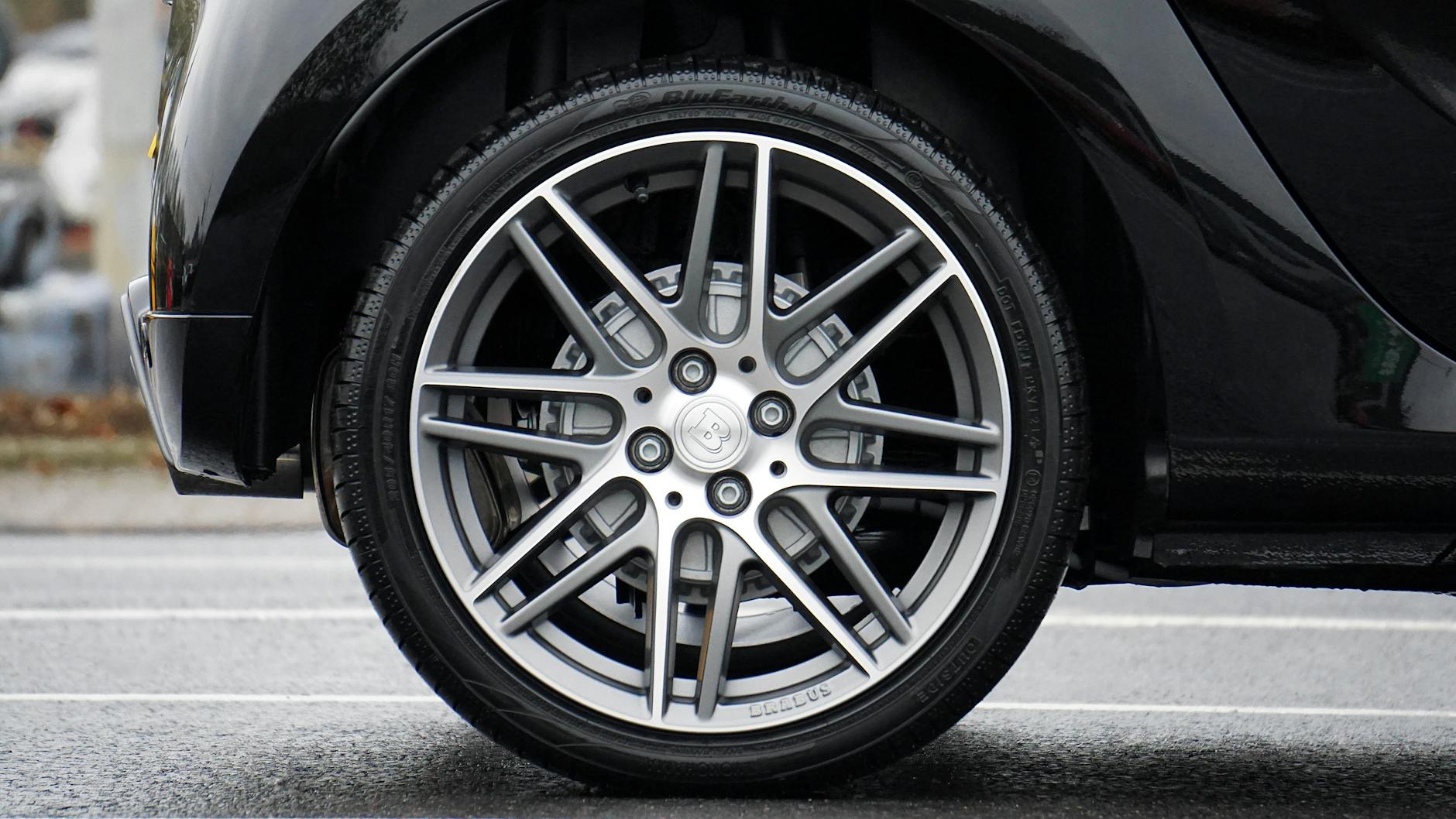
Ford Maverick Aftermarket Wheels: The Complete Guide

The Ford Maverick is a genuinely interesting vehicle to build. It's a unibody compact pickup that shares its platform with the Bronco Sport and Escape, not a body-on-frame truck — which means it behaves more like a performance crossover than a traditional truck when it comes to wheel fitment. That distinction matters a lot if you're shopping for Ford Maverick aftermarket wheels and don't want to end up with rubbing, a busted TPMS, or offset problems that make the truck look worse, not better.
This guide covers everything: OEM specs, what sizes actually fit, what to watch for with lift kits, the difference in fitment between XL, XLT, Lariat, and the FX4 package, and why forged wheels are worth serious consideration on a truck that already punches above its weight.
Ford Maverick Stock Wheel Specs
Ford ships the Maverick with a few different configurations depending on trim. The base XL and XLT come on 16-inch steel wheels or 17-inch alloys depending on the package. The Lariat steps up to 17-inch machined alloys as standard, with an optional 18-inch upgrade. The FX4 Off-Road package adds unique graphics and slightly more aggressive tire sizing on those 17s.
The bolt pattern is 5x108mm — that's a Ford global platform spec shared with the Escape and Bronco Sport, not the F-150's 6x135mm. This catches people off guard. If you're browsing wheels designed for fullsize Ford trucks, none of them fit. The 5x10⁸ bolt pattern is more common on European Fords, so some aftermarket suppliers have limited inventory in that spec.
Center bore is 63.4mm. Stock offsets run in the +45mm to +52.5mm range depending on the wheel size and trim. Those are relatively high offsets, typical of unibody crossover-derived platforms, meaning the wheels sit fairly flush within the fender wells. If you go too low on offset, the wheel face will poke past the fender — which can look clean or cause issues depending on how aggressive you go.
What Sizes Actually Fit the Maverick
The Maverick's fender clearance is noticeably tighter than a body-on-frame truck. The rear wheel wells in particular are constrained by the unibody structure. Here's a practical breakdown:
17-inch wheels are the sweet spot for a stock-height Maverick. You retain good tire sidewall height, keep load ratings where they need to be, and have a wide selection of tire sizes. Running 225/65R17 or 235/60R17 works cleanly without modification.
18-inch wheels are doable but require attention to tire selection. Drop to a 235/55R18 or 245/50R18 and you stay within spec. Go much taller in section width and you start running into issues at full steering lock, especially up front.
20-inch wheels are possible with the right offset and tire sizing — some owners run 245/45R20 — but at stock ride height the clearance margins are thin. This is where fitment data matters more than guesswork. A custom wheel order that specs the correct offset for your exact trim is the right call at this size.
One important callout: the Maverick AWD and FWD variants have slightly different suspension geometry. The AWD models have a slightly different front strut setup that can affect clearance at extreme steering angles. Always spec your fitment against the drivetrain, not just the trim name.
Offset and Fitment: Getting It Right
Offset is the single most consequential spec on this truck. The Maverick's high stock offset means the wheels sit deep in the fender well. A lot of owners want a more aggressive stance — wheels filling the arches better — which means stepping down in offset, typically to the +35mm to +42mm range.
Going to +35mm on a 17x8 or 18x8 wheel usually gives you a clean flush fit without needing spacers or fender rolling on a stock-height Maverick. Drop below +30mm and you're likely looking at poke on at least one axle, and the front will catch at full lock.
Spacer use on the Maverick is more controversial than on fullsize trucks. The unibody suspension components are sized for a lighter vehicle, and running 15mm+ spacers to fake an aggressive offset adds bearing load that compounds over time. If you want an aggressive fitment, ordering wheels with the correct offset built in is the cleaner solution — and with custom forged or flow-formed wheels, you're not paying extra for that spec since it's made to order anyway.
The concept of custom offset wheels is worth understanding before you order. Read more in this guide to custom offset wheels if you want to go deeper on how offset, backspacing, and wheel width interact.
Lifted Maverick Fitment
A modest 1.5" to 2" lift — typically via a strut spacer and rear block kit — is popular on the Maverick, especially for owners who want slightly more off-road capability. This changes the wheel fitment math.
With 2 inches of lift, you gain meaningful clearance for a taller tire. A 245/65R17 or even 255/65R17 can clear on a properly offset 17-inch wheel. Some owners run 28-inch-tall tires on lifted Mavericks without any trimming; others have to take a little material out of the front inner liner depending on the specific wheel width and offset combination.
The FX4 package adds underbody skid plates and a slightly more aggressive shock tune but doesn't meaningfully change wheel fitment — the suspension geometry is essentially the same. Where FX4 matters is that it ships with slightly more aggressive all-terrain tires from the factory, so the baseline tire-to-fender clearance is already tighter. Factor that in if your FX4 is still on its stock rubber.
Why the Maverick's Wheel Options Are More Interesting Than You Think
Most compact truck owners default to two looks: black off-road wheels (Method, Fuel, KMC) or polished/machined wheels for a cleaner appearance. Both work on the Maverick, but the truck's proportions actually reward a third approach: a properly concave, mid-gloss or brushed finish wheel in the 17–18" range that leans more sport truck than traditional pickup.
The Maverick's roofline and body proportions are closer to a Focus RS than an F-150. A wheel design that references that heritage — think a tight multi-spoke or a Y-spoke monoblock with moderate concavity — tends to look substantially better than the chunky off-road wheel styles that dominate the compact truck market.
That said, if you're building a capable overland or off-road Maverick, a simpler beadlock-style or lightweight 17-inch wheel in matte black or bronze is going to survive trail use better. Polished and chrome finishes are maintenance nightmares off-road.
Cast vs. Forged: Does It Matter on a Compact Truck?
This question comes up often on lighter-duty vehicles. The honest answer is yes, it matters — maybe more on a Maverick than on a heavy fullsize truck.
Here's why. The Maverick's curb weight is around 3,200–3,600 lbs depending on drivetrain — significantly lighter than an F-150. That means every pound of unsprung weight (wheels, tires, brakes) is a larger proportion of the vehicle's total mass. A typical cast aftermarket wheel in 17x8 might weigh 23–26 lbs. A flow-formed or forged version of the same wheel in the same size typically comes in at 17–20 lbs. Across four corners, that's 12–24 lbs of rotating mass removed.
On a vehicle with a 2.0L EcoBoost making 250 hp or a hybrid four-cylinder making 191 hp, that reduction is perceptible in throttle response and handling. It's not the same argument as on a C8 Corvette, but it's not irrelevant either.
Forged wheels are also meaningfully stronger per unit weight than cast. The grain structure of the aluminum is aligned through the forging process rather than randomly distributed as in casting. For a truck that sees occasional curb strikes, unpaved roads, or trail use, that matters. For a deeper technical explanation, the guide on cast vs forged wheels covers the metallurgy well.
Flow-Formed Wheels: The Practical Middle Ground
Full forged wheels are the premium option. Flow-formed (also called flow-forged or rotary-forged) wheels are a step below but still substantially stronger and lighter than conventional cast wheels. The barrel of a flow-formed wheel is spun over a mandrel under heat and pressure, which aligns the grain structure in the barrel wall and allows it to be made thinner without sacrificing strength.
For a Maverick owner who wants a significant upgrade from OEM cast alloys without the cost of full forged, flow-formed is the right call. A well-executed flow-formed 17x8 in 5x10⁸ can come in around 19–21 lbs — close to forged territory — at a noticeably lower price point.
Flow forged wheels are increasingly the standard for performance-oriented builds where budget matters.
Finish Options That Work on the Maverick
The Maverick's exterior palette — Carbonized Gray, Cactus Gray, Area 51, Oxford White, Rapid Red — is fairly muted. A few finishes tend to work particularly well:
Matte gunmetal or satin dark graphite is the most versatile option. It reads as premium, contrasts cleanly with lighter body colors, and blends with darker ones. Low maintenance.
Brushed or satin bronze is a strong choice on Area 51, Cactus Gray, and Oxford White builds. It's specific enough to be intentional without being loud.
Gloss black works but is extremely common on compact trucks right now. It'll look fine, it just won't stand out.
Machined face with dark tinted windows is the factory-adjacent upgrade look that reads well on the Lariat trim especially. The contrast between the machined lip and the darker spoke face gives depth without complexity.
Avoid high-chrome finishes on anything that might see off-road use or winter roads with brine. Chrome is genuinely problematic in those conditions and chips badly around wheel weights.
Choosing the Right Tire to Pair With Aftermarket Wheels
Wheel and tire selection should happen together. For a street-focused Maverick on 17s, the Michelin CrossClimate2 in 235/65R17 is one of the best all-around choices — excellent wet grip, 60,000-mile tread warranty, and quiet enough for daily use. The Falken Wildpeak AT3W in 235/65R17 is the go-to if off-road capability matters more.
On 18-inch wheels, the Continental CrossContact LX Sport in 245/50R18 is a strong pairing for street use. For the lifted crowd going to 245/65R17 or 255/65R17, the Yokohama Geolandar AT G015 offers a good balance of on-road manners and light trail capability.
For more on building out the full wheel and tire setup, the guide on aftermarket wheels and tires covers load ratings, speed ratings, and sizing tradeoffs in detail.
What to Watch Out For When Shopping Aftermarket
TPMS compatibility. The Maverick uses a tire pressure monitoring system that requires TPMS sensors in each wheel. If your aftermarket wheels don't have sensor seats, or if the seller doesn't include compatible sensors, you'll get a dashboard warning and (depending on your state) a failed inspection. Specify TPMS-compatible sensors when ordering.
Hub-centric fit. The Maverick's 63.4mm center bore is specific. Lug-centric wheels (where the lugs center the wheel rather than the hub) create minor vibration at highway speed and uneven load on the lug nuts. Always order or verify hub-centric fitment, or use hub-centric rings if the wheel bore is larger.
Lug seat type. Ford uses a 60-degree conical (acorn) seat lug. Confirm any aftermarket wheel uses a matching seat before ordering. Using a flat or ball-seat lug on a conical wheel seat causes improper clamping and is a genuine safety issue.
Warranty. The Maverick's five-year/60,000-mile powertrain warranty is voided on drivetrain components if Ford can demonstrate that aftermarket parts caused the failure. Wheels themselves don't typically affect powertrain warranty, but a severely incorrect offset that causes axle or bearing issues could get complicated in a warranty dispute. Stay within reasonable fitment parameters.
Getting Custom Forged Wheels Built for the Maverick
Because the Maverick's 5x10⁸ bolt pattern is less common in the North American aftermarket, off-the-shelf options are genuinely limited compared to the F-150's 6x135 or even the Tacoma's 6x139.7. Custom-built wheels are often the most practical path to exactly what you want.
A custom forged or flow-formed wheel program lets you specify the bolt pattern, center bore, offset, width, diameter, finish, and spoke design exactly. The result is a wheel that fits without compromises or spacers, is lighter than anything cast, carries a real structural warranty, and looks exactly how you want it to look.
For a compact truck that competes with the Toyota Tacoma and Hyundai Santa Cruz on value, dropping $3,000+ on a set of name-brand forged wheels from a legacy brand doesn't always make financial sense. At ForgedToFit, the same quality of forged construction through a 15-year OEM forging partner comes in at 50–70% less than those brands — and the wheels are built to your Maverick's exact specs from a CAD-verified design.
The broader guide on aftermarket truck wheels is a good resource if you're also considering other builds or want a fuller picture of the truck wheel market.
Summary: What to Prioritize
The Maverick rewards a thoughtful approach to wheels more than most compact trucks because its platform is genuinely performance-adjacent and the stock options are limited. Get the offset right — don't rely on spacers to correct a bad spec. Stick with hub-centric fitment. Use flow-formed or forged construction if you want a weight and strength upgrade over OEM. And take the time to match your tire sizing to the wheel width rather than just replicating the OEM dimensions.
The 5x10⁸ bolt pattern limits your off-the-shelf choices, but it makes a strong case for custom-built wheels where you're not paying extra for a spec the factory already determined for you.
Frequently asked questions
What bolt pattern does the Ford Maverick use?
The Ford Maverick uses a 5x108mm bolt pattern — the same as the Bronco Sport and Ford Escape. This is a global Ford platform spec, not shared with F-150 or other fullsize Ford trucks. Most traditional truck aftermarket wheels won't fit without adapter plates, which we don't recommend.
What is the stock offset on Ford Maverick wheels?
Stock Maverick offsets range from approximately +45mm to +52.5mm depending on trim and wheel size. For a more aggressive fitment that fills the fender arches better, most owners target the +35mm to +42mm range on 17–18" wheels without needing fender modification at stock ride height.
Can you fit 18-inch wheels on a Ford Maverick without rubbing?
Yes. A 18x8 wheel at +38mm to +42mm offset paired with a 245/50R18 or 235/55R18 tire fits cleanly on a stock-height Maverick. Going wider in the tire section — 255 or above — risks contact at full steering lock on the front axle. Always verify clearance at full lock before driving.
Are forged wheels worth it on a Ford Maverick?
Yes, particularly on the hybrid models where the powertrain efficiency gains from reducing unsprung weight are measurable. A forged or flow-formed 17x8 in 5x10⁸ typically weighs 17–21 lbs versus 23–26 lbs for a comparable cast wheel. Across four wheels that's up to 24 lbs of rotating mass removed, which improves acceleration response, handling, and fuel economy.
What lift kit works best with aftermarket wheels on the Maverick?
A 1.5" to 2" strut spacer lift is the most popular and compatible option with aftermarket wheels. It creates enough clearance for 245–255/65R17 tires on a properly offset 17-inch wheel. Taller lifts exist but require more attention to bump steer correction and affect the front suspension geometry enough to complicate wheel fitment significantly.
Does the Ford Maverick's TPMS work with aftermarket wheels?
The OEM TPMS sensors can sometimes be transferred to new wheels if the wheel design includes a proper sensor seat, but they're press-in units that can be damaged during dismounting. The simpler solution when ordering new wheels is to specify new TPMS-compatible sensors at the same time — they're inexpensive and eliminate the dash warning light.