Tesla Model S Aftermarket Wheels: The Complete Guide

The Model S is a genuinely heavy car — 4,800 to 5,000 lbs depending on configuration — sitting on a platform that expects a lot from its wheels. Tesla's OEM options are fine, but they're optimized for range optics and cost, not for how the car looks or how it performs dynamically. That's exactly why tesla model s aftermarket wheels have become a serious market: owners want something lighter, more aggressive, or simply more personal than what left the factory.
Doing this right requires understanding a few things that are specific to the Model S: its weight, its unusual bolt pattern, its sensitivity to unsprung mass, and the TPMS sensors Tesla bakes into its ecosystem. Get those right and the car transforms. Get them wrong and you're either rubbing on the fender liner or staring at a persistent tire pressure warning on your touchscreen.
Model S Fitment Specs You Need to Know
Before anything else, the specs. The Model S runs a 5x114.3 bolt pattern across all model years (2012–present). Center bore is 64.1mm, and that matters — running a wheel with a smaller center bore requires a hub-centric ring, or you'll feel vibration above 60 mph regardless of how well the wheel is balanced.
Stock sizing varies by year and trim:
- 19-inch (base/range spec): 245/45R19 all around
- 21-inch (performance/sport): 245/35R21 front, 265/35R21 rear
- 22-inch (Plaid): 245/30R22 front, 285/30R22 rear
The 21 and 22-inch configurations run a staggered setup — wider rubber out back to manage the rear-biased torque delivery. If you're running a dual-motor or Plaid, keeping that stagger makes sense. Single-motor rear-drive cars can run square setups more comfortably.
Offset is typically +40mm to +45mm on stock wheels. Go too low on offset (pushing the wheel out too far) and you'll get scrub radius issues that the electric power steering will fight you on. Go too high and the wheel tucks under the fender and looks wrong. The 40–45mm range is the sweet spot for flush fitment without spacers.
Why Weight Matters More on a Model S Than Almost Any Other Car
Unsprung mass — the weight of everything not supported by the suspension (wheels, tires, brake components) — affects ride quality, handling response, and efficiency. On a 2,200 lb track car, a 2 lb per corner weight saving is noticeable. On a 5,000 lb Model S, it's critical.
Tesla's OEM 21-inch Überturbine wheels weigh approximately 28–30 lbs each. A well-made forged 21-inch in a comparable style can come in at 20–22 lbs. That's 32–40 lbs of unsprung mass reduction across four corners — you'll feel it in steering response and ride compliance almost immediately.
This is where construction method becomes directly relevant. Cast wheels are poured aluminum, which requires more material to hit structural targets. Forged wheels — aluminum billet compressed under 2,000–10,000 tons of pressure — are denser and stronger at lower weight. Flow-formed wheels (sometimes called flow forged or rotary forged) are a middle-ground process: a cast core with the barrel spun and stretched under heat, improving strength and reducing weight without the full cost of a monoblock forge. Both are dramatically better than standard casting for a heavy EV.
You can read a detailed breakdown of the manufacturing differences in our guide to cast vs forged wheels, but for the Model S, the short version is: don't put cast wheels on this car if you care about how it drives.
Sizing Strategy: 19, 20, 21, or 22?
This is where most people overthink it.
19-inch is the ride-quality choice. A taller sidewall (245/45R19) absorbs road imperfections that the Tesla air suspension can't fully damp at low speeds. If you're in a city with bad roads, 19s with a quality tire will feel noticeably more planted and less crashy over sharp edges. The car will also be slightly more efficient because rotating mass is lower.
20-inch is the practical sweet spot for most owners. You get a good selection of performance tires at 245/40R20 or 255/40R20, the fitment looks proportional, and you're not sacrificing sidewall to the point where pothole damage becomes a monthly bill.
21-inch is where the car looks right to most eyes — it's the factory performance spec and the aftermarket supports it well. Michelin Pilot Sport 4S, Continental ExtremeContact Sport 02, and Pirelli P Zero PZ4 all come in staggered 21-inch sizes that suit the Model S. Just know that 30-series sidewalls are unforgiving on rough pavement.
22-inch is Plaid territory. Structurally fine if the wheels are forged, but tire choices get narrow and the ride gets firmer. Worth it if the visual impact matters to you and you're in a state with decent roads.
Style Considerations for the Model S Platform
The Model S body is long and low — 196 inches long, 56 inches tall. It has significant negative space in the wheel arch, which means smaller wheels look lost. That's part of why Tesla pushes 20 and 21-inch fitments even on range-spec cars.
Styling direction tends to split into two camps:
Aero-influenced spokes — partial to full turbine designs, which echo Tesla's aerodynamic wheel caps and look purposeful on the car. They read as intentional rather than just large.
Multi-spoke aggressive designs — Y-spokes, split five-spokes, or concave designs that emphasize the car's width and stance. These typically look better when the wheel fills the arch, so fitment precision matters even more here.
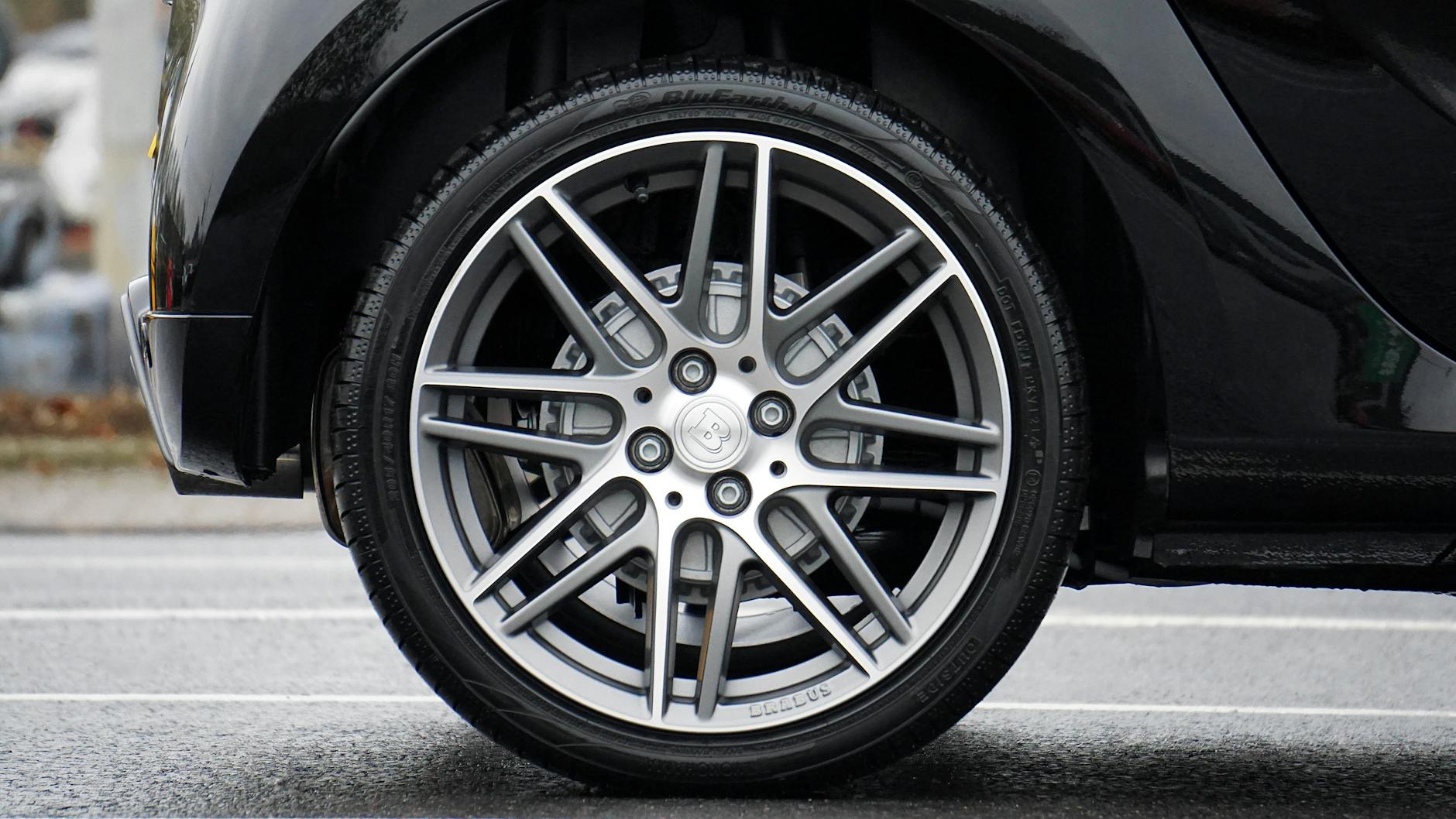
For either direction, a concave face adds visual depth without requiring extreme offsets. A moderately concave 21-inch with a brushed or matte gunmetal finish tends to work well against the Model S's body lines, which are relatively clean and don't compete with complex wheel designs. Deep dish setups can work but require careful offset calculation — see our piece on deep dish wheels if that's the direction you want to go.
Color-wise, the Model S comes in some strong paint colors — Deep Blue Metallic, Ultra Red, and Midnight Cherry Red. Against those, a machined face with dark windows tends to hold up better than full polished, which can look busy. Against Pearl White and Stealth Grey, darker finishes with machined accents are very effective.
TPMS: Don't Skip This Step
Tesla uses a proprietary TPMS system that communicates directly with the car's battery management and stability systems. The sensors are physically in the wheel, not the valve stem, which means you can't just reuse standard aftermarket TPMS sensors and expect them to work.
You have three options:
Reuse your OEM Tesla sensors — have a tire shop carefully transfer them from your stock wheels to your new wheels when mounting. This works if the new wheels have the correct sensor mounting location, and most reputable aftermarket wheels built for the Model S accommodate this.
Buy OEM replacement Tesla TPMS sensors — part number varies by year; they run $40–$70 each from Tesla or third-party suppliers. More reliable than generic sensors.
Use compatible aftermarket TPMS — brands like Autel and Schrader make programmable sensors that can be coded to Tesla's frequency. A shop with an Autel TPMS tool can program these to your VIN. Slightly more involved but works cleanly.
Ignoring TPMS on a Tesla isn't just a warning light annoyance — the car can flag a service alert, restrict performance modes, or in some software versions affect regenerative braking behavior. Deal with it properly at installation.
Custom Forged Wheels for the Model S: What the Process Looks Like
If you want something beyond catalog fitments — a specific spoke count, a custom finish, a diameter that splits the difference between standard sizes — custom forged wheels are the answer. The process is more approachable than most people expect.
At ForgedToFit, it works like this: you browse existing designs or upload your own concept, we generate a quote based on your spec (diameter, width, offset, finish), then produce a 3D CAD rendering for your approval before a single gram of aluminum gets forged. Manufacturing runs through our 15-year OEM forging partner, which means the same quality control standards that go into factory wheels — just built to your spec rather than a manufacturer's cost target.
For the Model S specifically, we typically recommend confirming your suspension configuration (standard or air), whether you want square or staggered sizing, and whether you're keeping winter wheels separate. If you track the car or run aggressive street driving, we'd lean toward a full monoblock forged construction over flow-formed, though flow-formed is entirely appropriate for road use and delivers meaningful weight savings over cast. The difference between the two processes is covered in depth in our flow formed vs forged wheels guide.
Pricing for custom forged Model S wheels through ForgedToFit typically runs 50–70% less than comparable sets from legacy brands like HRE, Vossen Forged, or Brixton. A comparable set from those brands in 21-inch forged monoblock can run $6,000–$10,000+. Our equivalent comes in significantly under that, with a 5-year warranty that most of those brands don't offer.
What to Watch Out for When Shopping
The Model S aftermarket is full of cast wheels marketed with words like "forged-style" or "forged finish" — meaning the design looks like a forged wheel, not that it actually is one. At 5,000 lbs with instant torque delivery, a cast wheel is working hard. The failure modes are real: cracking under hard cornering loads, accelerated deformation at the bead seat, stress fracturing at spoke roots on bad roads.
For more context on what you actually get when you prioritize price over construction, our piece on cheap aftermarket wheels is worth reading before you commit to anything.
Also worth checking: load rating. Wheels are rated in kg per wheel. For a 5,000 lb car with four wheels, each corner carries roughly 1,250 lbs (567 kg) static, more under dynamic load. Look for wheels with a load rating of at least 800 kg per wheel — some lightweight track-spec wheels are rated lower and are not appropriate for a heavy EV in daily use.
Finally, check hub centricity. A lot of aftermarket wheels spec 73.1mm center bore (BMW/Audi fitment) or 70.6mm. The Model S needs 64.1mm. Either confirm the wheel is center-bored to 64.1mm from the factory, or confirm proper hub-centric rings are included. This isn't optional — it's the difference between a wheel that's truly centered on the hub and one that relies entirely on lug torque to stay centered.
Running a Winter Wheel Setup
If you're in the northern US, Canada, or northern Europe, a dedicated winter setup is worth thinking about when you order your aftermarket wheels. Running one set of custom 21s year-round means either running all-season tires (which compromises the handling the lighter wheels unlock) or swapping tires seasonally on the same wheel (which is hard on beads and finishes).
A practical approach: order your primary set in 21-inch for summer, and a simpler 19-inch set in a plainer finish for winter rubber. The 19-inch setup with a proper winter tire like the Michelin X-Ice Snow or Continental VikingContact 7 will out-handle the summer set in cold temperatures. It'll also protect your nicer wheels from road salt, brine, and the general brutality of winter roads.
For a comprehensive look at pairing wheels with tires for the whole setup, our aftermarket wheels and tires guide covers the full picture.
Before You Order: A Quick Checklist
These are the five things worth confirming before any aftermarket wheel purchase for a Model S:
- Bolt pattern: 5x114.3 — non-negotiable
- Center bore: 64.1mm or larger with hub-centric rings included
- Offset: 40–45mm for flush fitment without modifications
- Load rating: 800 kg per wheel minimum
- TPMS compatibility: confirm sensor mounting location and plan for sensor transfer or replacement
Get those five right and the rest — diameter, width, finish, design — is about your preferences. The Model S rewards wheels that are light and properly fitted. Put the effort in upfront and you end up with a car that looks significantly more intentional and drives noticeably better.
Frequently asked questions
What bolt pattern does the Tesla Model S use?
All Model S vehicles use a 5x114.3 bolt pattern. The center bore is 64.1mm, which is less common than the 73.1mm bore found on many BMW and Audi-spec aftermarket wheels — confirm center bore before ordering or ensure proper hub-centric rings are supplied.
Can I run 20-inch wheels on a Tesla Model S?
Yes. 20-inch is actually one of the best practical choices — 245/40R20 or 255/40R20 tires give you a reasonable sidewall for road compliance, strong tire selection from major performance brands, and proportional fitment on the car. It's a step back from the performance 21-inch look but easier to live with daily.
Will aftermarket wheels void my Tesla warranty?
Wheels themselves are not covered under Tesla's powertrain or battery warranty, so swapping wheels doesn't void those. However, if wheel-related damage (e.g., a bent rim causing bearing wear) leads to a claim, Tesla can dispute coverage for that specific component. Using properly rated, correctly fitted wheels from a reputable manufacturer protects you here.
Do I need to reprogram TPMS when installing aftermarket Model S wheels?
Yes. Tesla uses a proprietary TPMS system. The easiest path is transferring your OEM Tesla sensors to the new wheels at tire mount time. Alternatively, you can use programmable aftermarket sensors (Autel, Schrader) coded to Tesla's frequency by a shop with the right TPMS programming tool. Don't skip this — it affects more than just the warning light.
Are forged wheels worth it on a Tesla Model S?
More so than on most cars. The Model S weighs close to 5,000 lbs, and unsprung mass has a disproportionate effect on ride quality and handling at that weight. A forged 21-inch wheel can come in 6–10 lbs lighter per corner than a cast equivalent — that's up to 40 lbs of unsprung mass reduction, which is genuinely felt in steering response and ride compliance.
What size tires should I run on 21-inch aftermarket wheels on the Model S?
For a staggered setup matching the factory performance configuration: 245/35R21 front, 265/35R21 rear. For a square setup: 245/35R21 or 255/35R21 all around. The Michelin Pilot Sport 4S, Pirelli P Zero PZ4, and Continental ExtremeContact Sport 02 are all available in these sizes and suit the car's performance profile well.