AMG Monoblock Wheels: The Complete Guide

The AMG monoblock wheel is one of the most recognizable designs in automotive history. If you've ever seen a W210 E55, a C43, or an early W220 S-Class sitting on a set of wide, polished, single-piece alloys with that distinctive multi-spoke dish, you know the look instantly. It communicates something specific: not just performance, but a particular era of German engineering confidence — heavy, purposeful, unapologetic.
But these wheels are also a case study in how OEM prestige pricing works, and why understanding the engineering behind them is worth your time before you spend serious money.
What AMG Monoblock Wheels Actually Are
The term "monoblock" refers to construction: one piece, machined from a single forged aluminum billet. No barrel welded to a center section, no multi-piece assembly. Just one unit. AMG used this construction across several generations of their performance lineup throughout the 1990s and 2000s, and the design became so associated with the brand that "monoblock" became synonymous with AMG itself in enthusiast circles.
The original AMG Monoblock design — sometimes called the Monoblock I or the "telephone dial" — appeared in the early 1990s on cars like the E36 AMG (the pre-Daimler AMG era). It had a flat face with minimal dish. What most people picture when they hear "AMG monoblock" is actually the later Monoblock III or V design: deeper dish, more pronounced spoke taper, and that CNC-polished lip contrasting against a darker spoke face.
These wheels typically ran 17×8.5" to 18×9.5" fitments. Offsets varied by platform, but the E55 AMG W210 used 18×8.5" front and 18×9.5" rear — a staggered setup that gave the car its planted, aggressive stance. The W220 S55 went wider still, with 18×9.5" and 18×10" staggered. For their era, those were serious dimensions.
The Engineering Case for Single-Piece Forged
A forged monoblock wheel is stronger per unit weight than a cast wheel and avoids the structural compromise of welded multi-piece construction. When AMG specified these for cars producing 350–500+ horsepower in the late 1990s, single-piece forging made sense. The grain structure of forged aluminum runs continuously through the wheel, which means impact resistance and fatigue life are genuinely better than cast alternatives — not marginally, but measurably.
For a deeper breakdown of why this matters, the piece on cast vs forged wheels covers the metallurgy in detail. The short version: for a high-powered rear-wheel-drive car that sees track days or spirited driving, forged monoblock construction isn't marketing fluff.
The Fitment Reality for Popular AMG Platforms
If you're trying to run an AMG monoblock style wheel on a modern Mercedes-AMG platform, the OEM offsets and bolt patterns are well-documented but the sizing has grown considerably.
C63 AMG (W204/W205): The W204 C63 came on 18×8.5" front / 18×9.0" rear from the factory, 5×112 bolt pattern, ET35/ET30 stagger. The W205 C63 S went to 19×8.5" / 19×9.5", same bolt pattern. Running a monoblock-style forged wheel on either platform in the factory stagger looks correct. Push to 20" only if you're staying on street tires and accepting the ride trade-off.
E63 AMG (W212): Factory fitment is 19×8.5" / 19×9.5", 5×112, ET35/ET28. The wider rear offset is important — a flat-offset wheel on the rear of a W212 will tuck and look wrong. You want that slight lip to fill the arch.
GT-Class AMG (C190/R190): These use 19×9.5" front / 20×11.5" rear, and the rear is genuinely wide. A monoblock design here benefits from deep dish to fill that fender visually.
S63/S65 AMG (W222): 20×9.5" front / 20×10.5" rear, 5×112. The S-Class needs a wheel with some visual mass to match the body proportion — a delicate thin-spoke design looks undersized. The monoblock aesthetic with a strong lip and substantial spoke structure suits it well.
If you're running a non-AMG Mercedes platform and want the AMG monoblock look — say, a W205 C300 or a W213 E400 — the bolt pattern is identical, and many owners go this route. Just be precise on offset. A C300 with the correct stagger and a forged monoblock design looks better than most AMG cars on stock wheels.
Original AMG Monoblocks: The Used Market
Genuine period AMG monoblock wheels show up on eBay, Craigslist, and German parts sites fairly regularly. Prices vary wildly based on condition and which generation you're buying. A clean set of Monoblock V wheels in 18" can run $1,500–$3,500 for a set. The early Monoblock I or II designs in good condition fetch less — $600–$1,200 for a set — because they're narrower and don't fill modern arches as well.
The problems with buying used OEM AMG wheels are predictable: curb rash on the polished lips (expensive to repair properly), corrosion under the clear coat, previous tire mounting damage, and unknown impact history. A forged wheel that's been kerbed hard enough may have micro-cracking that's invisible to the eye but affects structural integrity. You're buying an unknown.
There's also the fitment question. An 18" Monoblock V off a W210 will bolt onto a W205 with the right hub ring, but the offset almost certainly won't be right for the newer platform. You'll be running wheel spacers, which introduces its own set of considerations around extended hub bolts and torque.
Getting the AMG Monoblock Look Without the Compromises
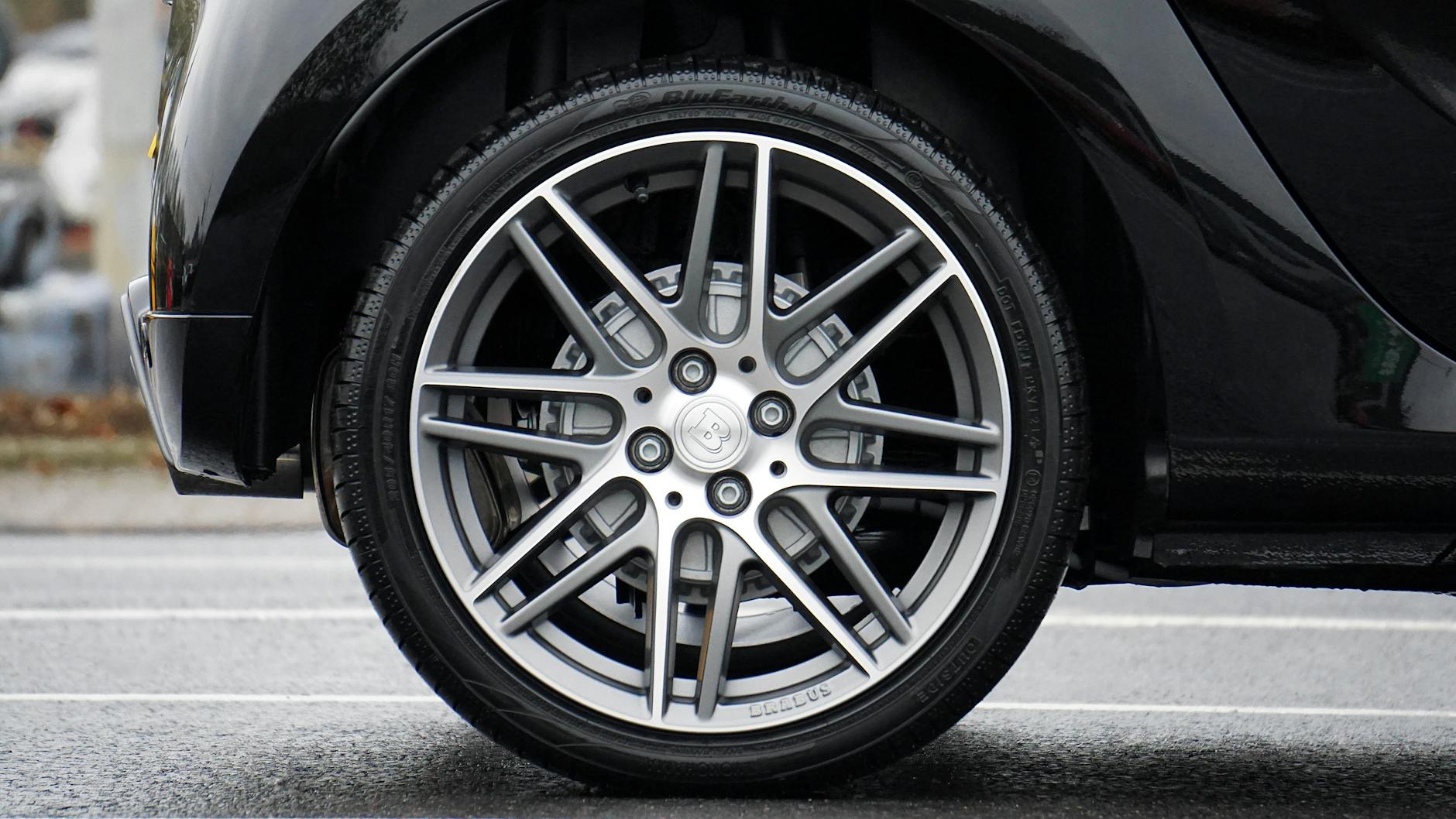
This is where it gets interesting. The AMG monoblock aesthetic — deep dish, multi-spoke fan design, polished lip with darker face, substantial spoke taper — is a design language, not a patent you can't touch. Custom forged monoblock wheels built to the same construction standard are available for 50–70% less than what legacy OEM suppliers charge for equivalent hardware.
The key word is "equivalent." A flow-formed wheel with a monoblock-ish design is not the same as a true single-piece forged wheel. Flow forming improves a cast center with a rolled barrel — it's good technology and absolutely worth choosing over pure casting, but it's a different product. For the genuine monoblock experience, you need a wheel that starts as a forged disc and gets machined to final shape from there.
To understand the distinction between these construction methods, the article on forged monoblock wheels goes into the specifics of why construction method affects both weight and long-term durability.
With a custom-built forged monoblock, you control:
- Diameter and width — not limited to what was available off a 1998 E55. Want 19×9.5" all around on a W205 C43? Done.
- Offset — specified to the millimeter for your exact platform, so you don't need spacers
- Finish — two-tone machined like the original, full gloss, brushed, or custom color on the face
- Spoke count and depth — you can replicate the 5-spoke, 10-spoke, or the classic AMG fan design closely, or deviate intentionally
The 3D CAD step before manufacturing matters here. You're approving the exact design before any metal gets touched. That eliminates the guesswork of buying used wheels and hoping the offset works.
Finish Options and How They Age
Original AMG monoblocks came in two primary finishes: fully polished, and the two-tone variant with a dark (usually gunmetal or black) spoke face and CNC-machined polished lip. The two-tone version aged better because the polished lip could be re-machined after curbing while the spoke face hid minor swirls.
On a custom build, the equivalent finish is a machined window or lip with a powder-coated or PVD spoke face. Matte gunmetal with a machined lip is the closest modern interpretation of the classic AMG monoblock two-tone. Gloss black with a machined lip also works but reads more aggressive and less period-correct.
Full chrome is available but worth avoiding on a design with AMG heritage — it shifts the aesthetic from European performance toward a different visual culture entirely. If you're interested in the chrome option for other reasons, the guide on custom chrome wheels covers the trade-offs honestly.
Anodized finishes hold up well and offer color options beyond the standard palette. Hyper silver — a bright but not mirror-polished silver — is a solid choice for W-body Mercedes cars because it reads as upscale without being flashy.
Sizing Up: When to Go Bigger Than OEM
A lot of AMG owners want to go larger than factory fitment. The W204 C63's 18" OEM size is genuinely undersized for a modern eye, and 19" or 20" looks more proportionate. But there are real limits.
Going from 18" to 19" on a C63 W204 is straightforward — same bolt pattern, just drop to a 40-series tire from 45, and you keep similar overall diameter. Going to 20" means 35-series rubber, which starts to feel harsh on anything but smooth pavement and increases the risk of sidewall damage on potholes. For a daily driver, 19" is usually the right answer. For a car that lives on smooth roads or the track, 20" is viable.
The GT-Class with its 20×11.5" rear spec is already at the limit for most street applications. Bumping to 21" on the rear requires either reduced sidewall height or a modest diameter increase, and both affect ride quality. AMG's own Aero package cars often run 21" — but they're on adaptive dampers tuned for that fitment.
On staggered setups specifically, maintaining that front-to-rear size relationship is important for both looks and handling. Running the same size all-around on a rear-biased AMG car loses the visual cue that tells you the car is performance-oriented. It also changes rotation patterns — something worth thinking through if you track the car. More on staggered wheels and when to run them covers the practical considerations.
AMG Monoblock Wheels on Non-Mercedes Platforms
The design translates beyond Mercedes. The multi-spoke fan wheel with a polished or machined lip reads as European performance regardless of platform, and there's a strong case for running it on:
BMW M3/M4 (F80/F82): The F80 runs 5×120, ET35 front and ET37 rear, typically 19×9" and 19×10". A monoblock-style wheel in these dimensions with a two-tone finish works well. The F82 M4 has wider arches and can push to 20×10" rear without looking disproportionate.
Porsche 911 (991/992): The rear-engine weight bias and wide rear haunches make the staggered monoblock aesthetic nearly ideal. 20×9" front and 21×12" rear (the 992 GT3 spec) needs a wheel design with visual weight in the rear — a deep-dish multi-spoke delivers that.
Audi RS6/RS7 (C8): 5×112 bolt pattern — same as Mercedes — which makes cross-referencing fitment data easy. The RS6 Avant in particular looks strong on a 22×10" all-around setup with an AMG-derived monoblock design, though 21" is more practical for the weight of the car.
For BMW-specific custom forged wheel options in detail, the guide on custom forged wheels for BMW covers platform fitment across the M lineup.
What to Expect from the Custom Build Process
Ordering custom forged monoblock wheels isn't the same as clicking "add to cart" on an in-stock item. The process has real steps, and understanding them upfront makes it smoother.
First is design confirmation. You're choosing spoke count, depth profile (how much dish), face angle, and finish. If you have a specific AMG monoblock variant you're referencing — say, the Monoblock VI design from an early W211 E55 — providing reference images helps the designer understand what you're going for. The 3D CAD render you receive before production shows you exactly what the wheel will look like on your car.
Second is fitment spec. You provide your platform, current tire size, and whether you want flush, slight poke, or tucked fitment. The offset gets calculated from there. If you're running coilovers or spacers, that gets factored in.
Lead time on custom forged monoblock wheels is typically 6–10 weeks from design approval to your door. That's longer than buying in-stock cast wheels but normal for made-to-order forged hardware. The 5-year warranty covers manufacturing defects — not curb damage, but structural failure, porosity, or coating adhesion issues.
For a broader look at how to approach this kind of purchase from the research stage through delivery, the aftermarket wheels complete buyer's guide walks through what to verify before you commit to any custom wheel order.
Frequently asked questions
What bolt pattern do AMG monoblock wheels use?
Most AMG monoblock wheels use a 5×112 bolt pattern, which is standard across Mercedes-AMG and most AMG-badged variants. The center bore is typically 66.6mm. This bolt pattern is also shared with Audi, Volkswagen Group performance cars, and some Porsche models, so fitment cross-referencing is relatively straightforward with the correct hub rings.
Can I run original W210 E55 AMG monoblock wheels on a newer Mercedes?
The bolt pattern is the same (5×112), but the offsets from late 1990s AMG cars won't match modern platforms without spacers. A W210 E55 monoblock in 18×9.5" ET25 on a W205 C63 will poke excessively unless you run a significant camber correction. It's doable as a show setup, but not ideal for driving. Custom-built wheels with the same design at the correct offset for your specific car is a cleaner solution.
Are AMG monoblock wheels actually forged?
The OEM AMG monoblock wheels from the classic era (Monoblock I through VI) were single-piece forged aluminum — that's the defining characteristic of the construction. Later AMG wheel designs moved to cast and flow-formed construction to reduce cost. If you're buying used, verify the construction method; many newer AMG OEM wheels labeled 'monoblock' in their design name are no longer true single-piece forgings.
How much do original AMG monoblock wheels cost?
On the used market, expect to pay $800–$1,500 for early Monoblock I/II sets in fair condition, and $1,500–$3,500 for Monoblock V or VI sets in clean shape. Condition varies enormously — polished lip damage and corrosion are common and expensive to fix properly. Custom-built forged monoblock wheels in the same design language typically land 50–70% below what legacy OEM suppliers charge for equivalent new hardware.
What's the difference between AMG Monoblock I, III, and V designs?
The Monoblock I (early 1990s) has a relatively flat face and modest dish — it was narrow by modern standards. The Monoblock III introduced deeper concavity and the characteristic polished lip contrast. The Monoblock V (used on W210 E55 and W220 S55) is the most recognizable version: wider, deeper dish, more dramatic spoke taper, and a substantial machined lip. The Monoblock VI appeared on the W211 E55 era and refined the spoke geometry further.
Do AMG monoblock style wheels work on non-German cars?
Yes, though the fitment data changes completely. The aesthetic works on any European performance car with the proportions to support it — BMW M-series, Porsche 911, even certain Alfa Romeo and Lotus platforms. On Japanese or American platforms it reads as cross-cultural, which some owners want intentionally. The design language is specifically German performance, so it tends to look most at home on European cars with a similar visual weight.