Build Your Own Forged Wheels: The Complete Guide

Most people assume custom forged wheels are something you order off a shelf — pick a finish, pick a size, done. The reality is more interesting than that. When you build your own forged wheels, you're specifying every dimension, every design detail, and every finish choice before a single billet of aluminum is touched. The result is a wheel that fits your exact car, your exact fender clearance, and your exact aesthetic — not a shelf product that's close enough.
The process has gotten dramatically more accessible in the last few years. What used to require a direct relationship with a European boutique brand (and their €4,000-per-wheel pricing) is now available through manufacturers that supply OEM programs and sell direct. Understanding the process means you'll make better decisions and not get surprised halfway through.
What "Build Your Own" Actually Means
This isn't a wheel configurator where you drag a color slider and call it custom. A real build-your-own forged wheel process involves specifying:
- Diameter and width — not just one size, but whether you're running square or staggered fitment
- Offset — sometimes per-corner on staggered setups
- Bolt pattern and center bore — matched to your hub, not a generic fit
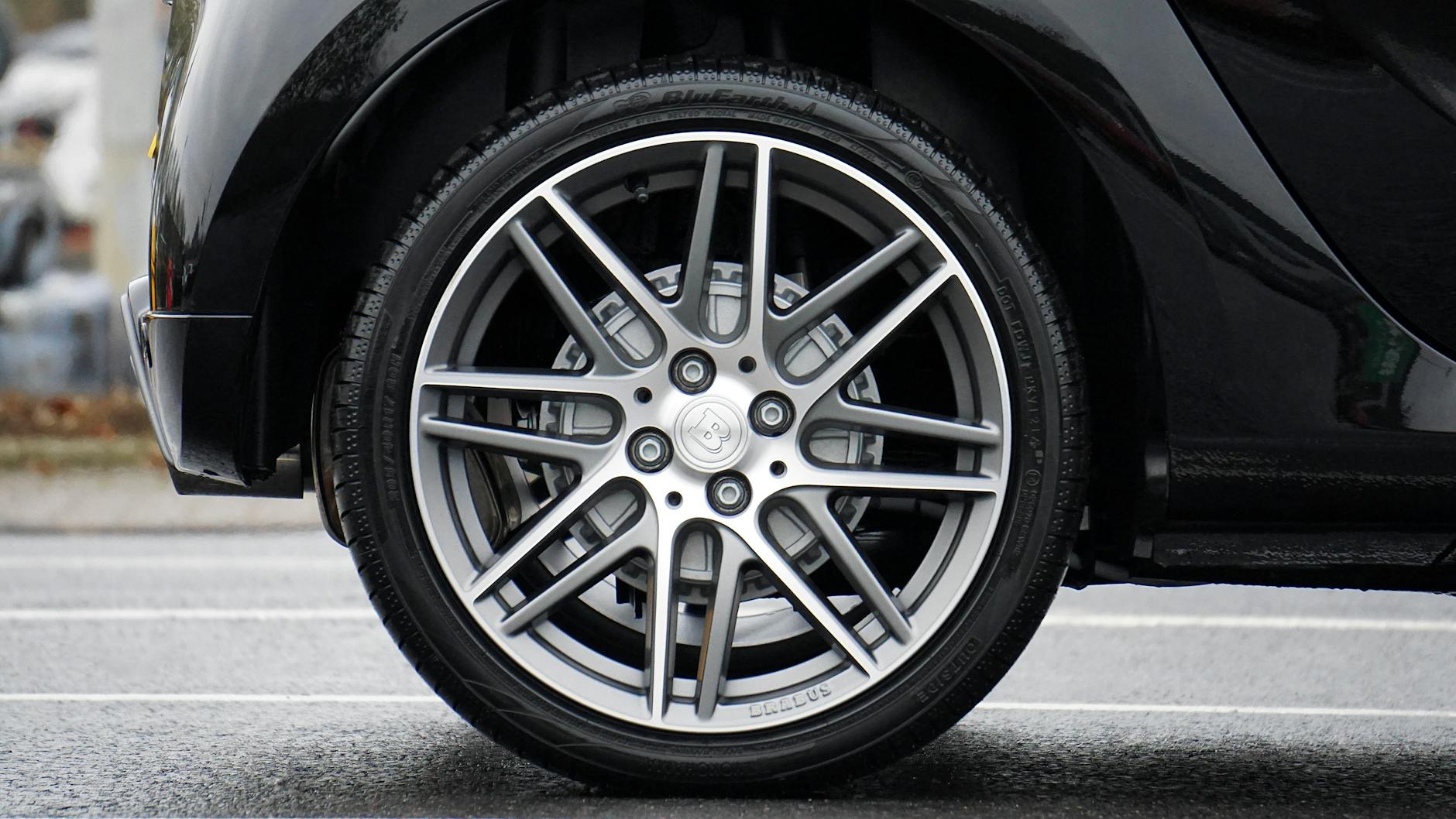
- Lip style — flat face, shallow concave, deep concave, stepped lip
- Spoke count and design — chosen from an existing catalog or submitted as original artwork
- Finish — machined, painted, anodized, brushed, or combinations
- Hardware — on two- and three-piece builds, the barrel attachment hardware can be a design element
Every one of those variables gets locked in before manufacturing begins. That's what separates a truly custom forged wheel from a wheel that's "custom" only in the sense that it has your car's bolt pattern.
Forged vs. Flow-Formed: Know Which You're Getting
Before diving into the build process, you need to understand what you're actually ordering. Forged wheels and flow-formed wheels are made differently, and that difference matters for strength, weight, and price.
Forged wheels start as a solid 6061-T6 aluminum billet that gets pressed under thousands of tons of force. The grain structure aligns with the shape, which is why forged wheels are stronger and lighter per unit of material than cast wheels. A forged 19×9.5 for an F30 335i will typically run 18–20 lbs depending on design — a cast equivalent is usually 22–25 lbs.
Flow-formed wheels (also called rotary forged or flow-forged) start as a low-pressure cast blank, then have the barrel spun and stretched under rollers while hot. The barrel ends up with a grain structure similar to forging, but the face is still cast. The result: lighter and stronger than a standard cast wheel, at a price point below full-forge. For a lot of street builds — a Mustang GT, a Tacoma, a Model 3 — flow-formed is the right call. For track use, time-attack, or very high-power applications, full-forge is worth the premium.
At ForgedToFit, we do both through the same 15-year OEM forging partner, so the choice is yours based on use case and budget — not based on what we happen to have in stock.
For a deeper breakdown of the material science and real-world performance differences, the cast vs forged wheels comparison is worth reading before you finalize your spec.
Step 1 — Nailing Your Fitment Before Anything Else
Fitment is where custom forged wheel builds go wrong. People spend weeks on a design, approve it, then realize they ordered a +35 offset when their bagged S550 needs +15 with 305-wide rear rubber. That's an expensive mistake on a made-to-order product.
Start with these numbers:
Bolt pattern — this is non-negotiable and comes from your car. A C8 Corvette is 5×120mm. An F30 BMW is 5×120mm too, but the center bore is different (72.6mm for BMW vs. 70.3mm for Corvette). Get both right.
Load rating — most passenger cars need wheels rated for 1,200–1,500 lbs each. High-GVWR trucks need more. Your forging partner should spec this based on the application.
Diameter and width — this is where you have creative freedom, but it's bounded by your fender arch, suspension travel, and tire availability. Running 21×10.5 on a Model 3 Performance looks aggressive and works, but you need to verify your suspension doesn't bind at full lock with that width.
Offset — measured in millimeters, positive or negative from the wheel centerline to the mounting face. Lower offset pushes the wheel outward; higher offset tucks it in. This is where staggered setups get nuanced — you might run +30 up front and +20 in the rear to get the same visual flush on a wider rear lip.
If you're not sure about offset, a custom offset wheels deep dive will walk you through the math.
Step 2 — Choosing Your Construction
One-piece, two-piece, and three-piece forged wheels aren't just aesthetic categories — they have real functional differences.
One-piece forged (monoblock) is the strongest option and the cleanest look. The entire wheel — center, barrel, and lip — is machined from a single forging. No hardware, no seals, no assembly points. This is what most OEM forged programs use. For daily drivers, track cars, and anyone who wants zero maintenance, this is the default recommendation. Our guide to 1 piece forged wheels covers the specifics.
Two-piece forged combines a forged center with a spun aluminum barrel, bolted together. The big advantage is fitment flexibility — you can run the same center with different barrel depths to achieve different offsets. It's also a popular choice for wide-body builds where you need very aggressive negative offset that would be wasteful to machine from a single billet.
Three-piece forged adds a separate outer lip, giving you the most aesthetic options — polished outer lips with a dark center, for example. The hardware (typically titanium or stainless bolts around the barrel) becomes part of the look. These take longer to build and cost more, but for a show car or a build where every detail matters, the result is hard to argue with. The 3 piece forged wheels guide goes much deeper on this.
Step 3 — Design: Catalog or Custom Artwork
This is where building your own forged wheels gets genuinely fun.
Most customers start with an existing design catalog. You're browsing spoke styles — Y-spoke, split five-spoke, multi-spoke mesh, turbine, directional — and picking the face profile (flat, shallow dish, aggressive concave). The CAD team then adapts that design to your exact specs: diameter, width, and center configuration.
The other option is uploading your own design. If you've sketched something, pulled reference from a concept car, or want a design element from a previous set of wheels that no longer fits your new platform, you can submit that as reference. Our CAD team turns it into a manufacturable 3D model and sends it back for approval before cutting starts.
Either way, you get to see a 3D render of your exact wheel — your specs, your finish, your design — before anything is manufactured. Changes at the render stage are easy. Changes after forging are not.
If you want to play with visualizations before committing, the custom wheels visualizer article explains how that process works.
Step 4 — Finish Selection
Finish has more impact on the final look than almost any other variable, and it's also where people rush decisions they later regret. Here's how to think about it:
Machined finishes — diamond-cut or brushed faces with clear coat are the most common. They show the aluminum's natural luster and age gracefully if the clear is maintained. Vulnerable to brake dust staining if you don't clean regularly.
Painted — gloss or matte in any RAL color, or custom matched to your car's bodywork. Gunmetal, anthracite, and gloss black are the volume leaders, but we've done wheels color-matched to Porsche Chalk and BMW Isle of Man Green. Paint is the most durable everyday option if the prep and clear coat are done right.
Anodized — a hard electrochemical finish that penetrates the aluminum rather than sitting on top. Extremely durable, available in a range of colors (though the palette is narrower than paint). Popular for motorsport applications where chips from debris are a concern.
Combination finishes — machined face with painted spokes, polished lip with brushed center — are where things get interesting on two- and three-piece builds. More labor, more cost, more visual impact.
Matte finishes hide fingerprints but show water spots and brake dust more than gloss. If your car rarely gets washed, gloss might actually look better day-to-day.
Step 5 — Manufacturing and Lead Times
Once you approve the 3D CAD render and confirm your finish, manufacturing begins. For forged wheels, that's not a 48-hour process — expect 6–10 weeks for full-forge builds, slightly less for flow-formed. This is normal and it reflects actual production: your wheels are being forged, machined, finished, and inspected from scratch.
What you should not accept is a supplier who quotes "custom forged" with a 2-week lead time. That's not custom forged — that's a shelf wheel that's being drilled to your bolt pattern. Real forging takes time.
During manufacturing, ForgedToFit's partner maintains full traceability — your billet material, heat treatment records, and dimensional inspection reports are documented. Each finished wheel gets a load rating stamp and is checked against your spec sheet before shipping.
What Does It Cost to Build Your Own Forged Wheels?
This is the question that stops most people before they even start the process, because they've priced Forgeline, BBS, or Brixton and walked away at $3,000–$5,000 per wheel.
ForgedToFit runs the same manufacturing process — same 6061-T6 billet, same OEM forging equipment, same quality controls — and ships direct from the factory. The savings, typically 50–70% versus legacy boutique brands, come from not paying for a brand's marketing overhead, showroom network, or US distributor margin.
A realistic budget for a set of four full-forged monoblock wheels in a common size (19×8.5 and 19×9.5 staggered for an F80 M3, for example) lands in a range that's competitive with high-quality cast aftermarket wheels from established brands. You're getting a genuinely superior product for comparable money — not a cheap knockoff.
Flow-formed builds come in lower. If you're building an F150 or a Tacoma and don't need race-level structural properties, flow-formed is where the value equation gets very compelling. Truck-specific guidance is available in the custom truck wheels article.
All ForgedToFit wheels ship with a 5-year warranty. That's structural and finish — not a voided warranty if you put them on a track.
Common Mistakes When Building Custom Forged Wheels
A few things go wrong repeatedly, and they're all avoidable:
Skipping center bore verification. A 5×120mm bolt pattern fits both BMW and Corvette, but the center bore doesn't. Running the wrong center bore creates hub-centric imbalance — you'll feel vibration at highway speeds that no amount of rebalancing will fix.
Ordering for current suspension instead of planned suspension. If you're lowering the car after the wheels arrive, the offset and clearance math changes. Order for where the car will be, not where it is.
Choosing a finish based on photos. Finish samples exist for a reason. Machined aluminum looks dramatically different under showroom LED lighting versus sunlight versus a parking garage. If finish matters to you, ask for physical samples.
Not verifying brake clearance. Larger calipers — upgraded brakes, or factory Brembos on performance trims — need more spoke clearance. Your caliper dimensions should be part of the spec sheet.
Going too aggressive on concave without understanding the trade-off. Deep concave looks dramatic, but it concentrates spoke stress differently than a flat face. For track use, discuss your concave depth with the engineering team before finalizing. For street use, there's more latitude.
The ForgedToFit Process, End to End
You start by browsing designs or uploading your own reference. You submit your car's specs — year, make, model, trim, current or planned suspension setup, brake caliper clearance if upgraded. We quote you. You approve the quote, pay a deposit, and the CAD team gets to work.
The 3D render comes back within a few business days. You can request adjustments — a different face profile, a tweak to spoke width, a finish change — at no charge before approval. Once you sign off on the render, manufacturing starts. Forged builds ship in 6–10 weeks; flow-formed builds typically come in faster.
Every set comes with a certificate of conformance, load rating documentation, and installation instructions. The 5-year warranty covers structural defects and finish delamination — not curb rash, obviously.
If you're still early in research and want to understand the broader landscape before committing to a spec, the custom forged wheels overview is a good reference point. And if you're specifically trying to evaluate forged wheel brands before deciding where to order, the forged wheels brands breakdown is worth your time.
Building your own forged wheels takes more thought than picking a wheel off a shelf — but that's exactly why the result looks and performs like no one else's set. Every decision you make is in the wheel when it arrives.
Frequently asked questions
How long does it take to build your own forged wheels?
Full-forge monoblock builds typically take 6–10 weeks from design approval to shipment. Flow-formed builds are generally faster. Lead time reflects real manufacturing — forging, machining, finishing, and inspection — not shelf stock being drilled to your bolt pattern.
Can I submit my own wheel design, or do I have to pick from existing styles?
Both options are available. You can choose from an existing design catalog and have it adapted to your exact specs, or you can upload reference artwork — a sketch, a render, photos of a design you like — and the CAD team will build a manufacturable 3D model from it. Either way, you approve a detailed render before manufacturing starts.
What's the difference between forged and flow-formed wheels, and which should I choose?
Forged wheels are machined from solid billet aluminum pressed under high force — the strongest, lightest option and the right choice for track use or high-power applications. Flow-formed wheels start as cast blanks with the barrel spun under heat and rollers, producing a barrel similar to forged but with a cast face. For most street builds, flow-formed offers an excellent strength-to-weight ratio at a lower price point.
How do I know my forged wheels will fit correctly?
You provide your car's year, make, model, trim, bolt pattern, center bore, and intended suspension setup. If you have upgraded brakes, you also provide caliper clearance dimensions. The CAD process confirms fitment in 3D before manufacturing. Getting this information right upfront — especially center bore and offset — is the most important step in the whole build.
Are custom forged wheels really 50–70% less than brands like BBS or Forgeline?
Yes, because the savings come from eliminating distributor margins, showroom overhead, and brand marketing costs — not from cheaper materials or lower manufacturing standards. ForgedToFit uses the same 6061-T6 billet aluminum and OEM-level forging equipment through a 15-year manufacturing partner. The product is comparable; the pricing model is different.
What warranty comes with custom forged wheels from ForgedToFit?
All ForgedToFit forged and flow-formed wheels come with a 5-year warranty covering structural defects and finish delamination. The warranty is not voided by track use. Normal wear, curb damage, and cosmetic damage from road debris are not covered.