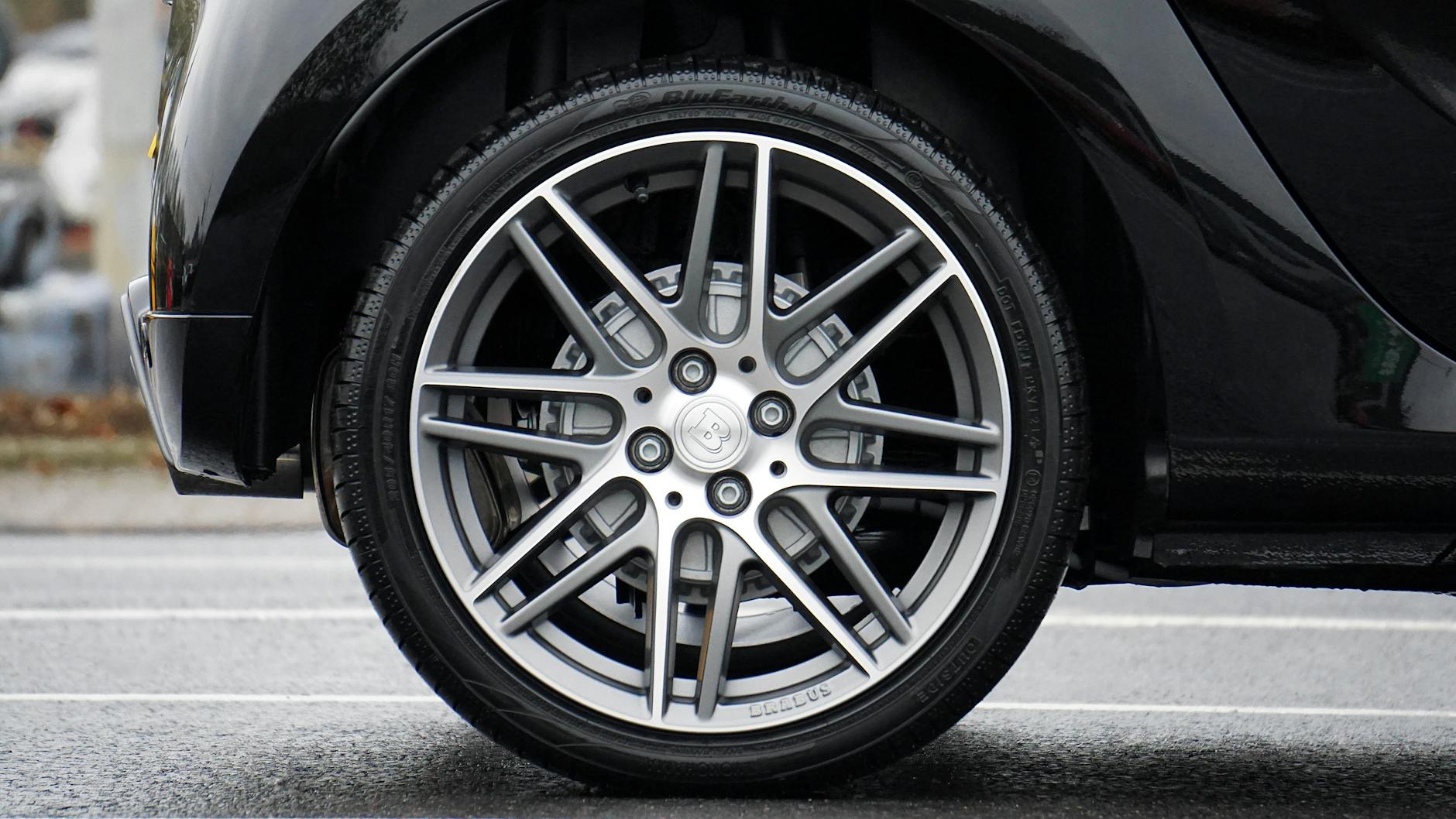
Forged vs Cast Wheels: What Actually Matters

The forged vs cast wheels argument has been running in forums and shop floors for decades, and most of what gets said online is either oversimplified or quietly wrong. Both constructions can produce a perfectly functional wheel. Both can also produce garbage, depending on who's making them and how. What actually separates forged from cast is the metallurgy, the manufacturing process, and what those things mean for your specific use case.
Let's get into it properly.
How Cast Wheels Are Made
Casting is the older and more common method. Molten aluminum alloy — typically A356 — gets poured or forced into a mold and left to solidify. There are a few variations: gravity casting, low-pressure casting (LPDC), and counter-pressure casting. Each produces slightly different results, but the fundamental process is the same.
Gravity casting, still used on cheaper wheels, lets the metal flow into the mold under its own weight. That introduces porosity — small air pockets trapped in the metal — which weakens the structure and forces manufacturers to add material to compensate. The result is a heavier wheel. Low-pressure casting is better. Pressurized gas pushes the molten metal into the mold more consistently, reducing porosity. Most decent OEM wheels and mid-tier aftermarket pieces are low-pressure cast.
Counter-pressure casting, less common but worth knowing about, pressurizes both the metal reservoir and the mold cavity simultaneously, then reverses the differential to fill the mold. The result is even lower porosity than standard LPDC and a denser grain structure. Some premium OEM applications — certain BMW M and Porsche factory wheels — use counter-pressure casting specifically to extract more structural performance from cast construction without the tooling cost of full forging. It narrows the gap between cast and forged, but it doesn't close it.
After casting, quality manufacturers perform T6 heat treatment on the finished wheel: a solution heat treatment followed by artificial aging. This significantly increases yield strength and hardness compared to an untreated casting. An A356-T6 cast wheel is meaningfully stronger than the same alloy in an as-cast state. When evaluating cast wheels, confirming that T6 treatment is part of the process is worth the five minutes it takes to ask the question.
The grain structure in a cast wheel is still relatively random and coarse regardless of which casting method is used. Crystals form as the metal cools, but they're not aligned in any particular direction. That matters because grain orientation directly affects tensile strength and fatigue resistance — and no amount of post-processing fully overcomes what the cooling stage establishes.
How Forged Wheels Are Made
Forging starts with a solid aluminum billet — typically 6061-T6 or 6082-T6 — and compresses it under extreme pressure, often 5,000 to 10,000 tons, using a die. That pressure does something casting can't: it aligns the grain structure of the metal in the direction of stress. The result is a much denser, more uniform piece with far fewer internal voids.
The forging itself is typically done hot, with the billet heated to between 800°F and 900°F to improve malleability before the press cycle. Some manufacturers use multiple progressive die stages, each step refining the blank closer to final geometry, which distributes the deformation more evenly and produces a tighter, more consistent grain flow than a single-stage press. The number of stages is a meaningful indicator of process quality that rarely shows up in marketing copy.
After the initial forging, the wheel blank gets machined — sometimes extensively — to cut out material that isn't needed. CNC machining removes metal from spoke faces, barrel walls, and window openings to hit final geometry. This is how forged wheels achieve their high strength-to-weight ratio. You're not adding material to compensate for weakness; you're removing it because the base material is strong enough that you don't need it. A high-complexity forged wheel might start as a 50–60 lb blank and finish at 18–22 lbs after machining.
Flow forming, which sits between casting and forging, spins a cast or forged blank while rollers stretch and compress the barrel. This aligns the grain structure in the barrel specifically, which is the highest-stress area during cornering. It's a meaningful upgrade over pure casting and significantly cheaper than full forging. For a deeper look at where flow forming fits, the Flow Formed vs Forged Wheels: Which Is Right for You? breakdown is worth reading.
The Actual Differences That Matter
Weight
A properly forged wheel runs 15–25% lighter than an equivalent cast wheel in the same size and design. On a set of 19×9.5 wheels, that difference can be 8–12 lbs per wheel — 30–40 lbs total. Unsprung weight reduction at that scale is real and measurable: better transient response, less inertia the suspension has to control, reduced strain on wheel bearings and hub faces over time.
On an F30 335i, swapping from 225-lb cast factory wheels to a forged set in the same size (19×8.5 front, 19×9.5 rear staggered) often results in a noticeable improvement in steering feel that no tire swap alone can replicate. That's the unsprung mass story — not dramatic on a smooth highway, very apparent on a twisty road or a track day.
The physics behind this are worth understanding. Unsprung weight affects two things: ride quality and handling response. The suspension has to work harder to keep a heavier wheel planted over road irregularities because the wheel itself has more inertia to overcome. On a track where you're asking the tire to maintain consistent contact patch pressure through compression and rebound cycles, that inertia translates directly into reduced grip consistency at the limit. A lap timer will often show the difference before you feel it consciously.
Strength and Durability
Forged aluminum has roughly 20–30% higher tensile strength than cast aluminum, and significantly better fatigue resistance. Under repeated loading cycles — which is exactly what wheels experience — the aligned grain structure of a forged wheel resists crack propagation better than a cast wheel's random grain structure.
This matters most at the spoke roots, which see the highest bending stress. When a wheel hits a pothole or a curb, the impact load is transmitted through the tire into the barrel and up into the spokes. On a cast wheel, that load encounters grain boundaries that run in unpredictable directions — some of which are oriented perpendicular to the stress, making them natural crack initiation sites. On a forged wheel, the grain has been deliberately aligned along the spoke geometry during the pressing and machining process, so the metal's strongest axis is working in the same direction as the load.
A cast wheel with thin spokes is more vulnerable to catastrophic failure from a pothole or curb strike. A forged wheel can be designed with thinner, more aggressive spokes and still maintain or exceed the safety margin of a heavier cast wheel. This is why you'll see five-spoke forged designs with 8mm spoke width at the mid-section on high-end track wheels — geometry that would be structurally irresponsible in cast aluminum.
That said: an over-engineered cast wheel can still outlast an under-engineered forged one. Process and alloy selection matter as much as the manufacturing method itself. A well-made LPDC wheel in A356-T6 from a reputable manufacturer will outlast a poorly forged piece made from a lower-grade billet that skipped proper heat treatment.
Design Flexibility
Forging allows for more aggressive designs — deep concave profiles, sharp spoke geometry, complex undercuts — without compromising structural integrity. You can run a 10–11mm concave dish on a forged wheel without the spoke base thickness penalties you'd need on a comparable cast piece.
Casting has limits. Very complex geometry can cause inconsistent metal flow in the mold, creating weak spots in unpredictable locations. Thin sections cool faster than thick sections, creating differential shrinkage that introduces residual stress even before the wheel ever sees a road load. This is why cast wheels tend toward simpler, blockier spoke designs — not necessarily because designers prefer them, but because the process constrains what's safely achievable. If you want something visually aggressive, the construction method constrains what's safely achievable. The Concave Wheels: What They Are and How to Get Them Right guide goes into detail on how construction affects what concave depth is actually feasible.
Forging also enables tighter dimensional tolerances. A forged wheel typically holds ±0.1mm on critical dimensions like center bore and bolt circle, compared to ±0.3–0.5mm for most cast production. That precision matters for hub-centric fit and for balancing — a wheel that's truer to spec requires less correction weight, which itself represents saved rotating mass.
Repairability
Forged wheels are generally more repairable after a curb strike or minor impact damage because the metal is denser and less porous. A cast wheel with a crack may have internal voids near the crack that make welding unreliable — the heat from the weld can cause porosity to expand or migrate, and the repaired area may be weaker than the surrounding material. A forged wheel with superficial damage often machines back cleanly, and a crack in a forged piece, if it hasn't propagated deep into the spoke, is more likely to weld and re-machine predictably.
This is particularly relevant for alloy repair shops doing cosmetic refurbishment. A scuffed cast barrel can sometimes develop hidden subsurface cracks from the same impact that damaged the finish, which only become visible during the machining pass. Forged barrels, being denser, are less likely to hide damage below the surface. Neither should be driven on if structurally compromised, but a forged wheel is more likely to survive a refurb and return to service safely.
The Price Question
Traditionally, the cost gap between forged and cast has been enormous — and that's where most people stop. A set of HRE or BBS forged wheels in 19-inch fitment runs $4,000–$8,000+. Quality cast wheels from Enkei, OZ, or similar brands sit at $800–$2,000 for a set. That's a real gap.
But that gap mostly reflects brand positioning and production economics, not the pure cost of forging. Legacy forging brands have enormous overhead — design teams, marketing budgets, dealer networks, and the price premium that comes from selling 50-year-old brand equity. The forging process itself, particularly at scale with an established OEM-grade forge, is not inherently unaffordable. When HRE produces a wheel, a substantial portion of what you're paying for is the catalog design, the showroom presence, the sponsorship program, and the brand story. The aluminum and the press time represent a smaller fraction of the retail price than most buyers realize.
ForgedToFit exists in that space: direct-to-customer forged and flow-formed wheels built through a 15-year OEM forging partner, which cuts the brand markup out of the equation entirely. The result is forged construction at prices that typically land 50–70% below what legacy brands charge for comparable specs. A custom forged 19×9.5 set for a Mustang GT or a Stinger GT, built to your exact offset and finish, shouldn't require a second mortgage.
For more on how to evaluate construction quality and what you're actually paying for across the market, the custom forged wheels guide is a useful reference.
When Cast Wheels Are Fine
Honesty matters here: cast wheels are appropriate in a lot of situations. A daily driver that sees normal road conditions, no track time, and is primarily a commuter doesn't need forged construction. A quality low-pressure cast wheel in a conservative design — nothing with razor-thin spokes — will likely last the life of the car with no issues.
Where cast starts to struggle:
- Track use. Repeated thermal cycling and high lateral loads accelerate fatigue. Cast wheels are more likely to develop micro-cracks over time under track conditions. Brake heat cycles alone — rotor temperatures reaching 600–900°F on a hard track day and then cooling down between sessions — create thermal gradients that stressed cast aluminum handles poorly over many repetitions.
- Aggressive fitment. If you're running 10mm of concave in a staggered setup on a widebody build, the spoke geometry needed for that look is safer in forged.
- Weight-sensitive builds. Performance hybrids, sports cars, anything where rotating mass is a tuning variable — forged is worth the premium.
- High-power rear-wheel-drive cars. A Model 3 Performance, a tuned EV6 GT, a 700whp Supra — these cars put serious loads through the rear wheels. Forged construction has a genuine safety argument in those applications.
- Sustained high-speed use. Autobahn-spec driving or extended high-speed highway runs put continuous centrifugal load on the barrel and spokes in a way that stop-and-go commuting doesn't. Fatigue accumulates differently under sustained load than under cyclic impact, and forged construction handles both modes better.
Spotting Marketing vs. Reality
The wheel industry is full of "forged" claims that don't mean what buyers assume. Here are the specific things to verify:
"Forged-look" or "forged-style" — Cast wheels designed to look like forged. Completely meaningless as a performance claim.
"Flow-forged" — Usually means flow-formed, not fully forged. Flow forming is legitimate and worthwhile, but it's not the same as a full billet forge.
Alloy grade — Not all aluminum is equal. 6061-T6 is the standard forging alloy for good reason. If a manufacturer won't disclose the alloy, that's a flag. Some lower-cost "forged" wheels use 6063, which has lower yield strength and fatigue resistance than 6061 despite being a legitimate forgeable alloy. The T6 temper designation matters too — without it, even 6061 is significantly weaker than its rated spec.
Load rating — A legitimate forged wheel will have a clearly stated load rating, typically meeting JWL/VIA or TÜV standards. JWL is the Japanese standard, common across the Asian aftermarket; TÜV certification is the German equivalent and widely regarded as one of the more demanding third-party standards. This is your structural assurance, not the word "forged" in the product name. If a wheel carries no certification marking at all, walk away regardless of what the marketing says.
Monoblock vs. multi-piece — Monoblock forged wheels (single-piece) are generally the strongest. Multi-piece wheels can use forged centers with cast or spun outers, which isn't the same thing. A two-piece wheel with a forged center and a spun aluminum outer barrel is a legitimate and well-regarded construction — BBS and HRE both build variants of this — but it should be sold accurately as a multi-piece, not simply as "forged." The Forged Monoblock Wheels: What They Are and Why They Matter breakdown explains where the construction differences actually show up in real-world use.
Country of origin and forge partner transparency — Premium brands are generally willing to name their forging facilities or at least describe their manufacturing process in auditable terms. Evasive answers about where and how the forging is performed are a reasonable cause for skepticism.
Fitment Doesn't Care About Construction
One thing the forged vs cast debate sometimes obscures: fitment is the more immediate variable for most builds. A perfectly forged wheel in the wrong offset or with an incorrect center bore is useless — worse than useless if it causes hub stress or ruins the stance. Whether you're running a staggered setup on an E92 M3, a square fitment on a Model 3 Performance, or aggressive negative offset on a widebody WRX, getting the fitment right matters more on day one than the manufacturing method.
Both forged and cast wheels can be built to custom fitment specifications. The advantage of working with a custom forging operation is that you're not locked into catalog sizes. If you need 20×10.5 +22 to clear your big brake kit on a 5-series, that's a normal order — not an exception. If a widebody kit adds 50mm of fender clearance per side and requires a completely non-standard offset to place the tire correctly under the arch, a custom forge can accommodate that without the compromises that come from adapting a catalog size with a thick spacer. The custom offset wheels guide walks through how to measure and specify fitment correctly before you order anything.
The Bottom Line
Forged wheels win on weight, strength, fatigue resistance, and design flexibility. Cast wheels win on upfront cost and are adequate for a broad range of daily-driven applications. The gap between the two has historically been justified by brand markup more than manufacturing cost — and that's changing as direct-to-consumer forging operations prove the construction is achievable at rational prices.
If you're building something you actually care about — something you track, something with real power, something where the wheels are part of the point — forged is the right answer. If you're putting a set of cosmetically upgraded wheels on a grocery-getter that sees normal roads, a quality cast set from a reputable manufacturer is genuinely fine.
Know what you're buying, verify the claims, and don't let brand prestige substitute for actual specification review.
Frequently asked questions
Are forged wheels stronger than cast wheels?
Yes, in measurable terms. Forged aluminum has roughly 20–30% higher tensile strength than cast aluminum of the same grade, and significantly better fatigue resistance due to aligned grain structure. That said, a well-engineered cast wheel can still outperform a poorly designed forged one — construction method alone doesn't guarantee quality.
How much lighter are forged wheels compared to cast?
Typically 15–25% lighter in an equivalent size and design. On a set of four 19-inch wheels, that often translates to 30–40 lbs of total weight saved. The practical benefit shows up most noticeably in steering response and suspension feel, especially at lower speeds and through corners.
Is flow forming the same as forging?
No. Flow forming is a distinct process where a cast or forged blank is spun and roller-pressed to compress and align the metal in the barrel. It's a genuine structural upgrade over standard casting — the barrel ends up denser and stronger — but the face and spokes aren't processed the same way as a full billet forge. It's a cost-effective middle ground that works well for most street applications.
Are cast wheels safe for track use?
A quality low-pressure cast wheel from a reputable manufacturer can handle occasional track days, but prolonged track use accelerates fatigue in cast aluminum. The repeated high-load cycles and thermal stress are exactly the conditions where forged construction's superior fatigue resistance justifies the cost. If you're doing regular track days or time attack, forged is the safer long-term choice.
Why are some forged wheels so expensive?
Legacy forged wheel brands price their products to reflect brand equity, dealer margins, and significant marketing overhead — not just manufacturing cost. The forging process itself, done through an established OEM-grade forging partner at volume, is far less expensive than those retail prices suggest. Direct-to-consumer manufacturers like ForgedToFit cut that markup out by building to order and shipping direct.
Can I get custom-sized forged wheels, or am I limited to catalog fitments?
Custom sizing is one of the core advantages of ordering from a build-to-order forging operation. Unlike catalog brands that offer fixed size/offset combinations, a made-to-order forged wheel can be spec'd to your exact diameter, width, offset, and center bore — which matters enormously if you're clearing big brakes, running a widebody kit, or need a non-standard PCD.