How to Buy Forged Wheels Online (And Not Get Burned)

Buying forged wheels online is one of those things that seems sketchy until you realize the traditional alternatives — overpriced tire shops, brand-name markup machines, and local dealers who stock three designs — aren't exactly stellar either. The wheel industry has a real direct-to-consumer problem: most of the money you spend goes to middlemen, not manufacturing. Getting a set of proper forged wheels shipped to your door, at honest pricing, is not only possible — it's now the smarter play for most enthusiasts.
But the online market is noisy. There are legitimate forged wheel suppliers, there are companies selling "forged-style" cast wheels with misleading product listings, and there are outright scams. Knowing what to look for takes about ten minutes of education. That's what this guide is.
What "Forged" Actually Means (And Why It Matters)
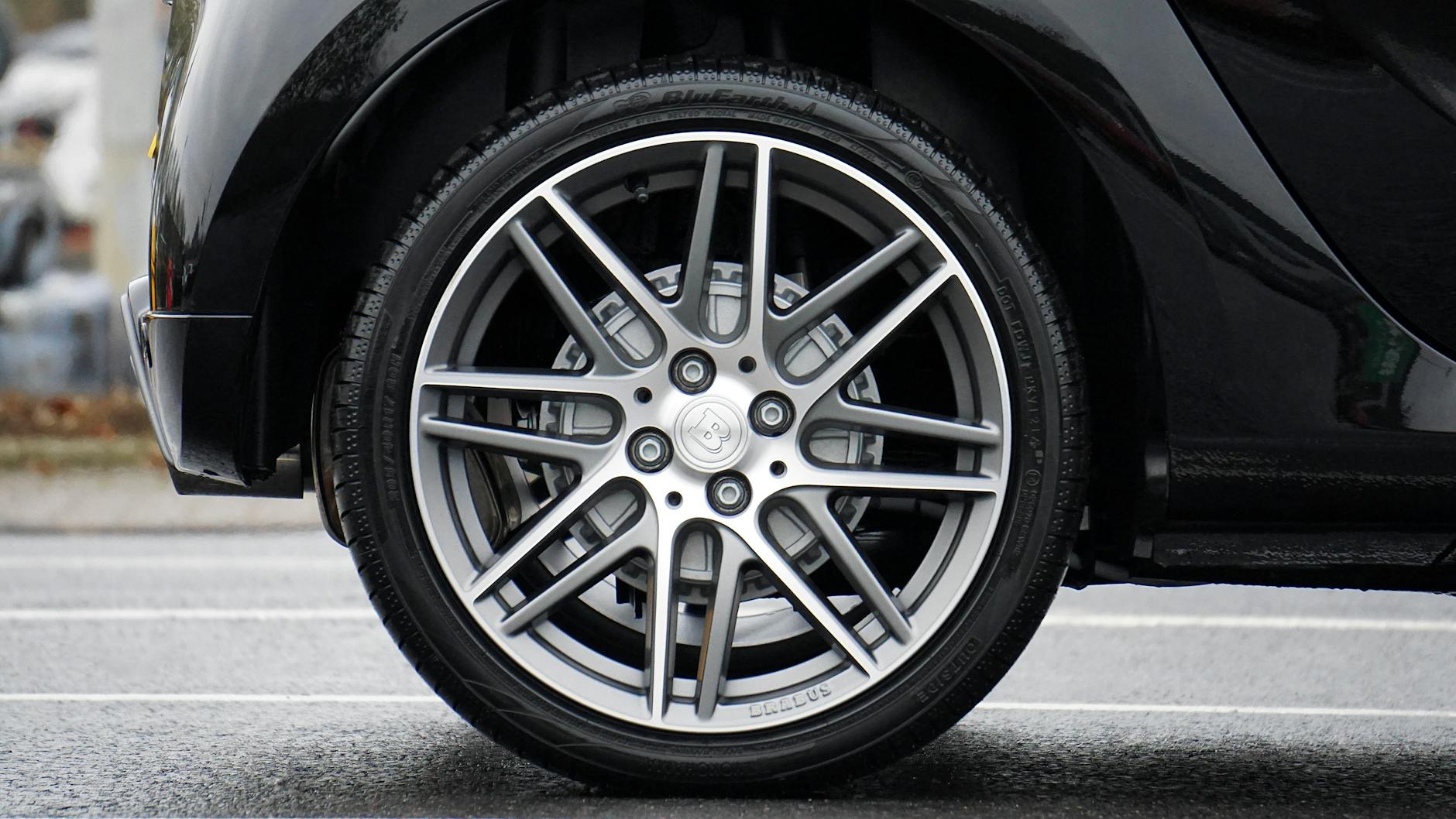
Forged wheels start as a solid billet of aerospace-grade aluminum alloy — typically 6061-T6 or 7075. That billet gets pressed under extreme pressure (sometimes 10,000+ tons) to compress and align the grain structure of the metal. The result is a wheel that's significantly stronger per pound than anything cast. A forged 20-inch wheel for a Mustang GT can weigh 2–3 lbs less than a comparable cast wheel in the same size. Across four corners, that's 8–12 lbs of unsprung weight you're removing, which has a real, measurable effect on handling, acceleration, and brake response.
Flow-formed wheels (also called rotary forged or flow forged) are a related process — a cast center gets spun and pressed while hot to stretch and compress the barrel, improving the structural properties of the rim specifically. They sit between cast and fully forged in terms of weight and strength, and they're worth knowing about. If you want to go deeper on that distinction, the flow formed vs forged wheels comparison covers the tradeoffs in detail.
For the purposes of buying online: when a listing says "forged," you want to verify the manufacturing process with documentation or by speaking to someone at the company. Marketing language is loose. Pressure-cast is not forged. Low-pressure cast with a forged-sounding name is not forged. Ask.
Why Online Beats Local for Forged Wheels
Local wheel shops carry inventory. Inventory means they buy what they can sell to the average customer, which means 20–30 designs in common sizes, from brands with the biggest marketing budgets. Shops mark up 30–60% over their cost to cover rent, staff, and stock risk. You're paying for all of that.
Online direct-to-consumer forged wheel suppliers work differently. They manufacture to order — no warehouse, no floor stock, no retail markup. The savings are structural, not occasional. At ForgedToFit, for example, wheels are produced through a 15-year OEM forging partnership, which means the same factory-level quality you'd find on an OEM performance variant, at 50–70% less than what Vossen, HRE, or ADV.1 charge for comparable product.
The other advantage is customization. A local shop can't machine a wheel to your specific offset, brake clearance requirement, or PCD. Online forging-to-order can. If you're running a widebody F30 335i and need a 19x10.5 ET25 with 72.6 hub bore and a specific face design, that's not a shelf item anywhere. It's a build.
For a broader comparison of online vs local purchasing, aftermarket wheels near me: why online wins breaks down the numbers clearly.
The Five Things You Must Verify Before Buying
1. Manufacturing Process and Material
Ask for the alloy spec and whether the wheel is one-piece forged (monoblock), two-piece, or three-piece. Monoblock forgings are the most common for street use — one machined piece, no hardware, no gaskets. Two- and three-piece wheels have bolted or welded barrels and centers, which can be great for extreme custom fitments but require more maintenance attention. The forged monoblock wheels guide explains the construction differences if you want specifics.
2. Load Rating
This is non-negotiable and almost never discussed in marketing. Every wheel has a load rating — the maximum weight it's certified to carry per wheel. For a 4,500 lb Tesla Model 3, each corner carries roughly 1,125 lbs under static load. Dynamic load during cornering is higher. Make sure the wheel's load rating matches or exceeds OEM spec for your vehicle. Reputable suppliers provide this. If a company can't tell you the load rating, walk away.
3. Fitment Specs and Hub Bore
Bolt pattern is obvious. But hub bore is where a lot of online purchases go wrong. Most aftermarket wheels are made with a universal hub bore slightly larger than OEM, then hub-centric rings are used to fill the gap. This is fine. What's not fine is running a wheel without those rings — you'll get vibration and potentially wheel wobble at speed. If you're ordering custom-built forged wheels, specify your exact hub bore. A 5x112 BMW and a 5x112 Audi are not the same — BMW uses a 66.6mm bore, Audi uses 57.1mm.
If you're on a specific platform, platform-specific guides like aftermarket BMW wheels or the aftermarket Porsche wheels guide will have the exact fitment specs you need.
4. Warranty and Return Policy
A company that stands behind forged aluminum with a multi-year structural warranty is signaling that they trust their own product. ForgedToFit backs wheels with a 5-year warranty. Cast wheel brands typically offer 1 year, if anything. Read the warranty terms — specifically whether it covers manufacturing defects and what the claim process looks like. Also check the return/exchange policy for sizing errors. Custom-built wheels can't be returned like off-the-shelf products, which is why the pre-order fitment process matters.
5. Lead Time Transparency
Forged wheels built to order take time. Expect 4–8 weeks for most forged builds depending on complexity and finishing. If a company says "forged" and promises 1-week delivery, that's a red flag — they're pulling from cast inventory and mislabeling it, or they're drop-shipping from a catalog house. Honest lead times are a sign of honest manufacturing.
Understanding Pricing: What's Real, What's Suspicious
HRE and ADV.1 charge $1,500–$4,000+ per wheel for monoblock forgings. Vossen's forged line runs $800–$1,500 per wheel. These prices include significant brand premium and dealer margin. The actual manufacturing cost for a high-quality forged wheel from an OEM-grade partner is considerably lower — which is exactly why direct-to-consumer models can sell a comparable product for $300–$700 per wheel and still be profitable.
If you see "forged wheels" at $80–$150 per wheel, that's not forged. That's cast. Possibly low-pressure cast with cosmetic machining. The material and process costs alone make sub-$200 forged wheels physically impossible at legitimate quality levels. A rough pricing floor to trust: $250+ per wheel for entry flow-formed, $400+ per wheel for genuine one-piece forgings in standard sizes.
The cast vs forged wheels breakdown has a detailed section on why the price gap exists and what you actually get at different tiers.
The Custom Build Process (What to Expect)
When you order custom forged wheels online from a serious supplier, the process should look something like this:
Step 1 — Spec submission. You provide your vehicle, target size (diameter, width, offset), bolt pattern, hub bore, and finish preference. If you have an existing design you like or want to upload your own, that information goes in here.
Step 2 — Quote and CAD review. The supplier comes back with a price and a 3D CAD rendering of your wheel. This is your chance to approve proportions, spoke geometry, face depth, and finish. Good suppliers will iterate with you until you're satisfied before any metal is touched.
Step 3 — Forging and machining. Once approved, the billet gets pressed, CNC-machined to spec, drilled, and finished. This is the 4–8 week window.
Step 4 — Quality check and shipping. Wheels are balanced, inspected, and crated for shipping. Reputable companies ship with tracking and insurance.
That process doesn't happen at a tire shop. It barely happens at most online retailers who stock catalog wheels. Custom-built is different, and the process above is what justifies calling something truly custom.
Platform-Specific Considerations
Different vehicles have very different constraints.
BMW F30/F32 (335i, 440i, M Sport): These cars are offset-sensitive. Run too little offset and the wheel tucks under the arch poorly; too much and you get scrub under load. 18x8.5 ET35 to 19x9.5 ET40 is the typical range for street use. Staggered setups (slightly wider rear) are popular on RWD and xDrive variants. The custom forged wheels for BMW guide covers this thoroughly.
Mustang GT / GT500: American muscle runs a 114.3x5 bolt pattern and is much more tolerant of aggressive offsets with a proper spacer setup. 20x10 front, 20x11 rear is a common staggered street setup. Brake clearance for Brembo packages on the GT500 requires at least 19mm of spoke-to-caliper clearance — confirm this before finalizing a design.
Tesla Model 3 / Model Y: Tesla's aluminum subframe and suspension geometry means lightweight wheels make a genuine difference in range and handling. The OEM aero covers on base trims are hiding 18-inch cast wheels — swapping to 19- or 20-inch forged aluminum with a low-drag design can actually improve both efficiency and look simultaneously. The Tesla Model 3 aftermarket wheels guide has specific offset data.
C7/C8 Corvette: The Corvette's wide hips and performance brake packages mean brake clearance and staggered sizing matter a lot. C8 runs a 5x120 bolt pattern; C7 uses 5x120 as well but with different offsets front to rear. Don't try to run square setups without checking arch clearance in the rear — it's tighter than it looks.
Trucks (F-150, RAM 1500, Silverado): High load ratings, larger diameters (20–24"), and often lifted ride heights that change the effective offset requirement. Forged wheels for trucks save meaningful weight — a forged 22-inch vs a cast 22-inch can be 6–8 lbs lighter per corner. For a lifted F-250 or F-350, load ratings above 2,200 lbs per wheel are often appropriate. The best aftermarket wheels for F250 covers this in depth.
Finishes: What Holds Up, What Doesn't
Powder coat is the most durable and cost-effective option — UV-stable, chip-resistant, and easy to repair if damaged. Matte black, gloss black, and anthracite are the most popular powder finishes for a reason: they hide brake dust, they photograph well, and they age cleanly.
Machined faces (a contrast-cut bright lip or face over a painted barrel) look sharp but require clear coating to protect the bare aluminum. That clear coat can yellow or peel over years of UV exposure and wheel cleaner use. Not a deal-breaker, but expect to refinish every 5–7 years.
Chrome plating on forged aluminum is possible but expensive and increasingly rare — most customers doing chrome finishes are using a polished finish instead, which is more durable and doesn't flake like traditional chrome. Painted finishes (body color, two-tone) require automotive-grade base and clear, and are best handled by specialty shops post-delivery if the supplier doesn't offer it.
Red Flags in Online Listings
A few things that should make you close the tab immediately:
- No load rating listed or available on request
- "Forged" in the name but the price is under $200/wheel
- No manufacturing origin disclosed
- No warranty information
- No physical address or phone number for the company
- Reviews that only discuss shipping speed, never product quality or fitment accuracy
- Stock photos with no actual product images
Legitimate forged wheel suppliers show their facility, cite their manufacturing partner, stand behind the product with documented warranties, and can answer technical questions about material and process.
Why the Direct-to-Consumer Model Works for Forged Wheels
The forged wheel market's legacy pricing problem is a distribution problem, not a manufacturing one. The actual forging and machining of a quality aluminum wheel, even from a Tier-1 OEM partner, doesn't cost $1,200 per wheel. What costs $1,200 per wheel is the brand, the dealer network, the showroom, the marketing campaigns, and the inventory financing — none of which you benefit from.
When a company cuts out the distributor and dealer, builds to order rather than to stock, and passes the savings directly to the buyer, the economics work. ForgedToFit's 15-year OEM partnership means the manufacturing is the same; it's the distribution chain that's different. That's why 50–70% savings over legacy brands isn't a promotional claim — it's a structural reality of the model.
For anyone serious about getting quality forged wheels without paying for someone else's sponsorship budget, buying direct online isn't a compromise. It's the right answer.
Frequently asked questions
How do I know if a wheel listed online is actually forged and not cast?
Ask the supplier directly for the alloy specification (e.g., 6061-T6 or 7075 aluminum) and the manufacturing process — specifically whether it uses open-die or closed-die forging under pressure. Legitimate forged wheel companies can provide this information without hesitation. Price is also a signal: genuine forged wheels rarely cost less than $250–$300 per wheel even from direct suppliers, and anything under $200 labeled "forged" is almost certainly cast.
How long does it take to receive custom forged wheels ordered online?
Expect 4–8 weeks from order approval for most custom forged builds. This covers billet forging, CNC machining, finishing, quality inspection, and shipping. Companies offering forged wheels in under 2 weeks are typically pulling from pre-made cast inventory. Honest lead times are a sign of genuine made-to-order manufacturing.
Can I get forged wheels custom-built to my exact offset and size online?
Yes — that's one of the main advantages of buying from a direct online forged wheel supplier. Unlike a local shop carrying shelf inventory, a made-to-order forged supplier can machine your wheel to a specific diameter, width, offset, bolt pattern, and hub bore. This matters most for modified vehicles, staggered setups, or platforms with unusual clearance requirements.
What load rating do I need for my vehicle?
Take your vehicle's gross weight (or curb weight plus max occupant/cargo load), divide by four, and that's your minimum static load per wheel. Add a safety margin for dynamic cornering loads — 20–30% is a reasonable buffer. Most passenger cars need 1,000–1,400 lbs per wheel; trucks and SUVs often need 1,800–2,500 lbs per wheel. Always ask the supplier for the wheel's load rating before purchasing.
Are forged wheels worth it compared to a quality cast wheel?
For most enthusiasts, yes — especially when the price gap is narrowed by buying direct. Forged wheels are lighter (often 2–4 lbs per wheel), stronger, and more impact-resistant than comparable cast wheels. On a performance car, that weight reduction improves steering response, braking, and acceleration measurably. On a Tesla, it can improve efficiency. The "not worth it" argument only holds when comparing $400 cast wheels to $1,500/wheel legacy-brand forgings. When forged wheels are available at $400–$600 per wheel direct, the value calculation shifts significantly.
What finish is most durable for forged wheels bought online?
Powder coat is the most durable everyday finish — it resists UV, chips, and most wheel cleaners without degrading. Matte or gloss powder finishes can last 10+ years with basic care. Machined contrast cuts look great but require a clear coat that may need refreshing every 5–7 years. Polished aluminum is premium but needs regular maintenance to prevent oxidation. For daily drivers, powder coat is the practical first choice.