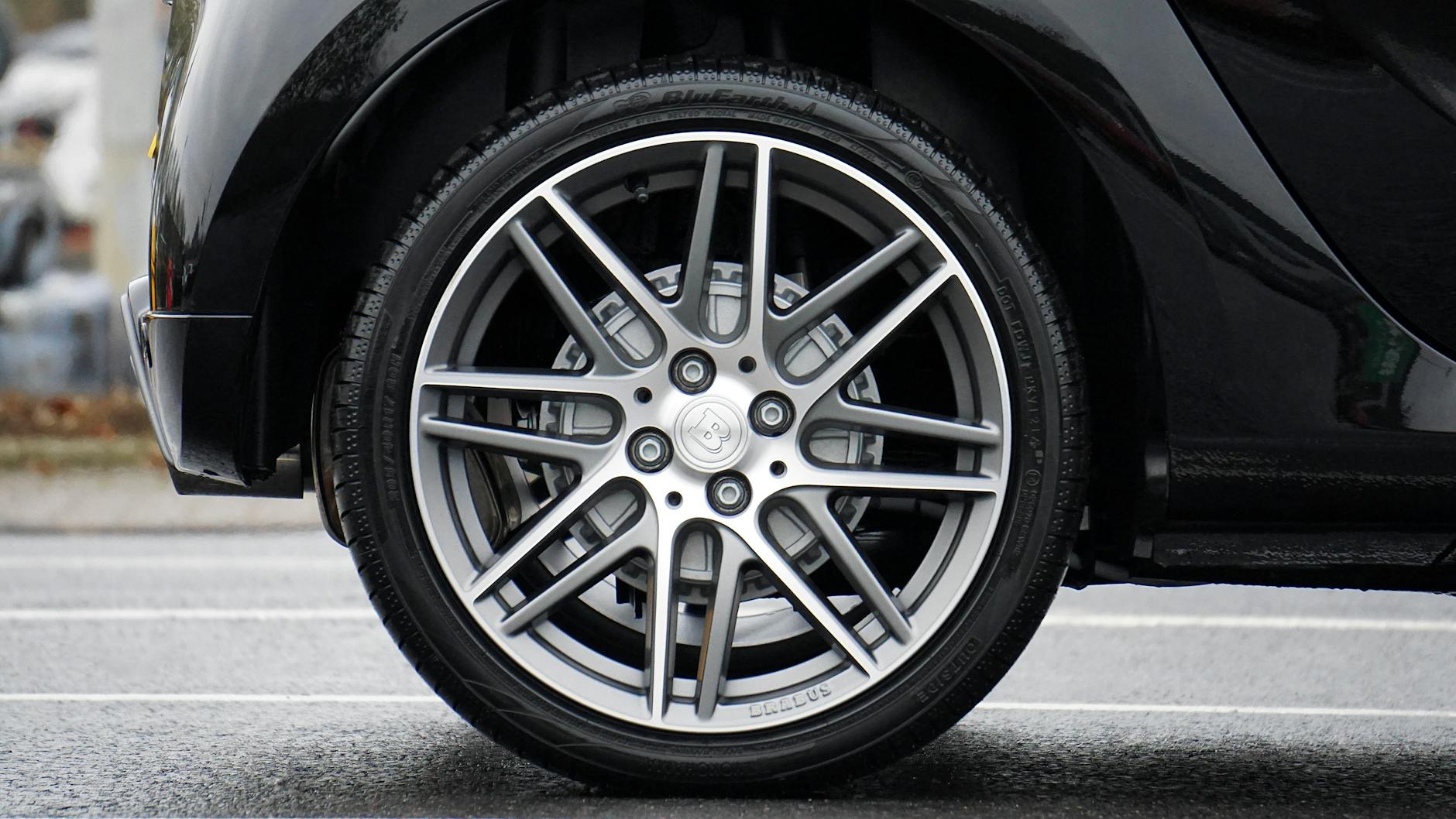
Bronze Forged Wheels: The Complete Guide

Bronze forged wheels occupy a specific and well-earned place in the enthusiast world. The finish reads as aggressive without being loud, works across an unusually wide range of car colors, and ages well compared to chrome or high-polish silver. But "bronze" covers a lot of ground — from warm amber-tinted clears over raw aluminum to deep espresso-bronze powdercoats — and the wheel underneath matters just as much as the color on top. This guide covers both.
What Makes a Wheel Actually "Bronze"
Bronze isn't a material here — it's a finish category applied to an aluminum alloy wheel. The base is almost always 6061-T6 or 7075-T6 aluminum (the same alloy spec used in aerospace and motorsport). What you're describing when you say "bronze" is the surface treatment.
The most common approaches:
- Anodized bronze: An electrochemical process that penetrates the surface rather than sitting on top of it. Extremely durable, won't chip or peel, but limited in the depth of tone you can achieve. Tends toward lighter, more golden hues.
- Powdercoat bronze: Dry pigment electrostatically applied and cured under heat. Offers the widest color range — from bright antique gold to near-black smoked bronze — and is very repairable if damaged.
- PVD (Physical Vapor Deposition) bronze: A thin metallic layer deposited in a vacuum chamber. Gives a chrome-like depth with a bronze tint. More expensive and less common, but visually stunning on the right design.
- Custom painted / two-stage bronze: A base color with a clear coat. More susceptible to stone chips than powdercoat or anodize but allows the most complex color matching.
When someone says they want "bronze forged wheels," they usually mean a warm medium-tone powdercoat or anodized finish — something in the family of Vossen's Deep Concave Bronze or HRE's Liquid Bronze. That's the baseline to have in your head.
Why Forged Specifically
The finish is a preference. The construction is a structural decision.
Forged aluminum wheels are made by pressing a billet of aluminum under 5,000–10,000 tons of force, aligning the grain structure of the metal rather than leaving it random as casting does. The result is a wheel that's 20–25% lighter than a cast equivalent at the same strength, or significantly stronger at the same weight. For a performance car or a truck that sees real use, that's not marketing language — it's physics.
The forging process also makes tight wall thicknesses possible, which is how manufacturers achieve those aggressive concave profiles without adding weight. A cast wheel doing the same thing would need more material to compensate for porosity and inconsistent grain.
If you want to go deeper on the construction side, the comparison between cast vs forged wheels is worth reading before you commit to a budget.
Flow-Formed Bronze Wheels: The Middle Ground
Not every build justifies full monoblock forging. Flow-formed (also called rotary-forged or flow-formed rolled) wheels use a cast center that gets spun and pressed to stretch and compress the barrel, partially aligning the grain structure. You get most of the strength and weight benefit of forged at 30–40% less cost.
For daily drivers, track weekends, and trucks where the wheel is going to take some abuse anyway, flow-formed bronze wheels are often the smarter choice. The finish options are identical — you can get the same anodized or powdercoated bronze on a flow-formed barrel as on a full forging.
See flow forged wheels for a detailed breakdown of the process.
Which Cars Look Best With Bronze Forged Wheels
This is where opinion becomes useful. Bronze works because it contrasts warm against cool and vice versa, depending on the car color.
Dark cars (black, midnight blue, dark grey, dark green): Bronze pops hard here. A set of 19x9.5 / 19x11 staggered bronze monoblocks on an F30 335i in mineral grey looks better than almost any other finish. The warm tone against the cool grey creates contrast without the aggression of gold.
White cars: Bronze is excellent. It avoids the sterility of silver and the loudness of gold. A white Mustang GT on 20x10 / 20x11 staggered bronze concave wheels has been a proven formula on Instagram for a decade because it actually works.
Silver/grey cars: Medium-tone bronze can blend rather than contrast, which some people like. Go darker (closer to smoked bronze or bronze-black) on silver to maintain visual separation.
Red and orange cars: This is divisive. Bronze can complement warm-toned reds and work surprisingly well on orange. It fails on cool-toned reds (like Imola Red or Guards Red) where it competes rather than contrasts. On a Supra in Renaissance Red? Yes. On a 911 in Guards Red? Probably not.
Model 3 and Model Y owners have made bronze one of the most popular finish choices in the EV space. The clean, flush fitment that Tesla platforms demand looks particularly strong in a darker bronze on the Model 3's long flanks.
Fitment: Getting Bronze Right for Your Platform
A good-looking wheel is worthless if it doesn't fit properly. Bronze forged wheels — like any custom forging — should be spec'd to your platform, not adapted.
Common fitment examples
BMW F30 / F32 (3/4 Series): Front 18x8.5 ET35, rear 18x9.5 ET22 staggered is a clean street fitment. If you're going aggressive, 19x9.5 ET22 front / 19x10.5 ET17 rear with a 5mm spacer up front gives you flush fitment without rubbing. Hub bore 72.6mm.
Ford Mustang GT (S550, 2015–2023): The S550 rear subframe allows real width. 20x10 ET45 front, 20x11 ET52 rear is the factory GT350-adjacent fitment. For flush-to-fender, 20x10.5 ET37 front / 20x11 ET36 rear with 295/35 rear works without modification.
C7 Corvette: Factory was 19x8.5 / 20x10. Going to 19x9.5 / 20x11 in a lightweight bronze forged saves meaningful rotating mass. Bolt pattern 5x120.65, hub bore 70.3mm — not a common aftermarket spec, which is exactly why custom forging matters here.
Tesla Model 3 (RWD/Performance): Bolt pattern 5x114.3, hub bore 64.1mm. 20x8.5 ET38 all around is a clean flush look. For the Performance trim's wider track, 20x9 ET35 front / 20x9.5 ET38 rear with a hub-centric ring gives a properly staggered setup that the factory never offered.
Tacoma (3rd Gen): Running a 17x9 ET-12 in a bronze powdercoat on a lifted Tacoma is a popular combination — the aggressive negative offset pushes the wheel out to fill the flare without spacers. 6x139.7 bolt pattern.
Sizing: How Big Should Bronze Forged Wheels Be
Larger isn't always better. Bronze tends to photograph and show better on wheels with more spoke, and that means bigger diameters look proportionally better. But every inch of diameter adds rotational inertia and ride harshness unless you offset it with weight savings — which forging does better than anything else.
Street cars and sports sedans: 18–20 inch is the sweet spot. Enough visual presence, enough sidewall for daily use.
Sports cars and supercars: 20–21 front, 21–22 rear staggered is typical. The C8 Corvette runs 20/21 from the factory and that's a sensible benchmark.
Trucks and SUVs: 20–22 inch is the mainstream. 22s work on full-size trucks — a Ram 1500 or F-150 in bronze at 22x9.5 has the proportions to carry the size. 24s are possible in bronze forged, though the weight savings become more critical at that diameter.
For more detail on larger sizes, the guides on 22 inch forged wheels and 24 inch forged wheels are useful references.
Bronze Forged Wheel Designs That Work
The design and the finish are in conversation with each other. Some thoughts:
High-spoke / multi-spoke designs in bronze look incredible. The finish catches light differently across the faces and between the spokes, creating visual depth that a flat or satin finish on the same design won't achieve. Think 10-spoke or turbine designs.
Mesh designs in bronze are a classic — the weave pattern and the warm tone together read as vintage motorsport. Works well on older European platforms and classic muscle.
Deep concave profiles in bronze are probably the most photographed wheel aesthetic in the enthusiast community for good reason. The bronze catches the shadow in the concave, making the depth look even more dramatic. If you want a deep concave wheel in bronze, plan for wider rear fitment to maximize the effect.
Matte vs gloss bronze: Matte powdercoat is more modern-looking and hides brake dust and road grime better. Gloss bronze is more traditional and looks sharper in photographs. Both work — it's a legitimate personal call.
What Bronze Forged Wheels Cost
Legacy brands (HRE, Vossen Forged, ADV.1, BBS Motorsport) price bronze forged sets for passenger cars at $4,000–$10,000 or more, depending on size and complexity. For trucks and larger diameters, $6,000–$15,000 isn't unusual.
ForgedToFit builds through a 15-year OEM forging partner and sells direct — the same 6061-T6 and 7075-T6 forgings, the same CAD engineering, the same 5-year warranty, at 50–70% less. A set of bronze forged wheels for an F30 335i that would run $6,000 through a legacy brand runs roughly $1,800–$2,800 here. The difference is margin and distribution, not manufacturing quality.
Flow-formed bronze sets start lower — typically $900–$1,600 for a full set on a passenger car platform.
How to Order Custom Bronze Forged Wheels
The process matters. Here's how it works at ForgedToFit:
- Browse designs or submit your own. If you have a design in mind, upload a reference. If not, choose from existing profiles and we'll adapt them to your platform.
- Specify your fitment. Year, make, model, current tire size, desired fitment (flush, poke, tucked), and whether you want staggered.
- Choose your bronze finish. We'll show you swatches and, if you want, 3D renders on your actual wheel design before production starts.
- Review 3D CAD. You approve the design before anything gets forged.
- Manufacture and ship. Typical lead time is 6–10 weeks depending on complexity.
The custom forged wheels guide covers this process in detail if you want to go deeper before starting.
Durability and Maintenance of Bronze Finishes
Bronze powdercoat is tough — more resistant to chips than paint, unaffected by most wheel cleaners. Avoid anything with high pH (harsh alkaline degreasers or acid wheel cleaners) on powdercoated finishes; they'll dull the surface over time.
Anodized bronze is essentially maintenance-free. The color is in the surface layer, not on top of it. You can use any wheel cleaner and the finish won't be affected.
PVD bronze should be treated like a delicate chrome — avoid abrasive cleaners and acidic solutions. Wipe with a microfiber and mild soap.
For any bronze forged wheel, brake dust is your biggest enemy cosmetically. Front wheels on performance cars accumulate iron particles fast. A weekly spray with a pH-neutral iron remover keeps the finish looking clean without requiring scrubbing that could dull the surface.
One-Piece vs Two-Piece vs Three-Piece in Bronze
Construction type affects how bronze looks as much as the finish itself.
1-piece (monoblock) forged bronze: Single piece of aluminum, forged whole. Cleanest look, best strength-to-weight, most popular choice for street and track. The bronze finish is applied over the entire wheel uniformly.
2-piece forged bronze: Center forged separately from the barrel, bolted together. Allows mixed finishes — you could run a bronze center with a brushed or polished barrel lip, which creates a genuinely sharp two-tone look. Useful for extreme widths that are harder to achieve in a monoblock.
3-piece forged bronze: Center, inner barrel, and outer barrel separately constructed. Maximum flexibility in offset and width, traditional in show car builds. The bronze center against a polished lip is a classic combination.
The 1 piece forged wheels guide, 2 piece forged wheels guide, and 3 piece forged wheels guide break down the structural trade-offs in detail.
Is Bronze Going Anywhere
Finishes come and go. Matte black had a decade run. Rose gold had a moment. Satin gunmetal is eternal. Bronze has been consistently popular for long enough — going back to at least 2012 in the enthusiast community — that it's reasonable to call it durable rather than trendy. The reason is practical: it's genuinely versatile, it photographs well, and it complements more car colors than almost any other non-neutral finish.
The shift toward slightly darker tones (bronze-black, dark bronze, smoked bronze) is the current direction, moving away from the warmer amber-gold tones that peaked around 2016–2018. If you want the wheel to feel current in 2025, lean darker. If you want it to look good for ten years regardless of trends, a medium bronze powdercoat is hard to argue with.
Frequently asked questions
Are bronze forged wheels a specific alloy or just a finish?
Just a finish. Bronze forged wheels are made from 6061-T6 or 7075-T6 aluminum alloy — the same material as any quality forged wheel — with a bronze-toned surface treatment applied afterward. That treatment is usually powdercoat, anodizing, or PVD. The term "bronze" describes color, not material.
How durable is the bronze finish on a forged wheel?
Powdercoated bronze is very durable — more chip-resistant than standard paint, unaffected by UV, and cleanable with most pH-neutral wheel cleaners. Anodized bronze is even tougher because the color is chemically bonded into the surface layer. Both finishes hold up well in daily driving conditions. Avoid acid-based or high-alkaline cleaners on powdercoat, and abrasive cleaners on anodize.
What car colors pair best with bronze forged wheels?
Dark grey, black, midnight blue, dark green, and white are the most reliable pairings. Bronze contrasts well against cool-toned dark colors and looks clean against white. Silver can work if you choose a darker bronze shade. Warm-toned reds and oranges can work, but cool-toned reds (Guards Red, Imola Red) tend to clash rather than complement.
How long does it take to get custom bronze forged wheels made?
At ForgedToFit, typical lead time is 6–10 weeks from design approval to shipping. That covers CAD design, forging, machining, finishing, and quality inspection. Complex designs or unusual fitment specs may push toward the longer end. Flow-formed bronze wheels can sometimes be faster depending on the design.
Can I get a two-tone finish with bronze — like a bronze center and polished lip?
Yes, and it's one of the strongest looks available. Two-piece and three-piece forged wheels allow independent finishing of the center and barrel/lip. A bronze forged center with a brushed or polished lip is a classic combination — particularly effective on wider, more concave profiles where the lip is prominently visible.
How much cheaper are custom bronze forged wheels through ForgedToFit vs legacy brands?
Typically 50–70% less for equivalent quality. A set of bronze forged wheels priced at $6,000–$8,000 through a brand like HRE or ADV.1 runs roughly $1,800–$3,000 through ForgedToFit. The difference is distribution margin and brand premium, not the manufacturing process or materials — both use the same OEM-grade aluminum alloys and CNC machining.