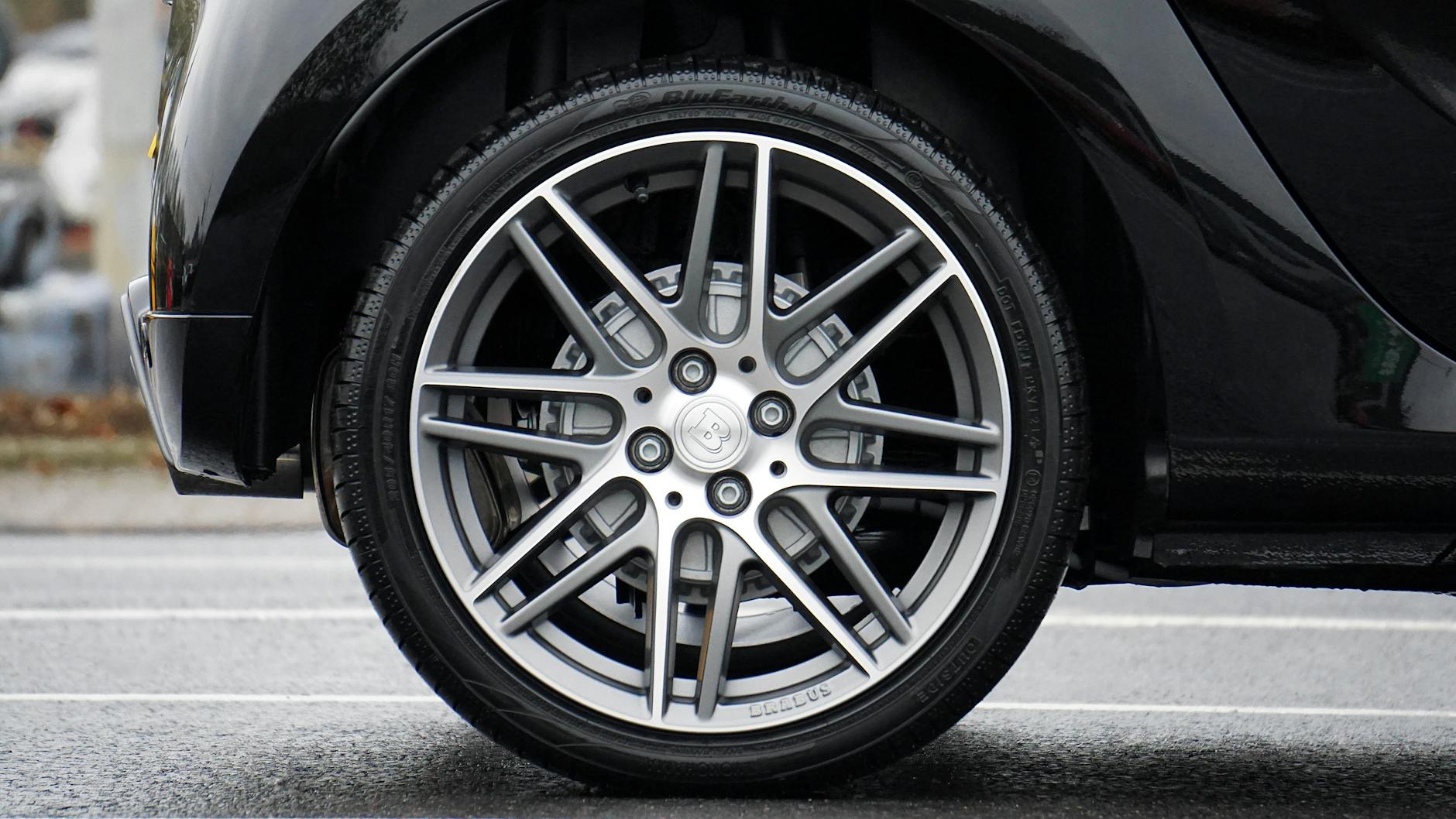
24 Inch Forged Wheels: The Complete Guide

Running 24 inch forged wheels is not a casual decision. The diameter puts you in a category where fitment errors are expensive, tire options narrow, and the gap between a quality forging and a cheap cast knockoff becomes very visible — both on the scale and under hard use. Done right, a set of 24s on the right platform looks genuinely impressive and, with forged construction, doesn't cost you the rotational mass penalty you'd expect at that size. Done wrong, you're fighting rubbing issues, a harsh ride, and wheels that crack under load.
This guide covers the full picture: who actually runs 24 inch forged wheels and why, what the manufacturing differences mean at this diameter, how fitment works across the main platforms, what you should budget, and how to order without making the mistakes that send people back to square one.
Who Actually Runs 24 Inch Forged Wheels
The honest answer: mostly full-size trucks, large SUVs, and the occasional high-riding luxury crossover. Platforms like the Ford F-150, GMC Sierra 1500, Chevy Silverado 1500, Ram 1500, Escalade, Navigator, and Yukon XL are the natural home for 24s. On a truck with a 3–4 inch level or lift, a 24x10 or 24x12 fills the wheel well in a way that looks proportional. Without any lift, a 24 can tuck tight enough to the fender that clearance becomes a real conversation.
You'll also see 24 inch forged wheels on the Cadillac Escalade ESV and the Lincoln Navigator L — longer wheelbases give you more latitude because the fender geometry is less aggressive. The Ram 1500 TRX is a special case: the stock wheel well is massive, but the offset requirements are strict, so running 24s there takes careful math.
Sports cars and performance sedans essentially never run 24s. A BMW M5 or Porsche 911 maxes out at 21–22 inches before you start compromising structural integrity of the tire sidewall and losing the slip angle behavior those suspension geometries depend on. If someone is trying to sell you 24 inch wheels for a Stinger GT or a Charger, they're not thinking about how that car actually works.
Why Forged Construction Matters More at 24 Inches
At 20 inches, a well-made cast wheel is heavy but acceptable for a daily driver. At 24 inches, the diameter means the barrel walls and spokes are spanning a significantly larger envelope, and a cast pour introduces porosity and inconsistent grain structure that compounds as size increases. A cast 24-inch wheel typically weighs 32–40 lbs per corner depending on design. A forged 24-inch wheel in the same design range runs 24–30 lbs. That 8–12 lb difference per wheel — 32–48 lbs total — is entirely unsprung rotational mass, which directly affects braking distance, suspension response, and long-term hub bearing wear.
Forging works by pressing a heated aluminum billet under thousands of tons of force, aligning the grain structure directionally and eliminating the porosity you get from casting. The result is a wheel that's denser where it needs to be and can be machined thinner everywhere else. At 24 inches, that tradeoff is the entire argument for forged: you get the visual size without the dead weight.
Flow-formed wheels sit between cast and fully forged. The hub is cast and then the barrel is spun under pressure, which does improve barrel strength meaningfully. For 24 inch applications where budget is a constraint, a quality flow-formed wheel is a legitimate option — but it won't match a full forging's strength-to-weight ratio, and on a heavy truck that sees any real use, you'll feel the difference.
For a detailed comparison of the two processes, the piece on flow formed vs forged wheels breaks it down practically.
Fitment Reality at 24 Inches
Width and Offset
For full-size trucks, the most common 24 inch widths are 10 inches and 12 inches. A 24x10 with a 0mm to +25mm offset is the standard fitment for leveled half-tons — it fills the wheel well without needing a spacer or an aggressive poke. A 24x12 with a negative offset (-44mm is common) is the choice when you want significant lip and a more aggressive stance, typically paired with a 4-6 inch lift.
The offset mistake people make most often is copying a fitment they saw on Instagram without accounting for the fact that the other truck may have a different cab-to-axle ratio, different control arm geometry, or a spacer they didn't mention. A 24x12 at -44mm on a leveled F-150 SuperCrew will likely rub the lower control arm at full lock without a lift. On a 4-inch lifted Silverado 1500, the same wheel clears cleanly. Context matters every time.
Bolt Pattern and Hub Bore
Most American full-size trucks run either 6x135 (Ford F-150, Expedition) or 6x139.7 (GM trucks, Ram 1500, Toyota Tundra). The Escalade uses 6x139.7. These bolt patterns are well-supported by 24 inch forged wheel manufacturers because the demand is there.
Hub bore is where people cut corners and pay for it. Ford F-150 hub bore is 87.1mm. GM 1500 trucks are 78.1mm. Ram 1500 is 71.5mm. A wheel with a larger hub bore and a cheap plastic hub-centric ring works fine for the first few months, but under load cycles it can introduce a vibration that no amount of balancing fixes. Ordering a wheel with the correct hub bore machined in — which a custom forged manufacturer does as standard — eliminates that entirely.
Tire Sizing
A 24x10 wheel takes a 305/35R24 or 295/35R24 as the most common fitment. A 24x12 typically runs a 33x12.5R24 or a 305/30R24 depending on whether you want the LT metric look or a more performance-oriented profile. Ride quality at 24 inches is always a compromise — the sidewall is short, full stop. If you're running these on a truck that sees unpaved roads regularly, you're going to feel every expansion joint.
Construction Options: 1-Piece, 2-Piece, and 3-Piece
At 24 inches, all three construction types are viable, but they serve different purposes.
A 1-piece forged monoblock is the lightest and structurally simplest option. There are no fasteners, no barrel-to-center joints, and no risk of the assembly loosening. For a truck that sees actual use — towing, off-road, load cycles — a 1-piece forged 24 is the right call. The design limitations are real (you can't mix finishes on center vs. barrel), but for most truck applications the aesthetic options within a monoblock are plenty. More background on the construction is in the 1 piece forged wheels guide.
A 2-piece forged wheel pairs a forged center with a spun or forged barrel, bolted together. This opens up a wider range of depth and width combinations without the tooling complexity of a single-piece design, and you can run different finishes on center and barrel. For custom 24s where someone wants a polished lip with a brushed center, this is the route. Weight is slightly higher than a comparable monoblock due to the hardware and additional material at the join. The 2 piece forged wheels guide covers the tradeoffs in detail.
3-piece forged wheels — forged center, inner barrel, outer barrel — are the ultimate expression of customization. You can tune the width in 5mm increments, mix finishes freely, and get a level of concavity that's difficult to achieve in a 1-piece. The weight penalty is real, and at 24 inches you're already managing mass, so 3-piece is typically the choice when aesthetics drive the decision more than outright performance. Details on construction in the 3 piece forged wheels guide.
What Concavity Looks Like at 24 Inches
At this diameter, even a modest concave profile — say 30–40mm of dish — reads as dramatic because the overall wheel face is so large. Running a 24x12 with a deep concave center and a high-polish lip on a lifted Silverado produces the kind of fitment that stops people in parking lots. But that depth requires the offset math to work: a deeply concave 24x12 with a -50mm offset needs adequate fender clearance both at the lip side and on the inner barrel side toward the brake caliper.
For trucks running big brake kits — Wilwood 6-piston setups are popular on the F-150 — you need to confirm caliper clearance before ordering. A reputable custom forged wheel manufacturer will ask for your caliper dimensions during the order process. If they don't ask, that's a warning sign.
More on this in the dedicated piece on deep concave wheels.
Price: What 24 Inch Forged Wheels Actually Cost
Legacy forged wheel brands — HRE, Vossen Forged, ADV.1 — price their 24 inch sets at $8,000–$15,000 depending on construction and finish. You're paying for brand equity and the retail markup that comes with it.
The reality is that the manufacturing process — billet aluminum, CNC machining, heat treatment — doesn't cost what those brands charge. The same OEM forging infrastructure that supplies Tier 1 automotive manufacturers produces high-quality forged wheels at a fraction of legacy brand pricing. ForgedToFit operates through exactly that kind of 15-year OEM partner relationship. A set of custom 24 inch forged wheels through ForgedToFit typically lands 50–70% below what you'd pay for a comparable HRE or ADV.1 set, with a 5-year warranty covering structural defects.
For a broader look at what drives forged wheel pricing and where money is actually well spent, the forged wheels for sale guide is worth reading before you commit.
The Design and Order Process
Ordering 24 inch forged wheels custom isn't like picking a size off a shelf. The process matters, and knowing what to expect prevents delays.
Step 1: Spec your fitment precisely. Diameter (24 inches), width (10 or 12 is most common), bolt pattern (confirm with your VIN if you're unsure), hub bore (match exactly), offset (calculated based on your lift, tire width, and fender clearance), and center bore depth if you're running a big brake kit.
Step 2: Choose your design. You can select from existing designs in a catalog or upload a custom design — a sketch, a render, a reference photo. The ForgedToFit team produces a 3D CAD rendering before anything goes to the forge, so you can see the exact profile, spoke geometry, and finish before approving production.
Step 3: Confirm the CAD. This is the stage most buyers rush and then regret. Take the time to review the rendering against your actual vehicle photos. Check the depth of concavity against your caliper clearance spec. Confirm the lip width looks right for your intended stance.
Step 4: Production and shipping. Forged wheels built to order take longer than pulling stock wheels off a warehouse shelf. Budget 6–10 weeks for production. Direct-to-customer shipping means no distributor markup and the wheels arrive packaged for their specific geometry.
If you want to go deeper on the design-your-own side of the process, there's a full walkthrough at build your own forged wheels.
Common Mistakes With 24 Inch Forged Wheels
The single most common mistake is ordering based on wheel diameter alone and treating offset as an afterthought. At 24 inches, a 5mm offset error is the difference between a clean fitment and a wheel that rubs on the lower control arm at full steering lock. Get the offset right first — everything else follows.
The second mistake is prioritizing the heaviest, most aggressive design without checking tire availability. A 24x14 at -76mm looks insane on paper. Finding a quality performance tire in 305/25R24 that isn't a budget Chinese brand is a real problem. Spec the tire first, then design the wheel around it.
Third: ignoring load rating. Trucks tow things. A 24 inch forged wheel on an F-150 that regularly pulls a 10,000 lb trailer needs a load rating that matches. Full forged construction handles this well; cheap cast wheels at 24 inches do not.
For a broader look at what separates good forged wheel purchases from costly ones, the guide on how to buy forged wheels online covers the due diligence process.
Finish Options Worth Knowing
At 24 inches, finish reads differently than on a 20-inch wheel simply because there's more surface area. A gloss black center with a diamond-cut lip has strong visual contrast at this size. Brushed titanium is increasingly popular on the luxury truck segment — it ages well and hides minor scratches better than polished finishes. Matte finishes don't show brake dust and road grime as much, which matters more on a truck that sees dirt.
Chrome at 24 inches is a specific aesthetic choice. It's heavy (chrome plating adds meaningful weight to an already large wheel), it requires more maintenance than painted finishes, and it reads as a very particular style. It's not wrong if that's what you're going for, but it's worth knowing the tradeoffs before speccing it. The custom chrome wheels guide covers this in detail.
Brands and the Market Landscape
The 24 inch forged wheel market is dominated by a handful of established names — Forgiato, DUB Forged, Lexani Forged on the styling-focused side, and HRE, Brixton Forged, and ADV.1 at the more engineering-focused premium end. The pricing spread between those camps is enormous, and the manufacturing quality difference is smaller than the price gap implies.
For an overview of where established forged wheel brands actually stand, the forged wheels brands guide is a useful reference. The short version: at 24 inches, the OEM forging-partner model that ForgedToFit operates under delivers comparable or superior metallurgy to most of the named brands at a fraction of the price — and with fully custom specs built around your exact vehicle rather than adapted from a catalog size.
Trucks Are the Right Application — Know Your Platform
If you're speccing 24 inch forged wheels for a truck, the platform-specific fitment guides are worth reading alongside this one. The aftermarket truck wheels guide covers the general considerations, and platform-specific pieces for the F-150 and Tacoma are available if you need model-specific fitment data.
For truck owners who want to go custom — specific finish, specific spoke count, specific depth — the custom truck wheels guide walks through the full ordering process with truck-specific fitment priorities.
Frequently asked questions
What vehicles actually fit 24 inch forged wheels?
Full-size trucks and large SUVs are the right application: Ford F-150, Chevy Silverado 1500, GMC Sierra 1500, Ram 1500, Cadillac Escalade, Lincoln Navigator, and Yukon XL are the most common platforms. Sports cars and performance sedans top out at 21–22 inches before sidewall and handling characteristics become a problem.
How much do 24 inch forged wheels weigh compared to cast?
A cast 24-inch wheel typically weighs 32–40 lbs. A comparable forged 24-inch wheel runs 24–30 lbs. That's 8–12 lbs per corner — up to 48 lbs total — in unsprung rotational mass removed, which improves braking, suspension response, and long-term bearing wear.
What offset should I run on 24 inch wheels for a leveled F-150?
For a leveled (not lifted) F-150, a 24x10 at 0mm to +25mm offset is the standard fitment that clears the lower control arm and fills the wheel well cleanly. A 24x12 at negative offset typically needs at least a 4-inch lift to clear at full steering lock without rubbing.
How long does it take to get custom 24 inch forged wheels made?
Budget 6–10 weeks for production. Custom forged wheels are built to your exact specs — not pulled from a warehouse — so the timeline reflects actual manufacturing, heat treatment, CNC machining, and finishing. A 3D CAD review stage happens before production starts, which adds a few days but prevents costly errors.
Are 24 inch forged wheels worth the cost over cast?
For trucks that tow, carry load, or see regular driving, yes. The weight savings are real, the structural integrity is higher, and a quality forged wheel under load cycles will outlast a cast equivalent. The cost gap is smaller than it used to be — OEM forging partnerships like ForgedToFit's bring forged pricing to 50–70% below legacy brands.
What tire sizes work with 24 inch wheels?
On a 24x10, the most common fitments are 305/35R24 and 295/35R24. On a 24x12, 33x12.5R24 (LT sizing) or 305/30R24 are standard. Tire selection at 24 inches is narrower than at 20–22 inches, so confirm availability in your preferred brand before finalizing wheel width.