Custom Wheels Near Me: Why Local Isn't the Best Option

The phrase "custom wheels near me" gets typed into Google millions of times a year. The intent is completely reasonable — you want wheels that fit your car, look the way you want, and don't require a three-month wait from some mysterious overseas operation. But the search almost always leads to disappointment: a few local shops with a wall of catalog samples, a salesperson who knows three bolt patterns, and a rack of mass-cast wheels dressed up as "custom" because you can pick a color.
That's not custom. That's inventory.
Real custom wheels — spec'd to your exact offset, diameter, width, finish, and face design — don't exist on a shelf at your local tire shop. They get made to order. And once you understand how that process actually works, the idea of buying locally starts to matter a lot less.
What "Custom" Actually Means in the Wheel World
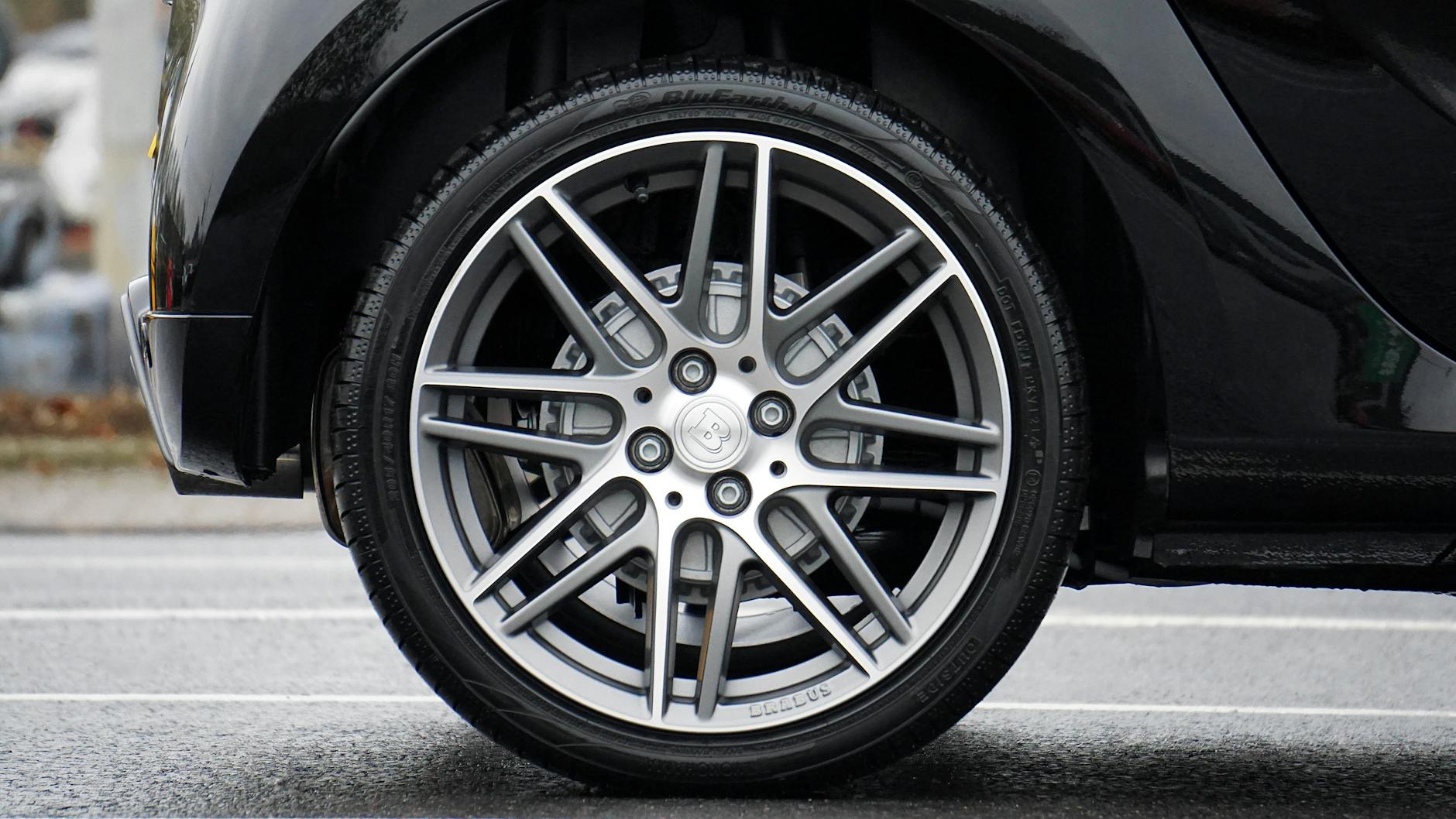
The word gets abused constantly. Walk into most shops and "custom" means choosing between five designs in two finishes, maybe with a painted lip if you're lucky. The wheels themselves are cast in bulk in a generic size, then warehoused until someone buys them.
True custom wheel production involves:
- A specific diameter and width chosen for your exact fitment (not whatever's closest on the shelf)
- Offset dialed in to match your suspension geometry and desired stance
- Bolt pattern matched to your hub — or dual-drilled if you're running two platforms
- Face design either selected from a catalog or designed from scratch
- Finish chosen from a real range: brushed, polished, matte, gloss, two-tone, candy, or custom color-matched
For a Mustang GT running 305s out back, that might mean a 20x11 with a +25mm offset in a staggered setup — something almost no local shop carries in stock. For an F30 335i that needs to clear factory M Sport brakes with a +35mm offset in 18x9.5, same story. The fitment math is specific, and "close enough" costs you either a spacer stack or a rub problem.
Custom wheels done right start with your car's actual specs, not what happens to be on the shelf.
Why Local Shops Can't Deliver What You Want
Local wheel shops operate on inventory economics. They buy what sells in volume — 18x8 and 18x9 in 5x114.3 and 5x120, mostly — because those cover the most popular platforms. Anything outside that sweet spot gets special-ordered from a distributor, which means you're still waiting weeks, you're still paying the shop's markup on top of the distributor's markup, and you're still limited to whatever the distributor stocks.
The actual manufacturing is happening overseas regardless. The difference is whether there are two or three middlemen between the factory and your car.
Most local shops also can't do 3D CAD verification of your fitment. They'll reference a catalog spec sheet, maybe use a fitment guide app, and tell you "that should work." If it doesn't — if the barrel clips your inner fender liner at full lock or the center cap sits proud against your caliper — you're the one absorbing that cost.
Beyond fitment, the quality tier at most local shops is cast aluminum. Cast wheels are poured molten into a mold, which leaves a grain structure with microscopic porosity. They're heavier and less strong per pound than forged alternatives. For a daily driver on stock suspension, this may not matter to you. For anyone who actually cares about unsprung weight, track use, or longevity, it absolutely does. The difference between cast and forged isn't marketing — it's material science. Cast vs forged wheels comes down to grain structure, tensile strength, and weight, and forged wins on all three.
The Direct-Order Alternative — How It Actually Works
ForgedToFit operates the opposite way a local shop does. There's no inventory to move, no shelf space to justify, no distributor margin stacked on top of retail markup. Wheels are manufactured to your exact spec through a 15-year OEM forging partner, then shipped direct.
The process is straightforward:
Step 1: Design selection or upload. Browse existing designs or submit your own. If you have a sketch, a reference image, or a very specific idea about spoke shape and face depth, that can be translated into a workable design.
Step 2: Spec your fitment. Diameter, width, offset, bolt pattern, center bore, finish. If you're not sure what offset your car needs, that conversation happens at the quote stage — not after you've already paid.
Step 3: 3D CAD verification. Before anything gets manufactured, the design gets rendered in CAD against your fitment specs. You can see exactly how the wheel will sit, how the face will look, and confirm clearances before production begins.
Step 4: Manufacture and ship. Forged or flow-formed, depending on what you've spec'd. Backed by a 5-year warranty.
The pricing ends up 50–70% less than legacy forged brands like HRE, Vossen Forged, or BBS — not because quality is compromised, but because there are no showrooms, no brand tax, no middlemen. The manufacturing quality is identical because it's the same OEM process used for premium OEM and aftermarket production.
Forged vs. Flow-Formed: What You're Choosing Between
If you've landed here from a "custom wheels near me" search, you may not have encountered the flow-formed vs. forged distinction yet. It matters.
Forged monoblock wheels start as a solid billet of aluminum alloy, get pressed under enormous hydraulic force (upward of 10,000 tons for a full forging cycle), then machined to final shape. The result is a wheel with the highest possible strength-to-weight ratio, extremely tight tolerances, and a grain structure that runs continuously through the material rather than stopping at a cast void. A forged 19x9.5 wheel for a BMW M3 application can weigh as little as 19–21 lbs depending on design — meaningfully less than a comparable cast unit.
Flow-formed (also called flow-forged or rotary-forged) starts as a cast blank but undergoes a secondary process where the barrel is spun under pressure at high temperature, stretching and aligning the aluminum grain structure along the barrel wall. The barrel ends up with properties close to forged, at a lower cost than full monoblock forging. A flow-formed wheel in 20x10 will typically weigh 2–5 lbs less than an equivalent cast unit and handle stress cycles significantly better. For daily street use on a Mustang, Model 3, or G37, flow-formed hits a very practical performance-per-dollar target. See the full breakdown in our flow forged wheels guide.
The choice between them usually comes down to intended use and budget. Track car or high-power build: forged monoblock. Street performance or enthusiast daily: flow-formed is the sensible call and still dramatically better than cast.
Fitment: The Most Important Variable Nobody Explains Clearly
Most wheel buying mistakes come from fitment errors, not aesthetic ones. And this is where local shops fail the most — because fitment isn't just bolt pattern and diameter.
Offset is the distance from the wheel's centerline to the hub mounting face, measured in millimeters. A higher positive offset (like +45mm) pushes the face inward, tucking the wheel under the fender. A lower offset (like +20mm) pushes it outward, giving you more lip and a more aggressive stance. On an F30, stock offset is typically around +36mm — running a +25mm changes the track width and requires you to confirm inner arch clearance at full suspension travel.
Center bore needs to match your hub diameter precisely, or you need a hub-centric ring. On a Toyota (60.1mm hub), a wheel bored to 72.5mm with a plastic ring is acceptable for street use but introduces vibration potential at high speed. Matching the bore exactly eliminates that entirely.
Brake clearance catches people constantly. A 6-piston Brembo on an S550 Mustang needs roughly 330mm of caliper clearance — not every 20-inch wheel clears it, particularly with deep concave faces. CAD verification catches this before production. A local shop guessing from a spec sheet does not.
For a deeper dive into offset math and how to spec it, the custom offset wheels guide covers the full methodology.
Finish and Design: What's Actually Achievable
Local shops show you a physical sample and tell you what they stock. A direct-order process isn't constrained by sample inventory.
Common finishes available through ForgedToFit:
- Brushed aluminum (directional or radial) — classic, ages gracefully, hides minor swirl marks
- Gloss or matte black — high-contrast against bright car colors, popular on GT cars and trucks
- Satin bronze / gold — strong on darker cars, particularly E-chassis BMWs and early Porsches
- Custom color match — if you have a RAL code, Pantone number, or want to match a paint color, that's achievable
- Two-tone — typically machined face with painted barrel or painted spokes with polished lip
- Chrome — available but worth understanding the tradeoffs before committing; custom chrome wheels covers the durability and maintenance considerations honestly
On the design side, the face profile matters as much as the finish. Concave faces with high lip depth look dramatically different than flat-face multi-spoke designs — and they behave differently structurally too. A deep concave 10-inch-wide wheel requires more material in the barrel to maintain strength. Understanding concave wheels before you order means you won't be surprised by the weight or lead time implications.
Platform-Specific Considerations
Different cars have genuinely different fitment constraints, and it's worth being specific.
BMW F30 335i: 5x120 bolt pattern, 72.5mm center bore, typical fitment target is 18x8.5 or 19x8.5 front and 19x9.5 rear for staggered, offset around +35–38mm front. Running under +30mm risks inner liner contact on lowered cars.
S550 Mustang GT: 5x114.3, 70.5mm bore, 20x10 front and 20x11 rear is the popular staggered spec, offset +35mm rear. The Brembo brake package on GT Performance/PP cars needs 330mm+ clearance — confirm this at order time.
Tesla Model 3: 5x114.3, 64.1mm bore. Weight is a meaningful factor here given the car's already high unsprung mass; flow-formed in 19 or 20 inch is the smart call. Aero considerations matter too — some faced designs noticeably affect range at highway speed.
F-150 / Silverado trucks: 6x135 or 6x139.7 depending on year and trim, large center bores (87.1mm for most F-150 applications). Trucks run large diameters (20–22 inch), heavy payloads, and need wheels rated for load. Cast wheels at the cheap end frequently crack under tow or payload stress. The truck custom wheels guide gets into load ratings specifically.
Why Warranty Matters More Than You Think
Most cast aftermarket wheels come with a 1-year warranty, often with carve-outs for road hazard, finish, and anything the manufacturer can attribute to "installation error." The 5-year warranty on ForgedToFit wheels is meaningful precisely because forged and flow-formed construction rarely fails in normal use — the warranty reflects actual confidence in the product.
Local shops often can't warranty wheels beyond what the brand covers, and if that brand is a gray-market import with no real US presence, the warranty is theater. Buying from a direct-to-consumer manufacturer with a clear warranty process removes that ambiguity entirely.
The Real Answer to "Custom Wheels Near Me"
If what you want is someone local to mount and balance your wheels, that's easy — any tire shop can do that. Mount-and-balance on a set of custom wheels is a 30-minute job; you don't need a specialty shop for it.
If what you actually want is wheels built to your exact spec, in the right fitment for your car, in a design and finish that doesn't look like everyone else's — that doesn't happen at a local shop. It happens through a direct-order process with a manufacturer who can machine your exact diameter, width, offset, and bore to spec before shipping them to your door.
The "near me" part of the search is really about trust and control. You want to be confident the wheels will fit, look right, and hold up. A 3D CAD design stage, a 5-year warranty, and a manufacturer relationship built on OEM-level forging achieves that more reliably than a local shop guessing from a fitment guide.
For everything you need to know about the full custom wheel ordering process, the custom wheels guide covers spec selection, design options, and what to expect from order to delivery.
Frequently asked questions
Can I get custom wheels built for any car, or only popular platforms?
Any car with a standard bolt pattern and known hub dimensions can be spec'd for custom wheels. Rare or unusual bolt patterns (like 5x130 on a Porsche or 5x112 on a VW/Audi) are entirely normal for custom forging — in fact, custom ordering is often the only way to get exactly what you want for less common platforms. You provide your car's specs; the wheels get built to match.
How long does a custom wheel order take compared to buying locally?
A local shop pulling in-stock wheels can hand them to you in a day. A custom forged or flow-formed order typically takes 4–8 weeks from design approval to delivery, depending on complexity and finish. That timeline is the tradeoff for getting exactly the right fitment, face design, and construction — instead of whatever happens to be on the shelf.
What's the difference between flow-formed and forged wheels in terms of price and performance?
Flow-formed wheels go through a rotary pressure process that strengthens the barrel significantly compared to standard casting. They cost less than full monoblock forged wheels but offer better weight and strength than cast. For street and spirited road use, flow-formed is an excellent value. Full forged monoblock is the choice for track use, high-power builds, or when you want the absolute lightest possible wheel.
Do I need to bring my car somewhere for fitment verification, or is it done remotely?
It's done remotely using your car's known specifications. At the quote stage, you provide your year, make, model, and any relevant modifications (lowering springs, big brake kit, fender work). That data, combined with 3D CAD modeling, verifies clearances before production starts. You don't need to visit a shop — the verification process is more accurate than what most local shops do in person.
Can I use the same set of custom wheels on two different cars?
Yes, if the bolt patterns and center bores match — or if you use hub-centric rings to adapt the bore. Dual-drilled wheels (drilled for two different bolt patterns) are also an option. Common pairings are 5x114.3 and 5x100, which covers a wide range of Japanese makes. Discuss this at the quote stage and the wheels can be spec'd to work across both platforms.
Is a 5-year warranty standard for forged custom wheels?
Not industry-wide. Many aftermarket wheel brands offer 1-year structural warranties, sometimes with significant carve-outs. ForgedToFit's 5-year warranty reflects the actual durability of forged and flow-formed construction — these wheels don't fail under normal use. It also reflects a direct manufacturer relationship rather than passing warranty responsibility through a distributor chain.