Design Your Own Wheels Online: The Complete Guide

Designing your own wheels online is no longer just for OEM engineers and race teams with deep pockets. The tooling, the CAD software, and the forging capacity that used to sit behind closed doors at Vossen or HRE are now accessible to anyone willing to spend a few minutes getting their specs right. The result: a set of wheels built specifically for your car, your fitment, your finish — at a price that doesn't require financing.
But "design your own" means something very different depending on where you're shopping. Some configurators let you pick a spoke color and call it a day. Others — the ones actually worth your time — hand you control over diameter, width, offset, center bore, spoke geometry, face profile, and finish, then hand those specs to engineers before a gram of aluminum moves. This guide covers the real process, the real decisions, and where people go wrong.
What "Design Your Own Wheels" Actually Means
There are two distinct things happening when someone searches for a wheel configurator. The first is a visualizer — a tool that lets you preview how a catalog wheel looks on your car. Useful for picking a style, but you're still buying a shelf product that may or may not fit your hub, your fender clearance, or your caliper.
The second is a true custom design tool — you're defining the actual engineering parameters of a wheel that will be manufactured to order. That's what this guide is really about. ForgedToFit's process sits in the second category: you browse existing designs or upload your own, we generate a quote, produce a 3D CAD rendering for your approval, and then the wheel goes into production.
The distinction matters because fitment on a custom-ordered wheel is exact. A Mustang GT running a 305/30R20 on the rear needs a different offset than one running a 275/40R20. A C8 Corvette's enormous Brembo calipers need specific caliper clearance built into the barrel design. Catalog wheels make compromises. Designed-to-order wheels don't have to.
The Specs You're Actually Configuring
Diameter and Width
Most modern performance platforms have moved to 19" or 20" front and rear as a baseline, with plenty running staggered setups — wider in the rear, same diameter front and back. An F30 335i typically runs 18×8.5 front / 18×9.5 rear from BMW; most owners upgrading to forged go 19×8.5 / 19×9.5 or push to a 19×10 rear if they want more tire volume. A Model 3 Performance runs 20" from the factory; aftermarket replacements usually stay at 20" but play with width to fit a wider tire.
Width isn't just about aesthetics. Every additional inch of width adds rotational mass if the design isn't engineered around it. A forged wheel handles this better than cast because the aluminum's grain structure allows thinner sections without sacrificing strength — so a forged 10" wide wheel can actually weigh less than a cast 9" wide wheel.
Offset and Backspacing
This is where most people make expensive mistakes. Offset is the distance from the wheel's mounting face to its centerline. A high positive offset tucks the wheel inward; a low or negative offset pushes it out toward the fender. On a stock F80 M3, the rear runs a +20mm offset; going to +15mm pushes the wheel about 5mm further out — which sounds minor until you're checking against your arch liner at full compression.
If you want a flush or slightly poked fitment, this is the number to dial in precisely. Custom offset wheels let you hit a target like +22mm exactly rather than settling for the nearest catalog option at +25mm or +18mm. For a detailed breakdown of how offset affects stance and clearance, see our guide on custom offset wheels.
Center Bore
This one gets overlooked until the wheels show up. BMW uses a 72.6mm hub bore; most aftermarket wheels are drilled to 72.6mm or come with hub-centric rings to adapt. But if you're ordering custom, you specify 72.6mm from the start — no ring, no wobble at speed, hub-centric fit from day one. Porsche 911s use 71.6mm. Tesla Model 3 uses 64.1mm. These aren't interchangeable, and hub rings, while functional, are a compromise that a custom order eliminates entirely.
Bolt Pattern
5×114.3 covers the majority of Japanese and American performance cars — Mustang GT, Camaro SS, 370Z, most Toyotas. European cars mostly split between 5×112 (BMW, Mercedes, Audi, VW) and 5×120 (older BMWs, some Land Rovers). The Corvette C8 runs 5×120. Get this wrong and the wheels literally won't bolt on, so this is non-negotiable to confirm before anything goes to CAD.
Face Profile: Flat, Concave, Deep Concave
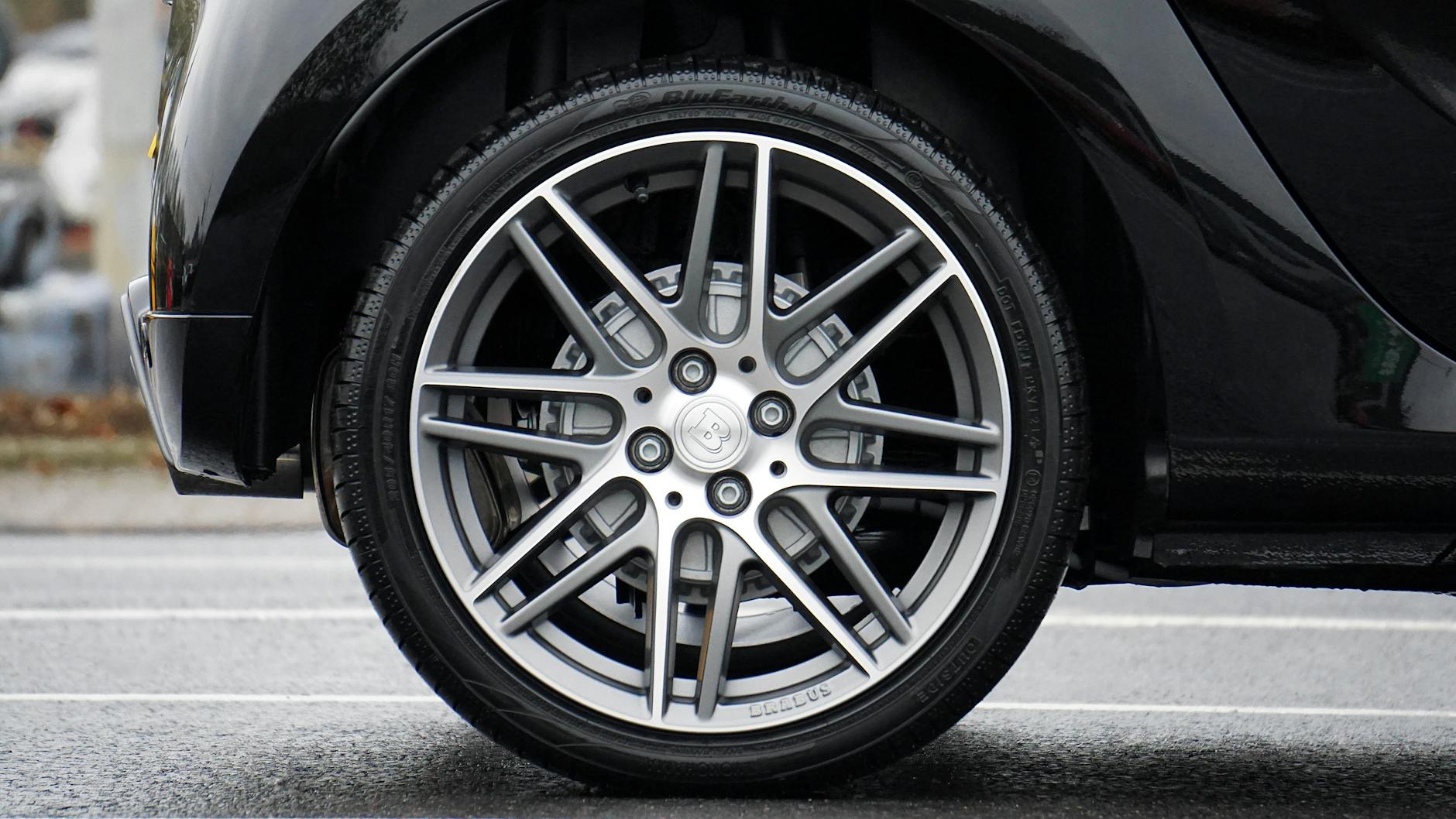
This is the biggest aesthetic decision you'll make. A flat-face wheel looks clean and modern on a track-oriented build. A shallow concave — say, 15mm of dish — adds dimension without being aggressive. Deep concave profiles, where the spokes bow back dramatically toward the barrel, require more engineering because the spoke sections are loaded differently under cornering forces. They also tend to look best on wider fitments — a 9.5" wide wheel with deep concave looks intentional; the same profile on a 7.5" wide wheel can look awkward.
For more on this decision, see our deep dive on concave wheels.
Spoke Count and Style
Five-spoke designs are the most structurally efficient per unit of material — the geometry distributes load evenly and allows for lighter section weights. Ten-spoke and multi-spoke designs tend to look more substantial and are popular on luxury-oriented builds (think AMG multi-spoke). Split-spoke and Y-spoke designs are common on sport builds because they showcase the concave face and give a tire an aggressive sidewall frame.
If you're uploading your own design, the engineering review will check that your spoke geometry can handle the load cases for your vehicle's weight and your intended use. A 900kg Lotus needs different structural margins than a 2,200kg Escalade.
Finishes: More Decision Than You Think
Gloss black is the most popular choice and the most forgiving to keep clean. Brushed or machined finishes look exceptional fresh off the lathe but show water spots and brake dust more readily. Two-tone machined — where the spoke face is CNC'd to a high polish and the barrel and lip are painted — is probably the most popular combo among enthusiasts right now because it gives you depth without committing to full chrome maintenance.
Chrome is a special category. Real chrome plating adds cost, requires a base coat build-up, and is notoriously difficult to repair if curbed. Most people who think they want chrome are actually after a bright silver brushed finish or a polished lip, which is significantly more practical. If chrome is your goal, read custom chrome wheels before committing.
Powder coat is the most durable painted finish by a wide margin — chip-resistant, fade-resistant, and available in virtually any RAL color. If you want a unique color matched to your car's body (that's increasingly popular on Porsches and BMWs), powder coat is how it's done.
The Manufacturing Behind the Design
When you design your own wheels online through ForgedToFit, the wheel is forged — not cast. That difference is structural. A cast wheel is poured as molten aluminum into a mold; a forged wheel starts as a solid aluminum billet that's pressed under 5,000–10,000 tons of force, aligning the grain structure of the alloy and eliminating porosity. The result is significantly stronger per unit of weight.
Flow-forming is used on some of our designs — a hybrid process where the barrel is rolled under pressure after initial forging, stretching the aluminum and increasing its tensile strength. It's the reason a flow-formed wheel can match a cast wheel's strength at 20–30% less weight. For a full technical breakdown, see our guide on flow forged wheels.
Legacy forged wheel brands — HRE, Forgeline, BBS — charge $800–$2,000+ per wheel partly because of brand equity and partly because they're operating smaller production runs. ForgedToFit works through a 15-year OEM forging partner running high-volume production, which is how we deliver the same forged quality at 50–70% of those prices with a 5-year warranty.
How the Online Design Process Works at ForgedToFit
Step 1: Choose or upload a design. Browse the catalog for an existing spoke pattern you like, or come with a sketch, a reference image, or a CAD file. If you have a specific design in mind that you've seen on an IG build or a show car, bring it — the engineering team can work from reference.
Step 2: Specify your fitment. Diameter, width, offset, center bore, bolt pattern. If you don't know all of these for your car, the team can look them up — you just need the year, make, model, and trim, plus your tire size if you're targeting a specific fitment.
Step 3: Get a quote. Based on your specs and design complexity, you'll receive a quote. No surprises later — the price at quote is the price you pay.
Step 4: Review the 3D CAD. Before any material is touched, you see a full 3D rendering of exactly what's being made. Spoke profile, concave depth, lip width, finish — all confirmed before production. Most customers approve on first pass; adjustments are common and expected.
Step 5: Production and shipping. Manufacturing takes 6–8 weeks depending on complexity and finish. Wheels ship direct — no distributor markup, no dealer margin.
Platform-Specific Considerations
BMW F30/F80/F82: The M3/M4 platforms have enormous front calipers (6-piston Brembos on the Competition) that need at least 18" diameter minimum and careful caliper clearance design. Most F80 owners run 19×9 front / 19×10 rear with a staggered setup. Offset around +28–32mm front, +18–22mm rear is common for a flush aggressive look.
Mustang GT/GT500: The S550 and S650 Mustangs run 5×114.3 and have relatively straightforward caliper clearance needs on the GT. The Shelby GT500's front Brembo 6-piston is more demanding — 20" minimum diameter and a spoke design that doesn't conflict with the caliper body. A 20×10.5 front / 20×11 rear is a popular combo on the GT500 with square tire setup.
Tesla Model 3: Aerodynamic drag matters more here than on most platforms because wheel drag directly affects range. Open-spoke designs with good aerodynamic efficiency — fewer, wider spokes rather than many thin ones — are the smarter pick. A 20×8.5 all around with a mild concave profile and a matte finish is a popular and practical choice.
Toyota Tacoma / Trucks: Trucks need load rating. A 6-lug Tacoma running 285/70R17 on the trail needs a wheel rated for the vehicle's GVWR, not just its curb weight. This is why the manufacturing spec review matters — a custom truck wheel built right will be rated appropriately, not just cosmetically specced.
Common Mistakes When Designing Custom Wheels
Ordering diameter without checking overall diameter. You might want 22" wheels on your truck, but if your tire sidewall drops from 35" overall to 30" overall, you've changed your gearing, your speedo accuracy, and potentially your suspension geometry.
Ignoring brake clearance until after the design is approved. The caliper body, the rotor hat, and sometimes the dust shield all need clearance from the spoke structure. This is checked during the engineering review, but if you come with a design that has a deep inset spoke, expect the team to ask about your brake setup.
Choosing finish based on photos alone. A gloss black wheel in a studio photo looks different in direct sunlight at a car show and different again after 3,000 miles of brake dust. Ask for finish samples or references before committing.
Underestimating lead time. Six to eight weeks feels long until you're trying to have the car ready for a specific event. Order early.
Why Online Is the Right Way to Buy Custom Wheels
A local shop that "does custom wheels" almost always means they order from a catalog and install them. True custom — where your specs drive manufacturing — requires direct-to-forge relationships that very few retailers have. Online ordering also creates a written record: your specs, your approved CAD, your quote. There's no ambiguity when the wheels arrive.
For anyone skeptical about buying wheels without touching them first, the 3D CAD approval step exists precisely to close that gap. You're not buying on faith — you're approving a technical drawing of exactly what's being made. That's more certainty than buying a catalog wheel you've only seen on a website.
If you're comparing this to buying off-the-shelf aftermarket wheels, the custom-built route adds 6–8 weeks and a design conversation, but removes every fitment compromise and gives you a wheel that's actually yours.
Anyone who's been through the process once rarely goes back to catalog shopping.
Frequently asked questions
How long does it take to design and receive custom wheels online?
The design and quote process usually takes 1–3 days. After you approve the 3D CAD rendering, manufacturing takes 6–8 weeks depending on the design complexity and finish chosen. Shipping is direct from the factory, typically adding 5–10 business days depending on your location.
Do I need to know my exact wheel specs before I start?
Not necessarily. You need your year, make, model, and trim — and your current or target tire size if you have a specific fitment in mind. The engineering team can pull the hub bore, bolt pattern, and recommended offset range from there. If you're doing a non-standard fitment (wider track, coilover drop, etc.), bring those details too.
Can I upload my own wheel design, or do I have to choose from existing options?
Both options work. You can browse the existing catalog and select a spoke pattern you like, or you can upload a sketch, a reference image, or a CAD file of your own design. The engineering team reviews any uploaded design for structural viability before quoting, which is standard practice — not every aesthetic idea translates cleanly to a structurally sound forging.
How is a forged custom wheel different from a cast aftermarket wheel?
Forged wheels start as a solid aluminum billet pressed under thousands of tons of force, which aligns the alloy's grain structure and eliminates porosity. Cast wheels are poured as molten aluminum into a mold, which leaves micro-voids and requires more material to achieve the same strength. The practical result: forged wheels are stronger, lighter, and more fatigue-resistant. For a daily-driven performance car, that difference is meaningful over time.
What if the wheels don't fit my car when they arrive?
Because the fitment specs — diameter, width, offset, center bore, bolt pattern — are confirmed in writing during the quote process and locked in before CAD is generated, a fitment mismatch is almost always a result of incorrect specs provided by the customer. Double-check your measurements against your actual vehicle before approving. If there's a manufacturing error, the 5-year warranty covers it.
Are custom-designed forged wheels street legal?
Yes. Forged wheels manufactured to your vehicle's load rating and diameter requirements are street legal in all 50 states. If you're in a market with specific TÜV or ADR certification requirements (Germany, Australia), mention this during the quote stage — some designs can be produced to meet those standards, and the engineering review will confirm what's possible for your spec.