Forged Wheels for Tesla: The Complete Guide

Tesla builds genuinely impressive cars. The wheels? Not so much. The aero covers hiding the Model 3's 18-inch stock rims exist for a reason — without them, the spoked casting underneath looks like it belongs on a rental Camry. And weight-wise, stock Tesla wheels are heavy for their size, which matters more on an EV than on almost any other vehicle. Forged wheels for Tesla aren't just an aesthetic upgrade; they're one of the few modifications that makes a measurable difference in real-world range, handling feel, and ride quality.
This guide covers why forged wheels are a uniquely good fit for Teslas, what the fitment specs look like across the model lineup, what to expect from the manufacturing process, and how to avoid the common mistakes people make when ordering aftermarket wheels for an EV.
Why Forged Wheels Make Particular Sense for EVs
On a gas-powered car, unsprung weight reduction is nice. On a Tesla, it's genuinely consequential. Every kilogram of rotating unsprung mass the car has to accelerate, brake, and steer over road imperfections costs energy twice — once to move the mass, once because the suspension has to work harder to keep the tire in contact with the road. Lighter wheels also reduce rotational inertia, which matters on a car with instant torque delivery. The Model 3 Performance accelerates hard enough that you can feel differences in wheel weight in the way the car hooks up.
Forged aluminum is roughly 20–25% stronger than cast aluminum at the same wall thickness, which means engineers can remove material and hit a lighter finished weight without sacrificing structural integrity. A properly designed forged 20-inch wheel for a Model S Plaid can weigh 10–12 lbs less per corner than the OEM casting. Across four corners, that's 40–48 lbs of unsprung weight gone. That's not trivial.
Range impact is harder to quantify because it depends on speed, tire choice, and driving style, but the physics are straightforward: less rotational mass = less energy to maintain speed. Real-world owners running lightweight forged wheels on Model 3s have reported 2–5% improvements in highway efficiency. That's not a marketing claim — it's physics.
For a deeper look at why the manufacturing process produces a stronger, lighter wheel, the comparison in cast vs forged wheels: what actually matters is worth reading before you buy.
Fitment Specs Across the Tesla Lineup
Tesla uses a 5×114.3 bolt pattern across the entire lineup — Model 3, Model Y, Model S, and Model X all share it. That's the same pattern as a huge range of Japanese and Korean vehicles, which means the aftermarket is wide. But bolt pattern is just the starting point.
Model 3
The Model 3 runs 18-inch wheels on the Standard Range and Long Range RWD, 19 inches on the Long Range AWD, and 20 inches on the Performance. The hub bore is 64.1mm — this is important because many wheels spec at 73.1mm (a common bore size), and if you're not using a hub-centric ring, you'll get vibration at highway speeds. A proper custom forged wheel for the Model 3 should be bored to 64.1mm from the start.
Offset on stock Model 3 wheels runs ET40–ET45 depending on the variant. Running too little offset (too much negative) pushes the wheel face outside the fender and can cause rubbing or TPMS sensor clearance issues. Running too much positive offset tucks the wheel too far in and can create brake caliper clearance problems. A safe custom range for most Model 3 builds is ET38–ET45, and you want to confirm caliper clearance on the 20-inch Performance calipers specifically — they're large.
For a complete breakdown of Model 3 aftermarket wheel options, specs, and sizing recommendations, see the Tesla Model 3 aftermarket wheels: the complete guide.
Model Y
The Model Y uses essentially the same fitment parameters as the Model 3 — 5×114.3, 64.1mm hub bore — but the vehicle is heavier (around 4,400 lbs vs. the Model 3's 3,900 lbs), which affects the load rating you need from your forged wheel. Stock Model Y wheels run 19 or 20 inches. The Performance variant's 21-inch wheels are large enough that some owners drop to 20 inches for a better tire selection and lower rolling resistance.
Cross-referencing the Tesla Model Y aftermarket wheels: the complete guide before finalizing your spec is worth the five minutes.
Model S and Model X
The Model S is where forged wheels make the most visual impact. The Plaid's 21-inch stock wheels look great but weigh around 28–30 lbs each — a good forged 21 can drop that to 18–21 lbs. The S uses 5×114.3 with a 64.1mm bore, and offset runs around ET38–ET45 depending on the generation. Older Model S (pre-2021 refresh) had slightly different rear spacing, so confirm your build year before ordering.
Model X fitment is similar but you're working around a heavier vehicle (5,000+ lbs) and Falcon Wing doors that limit wheel width at the rear. Stick to 9.5–10 inches wide at the rear and confirm your build-year-specific offset requirements.
For a full look at the S specifically, Tesla Model S aftermarket wheels: the complete guide covers the spec variations by year.
TPMS: Don't Overlook It
Tesla's TPMS sensors are integrated into the valve stem and are proprietary. They're not compatible with most generic TPMS sensors. When you buy forged wheels for a Tesla, you have two options: transfer your OEM sensors to the new wheels (requires a tire shop to carefully remove and reinstall them — they're fragile), or purchase Tesla-compatible aftermarket TPMS sensors. A few companies make direct-fit replacements at around $30–50 per sensor versus Tesla's $75+ each.
If you ignore TPMS entirely, you'll get a persistent warning on the instrument cluster and lose one of the safety systems Tesla uses during its driver-assist features. It's a small detail that catches people off guard post-install.
Aero vs. Open Face: The Range Trade-Off
Tesla's aero wheel covers on the Model 3 and Model Y aren't just a styling choice — they measurably reduce drag. Tesla claims about 1.3% reduction in power consumption with the covers on at highway speeds. If you're running forged wheels because you care about efficiency, removing the aero covers is a step backward aerodynamically, even if the wheels themselves are lighter.
The practical answer is that the weight savings from quality forged wheels outweigh the aero penalty at most real-world driving speeds (under 70 mph). Above 70 mph on sustained highway runs, it gets closer. Most Tesla owners who switch to forged wheels and care about range do so primarily for urban and mixed driving, where the unsprung weight reduction is the dominant factor anyway.
Some forged wheel designs for Tesla are specifically engineered with aerodynamic spoke geometry to minimize drag. Tight 5-spoke or Y-spoke patterns tend to be better than open multi-spoke designs from an aero standpoint — it's worth considering if range is your primary concern.
Flow Forged vs. Full Forged for Tesla
Not every "forged" wheel is forged the same way. Full monoblock forgings start as a solid aluminum billet that's pressed under massive tonnage into shape — strongest, lightest, most expensive. Flow forging (also called rotary forging or flow forming) uses a cast or forged blank for the center section and then spins and rolls the barrel under pressure, aligning the grain structure in the barrel specifically. This produces a barrel that's significantly stronger and lighter than a purely cast barrel, at a lower cost per wheel than full monoblock forging.
For a Tesla application, both approaches work well. A quality flow forged wheel will typically be 15–20% lighter than an equivalent cast wheel and plenty strong for road use, even on a 4,400-lb Model Y. A full monoblock forging will be lighter still and is the right choice if you're tracking the car or simply want the absolute best. The flow forged wheels: what they are and why they matter piece breaks down the process in detail.
For a direct comparison between the two construction methods, flow formed vs forged wheels: which is right for you? is a useful reference.
What Custom Forged Wheels for Tesla Actually Cost
This is where most buyers get surprised. Established forged wheel brands — HRE, Forgestar, Vossen Forged, ADV.1 — price their Tesla fitment wheels at $800–$2,500 per wheel. A set of four in a popular 20-inch size with custom finish can run $6,000–$10,000 before tires. That's real money on top of a vehicle you've already spent $50,000–$130,000 on.
The reason those prices exist is largely brand premium and dealer margin, not manufacturing cost. High-quality forged wheels can be produced at significantly lower cost when you cut the middlemen out and work directly with an OEM-grade forging facility. ForgedToFit operates through a 15-year OEM forging partner and sells direct, which is how the same caliber of forged aluminum wheel ends up at 50–70% less than legacy brands. A set of custom forged 20s for a Model 3 Performance, spec'd to your offset and finish preference, lands in a range that makes the upgrade genuinely accessible rather than aspirational.
The 5-year structural warranty matters here too. Stock Tesla wheels carry no meaningful aftermarket warranty, and a cracked casting from a pothole hit on a Model S running 21s is a $600+ OEM replacement per wheel. A forged wheel with a warranty changes that calculus.
Finish Options and What Works on Teslas
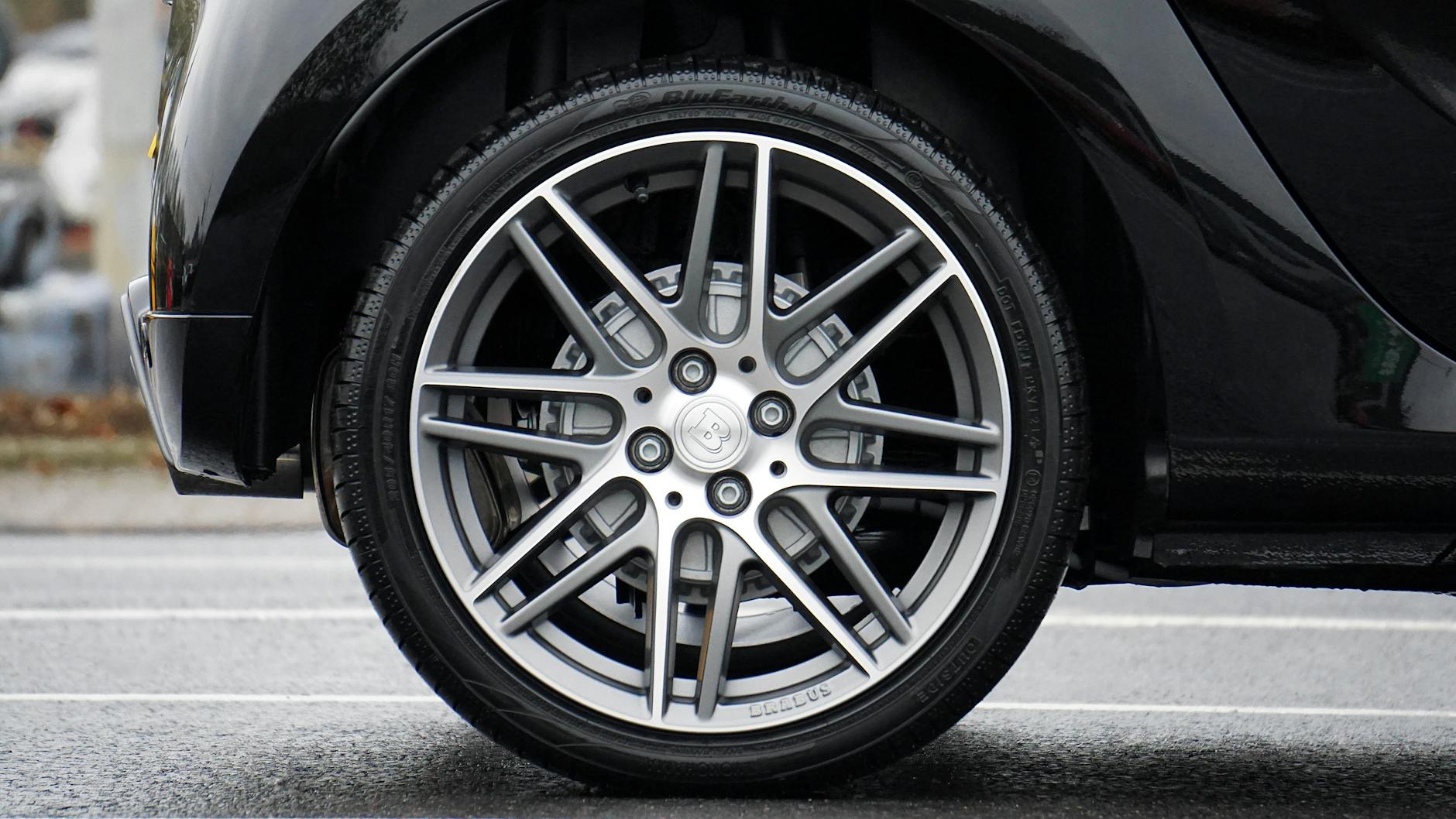
Tesla's exterior color palette leans clean — Pearl White, Midnight Silver, Solid Black, Deep Blue, Red. Gloss black wheels look good on white and silver cars but can disappear visually on black Teslas. Brushed or machined faces — particularly a dark gunmetal with a machined highlight — work well across most Tesla colors and show off the spoke geometry better than solid finishes.
Satin bronze has become genuinely popular on white Model Y Performance builds. It's distinct without being garish. On the Model S Plaid, a polished or satin silver forged wheel that references the OEM 21-inch arachnid spoke design but in a lighter construction is a common and effective approach.
Powder coat is more durable than painted finishes for daily-driven vehicles in areas where road salt is used. Anodizing offers excellent corrosion resistance and a clean look but limits color options. Liquid paint gives you the widest palette but requires more careful maintenance. For a daily-driven Tesla, powder coat or a quality liquid paint with a clear top coat are the practical choices.
The Ordering Process
Ordering custom forged wheels for a Tesla through ForgedToFit follows a straightforward path. You start with your vehicle's year, model, and variant to establish the baseline fitment — bolt pattern, hub bore, caliper clearance requirements. Then you select a design from the catalog or upload your own concept. A quote comes back with pricing based on size, construction method, and finish. Once approved, the team builds a 3D CAD model so you can confirm the design before anything gets manufactured. Production runs roughly 6–8 weeks from order confirmation, and wheels ship direct.
The CAD approval step is more important than it sounds. It's where you catch an offset that would put the wheel face too close to the lip, or confirm that the spoke count you chose actually clears the Model 3 Performance's front caliper. Seeing the design rendered in your specified finish on your specific vehicle before manufacturing starts is the difference between getting exactly what you want and discovering a problem after the fact.
For anyone still working through whether custom or catalog forged wheels are the right direction, custom forged wheels: the complete guide covers the full decision framework.
Common Mistakes to Avoid
Running the wrong hub bore is the most common fitment mistake. Tesla's 64.1mm bore is smaller than most wheels assume. Order with the correct bore or use proper hub-centric rings — not the thin plastic ones that compress under load, but machined aluminum rings.
Ignoring load ratings is a close second. A Model X Long Range weighs over 5,300 lbs. Each wheel needs to handle roughly 1,400 lbs of static load plus dynamic loading from acceleration, braking, and cornering. Cheap cast wheels often don't publish load ratings for a reason. A proper forged wheel spec sheet will show the load rating clearly.
Forgetting about tire pressure monitoring, as covered above, bites people post-install. Budget an extra $120–200 for a proper TPMS solution when you're pricing out the wheel set.
Finally, chasing the biggest diameter possible because it looks aggressive. A Model Y on 22-inch wheels looks planted, but you're now in very low-profile tire territory (235/30 or similar) that transmits every road imperfection directly to the suspension. The Model Y's suspension isn't tuned for that. 20 inches is the sweet spot for most Tesla applications — enough visual presence, enough tire sidewall to absorb road surface variation, and a much better tire selection at a lower cost per tire.
Frequently asked questions
What bolt pattern do Tesla vehicles use for aftermarket wheels?
All Tesla models — Model 3, Model Y, Model S, and Model X — use a 5×114.3 bolt pattern. The hub bore is 64.1mm, which is smaller than many aftermarket wheels assume, so confirm that spec or use machined aluminum hub-centric rings.
Do forged wheels actually improve Tesla range?
Yes, measurably so. Forged wheels are significantly lighter than cast equivalents, reducing unsprung rotational mass. Less energy is required to accelerate and maintain speed. Real-world owners have reported 2–5% highway efficiency gains, with the effect most pronounced in stop-and-go urban driving where constant acceleration cycles amplify the weight difference.
Can I transfer my Tesla's OEM TPMS sensors to new forged wheels?
Yes, but it requires care. Tesla's TPMS sensors are integrated into the valve stem and are fragile during removal. Have a tire shop with Tesla experience handle the transfer. Alternatively, purchase Tesla-compatible aftermarket TPMS sensors for around $30–50 each — they work with the car's native system and avoid the risk of damaging OEM units.
What size forged wheels are recommended for a Model 3 Performance?
The stock Model 3 Performance comes on 20-inch wheels, and that's the sweet spot for aftermarket forged fitment as well. It gives you enough tire sidewall to handle road imperfections without going into ultra-low-profile territory, and the tire selection at 20 inches is far better than at 21 or 22. Run an ET38–ET45 offset and confirm front caliper clearance — the Performance calipers are large.
How much do custom forged wheels for Tesla cost?
Legacy forged wheel brands charge $800–$2,500 per wheel for Tesla fitment, putting a set of four at $6,000–$10,000 before tires. ForgedToFit's direct-from-OEM-forging-partner model prices the same caliber of forged aluminum wheel at 50–70% less, with a 5-year structural warranty included.
Is flow forged good enough for a daily-driven Tesla, or do I need full monoblock forged?
Flow forged wheels are excellent for daily-driven Teslas. The barrel is pressure-formed to align the grain structure, making it significantly stronger and lighter than a cast barrel — more than sufficient for a road-driven Model Y or Model S. Full monoblock forged wheels are lighter still and the right call if you're tracking the car, but for street use, a quality flow forged wheel hits the best balance of weight, strength, and price.