Tesla Model Y Aftermarket Wheels: The Complete Guide

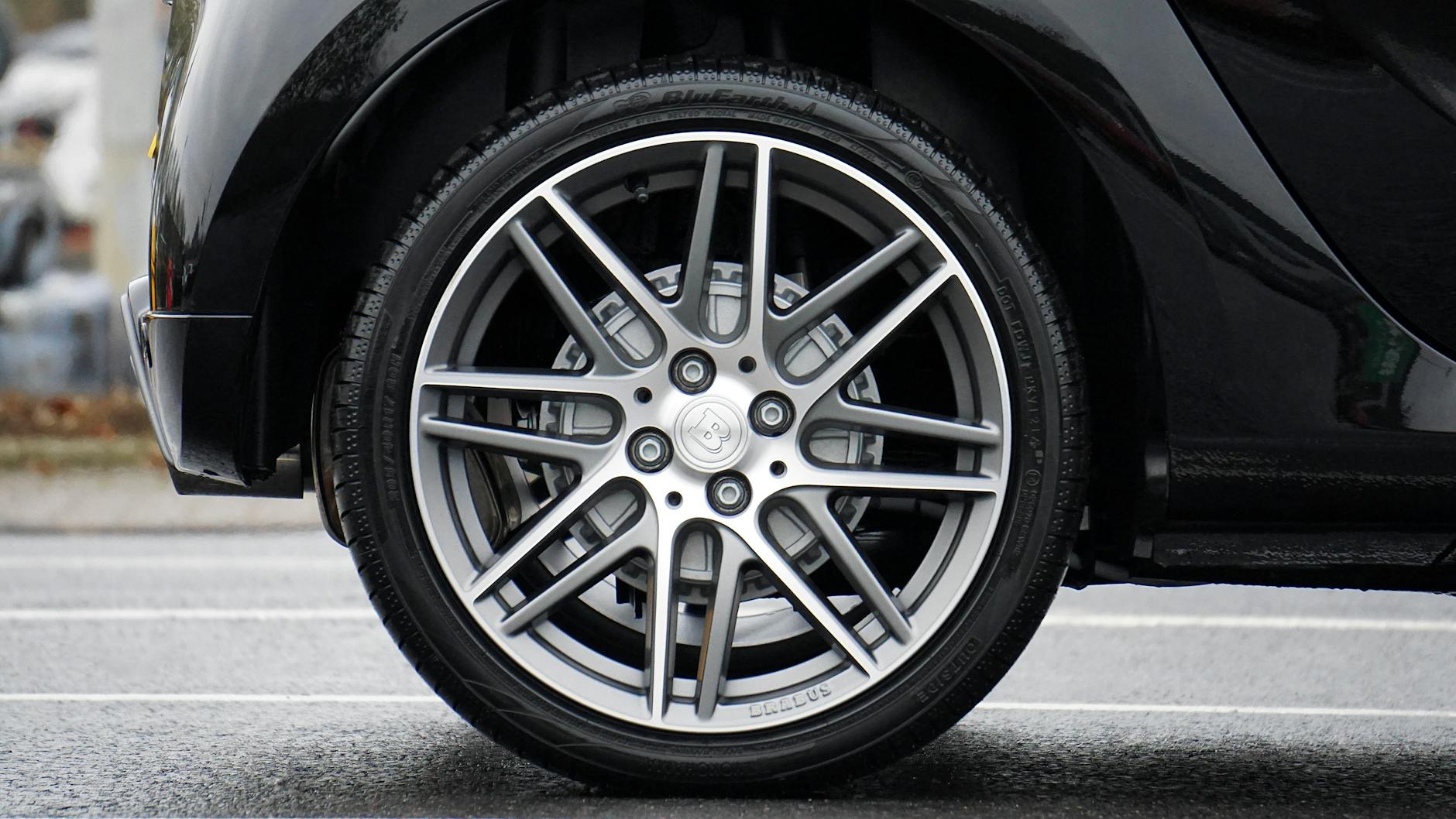
The Model Y is one of the best-selling vehicles in the world right now, and the aftermarket wheel scene around it has grown to match. Whether you're chasing a cleaner look, trying to shed unsprung weight for better range and handling, or just tired of staring at Tesla's aerodynamic hubcap situation, the options are genuinely good — if you know what you're buying.
This guide covers everything: OEM sizing, offset specs, TPMS quirks, what to avoid, and why a forged or flow-formed set is almost always the right call for a car this heavy.
Why the Model Y Is a Unique Fitment Challenge
The Model Y sits at the intersection of crossover and performance car, and that creates some specific wheel requirements. The Long Range AWD weighs in around 4,400 lbs. The Performance variant is roughly the same. That's serious mass, and it means wheels with marginal load ratings — cheap cast stuff with thin spokes — are genuinely risky, not just aesthetically questionable.
There's also the range equation. Every pound of unsprung weight you remove has a disproportionate effect on a car that's trying to maximize energy efficiency. Tesla's own engineers obsess over this. The Gemini wheels on the Long Range are a 19-inch flow-formed design specifically chosen to balance weight and structural integrity. When you replace them, you should be thinking about the same tradeoff.
Then there's TPMS. Tesla uses a proprietary tire pressure monitoring system that reads directly on the touchscreen. Aftermarket wheels can accept the OEM TPMS sensors from your stock wheels — your installer transfers them over — but you need to confirm this before you buy. Some wheel designs with very tight valve stem clearances make this awkward or impossible.
Stock Wheel Sizes by Trim
Before you spec anything, know what you're starting from:
- Model Y Standard/Long Range RWD: 19×8.5 ET35, 5×114.3
- Model Y Long Range AWD: 19×8.5 ET35, 5×114.3 (Gemini aero wheels)
- Model Y Performance: 21×9 ET35, 5×114.3 (Überturbine design)
- Model Y Juniper (2024+): 19×8.5 or 20×9, depending on trim, still 5×114.3
The bolt pattern is 5×114.3 across the entire lineup. Center bore is 64.1mm. Offset is consistently ET35 on the OEM sizes, though aftermarket fitments often run ET38–45 depending on the wheel width and your aesthetic goals.
What Size Should You Run?
This is where a lot of people get tripped up. Bigger isn't always better on an EV.
19-inch is the sweet spot for most Model Y owners. You get a reasonable sidewall (around 45–50 series), which genuinely helps with ride comfort on rough pavement — and the Model Y's suspension, while good, doesn't isolate as much as a Model S. A taller sidewall also gives you real protection against pothole damage to the wheel itself. If you're buying expensive forged wheels, you want that cushion.
20-inch works well. Tesla ships the Juniper in a 20 on some trims. You'll drop to a 40-series tire, lose a bit of comfort, and see a marginal weight penalty depending on the wheel design. The visual difference is noticeable — the 20 fills the arch more aggressively.
21-inch is what the Performance comes with from the factory, so Tesla has validated the clearances. You're at a 35-series tire at this diameter. Road noise goes up, comfort goes down, and any pothole at speed is a genuine threat to your sidewall. That said, 21s look exceptional on the Model Y's proportions, especially in a staggered fitment (20 front, 21 rear, or matching 21s all around with a wider rear).
22-inch is possible but requires careful fender clearance checks, especially at full lock. A handful of installers run these on lowered Model Ys with flush fitments. It's a commitment.
For most people: 19 for comfort and range, 20 for a visual upgrade with minimal compromise, 21 if you want the Performance look or you're track-curious.
Offset and Fitment on the Model Y
The OEM ET35 is a moderate offset — not particularly tucked, not particularly aggressive. If you want a flush or slightly poked look, you'll want to drift toward ET30–35 on a wider wheel. If you want the wheel to sit more inboard (rarer, but some prefer it), ET40–45 does that.
For a 9-inch wide wheel, ET35 is the OEM equivalent. Step to a 9.5-inch wide wheel and you'll want to come down to around ET38 to keep the same outer lip position, otherwise the wheel will tuck slightly. Go to a 10-inch wide with ET35 and you'll poke noticeably — which can look great but may catch on the front inner fender liner at full lock.
The front clearance is the critical axis. The Model Y has limited inner clearance near the strut, and some aftermarket wheels with high positive offsets (ET45+) on a wide barrel can contact the suspension. Always verify with your installer or the wheel manufacturer using hub measurements before ordering.
For a deep dive on getting offset right, the post on custom offset wheels covers the math in detail.
Forged vs. Cast: Why It Actually Matters Here
On a 4,400-lb electric crossover, wheel weight is not a trivial concern.
A typical cast 19-inch wheel for the Model Y weighs 22–26 lbs per corner. A flow-formed or forged equivalent in the same size comes in at 17–21 lbs. That's a potential 20-lb reduction across all four corners. On a car that's already carrying a 1,800-lb battery pack, that unsprung weight reduction has a real effect on how the suspension responds — faster rebound, more precise handling, less wheel hop under hard acceleration.
There's also structural integrity. Forged aluminum has a tighter grain structure than cast. It flexes under load rather than cracking. For a vehicle this heavy with performance aspirations (0–60 in 3.5 seconds for the Performance), that matters. You do not want to find out mid-corner that your cheap cast wheels have a fatigue crack.
The traditional argument against forged wheels has always been cost. That's changed. Our guide on forged wheels: what they are and why they matter explains the manufacturing process, but the short version is that forging through a direct OEM partner — rather than paying a legacy brand's retail markup — can get you a set of genuine forged monoblock wheels for the same price as mid-tier cast.
Flow-formed wheels are a legitimate middle ground. They start as cast blanks, then the barrel is spun under pressure to align the grain structure and reduce weight. The result is lighter and stronger than a straight cast wheel, at a lower cost than a fully forged piece. For the Model Y, especially on 19s where absolute lightness is less critical than on a track car, flow-formed is an excellent call. See our breakdown on flow forged wheels for more context.
Aerodynamics and Range
This is a topic the ICE world ignores and EV owners can't. Tesla's Gemini aero covers exist for a reason: they reduce drag at the wheel, meaningfully improving real-world range. When you swap to an open-spoke aftermarket wheel, you're adding aerodynamic drag.
How much range does it cost? Estimates vary, but owners running open-spoke 19s report 1–4% range reduction in mixed driving compared to the Geminis with covers. At highway speeds, it's higher. At low speeds in the city, it's negligible.
A few aftermarket manufacturers have started making aero covers compatible with their designs, similar in concept to the Gemini system. If range preservation is your top priority, look for that option. But for most people, the tradeoff of 8–12 miles of range for a wheel set you actually like looking at is entirely reasonable.
What to Watch Out For When Buying
The Model Y aftermarket wheel market has a lot of garbage in it. A few specific things to watch:
Load rating: Each wheel needs a load rating appropriate for the Model Y's corner weight, which runs roughly 1,100 lbs per corner fully loaded. Look for wheels rated to at least 1,200 lbs each. Most reputable manufacturers list this. If they don't, that's a red flag.
Hub-centric vs. lug-centric: Always use hub-centric rings if your aftermarket wheel's center bore is larger than 64.1mm. Lug-centric fitments on a heavy EV will cause vibration and, over time, stress on the wheel studs. This is not optional.
Extended lug nuts: Tesla uses a proprietary lug nut seat angle on some trims. If your aftermarket wheel uses a standard 60-degree conical seat, you need matching lug nuts — don't reuse the OEM units unless the wheel is specifically designed for them.
Valve stem clearance: As mentioned above, TPMS sensor transfer needs physical clearance in the valve stem hole. Confirm this before finalizing a design with very tight barrel geometry.
For a broader look at what separates genuinely good aftermarket wheels from the junk, the aftermarket car wheels buying guide is worth reading before you spend anything.
Popular Fitments That Work Well
Based on what's proven out in the community:
19×9 ET35, 5×114.3 — essentially a direct OEM+ spec. Slightly wider than stock, same offset. Works with stock fenders, no rubbing, looks noticeably more planted than the factory Gemini configuration. This is the safe, practical choice.
20×9.5 ET38, 5×114.3 — a step up in presence. You're running a 255/40R20 or 245/40R20 tire. Looks excellent on both Standard and Performance trims. Check front inner clearance with your specific wheel design.
21×9 front, 21×10 rear ET38 — staggered, aggressive. Works best on lowered Model Ys (15–20mm drop via spring or coilover). The wider rear fills the arch properly and visually balances the car. Not ideal if you rotate tires.
If you're curious about the staggered fitment in general — the tradeoffs and whether it makes sense for your use case — the piece on staggered wheels: what they are and when to run them lays it out clearly.
Getting Custom Forged Wheels Built for the Model Y
This is where things get interesting. Because the Model Y uses a common 5×114.3 bolt pattern that spans dozens of platforms — think F30 335i, Mustang GT, Kia Stinger, Subaru WRX — tooling for this bolt circle is widely available. That means custom forged or flow-formed wheels for the Model Y can be built without exotic tooling costs, keeping prices much lower than you'd expect.
At ForgedToFit, the process works like this: you browse existing designs or send in your own concept, we quote you based on size and specification, produce 3D CAD renderings for sign-off, then manufacture and ship direct. Turnaround is typically 6–8 weeks. The pricing comes in 50–70% below what you'd pay for equivalent wheels from legacy forged brands — because we're working through the same OEM forging partner those brands use, without the retail markup layered on top.
For the Model Y specifically, we'd typically recommend a forged monoblock for the Performance variant (where absolute weight matters) and a flow-formed design for Long Range AWD owners who want the visual upgrade without the premium. Both come with a 5-year warranty.
You can also use a custom wheels visualizer to preview how different designs and finishes will look on the car before committing to anything. It's a genuinely useful step — wheel designs that look great in photos don't always translate to a specific car's proportions.
Finish Options
The Model Y's exterior palette runs from solid whites and grays to the deep red and midnight silver options. A few finishes that work consistently well:
Brushed titanium / satin bronze — complements the gray tones and the red perfectly. Slightly warm without being loud.
Gloss black or matte black — the default go-to for Model Y owners, and it works. High contrast against white or silver.
Hyper silver — a bright machined look with dark windows in the spoke faces. Gives a clean, almost OEM-premium appearance.
Satin white or color-matched — increasingly popular on white Model Ys. The no-contrast look reads as intentional and clean.
Chrome is not recommended for the Model Y. It's a maintenance nightmare (chips, peeling in cold climates) and the styling clashes with the car's clean, minimal design language.
Installation and Final Notes
Have your wheels professionally installed and balanced on a road-force balancer, not a standard spin balance. The Model Y, like many EVs, is sensitive to wheel imbalance because there's no engine vibration masking it. Transfer your OEM TPMS sensors during installation. Torque to 129 lb-ft (the Tesla spec) with a properly calibrated torque wrench — over-torquing warps rotors and strips studs.
Recheck torque after 50 miles. First drive will settle the seating slightly.
Tesla Model Y aftermarket wheels aren't a complicated topic if you go in with the right information. Stick to proper load ratings, respect the offset envelope, choose a wheel construction that matches your use case, and don't pay legacy-brand prices when the same forging quality is available direct.
Frequently asked questions
What bolt pattern does the Tesla Model Y use?
5×114.3 across all Model Y trims — Standard, Long Range, Performance, and the updated Juniper. Center bore is 64.1mm. This is a common bolt pattern shared with platforms like the BMW 3 Series, Ford Mustang, and Kia Stinger, so tooling is widely available and custom wheels are relatively affordable to produce.
Will aftermarket wheels hurt my Tesla Model Y's range?
Open-spoke aftermarket wheels do add aerodynamic drag compared to Tesla's Gemini aero wheel-and-cover system. Real-world impact is typically 1–4% in mixed driving, more at sustained highway speeds. Lighter forged or flow-formed wheels partially offset this by reducing unsprung weight and rotational inertia, but you won't fully recover the aero benefit unless you also run aero covers compatible with your aftermarket design.
What's the best aftermarket wheel size for the Model Y?
19×9 ET35 is the most practical choice — it's a direct OEM+ spec that clears all stock fitment points, provides a taller sidewall for ride comfort, and is the easiest size to source in quality forged or flow-formed construction. 20-inch works well if you want more presence with minimal compromise. 21-inch is validated by Tesla's own Performance variant but comes with a stiffer ride and greater pothole risk.
Do I need to replace the TPMS sensors when switching to aftermarket wheels?
No — a competent installer will transfer your OEM Tesla TPMS sensors from your stock wheels to the new ones. Tesla's system will continue to read normally on the touchscreen. What you do need to verify is that the aftermarket wheel has adequate valve stem clearance to physically accept the sensor. Confirm this with the manufacturer before ordering, especially on wheels with tight barrel geometry.
Are forged wheels worth it for a Tesla Model Y?
Yes, particularly for the AWD and Performance variants. The car weighs over 4,400 lbs and puts down significant torque. Forged aluminum's tighter grain structure handles load cycles and hard acceleration better than cast. The weight savings — typically 4–8 lbs per wheel compared to cast equivalents — also benefit suspension response and contribute slightly to range. The traditional price barrier has come down significantly with direct-to-consumer forging options.
What lug nuts do I need for aftermarket wheels on the Model Y?
It depends on the wheel's seat type. Tesla OEM lug nuts use a specific seat angle. Most aftermarket wheels use a standard 60-degree conical seat, which requires matching aftermarket lug nuts — do not reuse the OEM ones unless the wheel manufacturer specifically says they're compatible. Use extended-shank lug nuts if needed for proper thread engagement. Torque spec is 129 lb-ft.