Mercedes Monoblock Wheels: The Complete Guide

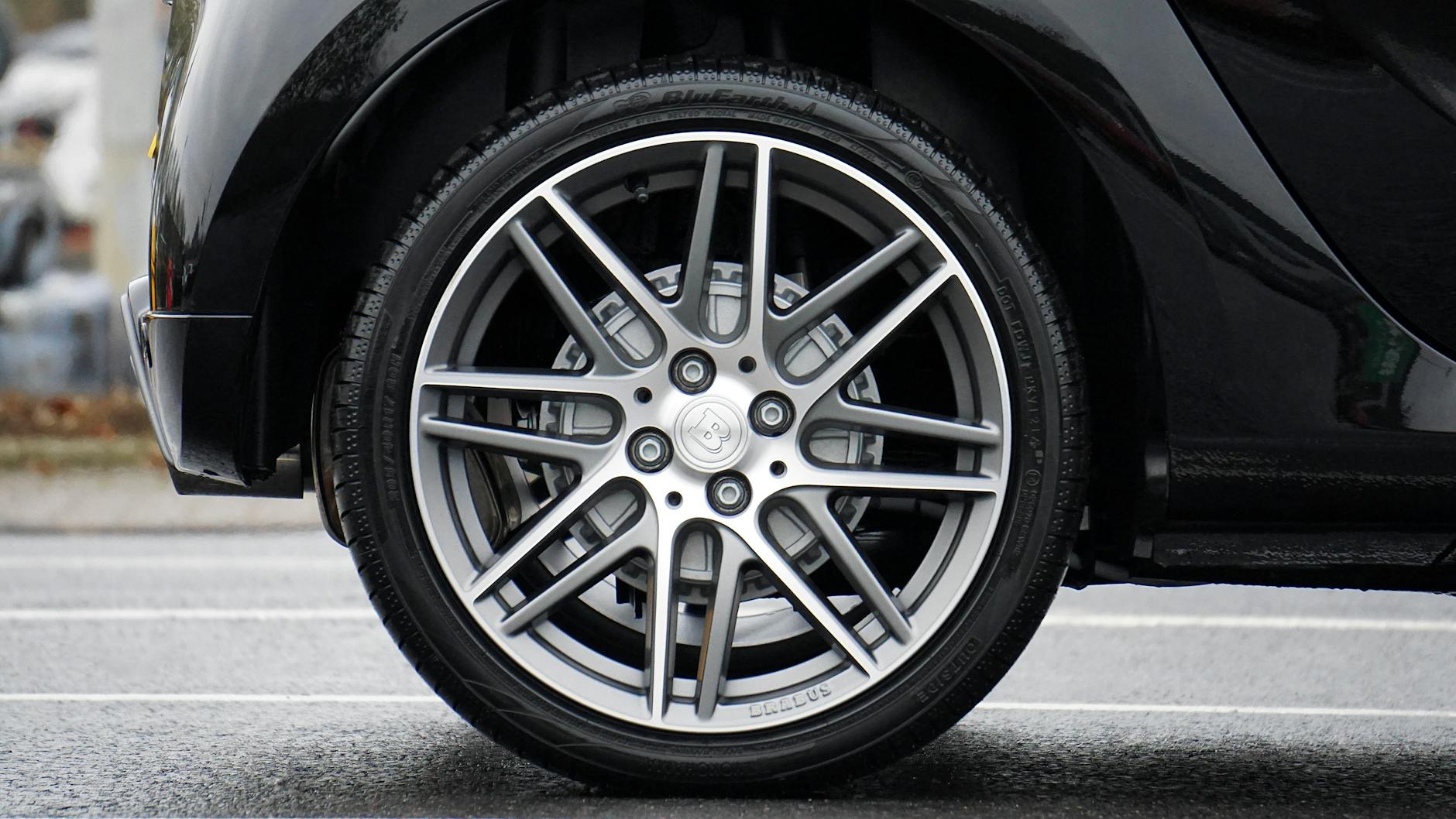
Mercedes-Benz has been putting monoblock wheels on its cars since the late 1990s, and the design never really went out of style. The clean, single-face spoke pattern — no visible hardware, no barrel seam, just one continuous aluminum form — suits the brand's aesthetic perfectly. Whether it's the classic 18-spoke AMG Monoblock from the W210 E-Class era or the more aggressive multi-spoke designs on current C-Class and E-Class AMG lines, the monoblock construction is a recurring theme across Mercedes's lineup. This guide covers what these wheels actually are, why the construction matters, how to get fitment right across common Mercedes platforms, and what your real options are when OEM pricing makes you flinch.
What "Monoblock" Actually Means on a Mercedes Wheel
A monoblock wheel is machined from a single piece of aluminum — no separate barrel bolted to a center, no two-piece or three-piece assembly. The entire wheel, from the lip to the hub face, is one unit. Mercedes AMG popularized the term in the 1990s with their iconic forged monoblock designs, and the name stuck across the industry.
The construction matters because every joint in a multi-piece wheel is a potential weakness and a source of weight. Eliminate the joints and you eliminate both problems. A properly forged monoblock is also denser and stronger at the material level than a cast wheel because the forging process aligns the grain structure of the aluminum under high pressure. The result is a wheel that's lighter for its strength, or stronger for its weight, depending on how you want to frame it.
For a deeper look at the manufacturing differences, the forged monoblock wheels guide covers the production process in detail.
Not all monoblock wheels are forged, though. Plenty of cast monoblock wheels exist — they're one piece but made by pouring molten aluminum into a mold rather than pressing a billet under thousands of tons of force. Cast monoblocks are cheaper to produce and perfectly adequate for most daily driving, but they're heavier and more brittle than forged equivalents. The original AMG Monoblock wheels were forged, which is a big part of why they're still so sought after.
The History: AMG's Original Monoblock Designs
The AMG Monoblock wheel first appeared in the mid-1990s, built to complement the C36 AMG and later the E55 AMG on the W210 platform. The design was a forged 18-spoke wheel with a flat face and a distinctive ribbed look between the spokes. Mercedes and AMG used the monoblock name explicitly in marketing — it wasn't just a construction term, it was a product name.
Those original wheels ran in 17×8.5 and 18×8.5 sizes for the era, which sounds modest by current standards but was genuinely large for late-1990s production cars. The W210 E55 AMG, for example, used 18-inch monoblocks that were considered aggressive fitment at the time. The wheels became a style reference point for the brand — if you see a flush-mounted, clean-face multi-spoke Mercedes wheel today, the DNA traces back to those early AMG forgings.
By the W211 and W219 generation, AMG expanded the monoblock family into new spoke counts and finishes. The CLS55 AMG and E55 AMG of that era used staggered setups — 8.5-inch wide fronts paired with 9.5-inch rears — a fitment pattern that AMG has continued on rear-biased platforms ever since.
Fitment Across Modern Mercedes Platforms
Getting Mercedes monoblock wheels right means understanding that the brand uses a surprisingly wide range of bolt patterns, offsets, and hub bores depending on the generation and model. The two main bolt patterns across modern Mercedes passenger cars are 5x112 and the older 5x114.3 used on some North American-market vehicles before the mid-2000s.
Here are the fitment specs for the platforms most people are working with:
- W205 C-Class (2015–2021): 5x112, hub bore 66.6mm, stock offset typically ET35–ET43 depending on AMG trim. Common aftermarket sizes: 19×8.5 ET35 front, 19×9.5 ET38 rear.
- W213 E-Class (2016–2023): 5x112, hub bore 66.6mm. AMG E53/E63 models run staggered from the factory — 19×9 front, 19×10 rear.
- W222 S-Class (2014–2020): 5x112, hub bore 66.6mm. The AMG S63 used 20×9 front, 20×10 rear from factory.
- C190 GT / R190 AMG GT: 5x112, hub bore 66.6mm. Rear is very wide — the GT R runs 20×10 front, 20×11 rear.
- X253 GLC / X167 GLS: 5x112, hub bore 66.6mm. These run 20-inch and 21-inch factory fitments; most people upgrading these go to 21×9 or 21×10.
If you're fitting wheels to a W204 C-Class or a W211 E-Class — both 5x112 platforms — the offset windows are similar but the hub bore stays at 66.6mm, so hub rings are rarely needed for quality aftermarket wheels that are bored correctly.
One thing to watch: AMG Sport Package and AMG Line trim levels often use different offsets than base models on the same platform because the flares or arch extensions allow a more aggressive fitment. Always confirm the exact trim before specifying offset.
For a detailed look at how offset affects fitment and appearance, the custom offset wheels guide is worth reading before you finalize specs.
OEM Mercedes Monoblock Wheels: What They Cost and Why
A single OEM AMG monoblock wheel for a current W213 E63 AMG runs $800–$1,400 through the dealer, and that's before you factor in TPMS sensors, mounting, and balancing. A set of four with sensors can easily hit $5,000–$6,000 installed. Genuine AMG Performance wheels — the forged items Mercedes sells through AMG dealers — push higher than that.
The older collectible wheels, like the original Monoblock I and Monoblock II designs for W210 and W202 platforms, command $1,500–$3,000 for a clean set on the used market because supply is limited and demand from restorers and enthusiasts is consistent.
This is the part of the Mercedes ownership experience that catches people off guard. The car depreciates; the branded parts don't follow the same curve.
Aftermarket Options: Cast, Flow-Formed, and Forged
The aftermarket covers Mercedes fitments well. The 5x112 bolt pattern with 66.6mm hub bore is a known quantity, and most serious wheel manufacturers catalog it. What separates your options is construction method.
Cast replicas of AMG monoblock designs are everywhere at $150–$300 per wheel. They'll bolt on, they'll look roughly like the OEM wheel in photos, and they'll weigh 24–28 lbs in an 18-inch size. Cast wheels have porosity in the aluminum — microscopic voids from the cooling process — which means they need to be heavier to hit the same strength target. A 19-inch cast wheel for an E-Class will typically weigh 26–30 lbs. That's unsprung weight the suspension has to manage on every road imperfection.
Flow-formed wheels (sometimes called flow-forged or rotary-forged) are a significant step up. The process starts with a cast center but spins the barrel under rollers at high pressure, which compresses and strengthens the aluminum in the barrel section. The result is a wheel that's 15–20% lighter than a comparable cast wheel and considerably stronger. For a C300 or E450 used primarily as a daily driver, a quality flow-formed monoblock-style wheel is a legitimate choice — strong, lighter than cast, and available at $300–$500 per wheel from reputable manufacturers.
Forged monoblock wheels are what you want if you're building something serious or you want the engineering to actually match what AMG put on the car from the factory. A forged monoblock starts as a solid aluminum billet, gets pressed under 5,000–10,000 tons of force, then CNC machined to final spec. The grain structure is aligned, the material is dense, and the weight savings over cast are dramatic — a forged 19-inch wheel can come in at 18–21 lbs where the cast equivalent is 26–29 lbs. Unsprung weight reduction that significant is actually felt in steering response and ride quality.
The [cast vs forged wheels](cast-vs-forged-wheels-what-actually-matters) breakdown goes deeper on why the manufacturing difference translates to real-world performance, not just spec-sheet bragging.
Getting Custom Forged Mercedes Monoblock Wheels Made
This is where things get interesting. Legacy forged wheel brands — HRE, Vossen Forged, ADV.1, Brixton — make excellent wheels for Mercedes fitments, but pricing starts at $3,000–$4,000 for a set and climbs quickly when you start adding finishes and custom offsets. For a W205 C63 AMG or a W213 E63, you're looking at $4,000–$7,000 for a set from those brands, before tires.
Custom forged wheels built through a direct-to-consumer model — bypassing the brand premium and distributor markups — can deliver the same OEM-grade forging at 50–70% less. The forging process is identical; what changes is who you're paying between the forge and your driveway.
The process works like this: you specify your platform (say, a W213 E63 AMG), your target size (19×9.5 ET40 front, 19×10.5 ET32 rear for a flush fitment on standard arches), your design preference, and your finish. A 3D CAD design gets generated so you can see exactly what the wheel looks like before any metal moves. Then it goes to the forge.
For Mercedes specifically, this matters because AMG platforms often run staggered fitments where front and rear offsets differ substantially. Getting that spec right in a custom forged context is straightforward — the wheel is built to your exact numbers rather than pulled from a catalog. The staggered wheels guide explains when staggered makes sense and what it means for tire rotation and replacement.
Sizing Guide: What Actually Works on Common Mercedes Models
Here's a practical sizing reference for the platforms most commonly running monoblock-style wheels:
C-Class (W205 C43, C63): A 19×8.5 ET35 front and 19×9.5 ET38 rear fits cleanly under standard arches without spacers. Go to 20-inch only if you're comfortable with a slightly firmer ride — the C-Class is already firm in AMG Sport suspension. ET33 or lower on the rear on a W205 will typically sit flush or slightly proud of the arch.
E-Class (W213 E53, E63): The W213's rear arch is more accommodating than the W205. A 20×10 ET38 rear works well. If you're pushing to 20×10.5, plan for ET42+ to stay inside the arch on a stock body. The E63's factory fitment of 19×9 front / 19×10 rear is a useful baseline — most people sizing up to 20s keep the same width ratio.
S-Class (W222): The W222 is physically large and heavy, so 21-inch fitments are the norm. A 21×9.5 ET40 front and 21×10.5 ET35 rear is a common custom build spec that fills the arches properly without rubbing.
GLC (X253): SUV fitments generally allow more latitude. A 21×9 ET35 is a popular upgrade from the factory 19s, and the GLC's suspension geometry tolerates the extra inch of diameter well with no drop. Go to 22-inch and you start needing to be careful about low-profile tire sidewalls and pothole vulnerability.
Finish Options That Work on a Mercedes
Mercedes uses a lot of dark finishes from the factory — glossy anthracite, matte graphite, and bi-color machined/painted combinations. Custom monoblock wheels can replicate any of those.
Gloss black on a monoblock design tends to read as heavy against darker Mercedes paint colors (Obsidian Black, Magnetite, Selenite Grey). Machined face with a dark painted spoke pocket is a cleaner look on those colors — the machined aluminum reflects light and gives the wheel visual depth without competing with the body color. On Polar White or Iridium Silver, gloss graphite or anthracite does the opposite and grounds the car visually.
Brush-finished aluminum — sometimes called "diamond cut" in Europe — is classic for monoblock designs and ages well. It's the closest to the original AMG aesthetic from the W210 era.
Warranty, Weight Ratings, and Load Capacity
A genuine concern with any aftermarket wheel for Mercedes is load rating. The S-Class and GLS are heavy cars — an S580 is 4,800+ lbs at the curb. The wheel's load rating per corner needs to account for the vehicle weight plus dynamic loads (braking, cornering). A proper forged wheel rated to 1,500 lbs per corner is adequate for most applications; cheap cast wheels often aren't rated clearly at all, which should tell you something.
Mercedes also runs a tire pressure monitoring system that uses OEM TPMS sensors. The replacement sensors need to be either OEM Mercedes units or compatible aftermarket TPMS sensors that can be programmed to the car's receiver. This is easy to manage but easy to overlook when budgeting.
A quality forged wheel comes with a real structural warranty — five years against manufacturing defects is the standard for OEM-grade forgings. That warranty is meaningless from a vendor who can't back it. Make sure you know who you're buying from and whether the warranty is enforceable.
The forged wheels overview explains what to look for in warranty terms and how to vet a manufacturer before committing.
What to Expect Paying Retail vs. Custom Direct
To make this concrete: a set of OEM AMG 19-inch forged monoblocks for a W213 E-Class retails at approximately $5,200–$6,800 through a Mercedes dealer in the US. An equivalent custom forged wheel — same bolt pattern, same hub bore, same load rating, same OEM-grade alloy, built on the same type of forging press — can be built and shipped direct for $1,800–$2,800 depending on size and finish. The 3D design step means you're not guessing at the look; you approve it before manufacturing begins.
That gap exists because of brand premium, dealer markup, and distribution chain costs — not because the OEM wheel uses fundamentally different technology or materials. The forge is the forge.
For anyone comparing the full landscape of custom forged options, the custom forged wheels guide covers how to evaluate manufacturers, what questions to ask, and how to read a spec sheet.
Frequently asked questions
What bolt pattern do Mercedes monoblock wheels use?
The vast majority of modern Mercedes passenger cars use a 5x112 bolt pattern with a 66.6mm hub bore. Some older North American-market models used 5x114.3, but anything from roughly 2005 onward across the C, E, S, and GLE/GLC families is 5x112. Always confirm your specific model and year before ordering.
Are the original AMG Monoblock wheels forged or cast?
The original AMG Monoblock wheels — the designs from the mid-1990s through the early 2000s on platforms like the W202 and W210 — were forged aluminum. That's a significant part of why they're still prized on the used market. Modern AMG Performance catalog wheels are also forged. Standard OEM Mercedes wheels on non-AMG trims are typically cast.
Can I run staggered monoblock wheels on my Mercedes C-Class or E-Class?
Yes, and AMG does it from the factory on the C63 and E63. A staggered setup uses wider wheels at the rear to accommodate the wider tires that benefit rear-wheel-drive performance cars. The W205 C63 AMG runs 9-inch fronts and 10-inch rears from the factory. Custom forged staggered sets can be built to any offset combination that fits your specific arch clearance.
How heavy are forged monoblock wheels compared to OEM cast Mercedes wheels?
A quality forged 19-inch monoblock-style wheel for a Mercedes E-Class typically comes in at 18–22 lbs depending on design. OEM cast wheels in the same size usually weigh 24–28 lbs. A 5–8 lb per corner reduction in unsprung weight is meaningful — it improves steering response, suspension compliance, and technically reduces the rotational inertia the engine has to overcome.
Do I need hub-centric rings for aftermarket Mercedes wheels?
Mercedes uses a 66.6mm hub bore. If the aftermarket wheel is bored to exactly 66.6mm, you don't need rings. Many quality aftermarket manufacturers bore Mercedes fitments correctly. If the wheel is bored larger (some manufacturers use 73.1mm as a universal bore), you'll need plastic or aluminum hub-centric rings to center the wheel on the hub. Running without them when there's a gap can cause vibration at highway speeds.
What's the price difference between OEM AMG monoblock wheels and custom forged alternatives?
OEM AMG forged wheels for a current-generation E-Class or C-Class typically retail at $1,200–$1,700 per wheel through a Mercedes dealer. A full set with sensors can approach $6,000–$7,000 installed. Custom forged wheels built direct through an OEM forging partner — same construction, same alloy grade, five-year warranty — can be produced for roughly $450–$700 per wheel depending on size and finish, which puts a complete set at $1,800–$2,800.