Custom Forged Rims: What They Are and How to Order

Most wheel shopping goes like this: pick a design from a catalog, hope the available sizes work for your car, settle for close enough. Custom forged rims break that loop entirely. You're not choosing from what's in stock — you're specifying exactly what you need, and a set gets built to those specs from a forged aluminum billet. The result is a wheel that fits your car precisely, weighs less than a comparable cast wheel, and holds up better under real stress.
That's the short version. The longer version involves understanding how forging actually works, what you're paying for, where the costs come from, and how to avoid the most common ordering mistakes.
What Makes a Rim "Forged"
Forging isn't a finish or a grade — it's a manufacturing process. A solid billet of 6061-T6 or 6082 aluminum is pressed under extreme force (anywhere from 900 to 10,000+ tons depending on the press) into a rough wheel shape, then CNC-machined to its final geometry. The compression aligns the grain structure of the metal, which is why forged aluminum is meaningfully stronger than cast aluminum of the same weight.
Cast wheels are made by pouring molten alloy into a mold. Faster, cheaper, and fine for most applications — but the cooling process introduces micro-porosity and a less consistent grain structure. That's not speculation; it's why OEM performance cars (M3, GT3, Corvette Z06, Model S Plaid) spec forged wheels from the factory.
Flow-formed wheels sit between the two. A cast center is spun while rollers compress and stretch the barrel, improving barrel strength and reducing weight compared to a standard cast wheel. They're a legitimate middle ground — worth understanding if budget is a constraint. You can read the full breakdown in our guide to flow formed vs forged wheels.
For custom forged rims specifically, you're most often looking at monoblock construction — one-piece forged — which is simpler, lighter, and more affordable than multi-piece forged. Multi-piece (2-piece or 3-piece) forged wheels have their own advantages for fitment extremes but carry a significant cost premium.
Why Custom Matters More Than People Realize
Off-the-shelf forged wheels exist, but "forged" alone doesn't solve your fitment problem. A Mustang GT running a 305/30R20 on a wider rear, an F30 335i with H&R springs and a 15mm front spacer, a Model 3 Performance that needs a specific ET to clear the brake caliper — these cars need specific diameters, widths, offsets, and bolt patterns that a standard SKU might not cover.
Custom forged rims solve that by letting you dial in:
- Diameter: typically 17" to 24" for passenger cars, up to 26" for trucks
- Width: from 7" to 13"+ depending on the application
- Offset (ET): the single most consequential fitment spec, and the one most often gotten wrong
- Bolt pattern: 5x112, 5x114.3, 5x120, 5x130, and dozens of others
- Center bore: must match the hub or use a spigot ring; sloppy center bores cause vibration
- Finish: gloss black, brushed, polished lip, two-tone, matte, custom painted
When you order custom, all of these are set to your specs — not adapted from what was already being made.
The Offset Problem
Offset is where most people stumble. It's the distance (in millimeters) from the wheel's mounting face to its centerline. Positive offset pushes the wheel inboard; negative offset pulls it outward. Get it wrong and you're rubbing on liners, or you've got a gap between the tire and fender that looks like you're wearing someone else's shoes.
A stock F30 335i runs ET34 on the front in most configurations. Drop to ET20 and you're adding 14mm of poke — which can look intentional or can hit the strut depending on wheel width. Go to ET45 and the wheel tucks too far in. Custom forging lets you hit ET27 if that's what your specific setup requires. No adapters, no compromises.
For deeper reading on this, custom offset wheels covers the math and platform-specific examples in detail.
What Custom Forged Rims Actually Cost
Legacy forged wheel brands — Vossen, HRE, Brixton, forgeline — charge $800 to $2,500+ per wheel for custom work. A set of four for a C8 Corvette or a BMW M4 can easily land at $5,000 to $8,000 before mounting and tires. That pricing reflects brand equity and domestic overhead more than raw manufacturing cost.
ForgedToFit works directly with a 15-year OEM forging partner. No retail middlemen, no inflated brand tax. That's how we deliver custom forged rims at 50 to 70% less than legacy brands — not by cutting corners on the aluminum grade or the CNC process, but by cutting out margin stacking.
For context: a set of 19" monoblock forged wheels for an F30 335i runs significantly less through direct-to-consumer OEM supply chains than the same spec from a premium boutique brand, and ships with a 5-year structural warranty. The forging partner making them is the same type of facility supplying wheels to automakers — the difference is that automakers buy in volume. We make it work at smaller quantities.
Flow-formed wheels cost less than full forged. If you're building a daily driver and weight savings matter more than maximum strength, that's worth considering. But if you're tracking the car, running a power-modified platform, or just want the best possible wheel for the long term, full forged is the right call.
The Design Process
One of the biggest misconceptions about custom forged rims is that you have to know exactly what you want before you reach out. You don't. The process is built around a back-and-forth.
Here's how it typically works at ForgedToFit:
- Browse or submit — Choose a design from our catalog or upload reference images. Some customers come with a sketch; others have a saved Instagram post.
- Quote — We confirm your fitment specs (diameter, width, offset, bolt pattern, center bore) and provide a price. This is also where you nail down finish.
- 3D CAD design — Before any metal is touched, you see a rendered CAD model of your wheel. Changes at this stage are easy; changes after forging are not.
- Manufacture — Once approved, the forging starts. Lead times are typically 6 to 10 weeks for full custom work.
- Ship direct — Packed and shipped straight to you or your installer.
The CAD step is worth emphasizing. It's where you catch a design element you don't love, confirm the spoke count looks right on your car's specific color, or realize the lip depth needs to change. Don't rush it.
Platform-Specific Considerations
BMW
BMW fitment is one of the most common applications for custom forged rims because the platform range is so wide. An E92 M3 has different needs than an F90 M5. Center bore is 72.6mm across most modern BMWs, bolt pattern is 5x120, but the offset and width requirements differ significantly by model and whether you're running a staggered setup. The F30 335i typically runs 18x8 ET34 front and 18x8.5 ET37 rear in staggered form — but drop to a 19" square setup and those ET numbers need to shift. Our custom forged wheels for BMW guide goes deep on this.
Tesla
Model 3 and Model Y are increasingly popular for forged wheel upgrades, partly for aesthetics and partly because reducing unsprung weight genuinely improves the already-sharp handling. The Model 3 Performance runs 5x114.3 with a 66.1mm center bore. Offset is critical here — Tesla's aero wheel covers on the standard range don't apply, but caliper clearance does. A set of 20x9 ET40 forged wheels is a common upgrade path that stays flush without rubbing. See our Tesla Model 3 aftermarket wheels guide for more.
Corvette
C7 and C8 Corvettes are natural candidates for custom forged rims given the factory already runs forged aluminum. The C8 in particular — with its 5x120mm bolt pattern and the rear's enormous 305-series tire requirement — benefits from custom width and offset work to get the aggressive fitment the platform is capable of. More in our aftermarket Corvette wheels guide.
Trucks
Trucks have different priorities: load rating, backspacing for lift kits, and diameter for tire clearance. A lifted F-250 or Ram 1500 running 35s or 37s needs wheels built to handle the load rating and the backspacing math that comes with a 4" or 6" lift. Custom forged rims for trucks aren't as common as for sports cars, but they make sense for builds where the wheel will see real stress. Custom rims for trucks covers the specifics.
Finish Options That Hold Up
Finish is where custom forged rims become genuinely personal. The core options:
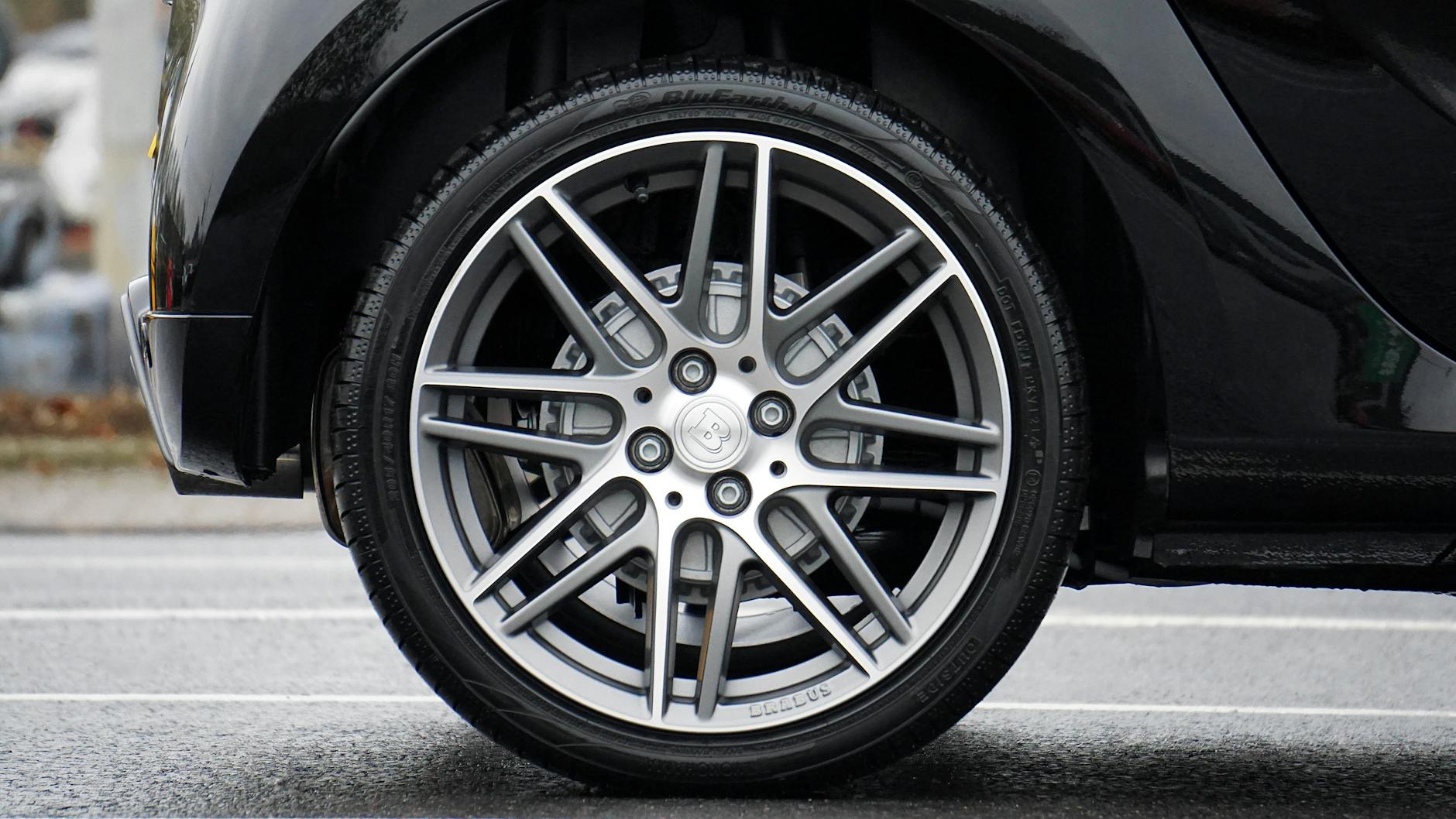
Gloss black is the most popular and the most forgiving — hides brake dust, looks sharp on almost any color car, ages well. Matte black has more texture but shows water spots more readily. Brushed/machined finishes show the tooling marks from CNC work, which looks great on monoblock designs with flat or concave faces. Polished lip with a contrasting painted center is a classic two-tone approach that looks especially good on deeper-dish designs.
Powder coat is durable and comes in a wide range of colors. Paint is used for more precise color matching. Chrome is possible but adds weight and maintenance requirements — worth understanding before you commit, which our custom chrome wheels article covers.
What to Verify Before You Finalize
A few things people skip and regret:
Tire size compatibility — a wheel width and offset combination that's geometrically possible might still be a problem if your chosen tire's section width causes rubbing at full lock. Confirm this against your specific suspension setup, not just a generic fitment chart.
Hub-centric vs lug-centric — forged wheels should be hub-centric for your application. If the center bore is larger than your hub diameter, spigot rings solve this cleanly. Don't skip them.
Weight rating — rarely a problem with forged wheels on passenger cars, but on trucks and SUVs, confirm the wheel's load rating covers your GVWR.
Brake clearance — especially relevant on cars with large OEM brakes (M cars, Porsches, performance Teslas) or aftermarket big brake kits. Get the caliper dimensions to your wheel contact before finalizing the design.
For a broader framework on evaluating any aftermarket wheel purchase, the aftermarket car wheels complete buying guide is worth a read.
Forged vs Cast: The Practical Difference
The weight difference between a forged and cast wheel of the same size is typically 3 to 5 lbs per corner on a passenger car wheel. That's 12 to 20 lbs of unsprung, rotational mass removed from the car. Reduced unsprung weight improves suspension response, steering feel, and ride quality in a way that's actually noticeable — not marginal. This is why performance-oriented drivers care about it even if they'll never see a track.
Strength-to-weight ratio matters under impact, too. A forged wheel takes a hard pothole hit differently than a cast wheel of similar weight. It's more likely to bend (which is repairable) than crack (which is not). For cast vs forged wheels as a direct comparison, we've covered the full breakdown elsewhere.
Buying Forged Wheels Online
The concern with buying custom forged rims online is legitimate: you're spending real money on something you can't physically inspect before it ships. The answer is working with a manufacturer that shows its work — 3D CAD before production, documented OEM partnerships, a real warranty, and responsive communication throughout the process.
Cutting-rate "forged" wheels that appear on marketplaces with no verifiable manufacturing background are a different category entirely. If a set of "forged" wheels is priced at $150 each, it's either not truly forged, not manufactured to any standard, or both. Our guide to how to buy forged wheels online covers how to vet a supplier before you commit.
Custom forged rims done right represent a permanent, high-quality change to how your car looks, handles, and feels. The process takes longer than buying off-the-shelf and requires more input from you — but that's exactly why the result is better.
Frequently asked questions
How long does it take to get custom forged rims made?
Typical lead time for full custom forged rims is 6 to 10 weeks from design approval to ship date. The 3D CAD review stage happens before manufacturing begins, so changes before approval don't extend the production timeline. Complex finishes or multi-piece construction can add time.
Are custom forged rims worth it over high-quality cast wheels?
For performance applications — track use, high-power builds, or any situation where unsprung weight matters — yes. Forged wheels are 3 to 5 lbs lighter per corner, stronger under impact, and more likely to bend than crack when hit. For a daily driver with no performance intent, a quality flow-formed wheel is a reasonable alternative at lower cost.
Can I use my own design for custom forged rims?
Yes. You can upload reference images, sketches, or detailed CAD files. The design team converts your concept into a manufacturable 3D CAD model, which you approve before production starts. Most customers either choose from an existing catalog or bring loose inspiration images — a fully finished design file isn't required.
What's the minimum I need to know about my car to order custom forged rims?
At minimum: your car's year, make, model, and trim. From there, bolt pattern, center bore, and factory offset can be confirmed. If you're running lowering springs, a lift kit, or big brake upgrades, mention those too — they affect the optimal offset and clearance requirements.
Do custom forged rims come with a warranty?
ForgedToFit's custom forged rims include a 5-year structural warranty. This covers manufacturing defects and structural integrity — not curb rash or cosmetic damage from road use.
What's the difference between monoblock and multi-piece custom forged rims?
Monoblock means the wheel is machined from a single forged billet — simpler, lighter, and more affordable. Multi-piece (2-piece or 3-piece) wheels have a forged center bolted or welded to a separate barrel, which allows more extreme width and offset combinations but costs significantly more. For most builds, monoblock forged is the right call.