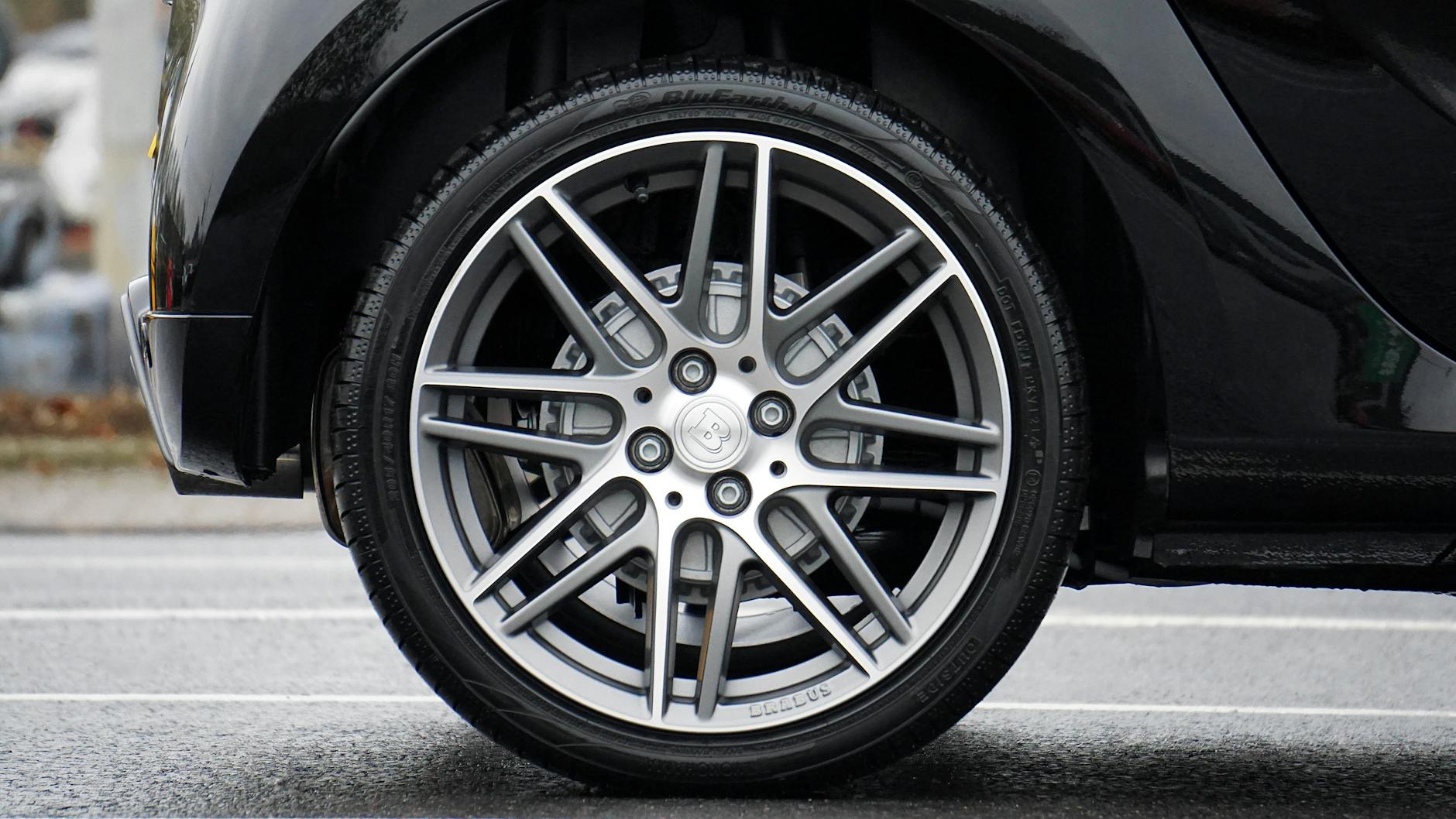
What Are Forged Wheels? The Complete Explanation

Forged wheels are the strongest, lightest alloy wheels you can put on a car — but the manufacturing process behind that claim is often misunderstood. Ask most people what makes a wheel "forged" and you'll get a vague answer about quality or expense. The reality is more specific, and once you understand the actual process, it's obvious why forged wheels behave differently from everything else on the market.
The Short Answer: What Makes a Wheel Forged
A forged wheel starts as a solid billet of aluminum alloy — typically 6061-T6 — and gets compressed under extreme hydraulic pressure, usually somewhere between 5,000 and 10,000 tons, depending on the press and the manufacturer. That compression forces the aluminum's grain structure to align with the shape of the wheel rather than solidifying randomly as it cools (which is what happens in casting). The result is a denser, more uniform piece of metal with far fewer internal voids or weak points.
After forging, the blank gets CNC-machined to its final shape — spoke profiles, barrel walls, bolt circle, center bore, the works. That combination of pressure-forged density and precision machining is what distinguishes a genuine forged wheel from everything else.
How the Manufacturing Process Actually Works
Step 1: Billet Preparation
The aluminum billet is cut from extruded bar stock and preheated to around 400–450°C — hot enough to be workable under the press, but nowhere near molten. This is a critical distinction from casting, where the metal is fully liquid. Because forged aluminum is never fully melted, its crystalline grain structure is preserved and refined rather than broken up and reformed.
Billet quality matters at this stage. Aerospace-grade 6061 bar stock is produced under tightly controlled extrusion conditions that minimize inclusions and segregation. A manufacturer cutting corners here — using lower-purity feedstock or inconsistent bar stock — introduces variability before the press even touches the metal. Reputable OEM-tier forging suppliers conduct incoming material inspection, including spectrographic analysis, to verify alloy chemistry before production begins.
Step 2: Press Forging
The heated billet goes into a die and gets compressed by the forging press. A single press stroke isn't always enough — some manufacturers use multiple forging stages with intermediate annealing steps to achieve the geometry they need without cracking the material. The mechanical working of the aluminum during this stage is what aligns the grain flow and eliminates internal porosity. A high-quality OEM-tier forging partner will hold tolerances of ±0.1mm or better at this stage.
Die design is more sophisticated than it appears. The die cavity is engineered not just to produce the rough wheel shape, but to direct material flow so that grain lines run continuously from the hub mounting face through the spoke length and into the barrel — following the stress paths the wheel will actually see in service. Getting that flow pattern right requires finite element analysis of the forging process itself, not just the finished wheel geometry. This is one reason high-quality forging dies are expensive and why the barrier to entry for legitimate forged wheel production is significant.
Step 3: Heat Treatment
After forging, the wheel blank goes through a T6 heat treatment process: solution annealing followed by artificial aging. Solution annealing heats the blank to around 530°C and holds it there long enough to dissolve alloying elements into the aluminum matrix, then quenches it rapidly to lock that supersaturated state in place. Artificial aging then heats the blank to around 160–175°C for several hours, causing fine precipitates to form throughout the matrix and dramatically increasing hardness and tensile strength.
This brings the alloy's tensile strength up to around 310–330 MPa — roughly twice what you'd see in a typical gravity-cast wheel. The quenching step is time-sensitive; delays between the furnace and the quench tank allow the supersaturated state to partially relax, reducing the peak strength the aging step can achieve. Consistent, process-controlled heat treatment is one of the quality variables that separates serious forging operations from lower-tier producers. Flow formed wheels sit somewhere in between casting and forging on the strength spectrum, and it's worth reading a proper flow formed vs forged wheels breakdown if you're weighing both options.
Step 4: CNC Machining
This is where the wheel actually becomes a wheel. Multi-axis CNC mills cut the spoke design, face profile, and barrel geometry from the forged blank. Because the blank has already been heat-treated and its structure is stable, the machining process is extremely accurate. The blank stock is oversized relative to the final wheel, and depending on how aggressive the spoke design is, a significant amount of material gets removed — sometimes 40–60% of the billet's original weight.
The machining sequence matters. Roughing passes remove bulk material, but finish passes on spoke surfaces need to avoid introducing stress concentrations. Sharp inside radii at spoke roots are a known fatigue initiation site; a well-engineered wheel will have generous fillets there, and a quality CNC program will hold those radii consistently. Tool path programming and fixturing precision are what separate a wheel that meets dimensional spec from one that also meets fatigue life requirements.
Step 5: Finishing
After machining, wheels go through surface prep — typically blasting or polishing — then powder coat, paint, or a brushed/polished finish. A quality forged wheel doesn't need thick paint to hide surface porosity the way some cast wheels do, which is why many forged designs look sharper at the edges and machined surfaces.
Anodizing is another finishing option available to forged wheels that isn't practical on cast wheels because porosity in cast surfaces causes uneven anodize penetration and blotchy color. A forged surface anodizes cleanly and uniformly, which is why hard-anodized finishes — common in aerospace and motorsport applications — are exclusively applied to wrought or forged aluminum components.
Why the Grain Structure Matters So Much
This is the core of the forged wheel argument. Think of aluminum grain structure like wood grain: wood is much stronger along the grain than across it. In a cast wheel, grains solidify in random orientations, so you get roughly isotropic strength that's mediocre in every direction and has no way to exploit the material's full potential. A forged wheel's grains run continuously through the spoke and into the barrel wall, oriented to handle the actual stress paths the wheel sees in service.
The practical consequence shows up most clearly under impact loading — a pothole strike, a curb hit, a sharp bump at speed. Cast wheels fail by cracking because a crack propagating through randomly oriented grains encounters no preferential resistance; it simply advances through the weakest available path. In a forged wheel, crack propagation across the grain direction is significantly harder, so the wheel is more likely to deform plastically rather than fracture catastrophically. That distinction matters in a road scenario where a fractured wheel causes an immediate loss of tire pressure and vehicle control, while a deformed wheel gives the driver time to respond.
In practice, this means a forged wheel can achieve the same structural performance as a cast wheel at significantly lower weight — typically 15–25% lighter for the same size. On an 18×9.5 wheel, that might be the difference between 22 lbs and 17 lbs. Multiply that across four corners, factor in that these are rotating unsprung masses, and the handling improvement is real and measurable: sharper turn-in, reduced gyroscopic inertia, and better suspension compliance. At highway speeds, the gyroscopic effect of a heavier wheel resists steering input in a subtle but consistent way. Lightweight forged wheels reduce that effect enough that drivers coming from heavy OEM cast wheels frequently describe the steering as feeling more direct, even before any suspension changes.
Forged vs. Cast: The Numbers That Actually Matter
Cast wheels — whether gravity cast, low-pressure cast, or counter-pressure cast — have tensile strengths ranging from roughly 150 MPa on the low end to around 230 MPa for the best counter-pressure castings. Forged 6061-T6 runs 310+ MPa. Impact toughness (the ability to deform without cracking on a pothole hit) is even more divergent. Elongation at break — the amount a material can stretch before fracturing — is typically 8–12% for forged 6061-T6 and only 3–5% for a good casting. That elongation difference is exactly what governs whether a wheel deforms or shatters under sudden overload.
For a deeper look at how these two construction methods stack up across every relevant dimension, the forged vs cast wheels comparison goes further into specific failure modes and real-world durability data.
The trade-off is cost. A typical 19" cast aftermarket wheel from a mid-tier brand runs $150–250 per corner. A forged equivalent from a legacy brand like HRE, Forgeline, or Vossen Forged runs $800–1,500+ per corner. That's not irrational pricing given the process — forging dies are expensive, press time is expensive, and CNC machining a wheel from billet takes far longer than pulling one out of a mold. But it does mean that forged wheels have historically been out of reach for most builds.
Monoblock, Two-Piece, and Three-Piece Forged Wheels
Forged wheels come in three construction types, and each has real implications for weight, repairability, and cost.
Monoblock forged (also called one-piece forged) means the entire wheel — face, spokes, inner barrel, and outer lip — is machined from a single forged billet. No welding, no bolted joints. This is the lightest and structurally cleanest option, and it's what most forged wheels at the performance end of the market are. Forged monoblock wheels are the benchmark for strength-to-weight ratio.
Two-piece forged combines a forged face/spoke section with a spun or flow-formed barrel, joined by welding or bolts. This allows more flexibility in offset and width customization without machining a unique billet for each fitment, which keeps costs down. The structural performance is slightly compromised at the joint versus a true monoblock, but the difference is marginal in street use. The weld joint on a quality two-piece is typically the thickest cross-section on the wheel, deliberately over-engineered to compensate for the heat-affected zone created during welding.
Three-piece forged adds a separate inner barrel section, with the outer lip bolted to the center using aircraft-grade hardware through a machined flange. This construction is common on high-end custom wheels because it allows wide, deep-dish fitments that would be difficult to machine from a single billet, and damaged lips can be replaced rather than scrapping the entire wheel. The weight penalty from the hardware is small, and three-piece wheels can look exceptional on the right build — the hardware itself, whether polished stainless or anodized titanium bolts around the barrel, becomes a design element. See the deep dish wheels guide if that aesthetic is what you're after.
Real-World Fitment: Why Custom Forged Makes Sense
Here's where the practical case for forged becomes compelling beyond just material science. OEM wheel sizing is almost never optimal for performance or aesthetics. A stock F30 335i runs 225/45R18 front and 255/40R18 rear on 8" and 8.5" wide wheels with a +36 offset. Run a proper 18×9.5 ET30 front and 18×10.5 ET25 rear in a forged monoblock, and you're tucking the tire flush with the fender without spacers, running a wider contact patch, and the car looks like an entirely different machine.
A 2018 Mustang GT comes with a 255/40R19 all around on 8.5" wheels. Staggered forged fitment — say 19×9.5 ET38 front, 19×11 ET52 rear — fills the arches properly, improves rear traction geometry, and saves 8–10 lbs per corner over OEM cast aluminum.
Tesla Model 3 owners face a different challenge: the OEM 18" aero wheels are hideous but aerodynamically relevant for range. A lightweight forged 19" in a turbine or mesh design can actually match or beat the aero drag of the OEM cover while shedding 4–5 lbs per wheel. Several Model 3 owners running forged 19s have reported EPA-comparable range figures on long highway trips compared to the stock aero setup, because the rotational mass reduction partially offsets any aerodynamic penalty.
The point is that forged wheels aren't just about material properties in isolation — they're the only construction method that lets you hit aggressive fitment targets at low weight without the structural compromises that aggressive casting geometries introduce. Thin cast spokes and narrow barrel walls are inherently weaker at the cross-sections you need to machine them down to for an aggressive design; a forged blank starts with superior material properties, so the designer has more freedom to remove material while still meeting structural requirements. If you're working through a full fitment spec, the custom offset wheels guide is the right place to work through the math.
Are Forged Wheels Worth It?
For daily drivers in mild climates running stock power? Probably not. A good flow-formed wheel gives you 80% of the weight and strength benefit at a fraction of the price, and the material difference won't manifest in any noticeable way on a street car doing normal road miles.
For track use, performance builds, or cars where unsprung weight has a real effect on handling? Absolutely. Every serious race and time-attack program runs forged wheels because the weight savings and failure resistance under sustained lateral load are not minor. A cast wheel under hard track use can develop stress cracks at the spoke roots — particularly in high-cornering-load applications like autocross or circuit driving where lateral forces cycle repeatedly through the spokes — while a properly forged equivalent generally won't. The fatigue life of forged 6061-T6 under cyclic loading is substantially better than any casting at equivalent geometry, because the absence of internal voids removes the primary crack initiation sites.
For high-horsepower builds where wheel integrity matters? Yes, without question. A built LS-swapped car making 650 whp and doing drag launches puts enormous stress on the wheel at the bead seat and spoke roots. That's not a scenario where you want to find out your cast wheels had internal voids.
Cost used to be the main barrier. But direct-to-consumer forged wheel manufacturers — building through the same OEM-tier forging partners that supply major automotive brands — have changed the math significantly. Getting a set of custom forged wheels made to your exact fitment spec for a price comparable to premium cast aftermarket wheels is genuinely possible now, and it removes the historical "forged is only for $10,000 wheel budgets" objection.
For a full overview of how custom forged wheels are specified and ordered, the custom forged wheels guide covers the process from design to fitment to finish selection.
The Aluminum Alloy: Why 6061-T6 Is Standard
Most forged wheels use 6061 aluminum alloy, specifically in the T6 temper. 6061 is a silicon-magnesium alloy with good corrosion resistance, excellent machinability, and tensile strength that responds well to heat treatment. The T6 designation means it's been solution heat-treated and artificially aged to peak hardness — this is not an optional step; it's what converts the forged blank into the high-strength component the design assumes.
Some manufacturers use 6082-T6, which has slightly higher tensile strength and better fatigue resistance under cyclic loading, and is more common in European production where it's the preferred structural alloy. 7075-T6, a zinc-magnesium alloy originally developed for aircraft structural members, offers even higher tensile strength — around 500 MPa — but is harder to forge into complex wheel geometries and more susceptible to stress corrosion cracking in the presence of road salt and moisture, making it a specialist choice rather than a general-purpose upgrade. What matters more than alloy choice is forging quality, heat treatment consistency, and CNC precision — which is why working with a proven OEM forging partner with proper metallurgical QC matters far more than the alloy designation on the spec sheet.
For a more detailed dive specifically into aluminum forged wheel materials and production, see the forged aluminum wheels explainer.
What to Look for When Buying Forged Wheels
Not everything sold as "forged" is actually forged in the traditional sense. Watch for these specifics:
- Documented forging process: A legitimate manufacturer should be able to tell you what press tonnage is used and confirm T6 heat treatment. Vague claims about "forged-inspired" construction or "forged finish" are red flags.
- JWL/VIA or TÜV certification: These certifications require independent impact and fatigue testing. Not all forged wheels carry them, but it's a strong indicator of structural validation.
- Weight specs: A genuine forged 18×9.5 wheel in a 5-spoke design should weigh 17–20 lbs depending on spoke profile. If the spec sheet claims 22+ lbs for that size, it's likely cast.
- Custom fitment capability: One of the primary advantages of the forged process is the ability to machine bespoke offsets and widths without tooling changes. If a manufacturer only offers standard fitments with fixed offsets, they may be working from cast blanks.
- Finish quality at machined edges: Because forged aluminum has no surface porosity, machined surfaces and edges should be crisp and clean without pitting or tool-fill marks. Look at spoke edges and window cutouts in product photos — a cast wheel often shows slight roughness or filler at these locations that a forged wheel won't.
If you're still working through the broader question of what type of aftermarket wheel makes sense for your build, the aftermarket car wheels buying guide covers the full landscape across construction methods, fitment, and budget.
Frequently asked questions
What is the difference between forged and cast wheels?
Forged wheels are made by compressing a solid aluminum billet under thousands of tons of pressure, which aligns the metal's grain structure and eliminates internal voids. Cast wheels are made by pouring molten aluminum into a mold, which produces random grain orientation and more internal porosity. The result is that forged wheels are typically 15–25% lighter and significantly stronger than cast equivalents of the same size.
Are forged wheels stronger than cast wheels?
Yes. Forged 6061-T6 aluminum has a tensile strength of around 310–330 MPa, versus 150–230 MPa for cast aluminum wheels depending on the casting method. More importantly, forged wheels have higher impact toughness — they're more likely to bend on a severe pothole hit than to crack, which is the safer failure mode.
How much lighter are forged wheels compared to cast?
On a typical 18×9.5 wheel, a quality forged design will weigh 17–19 lbs versus 21–24 lbs for a comparable cast wheel. The exact difference depends on spoke design and barrel wall thickness, but 15–25% lighter is a reasonable general figure. That weight reduction, applied across four unsprung rotating masses, has a measurable effect on handling and acceleration.
Why are forged wheels so expensive?
The forging process requires heavy industrial presses (5,000–10,000 ton capacity), expensive precision dies, and significantly more CNC machining time than casting. Each wheel requires multiple manufacturing stages including heat treatment. Legacy brand pricing also includes large overhead and distributor margins. Direct-to-consumer forged manufacturers working through OEM-tier forging partners have reduced this gap substantially — custom forged wheels are no longer exclusively a five-figure proposition.
Can forged wheels be made to custom sizes and offsets?
Yes, and this is one of the core advantages of the forged process. Because the final wheel geometry is machined from a forged blank rather than molded, the CNC program can be modified for custom widths, offsets, and center bore sizes without requiring new tooling. This makes custom forged wheels practical for unusual fitments that off-the-shelf cast wheels can't accommodate.
What does 'flow formed' mean and is it the same as forged?
Flow formed wheels start as a low-pressure cast blank, which is then spun and stretched over a mandrel under heat and pressure to thin and work-harden the barrel walls. This improves the barrel's strength and reduces weight compared to a fully cast wheel, but the spoke and face section remains cast. It's a legitimate improvement over standard casting but not the same as a fully forged wheel, which starts as a solid billet and has its entire structure forged.