Custom Wheels Wisconsin: What to Know Before You Buy

If you're shopping for custom wheels in Wisconsin, you've probably already run into the same dead ends most people hit: a few local shops with limited inventory, a lot of cast wheels dressed up with fancy names, and prices that make you wonder if the rims come with a down payment. The good news is that the wheel market has genuinely changed over the last several years, and Wisconsin drivers — whether you're in Milwaukee, Madison, Green Bay, or anywhere in between — have access to the same forged and flow-formed custom wheels that were once exclusive to major metro markets or required flying out to a specialty shop in California.
This guide covers everything worth knowing before you spend money: how to evaluate your options, what questions to ask, what forging actually means for your car's performance and safety, and why the best custom wheels Wisconsin buyers can get are often ordered online rather than pulled off a shelf at a local tire shop.
Why "Local" Custom Wheels Often Disappoint
Local wheel shops aren't bad businesses. But their model has a structural problem: they carry inventory. That means they stock what sells fast and in volume — popular sizes in popular offsets for popular vehicles. If you drive something even slightly outside the mainstream, like a lifted Silverado 2500 that needs a specific backspacing, a BMW F30 335i with aggressive fitment requirements, or a C7 Corvette running staggered 19/20 fronts and rears, local shops either don't have what you need or they're ordering it from a distributor anyway and marking it up 30–40%.
Most of what sits on a local shop floor is also cast aluminum — gravity-cast or low-pressure cast, which is the cheapest manufacturing method. Cast wheels aren't necessarily dangerous, but they're heavier and more brittle than forged equivalents at the same diameter. A cast 20-inch wheel might weigh 28–32 lbs. A forged version of the same wheel in the same size can come in under 22 lbs. That's not a marketing number — it's a real reduction in unsprung rotational mass, and it affects acceleration, braking, ride quality, and steering feel in ways you can actually detect.
When you're paying $400–600 per wheel at a local shop for cast product, you're paying for convenience and shelf space, not quality.
The distributor markup chain is worth understanding in more detail. A cast wheel manufactured overseas might leave the factory at $80–100. By the time it passes through an importer, a regional distributor, and lands on a shop floor in Milwaukee or Madison, it's carrying three or four layers of margin. The shop then marks it up again because they need to cover rent, staff, and the time a salesperson spent talking to you. None of those costs went into the wheel itself. That's the structural reason why a $500 cast wheel from a local shop genuinely underperforms a $500 forged wheel ordered direct — the money is going to completely different places.
What Custom Wheels Actually Means
The word "custom" gets used loosely. At some shops it just means "not OEM" — any aftermarket wheel qualifies. Real custom wheels means the wheel is built to your specifications: your bolt pattern, your diameter and width, your offset or backspacing, your finish, and optionally your spoke design. That's a fundamentally different product from picking a size off a display and hoping it fits.
For most passenger cars and trucks, bolt pattern and offset are the critical fitment specs. Get offset wrong on a Mustang GT and you'll either have the wheel sitting too far inboard (rubbing the inner fender liner under compression) or too far outboard (poking past the fender). The difference between a +35mm and a +22mm offset on a 19x10 isn't subtle — it's a completely different look and a completely different fitment outcome.
True custom forged wheels are manufactured after you order. There's no shelf. The spec sheet for your car becomes the blueprint for the wheel. That's how you get exact fitment on non-standard applications — wide-body builds, slammed Audis, trucks with leveling kits — where off-the-shelf sizing just doesn't work.
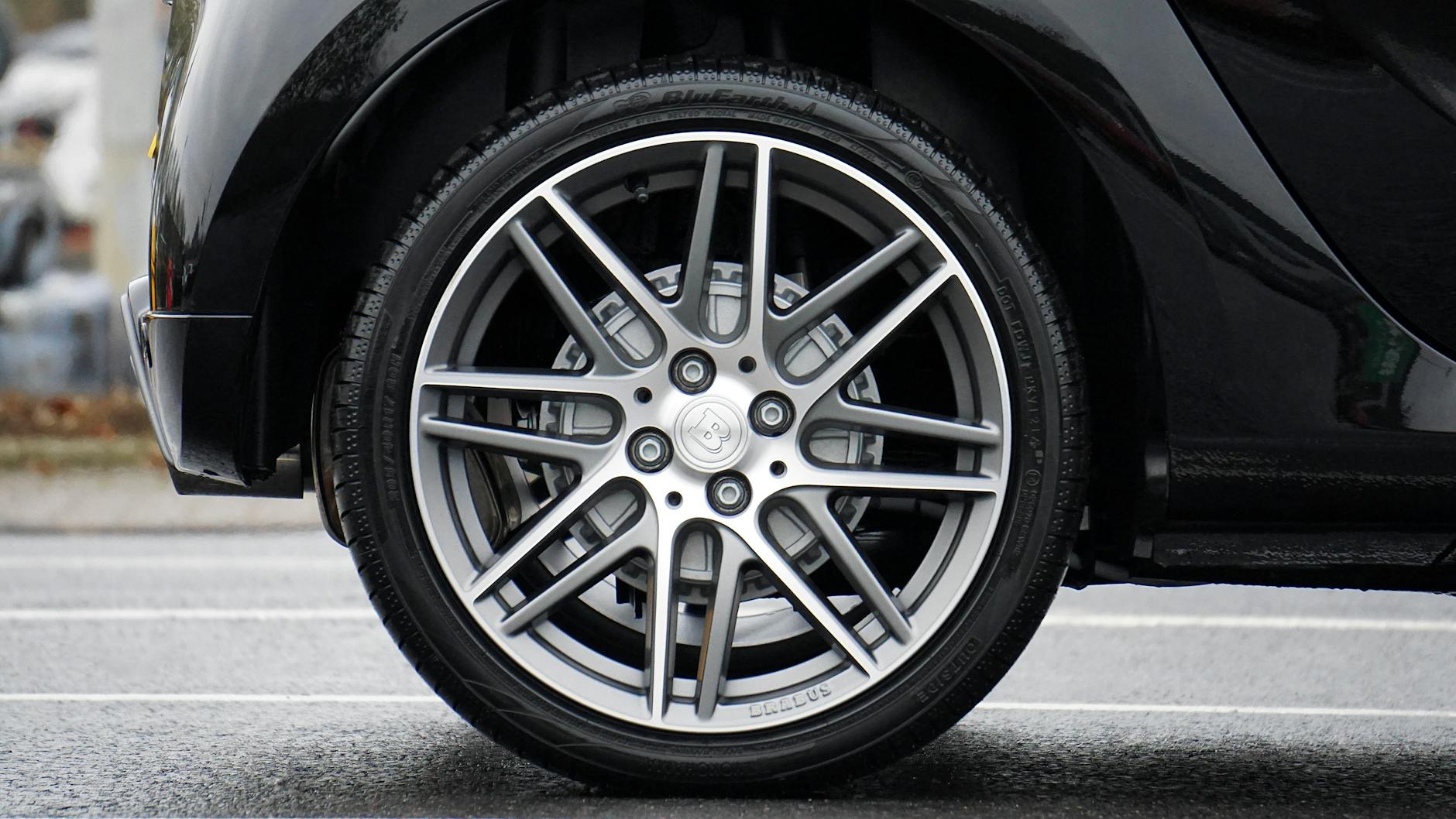
The distinction also matters for spoke design and depth. A shelf wheel comes in whatever configuration the manufacturer decided would sell in volume. A true custom wheel lets you specify spoke count, spoke taper, lip depth, and even concavity — how aggressively the face of the wheel steps back from the lip toward the hub. Deep-concave wheels on a wide-body build look completely different from a flat-face wheel, and you can't get that level of design control from a shop floor in Waukesha.
Forged vs. Cast: The Practical Difference for Wisconsin Drivers
Wisconsin roads are not gentle. Freeze-thaw cycles destroy pavement. Potholes in March are basically craters. Salt gets used aggressively from November through March, sometimes April. This matters for wheel material.
Cast wheels are more brittle. Under a sharp impact — a pothole strike at speed — a cast wheel is more likely to crack than bend. A forged wheel has a denser grain structure from being pressed under thousands of tons of hydraulic force. It deforms rather than shatters. That's a meaningful difference when you're hitting Wisconsin road conditions at highway speed.
Forged aluminum also has better natural corrosion resistance at the alloy level. Combined with a quality powder coat or anodized finish, a forged wheel holds up to salt and road spray considerably better than cheap cast product. You're not re-coating or dealing with bubbling clear coat after two winters.
Consider what Wisconsin winters actually expose wheels to: calcium chloride brine gets sprayed before storms, sodium chloride gets scattered during them, and the residue sits in wheel crevices through repeated freeze-thaw cycles. On a cast wheel with painted finish, that combination eventually works under the clearcoat at any micro-crack or chip and bubbles the surface. Powder coat on forged aluminum — which is thicker, more flexible, and bonded to a denser substrate — resists that process substantially better. Drivers running quality forged wheels in Wisconsin markets routinely report no significant finish degradation after four or five winters with basic rinse maintenance.
For a detailed breakdown of the manufacturing differences, the cast vs forged wheels comparison covers the metallurgy and real-world implications without oversimplifying.
Flow Formed Wheels: The Middle Ground Worth Knowing About
Not every application needs a fully forged monoblock. Flow-formed wheels — also called flow forged or rotary forged — start as a cast blank that gets spun at high speed while rollers compress and shape the barrel. This aligns the grain structure in the barrel section, the part most stressed under load, producing strength close to a full forge at a lower price point.
For Wisconsin drivers who want meaningful performance and durability without the full custom forged price tag, flow-formed is an excellent option. They're lighter than standard cast, tougher under impact, and you can still get them made to your exact specs. Flow forged wheels are a smart pick for daily-driven vehicles where you want the structural benefit but don't need the absolute minimum weight of a billet forged piece.
The practical weight comparison is instructive. A standard cast 19-inch wheel typically lands in the 26–30 lb range. A flow-formed equivalent in the same size comes in around 22–25 lbs. A full monoblock forged wheel in 19 inches from a quality manufacturer runs 18–21 lbs depending on spoke design and width. The step from cast to flow-formed delivers most of the weight reduction. The additional step from flow-formed to full forged matters most for track-driven cars, autocross builds, and applications where you're genuinely pushing the chassis hard.
For a Wisconsin driver commuting in a Civic Si or a WRX and wanting better aesthetics and reasonable durability over a stock replacement, flow-formed hits the value window cleanly. For someone building a dedicated track day car or a show-quality build where every pound counts, full forged is the answer.
What to Specify When Ordering Custom Wheels in Wisconsin
Ordering custom wheels online sounds intimidating until you've done it once. The specs you need are straightforward, and most of them are in your owner's manual or on the sticker inside the driver's door jamb.
Diameter and width. This is the starting point. A stock F150 runs 18x7.5 or 20x8.5 depending on trim. A performance-oriented upgrade might go 20x9 or 20x10. Width affects tire selection, fitment, and visual stance. Going too wide without adjusting offset causes rubbing; going too narrow on a wide tire causes sidewall bulge.
Bolt pattern. This is non-negotiable — it has to match. BMW 5x120, Ford 6x135, GM trucks 6x139.7, Dodge RAM 6x139.7 or 8x165.1 depending on configuration. Know yours before you do anything else.
Offset. Measured in millimeters from the wheel's centerline to the hub mounting face. Positive offset pushes the wheel inward; negative pushes it outward. Stock offset for most modern front-wheel-drive cars is in the +35 to +45mm range. Rear-wheel-drive performance cars often run lower offsets for wider stance. Going too low on offset without adequate fender clearance causes rubbing under steering lock or suspension compression — a problem that shows up immediately in Wisconsin parking lots and driveways with aggressive entry angles.
Center bore. Has to match or be hubcentric with the adapter. Most shops use hub rings for slight mismatches, but getting this right from the start is cleaner.
Finish. Gloss black, matte black, brushed silver, bronze, two-tone — whatever fits the car. Powder coat is durable and holds up to salt better than painted finishes. Matte black forged wheels and brushed aluminum forged wheels are both popular choices that age well in harsh climates. In Wisconsin specifically, darker finishes tend to hide the fine surface residue from road brine better than polished or chrome-adjacent options — a practical consideration that doesn't always come up in online guides written for Southern California drivers.
The Price Reality: Why Online Often Beats Local
A set of forged custom wheels from a legacy brand — HRE, Brixton, ADV.1 — runs $4,000–8,000+ for a set of four, sometimes more. That's before tires. Local shops that carry these brands mark them up further and often tack on mandatory installation packages.
ForgedToFit works directly through a 15-year OEM forging partner — the same manufacturing infrastructure used by major brands — and cuts out the distributor and retail layers entirely. The result is 50–70% less than those legacy brand prices with no compromise on the actual forging process or material quality. The wheels come with a 5-year warranty. You get a 3D CAD design review before anything goes into production, so you're approving the exact spoke geometry, depth, and finish before a single piece of aluminum gets pressed.
For Wisconsin buyers, the shipping cost is modest relative to what you're saving. A set that would run $6,000 at a specialty shop lands at your door for closer to $1,800–2,500 depending on size and configuration. You can build your own forged wheels from scratch or start from an existing design and modify it.
It's also worth noting that the 6–8 week lead time — which some buyers see as a drawback — is largely irrelevant in the context of a Wisconsin build. Most people doing serious wheel upgrades in this region are planning around seasonal installation anyway. Ordering in late February for a mid-April delivery aligns naturally with the window when salt season ends and it makes sense to pull off winter wheels. The lead time stops feeling like a limitation once you frame it that way.
Platform-Specific Fitment Examples
A few concrete examples help illustrate how this works in practice.
BMW F30 335i: Stock rear is 18x8.5, +47 offset, 5x120 bolt pattern. A common upgrade is 19x8.5 front / 19x9.5 rear in a staggered setup, with offset dialed back to around +30–35 rear to fill the fender properly. You won't find that staggered set on a local shop floor in Appleton. It gets built. Getting the rear offset right on an F30 is particularly important because the rear trailing arm geometry creates a relatively tight clearance window — too aggressive and you get inner barrel contact under load, not just fender rubbing.
Mustang GT (S550): 5x114.3 bolt pattern, and these cars eat wheels for lunch on aggressive driving. A 20x10 front / 20x11 rear staggered forged setup in the 25–30 lbs-per-corner range makes a real difference over the 30+ lb stock cast units. Staggered wheels are almost always the right call on a Mustang GT. The S550 platform also has a reputation for stress-cracking cheap cast wheels on track days — the combination of mass and horsepower transmits real shock loads into the wheel under hard acceleration over imperfect surfaces.
Tesla Model 3: This one matters more than people realize. The Model 3 is already range-sensitive, and heavy wheels hurt efficiency. Dropping from a 26 lb cast wheel to a 19–20 lb forged equivalent in 18 or 19-inch saves range measurably across a commute. Tesla Model 3 aftermarket wheels have specific offset requirements — the front fitment is tight — so custom sizing matters here. EV owners in Wisconsin also benefit from the aerodynamic profile options available in custom forged designs; a more closed spoke pattern at 18 inches recovers some of the efficiency loss that comes with upgrading from the stock aero covers.
Silverado 1500 or 2500 HD: Truck applications often involve leveling kits or mild lifts that change the effective offset window. A 2500HD with a 2-inch level and 35-inch tires needs backspacing calculated carefully. Going custom-built means those exact numbers get dialed in, versus guessing which off-the-shelf option clears the brake caliper. On a 2500HD running a 4-inch lift with 37s, the backspacing window narrows considerably and the loads the wheel sees — especially towing — argue strongly for forged construction over cast.
WRX / STI (VA or VB platform): These cars are popular in Wisconsin for obvious reasons, and the fitment community around them is obsessive about wheel specs. The STI front caliper is large enough that clearance is a real constraint on spoke design — certain five-spoke styles simply don't clear without a spacer. Getting a custom wheel built with the correct spoke geometry and a confirmed caliper clearance spec eliminates that headache entirely.
Visualizing Before You Buy
One legitimate concern with ordering custom wheels you've never seen on your actual car is not knowing how they'll look. A good custom wheels visualizer tool lets you map designs onto your vehicle before committing. Combined with a 3D CAD review of the actual wheel design, you go into production knowing exactly what's coming. This removes most of the risk that people associate with buying wheels online.
The Local Shop's Real Advantage — and Its Limits
Local shops are genuinely useful for a few things: tire mounting, balancing, and installation. Once your custom wheels arrive, a good tire shop can mount and balance your tires and get you on the road same-day. Most shops in Wisconsin charge $20–30 per wheel for that service. That's the part of the process where local actually adds value.
The design selection, spec matching, manufacturing quality, and price? Those are all things where an online-direct model wins, and the post for custom wheels near me covers this tradeoff in depth if you want the full breakdown.
What the 5-Year Warranty Actually Covers
A warranty on custom wheels is only as good as the company standing behind it. ForgedToFit's 5-year warranty covers structural defects — cracking, delamination, finish failure under normal use. It doesn't cover curb rash or pothole damage (that's on the driver), but structural integrity over five years of Wisconsin winters is a real commitment. Legacy brands at triple the price often offer 1–2 year limited warranties with more carve-outs.
Forged construction is part of why this warranty is possible. Cast wheels crack unpredictably and sometimes catastrophically. Forged wheels fail slowly and visibly if they fail at all, which is why the manufacturer can stand behind them with confidence.
The finish warranty is particularly relevant for Wisconsin buyers. Powder coat delamination from salt exposure is the most common finish failure mode in cold-climate markets, and a five-year finish warranty in that environment is a meaningful statement about coating quality and process control. Ask a local shop how long their finish warranty runs on the cast wheels they're selling — the answer is usually shorter, with more exceptions.
Getting Started
The process is straightforward. Browse existing designs or upload your own sketch or inspiration image. Provide your vehicle specs — year, make, model, any suspension modifications. Get a quote. Approve the 3D CAD design. Production takes 6–8 weeks on average from order to ship, and wheels arrive direct to your door or to the tire shop of your choice in Wisconsin.
Custom wheels in Wisconsin don't require a local shop with a fancy showroom. They require the right manufacturing partner, the right specs, and a clear picture of what you want on the car.
Frequently asked questions
Can I order custom forged wheels in Wisconsin without visiting a shop?
Yes. The entire process — design selection, spec submission, 3D CAD approval, and manufacturing — happens online. Wheels ship direct to your door or to a local tire shop for mounting. You only need a local shop for mounting, balancing, and installation, which any tire shop can handle.
How long does it take to get custom wheels made and delivered to Wisconsin?
Typical lead time is 6–8 weeks from order confirmation to shipment. That includes CAD design review, forging, machining, finishing, and quality inspection. Shipping to Wisconsin from the manufacturing facility takes 3–7 business days depending on carrier and destination.
Are forged wheels worth it for daily driving on Wisconsin roads?
Absolutely. Wisconsin's freeze-thaw potholes are hard on cast wheels, which crack under sharp impact more readily than forged equivalents. Forged wheels deform rather than shatter, and their denser aluminum grain structure holds up better to road salt and winter conditions. For daily drivers, the durability argument is arguably stronger than the performance one.
What's the difference between flow formed and fully forged custom wheels?
Flow formed wheels start as a cast blank and get spun while rollers compress and elongate the barrel, improving strength in the most stressed section. Fully forged wheels are pressed from a solid billet under high pressure, aligning grain structure throughout. Both are superior to standard cast. Fully forged is lighter and stronger but costs more; flow formed is an excellent middle ground for daily-driven vehicles.
How do I know if custom wheels will fit my specific car?
You need four specs: diameter and width, bolt pattern, offset (in mm), and center bore. These are either in your owner's manual, on the door jamb sticker, or available by looking up your specific trim level on a fitment database. When you order through ForgedToFit, the team verifies fitment against your vehicle specs before production starts, and you review a 3D CAD model of the exact wheel configuration before anything gets manufactured.
Can I get custom truck wheels made for a lifted Silverado or RAM in Wisconsin?
Yes, and this is actually where custom-built wheels shine compared to off-the-shelf options. Lifted trucks with leveling kits or suspension modifications often need specific backspacing and offset combinations that standard inventory doesn't cover. Ordering custom means those specs get dialed in precisely — correct clearance around the brake caliper, correct stance with the lift, correct load rating for the truck's GVWR.